The Last Song Budget
 Drama
DramaUpdated
Synopsis
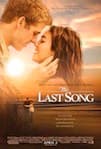
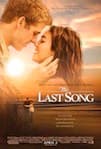
Rebellious teenager Ronnie Miller is sent to spend the summer in a small Southern beach town with her estranged father Steve, a former concert pianist. Over the course of the season, Ronnie falls in love with a local volleyball player named Will Blakelee, reconciles with her father, and learns a heartbreaking secret about his health.
What Is the Budget of The Last Song (2010)?
The Last Song (2010), the eighth Nicholas Sparks novel adaptation to reach theatrical screens, was produced on a reported budget of $20,000,000. Touchstone Pictures (a Walt Disney Studios label used for non-family releases) financed the project as a vehicle for Miley Cyrus, who was transitioning out of the Hannah Montana brand and pursuing more mature dramatic roles. Sparks wrote the novel and co-wrote the screenplay with Jeff Van Wie specifically with Cyrus in mind, an unusual arrangement in which the source material was developed in parallel with the film adaptation.
The $20,000,000 figure was modest for a major-studio summer release but consistent with the Sparks adaptation tier, which had established a reliable profitability formula. The investment covered Miley Cyrus's salary and producer fee, supporting roles for Greg Kinnear and Australian breakout Liam Hemsworth, a 2009 location shoot on Tybee Island, Georgia, and a soundtrack centered on Cyrus's original songs released through Hollywood Records. Adam Shankman and Jennifer Gibgot of Offspring Entertainment produced.
Key Budget Allocation Categories
The $20,000,000 budget was distributed across several core production areas:
- Above-the-Line Talent: Miley Cyrus received an estimated $1,000,000 acting fee plus producer compensation, a significant step down from her Hannah Montana payday but appropriate for the dramatic-pivot positioning. Greg Kinnear commanded an established featured-player rate. Liam Hemsworth, then a relative unknown coming off the Australian soap Neighbours, was paid scale-plus terms in his first major Hollywood role. Director Julie Anne Robinson, transitioning from British television to her feature debut, received a first-time-director fee.
- Tybee Island Location Shoot: Principal photography ran from June to August 2009 on Tybee Island and in nearby Savannah, Georgia. Location costs covered beach permitting, sea-turtle nesting accommodations (the film's subplot), local crew hires, lodging for the production unit, and the seasonal tourist-area logistics that required shooting around active beachgoers.
- Music and Soundtrack: Composer Aaron Zigman scored the dramatic underscore, while the soundtrack album anchored by Cyrus's original songs (released on Hollywood Records) functioned as both a marketing asset and a parallel revenue stream. Recording sessions, song licensing, and the integrated music-video production added to the music budget.
- Production Design: Production designer Linda Burton built the beach house exteriors and interiors used as Steve Miller's home, the local bait shop, and the wedding-venue church. Sea turtle and nest assets were practical and supervised by wildlife consultants.
- Cinematography: Cinematographer John Lindley shot the film on 35mm with extensive natural-light beach photography, requiring magic-hour scheduling and sand-resistant camera packages. Underwater work for the swimming sequences added rigging costs.
- Costume and Hair/Makeup: Costume designer Renee Ehrlich Kalfus built Cyrus's casual-rebel wardrobe as a deliberate visual departure from Hannah Montana, and the hair/makeup team handled the aging-out makeup for the Greg Kinnear character's late-film illness arc.
- Reshoots and Pickup Days: A short pickup shoot in late 2009 added scenes for the romantic arc, and post-production wrapped in early 2010 for the March 31 release date.
How Does The Last Song's Budget Compare to Similar Films?
At $20,000,000, The Last Song sat in the middle of the Nicholas Sparks adaptation tier and the broader young-adult romance category. The comparison set illustrates how its commercial outcome stacked up:
- A Walk to Remember (2002): Budget $11,800,000 | Worldwide $47,494,916. Warner Bros.' Mandy Moore vehicle cost 41% less than The Last Song and earned roughly 53% of the worldwide gross, establishing the Sparks adaptation template that The Last Song followed.
- The Notebook (2004): Budget $29,000,000 | Worldwide $118,144,447. New Line's Rachel McAdams and Ryan Gosling adaptation cost 45% more than The Last Song and earned 33% more worldwide, the genre ceiling for a Sparks adaptation.
- Dear John (2010): Budget $25,000,000 | Worldwide $114,985,798. Sony's Channing Tatum and Amanda Seyfried adaptation, released in February 2010, cost 25% more than The Last Song and out-grossed it worldwide by 29%, the comparable theatrical year peer.
- The Fault in Our Stars (2014): Budget $12,000,000 | Worldwide $307,200,000. Fox's Shailene Woodley YA adaptation cost 40% less than The Last Song and earned more than three times its worldwide gross, showing the upper bound of the young-adult romance category.
- Five Feet Apart (2019): Budget $7,000,000 | Worldwide $91,407,322. CBS Films' Haley Lu Richardson illness-romance cost 65% less than The Last Song and earned a comparable worldwide total, suggesting the genre's continuing receptiveness to low-budget entries.
The Last Song Box Office Performance
The Last Song opened on March 31, 2010, in 2,673 theaters and earned $16,200,000 over its three-day weekend (and $25,640,000 over its five-day Easter frame), finishing second behind How to Train Your Dragon. The opening exceeded Touchstone's pre-release projections and confirmed Cyrus's drawing power outside of the Hannah Montana brand.
Against a $20,000,000 production budget, the film needed approximately $50,000,000 in worldwide gross to reach profitability after marketing and distribution costs. Here is the financial breakdown:
Box Office Breakdown
The Last Song (2010)

The Last Song returned approximately $1.85 in worldwide theatrical revenue for every $1 invested when measured against total estimated production and marketing spend. The domestic share of the gross was $62,950,384 against an international share of $26,068,817, a 71/29 split heavily weighted toward North America, consistent with the demographic profile of the young-adult Sparks audience.
The result extended the Sparks adaptation pipeline, which had Dear John released two months earlier in February 2010 and would continue with The Lucky One (2012), Safe Haven (2013), and The Best of Me (2014). The Last Song also marked the on-set meeting and start of the Miley Cyrus and Liam Hemsworth relationship, which became a major tabloid story across the 2010s and added cultural footprint to the film's commercial legacy.
The Last Song Production History
Development on The Last Song began in 2008 when Nicholas Sparks agreed to write a novel and screenplay specifically with Miley Cyrus in mind, an unusual arrangement initiated by producers Adam Shankman and Jennifer Gibgot of Offspring Entertainment. Cyrus, then 16 and looking to transition out of the Disney Channel Hannah Montana brand, sought a vehicle that could establish her as a dramatic lead. Sparks delivered the novel in 2009, and the screenplay was developed in parallel with Jeff Van Wie, an unusual book-and-film tandem release model.
Director Julie Anne Robinson was hired in early 2009, making her feature directorial debut after extensive British television work on Doctor Who, Mistresses, and Coronation Street. Australian actor Liam Hemsworth, the younger brother of Chris Hemsworth, was cast as the male lead Will Blakelee after auditioning multiple times. The casting marked Hemsworth's first major Hollywood role, with The Last Song serving as the platform that led to his casting in The Hunger Games (2012) the following year.
Principal photography ran from June 15, 2009 to August 18, 2009, on Tybee Island and in nearby Savannah, Georgia. The Georgia Entertainment Industry Investment Act, which had been signed into law in May 2008, provided a 20% transferable tax credit plus a 10% logo-promotion uplift, contributing to Georgia's emergence as a major production hub in the years that followed. The Last Song was among the early major-studio features to take advantage of the incentive, and its production helped establish Tybee Island as a recurring Sparks adaptation location.
Post-production ran through the fall and winter of 2009, with composer Aaron Zigman recording the dramatic score and Hollywood Records preparing the parallel soundtrack album release. Miley Cyrus recorded original songs including "When I Look at You" and "I Hope You Find It" for the soundtrack. The film opened wide on March 31, 2010, positioned as a Touchstone Pictures Easter-weekend romantic-drama counterprogram against the DreamWorks Animation tentpole How to Train Your Dragon.
Awards and Recognition
The Last Song received primarily teen-oriented awards recognition. The film won six Teen Choice Awards in 2010: Choice Movie Drama, Choice Movie Actress Drama (Miley Cyrus), Choice Movie Actor Drama (Liam Hemsworth), Choice Movie Breakout Star Female (Cyrus), Choice Movie Breakout Star Male (Hemsworth), and Choice Movie Liplock (Cyrus and Hemsworth). The recognition reflected the film's strong resonance with the under-25 demographic that anchored its box office.
Miley Cyrus received a Razzie Award nomination for Worst Actress, while the film also received a Razzie nomination for Worst Picture, reflecting the polarized critical reception. The Casting Society of America Artios Awards nominated the film for Best Big Budget Feature Drama Casting, recognizing the Hemsworth and supporting-cast discoveries. Cyrus's song "When I Look at You" received a Teen Choice Award nomination for Choice Music Love Song.
Critical Reception
The Last Song received negative reviews from critics but resonated strongly with its target audience. The film holds a 19% approval rating on Rotten Tomatoes based on 124 critic reviews, with a critical consensus that called it sappy and emotionally manipulative. On Metacritic, the film scored 31 out of 100, indicating generally unfavorable reviews. Audiences surveyed by CinemaScore gave the film an A-, a strong score that confirmed the disconnect between professional critics and the young-female demographic that the film was designed to serve.
Detractors objected to the film's reliance on familiar Nicholas Sparks beats (the dying parent, the misunderstood teen, the small-town romance), Miley Cyrus's limited dramatic range in her first major non-musical role, and the screenplay's heavy-handed pacing through its three-act structure. Roger Ebert gave the film one and a half out of four stars and wrote that "the only thing missing is a sentence reading: The End. Or maybe: The Beginning."
Defenders praised Greg Kinnear's grounded performance as the dying father Steve, the Tybee Island location photography by John Lindley, and Liam Hemsworth's screen-test charisma. The film's critical reputation remains low, but its cultural footprint is amplified by the on-set genesis of the Cyrus-Hemsworth relationship, which became one of the most heavily covered celebrity romances of the early 2010s. The Last Song is regularly cited in tabloid retrospectives as the film that introduced the couple, a sidebar that has kept the title in continuous online conversation despite the critical dismissal.
Frequently Asked Questions
How much did it cost to make The Last Song (2010)?
The reported production budget was $20,000,000. Touchstone Pictures (a Walt Disney Studios label) financed the project as a vehicle for Miley Cyrus, who was transitioning out of the Hannah Montana brand. Adam Shankman and Jennifer Gibgot of Offspring Entertainment produced.
How much did The Last Song earn at the box office?
The film grossed $62,950,384 domestically and $26,068,817 internationally, for a worldwide total of $89,019,201. It opened to $16,200,000 over its three-day March 31, 2010 weekend, finishing second behind How to Train Your Dragon.
Was The Last Song profitable?
Yes. Against an estimated $45,000,000 to $50,000,000 total investment (production plus marketing), the film returned approximately $1.85 in worldwide gross for every $1 invested. The result extended the Nicholas Sparks adaptation pipeline that would continue with The Lucky One (2012), Safe Haven (2013), and The Best of Me (2014).
Who directed The Last Song?
British television director Julie Anne Robinson made her feature directorial debut on The Last Song, following extensive work on Doctor Who, Mistresses, and Coronation Street. The film was her first major Hollywood project.
Did Miley Cyrus and Liam Hemsworth meet on The Last Song?
Yes. The Last Song marked the on-set meeting and start of the Miley Cyrus and Liam Hemsworth relationship, which became one of the most heavily covered celebrity romances of the 2010s. The couple later married in December 2018 and divorced in 2020. The film's cultural footprint is amplified significantly by the relationship's media coverage.
Where was The Last Song filmed?
Principal photography took place from June 15, 2009 to August 18, 2009 on Tybee Island and in nearby Savannah, Georgia. The Last Song was among the early major-studio features to take advantage of the Georgia Entertainment Industry Investment Act, a 20% transferable tax credit signed into law in May 2008.
Who wrote The Last Song?
Nicholas Sparks wrote both the novel and co-wrote the screenplay with Jeff Van Wie. Unusually, Sparks wrote the novel specifically with Miley Cyrus in mind at the request of producers Adam Shankman and Jennifer Gibgot, developing the screenplay in parallel with the book in an unusual book-and-film tandem release model.
What did critics think of The Last Song?
The film received negative reviews, with a 19% approval rating on Rotten Tomatoes (based on 124 critics) and a 31 out of 100 Metacritic score. However, audiences gave it an A- CinemaScore, confirming the disconnect between professional critics and the young-female demographic the film was designed to serve.
How does The Last Song compare to other Nicholas Sparks films?
The Last Song cost $20M (more than A Walk to Remember at $11.8M but less than The Notebook at $29M and Dear John at $25M). It earned $89M worldwide, less than The Notebook ($118M) and Dear John ($114M) but more than A Walk to Remember ($47M), placing it in the upper-middle tier of the Sparks adaptation library.
Did The Last Song win any awards?
The film won six Teen Choice Awards in 2010: Choice Movie Drama, Choice Movie Actress Drama (Miley Cyrus), Choice Movie Actor Drama (Liam Hemsworth), Choice Movie Breakout Star Female (Cyrus), Choice Movie Breakout Star Male (Hemsworth), and Choice Movie Liplock. Miley Cyrus also received a Razzie Award nomination for Worst Actress.
Filmmakers
The Last Song (2010)

Build budgets like this one in Saturation
Start from an industry-standard feature film template, import the schedule and rates you already have, and let the cost report keep itself current as you spend. Real-time collaboration, no spreadsheets.