The Kid Budget
Updated
Synopsis
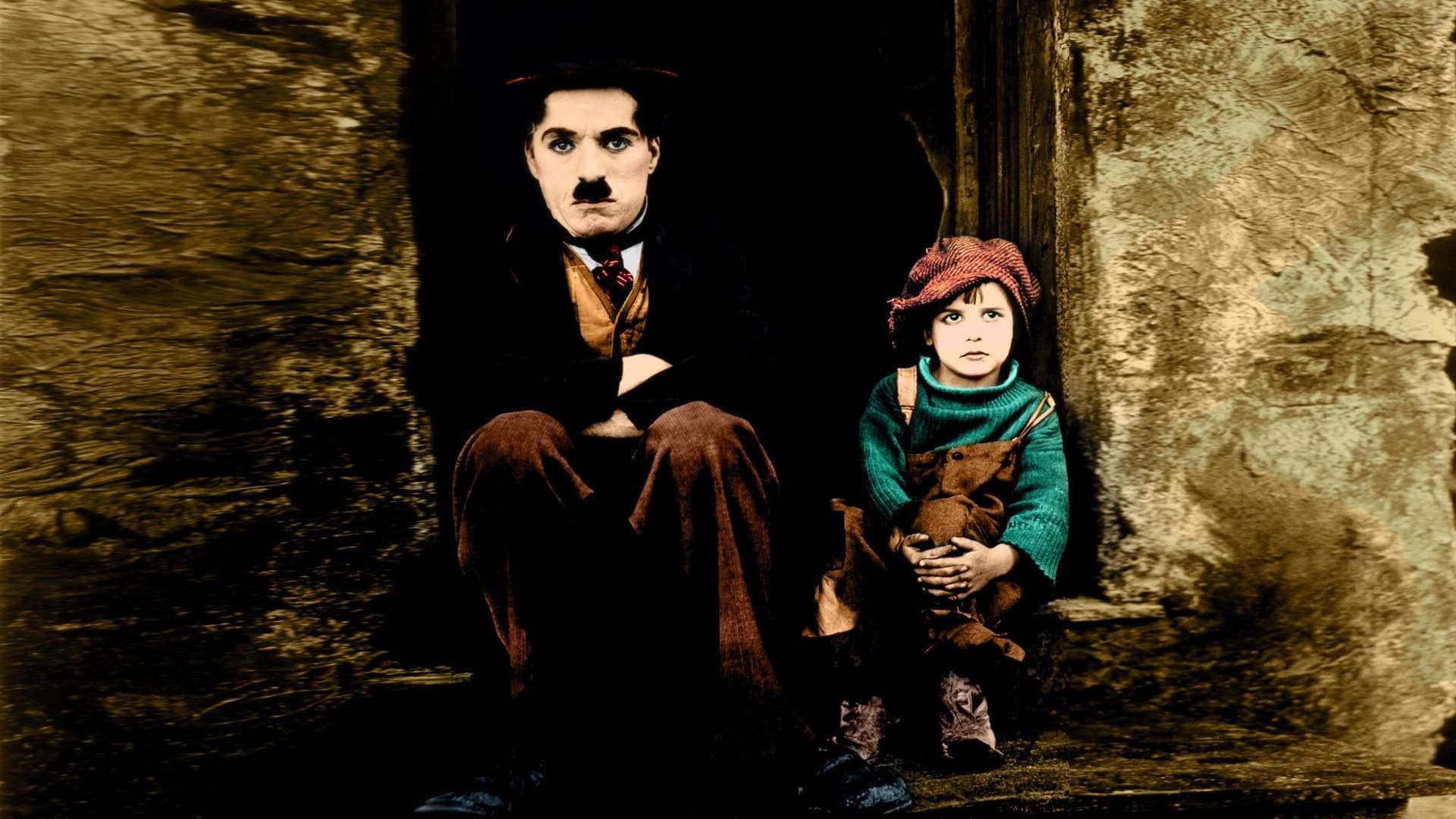
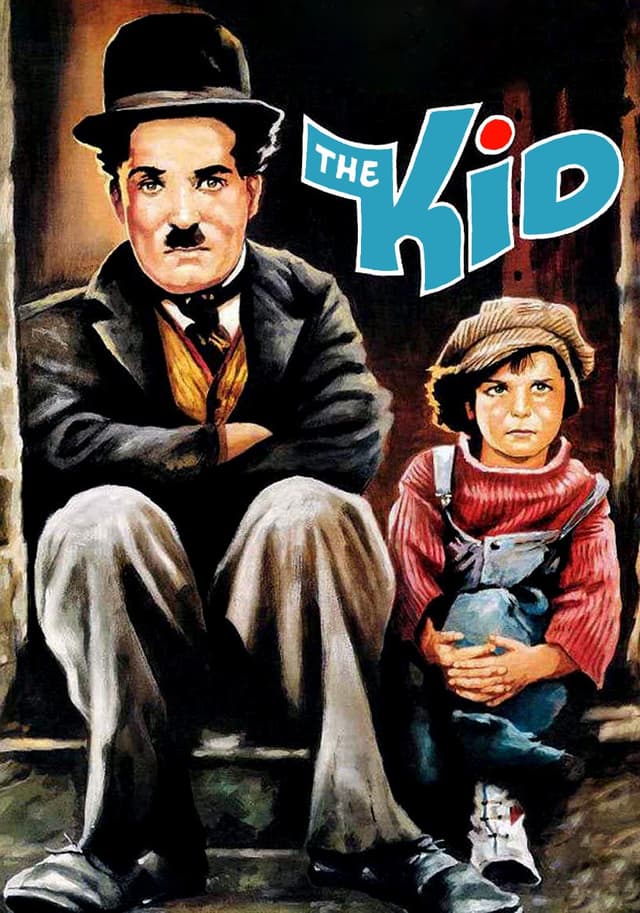
A tramp cares for a boy after he's abandoned as a newborn by his mother. Later the mother has a change of heart and aches to be reunited with her son.
What Is the Budget of The Kid?
The Kid (1921) was produced on a budget of approximately $250,000, a substantial sum for the early 1920s when most comedies cost between $25,000 and $75,000. Charlie Chaplin, who wrote, directed, produced, and starred in the film, invested heavily in an extended production timeline that stretched over twelve months. This was exceptionally long for the era, when most features were completed in a matter of weeks.
Chaplin financed the production through his contract with First National Pictures, which gave him considerable creative control in exchange for delivering completed films. His willingness to spend far beyond industry norms reflected a perfectionist approach that would define his career: shooting extensive footage, discarding takes that fell short, and reshaping the story throughout production rather than following a rigid script.
Key Budget Allocation Categories
Chaplin ran a tightly controlled production at his own studio, channeling resources into areas that would maximize the emotional impact of every scene.
- Talent and Cast Chaplin took no upfront salary, instead earning from his distribution deal with First National. Jackie Coogan, the five-year-old co-star, was paid a modest weekly rate, though his performance would make him the most famous child actor in the world.
- Set Construction The production built an elaborate slum neighborhood on Chaplin's studio lot, complete with multi-story tenement facades, alleyways, and rooftops that served as key locations for the Tramp's encounters with neighbors and authorities.
- Film Stock and Reshoots Chaplin shot an estimated 400,000 feet of negative to produce a final cut of roughly 5,300 feet, a shooting ratio of approximately 75:1 that consumed enormous quantities of raw film stock.
- Extended Production Schedule With principal photography spanning over a year (far longer than the few weeks typical of 1920s features), crew wages, studio overhead, and facility costs accumulated well beyond industry standards.
- Post-Production and Editing Chaplin personally supervised every phase of editing, titling, and scoring. The meticulous cutting process required months of work as he shaped the balance between comedy and pathos that defined the finished film.
How Does The Kid's Budget Compare to Similar Films?
At $250,000, The Kid represented a significant investment for a comedy feature in 1921. Placing it alongside other notable productions of the era reveals how Chaplin positioned himself between modestly budgeted comedies and the most lavish dramas.
- The Birth of a Nation (1915) Budget $110,000 | Worldwide $50,000,000+. D.W. Griffith's Civil War epic set the template for feature-length spectacle at a fraction of The Kid's cost, though its massive returns rewrote expectations for what films could earn.
- Intolerance (1916) Budget $2,000,000 | Worldwide $1,750,000. Griffith's ambitious follow-up proved that overspending could destroy profitability, a cautionary tale Chaplin avoided by keeping The Kid's budget disciplined relative to its projected returns.
- A Dog's Life (1918) Budget $50,000 | Worldwide data unavailable. Chaplin's earlier three-reel comedy for First National cost a fifth of The Kid's budget, illustrating the financial leap he took when graduating to feature-length storytelling.
- The Gold Rush (1925) Budget $923,000 | Worldwide $4,250,000. Chaplin's later feature nearly quadrupled The Kid's budget, reflecting both inflation and his growing appetite for elaborate location shoots and extended timelines.
- Safety Last! (1923) Budget $121,000 | Worldwide $1,588,000. Harold Lloyd's iconic comedy cost roughly half of The Kid's budget, highlighting how Chaplin's perfectionist methods consistently pushed his productions above industry averages.
The Kid Box Office Performance
The Kid was a massive commercial success, earning an estimated $5,450,000+ worldwide against its $250,000 production budget. It became the second-highest-grossing film of 1921 and one of the most profitable productions of the silent era.
For a silent-era film, the standard break-even calculation differs from modern formulas. Distribution and marketing costs in the 1920s were proportionally lower, and First National handled prints and advertising as part of its distribution agreement. Using a conservative 2x multiplier for total costs (production plus distribution), The Kid needed roughly $500,000 to break even.
- Production Budget $250,000
- Estimated Break-Even $500,000 (approximately 2x production cost including distribution)
- Worldwide Gross $5,450,000+
- Estimated Profit $4,950,000+ above break-even
- Return on Investment (5,450,000 - 250,000) / 250,000 x 100 = 2,080% ROI on production cost
The film's extraordinary returns made it one of the most profitable investments in early cinema. Its success proved that audiences would embrace feature-length comedies with emotional depth, opening the door for Chaplin's even more ambitious projects throughout the 1920s.
The Kid Production History
Charlie Chaplin began developing The Kid in 1919, inspired by the birth of his first son (who tragically died three days after birth) and his growing desire to move beyond short comedies into feature-length filmmaking. He conceived a story centered on the Tramp discovering and raising an abandoned infant, blending the physical comedy that had made him the world's most famous entertainer with genuine emotional stakes.
Casting the child proved critical. Chaplin discovered four-year-old Jackie Coogan performing a shimmy dance in a vaudeville act at the Orpheum Theatre in Los Angeles. Coogan's natural expressiveness and ability to mirror Chaplin's pantomime style convinced the director he had found the perfect co-star. Chaplin reportedly spent weeks rehearsing with Coogan before cameras rolled, building a rapport that translated into one of cinema's most beloved onscreen partnerships.
Production stretched over twelve months at Chaplin Studios on La Brea Avenue in Hollywood. Chaplin's working method involved shooting scenes repeatedly from different angles and with varied performances, accumulating hundreds of thousands of feet of film. He frequently rewrote and restructured the story during production, treating the script as a living document rather than a fixed blueprint.
The production was complicated by Chaplin's divorce from his first wife, Mildred Harris. The custody subplot at the heart of The Kid, in which authorities attempt to separate the Tramp from the child he has raised, mirrored elements of Chaplin's own legal battles. When Chaplin feared that Harris's lawyers might attempt to seize the film negative as a marital asset, he smuggled the footage to a Salt Lake City hotel room, where he and his editor completed the assembly far from the reach of California courts.
First National Pictures released The Kid on January 21, 1921. The film ran 68 minutes, making it Chaplin's first full-length feature. Chaplin famously described it as "a picture with a smile and perhaps a tear," a tagline that captured the tonal innovation the film represented: the first major work to fuse slapstick comedy with dramatic storytelling in a way that left audiences both laughing and deeply moved.
Awards and Recognition
The Kid predates the establishment of the Academy Awards (first held in 1929) and all major film festivals, so it received no formal awards at the time of its release. Its lasting recognition has come through retrospective honors that confirm its place as one of cinema's foundational achievements.
- National Film Registry Selected for preservation by the United States Library of Congress in 2011, recognizing the film as "culturally, historically, or aesthetically significant."
- AFI Recognition While not included in the AFI's 100 Years...100 Movies list, the film is widely cited in AFI retrospectives on comedy and the silent era.
- Coogan Law Legacy Jackie Coogan's performance made him the highest-paid child actor of the 1920s, but his earnings were squandered by his parents. The resulting scandal led California to pass the Child Actors Bill in 1939 (known as the "Coogan Law"), which requires a portion of child performers' earnings to be set aside in trust. This legislation remains in effect and has been adopted in modified forms across multiple states and countries.
- Restoration and Re-release Chaplin personally supervised a re-edited version in 1971, trimming approximately five minutes and adding a new musical score he composed himself. The restored version has been screened at major festivals and repertory cinemas worldwide.
Critical Reception
The Kid holds a 100% approval rating on Rotten Tomatoes, reflecting universal critical admiration across a century of reviews. At the time of its release, critics praised Chaplin for demonstrating that comedy could carry genuine emotional weight without sacrificing laughs.
Contemporary reviewers were struck by the seamless interplay between Chaplin and five-year-old Jackie Coogan, whose naturalistic performance defied expectations of what a child actor could achieve. The New York Times noted the film's ability to move between "roars of laughter and a lump in the throat" within a single scene, a tonal achievement that had no real precedent in American cinema.
Modern critics view The Kid as the moment Chaplin evolved from a brilliant comedian into a complete filmmaker. The film's influence extends far beyond comedy: its integration of humor and heartbreak became the template for works ranging from Vittorio De Sica's Bicycle Thieves (1948) to Pixar's approach to animated storytelling. Scholars frequently cite it as the first feature film to demonstrate that comedy and drama were not opposing genres but complementary tools for illuminating the human condition.
Frequently Asked Questions
How much did it cost to make The Kid (1921)?
The production budget was $250,000, covering principal photography, cast and crew salaries, locations, sets, post-production, and music. Marketing and distribution (P&A) costs are estimated at an additional $125,000 - $200,000, bringing the total studio investment to approximately $375,000 - $450,000.
How much did The Kid (1921) earn at the box office?
The Kid grossed $5,450,000 worldwide.
Was The Kid (1921) profitable?
Yes. Against a production budget of $250,000 and estimated total costs of ~$625,000, the film earned $5,450,000 theatrically - a 2080% ROI on production costs alone.
What were the biggest costs in producing The Kid?
The primary cost drivers were above-the-line talent (Charlie Chaplin, Jackie Coogan, Carl Miller); star comedian salaries, location filming, and aggressive marketing campaigns.
How does The Kid's budget compare to similar comedy films?
At $250,000, The Kid is classified as a ultra-low-budget production. The median budget for wide-release comedy films in the era ranges from $30 - 80M for mid-budget to $150M+ for tentpoles. Comparable budgets: High and Low (1963, $250,000); Rashomon (1950, $250,000); Peter Pan's Neverland Nightmare (2025, $250,000).
Did The Kid (1921) go over budget?
There are no widely reported accounts of significant budget overruns for this production. However, studios rarely disclose precise budget overrun figures publicly. The reported production budget reflects the final estimated cost.
What was the return on investment (ROI) for The Kid?
The theatrical ROI was 2080.0%, calculated as ($5,450,000 − $250,000) ÷ $250,000 × 100. This measures gross revenue against production budget only - it does not account for P&A or exhibitor shares.
What awards did The Kid (1921) win?
2 wins total.
Who directed The Kid and who were the key crew members?
Directed by Charlie Chaplin, written by Charlie Chaplin, shot by Roland Totheroh, with music by Charlie Chaplin, edited by Charlie Chaplin.
Where was The Kid filmed?
The Kid was filmed in United States of America.
Filmmakers
The Kid

Official Trailer
Build budgets like this one in Saturation
Start from an industry-standard feature film template, import the schedule and rates you already have, and let the cost report keep itself current as you spend. Real-time collaboration, no spreadsheets.