The Sentinel Budget
 Thriller/Suspense
Updated
Synopsis
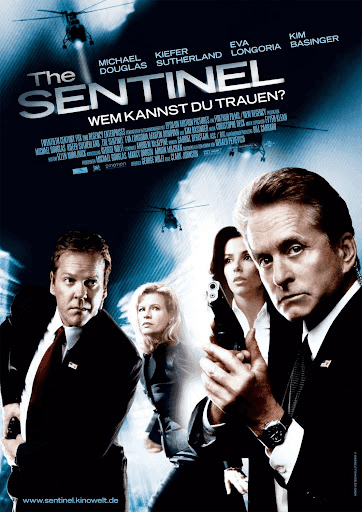
Pete Garrison, the legendary Secret Service agent who took a bullet for Ronald Reagan, finds his career and life unraveling when an internal mole investigation begins to circle him. Framed by an assassination plot against the sitting president, Garrison must clear his name while protecting the First Family from a conspiracy that runs through the heart of his own agency.
What Is the Budget of The Sentinel (2006)?
The Sentinel (2006), directed by Clark Johnson and distributed by 20th Century Fox, was produced on a reported budget of $60,000,000. The political thriller was financed by 20th Century Fox, Regency Enterprises, and New Regency Pictures, with producers Michael Douglas, Marcy Drogin, and Arnon Milchan structuring the project as a star-driven Secret Service procedural built around Douglas. The film was adapted by George Nolfi from the 2003 novel by Gerald Petievich, a former Secret Service agent whose insider perspective gave the project marketing credibility.
The investment positioned The Sentinel as a mid-budget star-driven thriller. Fox and Regency wanted a property that could anchor the spring 2006 mid-tier corridor and demonstrate that Douglas could still carry a contemporary thriller in his 60s. The math required roughly $135,000,000 in worldwide gross to clear breakeven after marketing, a target the film missed despite a credible domestic opening.
Key Budget Allocation Categories
The Sentinel's $60,000,000 budget was distributed across several core production areas:
- Above-the-Line Talent: Michael Douglas commanded the largest share of the cast budget. Kiefer Sutherland, riding high on 24, signed at a substantial fee for the David Breckinridge role. Eva Longoria, fresh from Desperate Housewives, took the Jill Marin part at a TV-to-film transition rate, with Kim Basinger, Martin Donovan, and Ritchie Coster filling out supporting roles at working-actor rates.
- Toronto Location Shoot: Principal photography took place primarily in Toronto, Ontario from May to July 2005, anchored by Ontario's film tax credit program and Canadian co-production benefits. Toronto stood in for Washington, D.C., with additional second-unit photography in the U.S. capital for establishing shots of the White House and Treasury building.
- Set Construction: The production built elaborate White House interior sets on Toronto sound stages, including the West Wing corridors and a contained Oval Office that supported the procedural narrative. The set construction consumed a substantial portion of below-the-line spend given the political-thriller premise.
- Practical Stunts and Action: The film relied on practical performance for its action sequences, including the foot-chase sequences and the Toronto-as-DC car action. Stunt coordinator Mickey Gilbert led the unit, with limited visual-effects support for plate enhancements and squib work.
- Score and Music: Composer Christophe Beck scored the film with an electronic and orchestral suspense score appropriate to the procedural thriller register. The score budget was substantial in line with mid-budget thriller standards.
- Marketing and Reshoots: 20th Century Fox invested in an aggressive domestic marketing campaign positioning the film as the adult procedural-thriller event of spring 2006. Limited reshoots in early 2006 added incremental cost. Domestic marketing spend was estimated in the $30,000,000 to $35,000,000 range.
How Does The Sentinel's Budget Compare to Similar Films?
At $60,000,000, The Sentinel sat in the mid-range of mid-2000s political procedural thrillers:
- Vantage Point (2008): Budget $40,000,000 | Worldwide $151,162,623. The subsequent presidential-assassination thriller cost 33% less than The Sentinel and earned roughly 1.7x its worldwide gross, the close contemporary comparable that out-performed.
- In the Line of Fire (1993): Budget $40,000,000 | Worldwide $176,997,168. The Clint Eastwood Secret Service thriller cost 33% less than The Sentinel and earned roughly 2x its worldwide gross, the genre benchmark and direct subject-matter comparable.
- Air Force One (1997): Budget $85,000,000 | Worldwide $315,156,409. The Harrison Ford political-thriller benchmark cost 42% more than The Sentinel and earned more than 3.5x its worldwide gross, the genre commercial ceiling.
- The Interpreter (2005): Budget $80,000,000 | Worldwide $162,949,891. Sydney Pollack's contemporary political thriller cost 33% more than The Sentinel and earned roughly 1.8x its worldwide gross.
- The Recruit (2003): Budget $46,000,000 | Worldwide $101,191,884. The earlier Al Pacino and Colin Farrell intelligence thriller cost 23% less than The Sentinel and earned roughly 14% more worldwide.
The Sentinel Box Office Performance
The Sentinel opened on April 21, 2006 to $14,275,737 across 2,802 theaters, finishing first at the domestic box office in a weak spring weekend. The opening was modestly above Fox's internal projections but the film dropped sharply in subsequent weeks as Mission: Impossible III opened in early May and absorbed the adult-thriller audience.
Against a $60,000,000 production budget the film needed approximately $135,000,000 worldwide to clear breakeven after marketing. Here is the financial breakdown:
Box Office Breakdown
The Sentinel

The Sentinel returned approximately $0.84 in theatrical revenue for every $1 invested when measured against total estimated production and marketing spend, a modest theatrical loss. The domestic share of the gross was $36,277,941 against an international share of $41,994,417, a 46/54 split close to balanced for a Douglas-led political thriller.
Home video provided substantial recovery. DVD sales in late 2006 and early 2007 returned the film toward the breakeven line, and the film has remained a steady catalog title for the Disney-now-owned 20th Century Fox library. The combined commercial outcome was modestly negative against the production investment but not catastrophic.
The Sentinel Production History
Development on The Sentinel began in 2003 with the publication of Gerald Petievich's novel of the same name. Petievich, a former Secret Service agent who had previously written the basis for To Live and Die in L.A. (1985), provided the project with insider procedural credibility. George Nolfi adapted the screenplay, with Michael Douglas attached to produce through his Further Films and to star as Pete Garrison.
Clark Johnson was attached to direct in late 2004 on the strength of his work on The Shield, The Wire, and Homicide: Life on the Street. The procedural-television background was viewed as appropriate for the contained political-thriller premise. Casting was completed by spring 2005: Kiefer Sutherland as David Breckinridge, Eva Longoria as Jill Marin, Kim Basinger as the First Lady, Martin Donovan as William Montrose, and David Rasche as President Ballentine.
Principal photography ran from May to July 2005 primarily in Toronto, Ontario, anchored by the province's film tax credit program. The production built elaborate White House interior sets on Toronto sound stages, with additional second-unit photography in Washington, D.C. for establishing shots. Post-production wrapped in early 2006 at Fox's Los Angeles facilities, with Christophe Beck recording the score ahead of the April 21, 2006 theatrical release.
Awards and Recognition
The Sentinel received modest industry awards recognition. The film failed to register at the major industry ceremonies and earned no nominations at the Golden Globes, the Saturn Awards, or the major guild awards.
Kiefer Sutherland's supporting performance as David Breckinridge received critical attention as a successful translation of his 24 procedural energy into a feature thriller context. The film has remained a steady catalog title and frequent cable rerun, often programmed alongside In the Line of Fire and Air Force One as part of political-thriller programming blocks.
Critical Reception
The Sentinel received mixed-to-negative reviews. The film holds a 36% approval rating on Rotten Tomatoes based on 154 critic reviews, with a critical consensus calling it a competent but routine procedural thriller that wastes Michael Douglas on a generic premise. On Metacritic, the film scored 51 out of 100, indicating mixed or average reviews. Audiences surveyed by CinemaScore gave the film a B, modest for a star-driven thriller.
Critics broadly praised the procedural-detail authenticity and Kiefer Sutherland's supporting work but objected to the implausible mole-investigation plot, the underdeveloped supporting cast, and what Roger Ebert called "a competent thriller that does not generate enough heat to justify its sense of importance." Manohla Dargis of The New York Times wrote that the film "is the kind of political thriller that uses real institutions to give weight to imaginary stakes." Variety's Todd McCarthy called it "a passable spring weekend distraction."
Michael Douglas's performance was the most divisive element. Some critics defended his work as appropriately committed for the procedural lead; others viewed the casting as a star-vehicle exercise that obscured a thinner screenplay. The Sentinel has remained a footnote in his filmography, rarely revisited in retrospective coverage of his work.
Frequently Asked Questions
How much did it cost to make The Sentinel (2006)?
The reported production budget was $60,000,000. 20th Century Fox financed the production with Regency Enterprises and New Regency Pictures, with Michael Douglas producing through his Further Films alongside Marcy Drogin and Arnon Milchan.
How much did The Sentinel earn at the box office?
The film grossed $36,277,941 domestically and $41,994,417 internationally, for a worldwide total of $78,272,358. It opened to $14,275,737 in the United States on April 21, 2006, finishing first at the domestic box office in a weak spring weekend.
Was The Sentinel a box office hit?
No. Against a $60,000,000 production budget and an estimated $30,000,000 to $35,000,000 in marketing spend, the film returned approximately $0.84 in worldwide gross for every $1 invested, falling short of theatrical breakeven. Home video helped close the gap but the combined outcome remained modestly negative.
Who directed The Sentinel?
Clark Johnson directed the film, working from a screenplay by George Nolfi adapting Gerald Petievich's 2003 novel. Johnson had previously directed on The Shield, The Wire, and Homicide: Life on the Street, with the procedural-television background viewed as appropriate for the political-thriller premise.
Where was The Sentinel filmed?
Principal photography ran from May to July 2005 primarily in Toronto, Ontario, anchored by the province's film tax credit program and Canadian co-production benefits. Toronto stood in for Washington, D.C., with additional second-unit photography in the U.S. capital for establishing shots of the White House and Treasury building.
Who stars in The Sentinel?
Michael Douglas stars as veteran Secret Service agent Pete Garrison. Kiefer Sutherland plays internal-investigator David Breckinridge, Eva Longoria plays Jill Marin, Kim Basinger plays the First Lady, and Martin Donovan, Ritchie Coster, and David Rasche appear in supporting roles.
Was The Sentinel based on a book?
Yes. The film is based on the 2003 novel of the same name by Gerald Petievich, a former Secret Service agent who had previously written the basis for William Friedkin's To Live and Die in L.A. (1985). Petievich's insider perspective gave the project procedural credibility.
How does The Sentinel compare to other Secret Service films?
The Sentinel ($78,272,358 worldwide against $60,000,000) underperformed the genre benchmark In the Line of Fire (1993, $176,997,168 worldwide against $40,000,000) and the subsequent Vantage Point (2008, $151,162,623 worldwide against $40,000,000). Both comparables cost less than The Sentinel and earned substantially more.
What did critics think of The Sentinel?
The film received mixed-to-negative reviews, with a 36% approval rating on Rotten Tomatoes (based on 154 critics) and a 51 out of 100 score on Metacritic. Audiences gave it a B CinemaScore. Critics praised the procedural-detail authenticity and Kiefer Sutherland's supporting work but objected to the implausible mole-investigation plot.
Did The Sentinel win any awards?
No. The Sentinel received no significant industry awards or nominations. Kiefer Sutherland's supporting performance received critical attention as a successful translation of his 24 procedural energy into a feature thriller context, but no formal awards-body recognition followed.
Filmmakers
The Sentinel

Build budgets like this one in Saturation
Start from an industry-standard feature film template, import the schedule and rates you already have, and let the cost report keep itself current as you spend. Real-time collaboration, no spreadsheets.