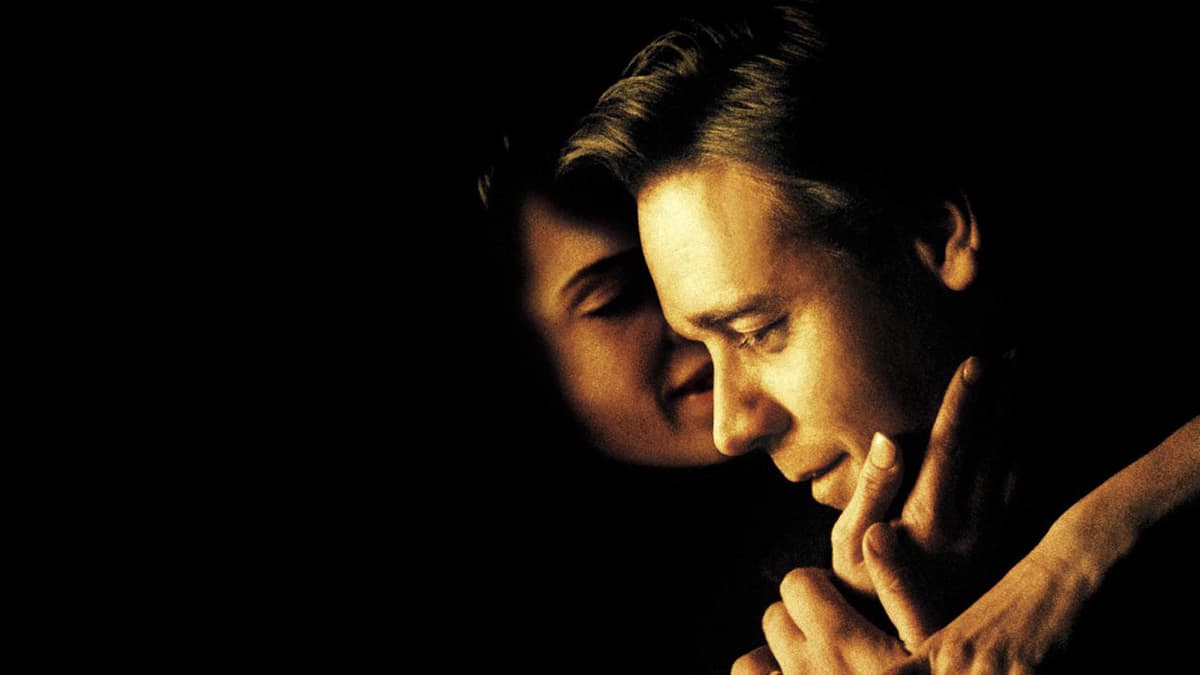

The Ides of March Budget
 Drama
DramaUpdated
Synopsis
The Ides of March takes place during the frantic last days before a heavily contested Ohio presidential primary, when an up-and-coming campaign press secretary finds himself involved in a political scandal that threatens to upend his candidate's shot at the presidency
What Is the Budget of The Ides of March?
The Ides of March was produced on a budget of $12.5 million, a lean figure for a star-studded political thriller released by Columbia Pictures in 2011. Director George Clooney, who also co-wrote and starred in the film, kept costs controlled by shooting on location in Cincinnati, Ohio, over a tight schedule and assembling a cast of top-tier character actors alongside the film's leads. The modest budget reflected the confidence Clooney and producing partners Grant Heslov and Brian Oliver had in the material, adapted from Beau Willimon's acclaimed play "Farragut North."
Columbia Pictures distributed the film domestically, with Lakeshore Entertainment and Mandate Pictures co-financing. At $12.5 million, the picture was positioned as a prestige drama rather than a commercial tentpole, a budget tier where strong reviews and awards traction can drive a profitable run. The film's final worldwide gross of $41.8 million represents more than three times its production cost, making it one of the stronger returns in Clooney's directing catalog.
Key Budget Allocation Categories
- Cast and Above-the-Line Talent: Ryan Gosling starred as campaign press secretary Stephen Meyers, supported by George Clooney (who took a reduced directing fee), Philip Seymour Hoffman and Paul Giamatti as rival campaign managers, Evan Rachel Wood, Marisa Tomei, Jeffrey Wright, and Max Minghella. The ensemble's combined above-the-line cost likely consumed $6 to $8 million of the budget, a high share for a $12.5 million film, made possible by multiple actors taking reduced fees for the material.
- Cincinnati Location Production: Filming took place almost entirely in Cincinnati, Ohio, which doubled for an unnamed Midwestern state during a Democratic presidential primary. The production used Hamilton County Courthouse and Cincinnati City Hall as campaign offices, and shot extensively on the University of Cincinnati campus. Cincinnati's competitive production incentives and cooperative city government allowed the production to access civic landmarks that added authenticity at lower cost than purpose-built sets.
- Cinematography and Camera: Phedon Papamichael served as director of photography, bringing his experience from Sideways and Nebraska to give the film a cool, slightly desaturated palette that matched the film's moral atmosphere. The controlled visual language, mostly interior offices, hotel rooms, and campaign events, kept lighting and equipment costs lower than a film with extensive exterior action sequences.
- Music and Score: Alexandre Desplat composed the original score, contributing a restrained, piano-driven sound that underlined the film's theme of betrayal rather than heroism. Desplat's minimalist approach kept the music budget lean while still delivering the prestige-picture texture Columbia needed for awards positioning.
- Adaptation and Script Development: Beau Willimon's play "Farragut North" had already proven itself in a successful 2008 Off-Broadway run at the Atlantic Theater Company, with Jake Gyllenhaal in the lead role. Clooney and Grant Heslov adapted the screenplay from that foundation, meaning the script arrived at production in a relatively polished state, reducing the development overhead that inflates budgets on original screenplays.
How Does The Ides of March's Budget Compare to Similar Films?
The Ides of March sits in the tradition of lean, dialogue-driven political thrillers that rely on writing and performance over production spectacle. Its $12.5 million budget is consistent with prestige dramas of its era that prioritized ensemble casting and awards positioning over blockbuster scale.
- Michael Clayton (2007): Budget $25M | Worldwide $93.8M | Tony Gilroy's political-corporate thriller with George Clooney in the lead set the benchmark for the genre at this tier. Michael Clayton's double-the-budget approach relative to Ides reflects its more expansive New York locations and longer production schedule, but both films share the same core audience of adult drama viewers responding to morally complex scripts.
- The Descendants (2011): Budget $20M | Worldwide $172.5M | Alexander Payne's ensemble drama with George Clooney, released the same year as Ides, demonstrated that star-driven adult dramas could significantly outperform their budgets when awards momentum aligned. The Descendants won the Academy Award for Best Adapted Screenplay. Both films targeted the same awards-season audience.
- Lincoln (2012): Budget $65M | Worldwide $275.3M | Steven Spielberg's political drama illustrates the upper end of what prestige political films cost when period production, large ensemble casts, and extended schedules are involved. Ides achieved similar critical standing at roughly one-fifth the cost by stripping the political story to its most intimate dramatic elements.
- Frost/Nixon (2008): Budget $25M | Worldwide $27.2M | Ron Howard's adaptation of Peter Morgan's play about the Nixon interviews is the closest structural parallel to Ides: a stage-to-screen adaptation of a politically charged two-character drama released by a major studio. Frost/Nixon's tepid box office return at twice the budget underscored the difficulty of the genre and made Ides's $41.8M worldwide result look comparatively strong.
The Ides of March Box Office Performance
Columbia Pictures gave The Ides of March a wide theatrical release on October 7, 2011, following its world premiere as the closing film of the Venice Film Festival in September. The film opened to $10.5 million domestically in its first weekend, a solid result for a political drama with no action elements, and went on to earn $21,608,565 in the United States and Canada. International markets, led by France, Germany, the United Kingdom, and Australia, contributed an additional $20.2 million, bringing the worldwide total to $41,832,679.
Against a production budget of $12.5 million and an estimated theatrical P&A spend of $12 million, the total investment was approximately $24.5 million. Theaters retain roughly 50 percent of box office gross, so Columbia's share of the worldwide gross was approximately $20.9 million. The film did not recoup its full investment through theatrical alone, but home video, television licensing, and streaming rights made the picture profitable in its ancillary windows. On a $12.5 million production budget alone, the worldwide gross of $41.8 million represents a strong return.
Box Office Breakdown
The Ides of March (2011)

The film earned roughly $3.35 for every $1 invested in production, a figure that looks more modest when P&A is included but underscores that the picture was made efficiently enough to give Columbia a workable foundation for overall profitability once all revenue windows are considered.
The Ides of March Production History
Beau Willimon's play "Farragut North" drew directly from his experience as a 23-year-old volunteer working on Howard Dean's 2004 presidential primary campaign. Willimon served in the campaign's Iowa operation and witnessed firsthand the machinery of political ambition, loyalty, and betrayal at the staff level. The play premiered Off-Broadway at the Atlantic Theater Company in 2008 in a production that garnered strong notices for its lean, pressure-cooker structure. The title "Farragut North" refers to a Washington, D.C. Metro station, a placeholder name representing the campaign's anonymous Washington insider world.
George Clooney optioned the play and developed the screenplay with longtime producing partner Grant Heslov and Willimon himself. Clooney was drawn to the material's central question: what does a deeply idealistic person do when they discover their mentor has compromised their shared values? The film's protagonist, Stephen Meyers, played by Ryan Gosling, is not a villain but someone who chooses pragmatism over principle at the moment of crisis. Clooney and Heslov restructured the play significantly for screen, expanding secondary characters and shifting the final act to give the film a more open-ended moral conclusion than the stage version offered.
Principal photography took place in Cincinnati, Ohio, from February to April 2011. The production used Cincinnati specifically for its civic architecture: Hamilton County Courthouse and Cincinnati City Hall served as campaign headquarters and press rooms, the Westin Cincinnati as the primary hotel set, and the University of Cincinnati campus for exterior campaign scenes. Ohio's film tax incentive program and the cooperation of city officials made Cincinnati the right practical and economic choice for a film set during an Ohio Democratic presidential primary.
The film had its world premiere at the Venice Film Festival on September 1, 2011, as the closing night film of the official selection, a prestigious slot that launched the film's awards campaign. The Venice premiere was followed by screenings at the Telluride Film Festival and the Toronto International Film Festival later that month. Columbia opened the picture wide in North America on October 7, giving it a direct run at the fall awards season. The title "The Ides of March" references the date in Shakespeare's "Julius Caesar" on which Brutus and the conspirators assassinate Caesar, a deliberate invocation of the film's theme of betrayal by trusted lieutenants.
Awards and Recognition
Ryan Gosling received a Golden Globe nomination for Best Actor in a Drama Series for his performance as Stephen Meyers, one of the film's major awards season recognitions. The film was George Clooney's official selection to the Venice Film Festival as a closing night entry, a mark of the artistic standing the picture achieved even before its North American release.
The film received Screen Actors Guild Award nominations and was shortlisted for multiple critics' circle honors during the 2011 awards season. Philip Seymour Hoffman and Paul Giamatti, whose pairing as rival campaign managers drew sustained critical praise, were frequently cited in ensemble performance awards contexts. The American Film Institute named The Ides of March one of the ten best films of 2011.
Alexandre Desplat's score and Phedon Papamichael's cinematography both received attention from regional critics' associations, and the adapted screenplay by Clooney, Heslov, and Willimon was recognized by several guilds for its structural precision. The Writers Guild of America nominated the script for Best Adapted Screenplay.
Critical Reception
The Ides of March holds an 84% approval rating on Rotten Tomatoes and a score of 70 out of 100 on Metacritic, reflecting broad critical appreciation for its ensemble performances and sharp screenplay alongside some reservations about the film's moral pessimism. A. O. Scott of The New York Times called it "taut, intelligent, and morally serious," praising Gosling's performance as "coolly brilliant." The Guardian's Peter Bradshaw awarded it four stars, writing that Clooney had delivered "a film of genuine intelligence about political idealism and its betrayal."
Roger Ebert gave the film three and a half stars and praised it as a film that "takes politics seriously" without reducing its characters to simple heroes or villains. Empire Magazine called it "smart, well-crafted, and superbly acted," while Variety noted that Clooney had made "a tightly wound political thriller that plays as contemporary as today's headlines." The consensus among major reviewers was that the film's strength lay in its screenplay and its ensemble, particularly the dynamic between Gosling, Hoffman, and Giamatti.
Some critics found the film's conclusion too abrupt and its vision of American politics too bleak without sufficient dramatic payoff. Those reservations notwithstanding, the film is consistently cited as one of the stronger political dramas of the 2010s, a lean, efficiently made chamber piece that uses campaign politics as a mirror for questions about ambition, loyalty, and the cost of pragmatism.
Frequently Asked Questions
How much did The Ides of March cost to make?
The production budget was $12,500,000. Sony Pictures Releasing distributed the political drama, with Cross Creek Pictures and Smokehouse Pictures, the George Clooney and Grant Heslov production company, co-financing.
How much did The Ides of March earn at the box office?
The film grossed $40,962,534 domestically and $35,200,000 internationally, for a worldwide total of approximately $76,200,000. It opened to $10,470,000 on October 7, 2011, finishing second behind Real Steel.
Who directed The Ides of March?
George Clooney directed the film, his fourth feature as director after Confessions of a Dangerous Mind (2002), Good Night, and Good Luck (2005), and Leatherheads (2008). Clooney also co-wrote the screenplay with Grant Heslov and Beau Willimon, based on Willimon's play Farragut North.
Who stars in The Ides of March?
Ryan Gosling plays campaign press secretary Stephen Meyers, with George Clooney as presidential candidate Governor Mike Morris. The ensemble includes Philip Seymour Hoffman, Paul Giamatti, Marisa Tomei, Evan Rachel Wood, Jeffrey Wright, and Max Minghella.
Is The Ides of March based on a true story?
No, but the source play by Beau Willimon drew significantly on Willimon's experience working on the 2004 Howard Dean presidential primary campaign in Iowa. Willimon later created Netflix's House of Cards, drawing on similar political-thriller terrain.
Where was The Ides of March filmed?
Principal photography took place in Cincinnati, Ohio, taking advantage of the state's Ohio Motion Picture Tax Credit. Cincinnati doubled for various Ohio campaign-trail locations, with additional Michigan and Detroit-area sequences shot for the climactic Detroit primary scenes.
Did The Ides of March receive any Oscar nominations?
Yes. The film received one Academy Award nomination at the 84th Academy Awards, for Best Adapted Screenplay for George Clooney, Grant Heslov, and Beau Willimon. The nomination lost to The Descendants, which Clooney starred in that same year.
What did critics think of The Ides of March?
The film received positive reviews, with an 84% approval rating on Rotten Tomatoes and a 67 out of 100 score on Metacritic. Critics praised the ensemble cast and the screenplay's structural patience, while some objected to a cynical resolution that they viewed as overdetermined.
Was The Ides of March profitable?
Yes. Against the $12,500,000 production budget and an estimated $25,000,000 to $30,000,000 in marketing spend, the worldwide gross of $76,200,000 produced a modest but clear theatrical profit. Strong home video, Netflix licensing, and cable revenue extended the financial return.
How does The Ides of March compare to other George Clooney directed films?
The Ides of March's $76,200,000 worldwide gross outperformed Good Night, and Good Luck (2005, $54,600,000 worldwide on a $7,500,000 budget) and Leatherheads (2008, $41,400,000 worldwide on a $58,000,000 budget). It was later eclipsed by The Monuments Men (2014, $156,800,000 worldwide on a $70,000,000 budget) and Suburbicon (2017, $13,300,000 worldwide).
Filmmakers
The Ides of March (2011)

Build budgets like this one in Saturation
Start from an industry-standard feature film template, import the schedule and rates you already have, and let the cost report keep itself current as you spend. Real-time collaboration, no spreadsheets.