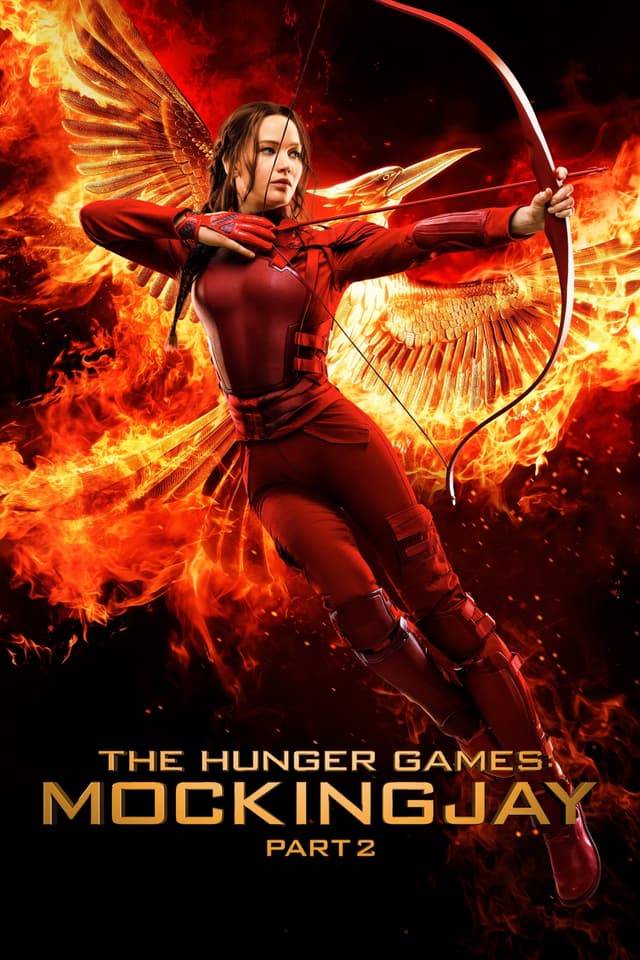
The Hunger Games: Mockingjay - Part 2 Budget
 ActionAdventureScience Fiction2h 17m
Updated
Synopsis
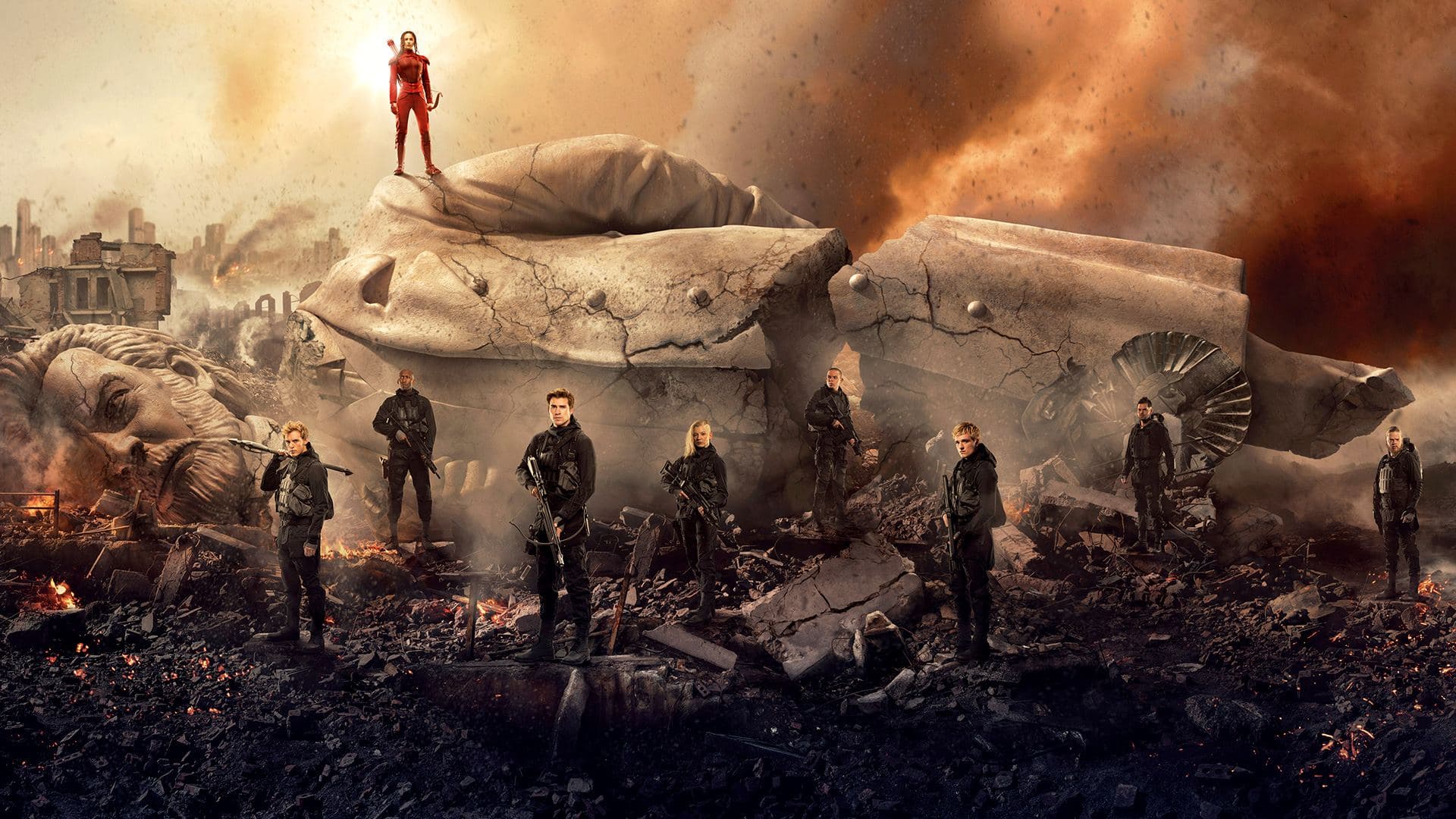
With the nation of Panem in a full scale war, Katniss confronts President Snow in the final showdown. Teamed with a group of her closest friends, including Gale, Finnick, and Peeta, Katniss goes off on a mission with the unit from District 13 as they risk their lives to liberate the citizens of Panem and assassinate President Snow.
What Is the Budget of The Hunger Games: Mockingjay - Part 2 (2015)?
The Hunger Games: Mockingjay - Part 2 (2015), directed by Francis Lawrence and distributed by Lionsgate, was produced on a reported budget of $160,000,000. The film served as the fourth and final installment in The Hunger Games film franchise, adapting the second half of Suzanne Collins' concluding novel and bringing Katniss Everdeen's story to a close. Lionsgate financed the production through its Color Force banner, with Nina Jacobson and Jon Kilik producing the back-to-back shoot that also yielded Mockingjay - Part 1.
The $160,000,000 figure reflected the studio's confidence in the franchise after three consecutive billion-dollar-tier global performers. Costs scaled up from earlier installments to accommodate larger urban combat set pieces in the Capitol, an international location footprint that included Atlanta, Berlin, and Paris, and additional photography after the February 2014 death of Philip Seymour Hoffman forced narrative rewrites and scene restructuring. The combined budget across both Mockingjay films is widely reported at approximately $250,000,000, with each entry attributed roughly half.
Key Budget Allocation Categories
The reported $160,000,000 budget was distributed across several major production areas:
- Above-the-Line Talent: Jennifer Lawrence reportedly earned $10,000,000 plus backend participation for the role of Katniss Everdeen, having renegotiated upward after her post-Silver Linings Playbook Oscar win. Josh Hutcherson and Liam Hemsworth also commanded raises against their original franchise contracts, and the ensemble featured Donald Sutherland, Julianne Moore, Woody Harrelson, Elizabeth Banks, Jeffrey Wright, Stanley Tucci, and the late Philip Seymour Hoffman in his final completed screen role. Director Francis Lawrence was paid on a two-film basis.
- Capitol Combat Sequences: The third act required the construction of a multi-block Capitol streetscape with practical traps, mutated creature pods, sewer interiors, and presidential mansion exteriors. The "Black Wave" oil trap and the Holo-mapped urban warfare sequences drove the largest single line items in physical production, requiring significant practical effects work and stunt coordination across hundreds of crew members.
- Visual Effects: Multiple vendor houses, led by Double Negative, contributed digital effects for the Capitol set extensions, mutt creature work in the sewer sequence, Peeta's hijacked-state hallucinations, and Coin's parachute device. The CG augmentation of Tempelhof Airport for District 2 combat and the destruction of Capitol architecture pushed the visual effects budget into franchise-record territory.
- International Location Photography: The production maintained its Atlanta base through Pinewood Studios Atlanta, then relocated for blocks in Berlin (Tempelhof Airport) and Paris (Les Espaces d'Abraxas in Noisy-le-Grand). International travel, lodging, local crew rates, and location permits added meaningful cost over a pure Georgia shoot, though Georgia's 20 percent base tax credit absorbed a significant portion of overall qualified spend.
- Score and Music: James Newton Howard returned to score his fourth and final Hunger Games entry, conducting an extended orchestral session that incorporated motifs from all three previous films. The soundtrack also commissioned an original Jennifer Lawrence vocal performance of "The Hanging Tree" reprise and licensed needle drops for the end-credits Lorde-curated companion album.
- Reshoots and Hoffman Restructuring: Philip Seymour Hoffman died on February 2, 2014, with approximately seven days of Plutarch Heavensbee material still unshot for Mockingjay - Part 2. Director Francis Lawrence rejected digital recreation and rewrote the remaining Plutarch beats, reassigning the climactic letter scene to Haymitch (Woody Harrelson) and restructuring the District 13 sequences. The rewrites required additional unit photography and editorial reconstruction in mid-2014 and 2015.
- Marketing and Distribution: Lionsgate mounted its largest marketing campaign in studio history for the franchise finale, with promotional partnerships, two trailers, multi-territory press tours by the principal cast, and a "For Prim" closing-chapter creative push that played heavily on emotional payoff for established fans.
How Does The Hunger Games: Mockingjay - Part 2's Budget Compare to Similar Films?
At $160,000,000, Mockingjay - Part 2 sits in the upper tier of young-adult adaptation budgets and represents the largest single-film spend of any Hunger Games installment. The comparison set illustrates how franchise finales scale relative to their openers and to the wider YA-adaptation field:
- The Hunger Games (2012): Budget $78,000,000 | Worldwide $694,394,724. The series opener cost less than half what the finale spent and out-grossed it by $30,000,000 worldwide, underscoring that the franchise peaked commercially with its first entry and never exceeded that ceiling.
- The Hunger Games: Catching Fire (2013): Budget $130,000,000 | Worldwide $865,011,746. The second installment is the highest-grossing entry in the series and delivered the strongest return on investment, with critics widely praising it as the franchise's creative peak.
- The Hunger Games: Mockingjay - Part 1 (2014): Budget $125,000,000 | Worldwide $755,356,711. The first half of the Mockingjay split cost less than Part 2 and earned roughly $100,000,000 more, reflecting the diminishing-returns problem that affects most YA two-part finales.
- Harry Potter and the Deathly Hallows - Part II (2011): Budget $250,000,000 | Worldwide $1,342,025,430. The Warner Bros. wizarding finale spent $90,000,000 more than Mockingjay - Part 2 and more than doubled it at the worldwide box office, demonstrating the upside ceiling for a culture-defining YA conclusion when audiences turn out at every release.
- The Twilight Saga: Breaking Dawn - Part 2 (2012): Budget $120,000,000 | Worldwide $829,746,820. Summit's vampire-saga finale cost $40,000,000 less than Mockingjay - Part 2 and out-grossed it worldwide by roughly $170,000,000, the clearest contemporaneous example of a YA finale that exceeded its predecessor.
- The Divergent Series: Allegiant (2016): Budget $110,000,000 | Worldwide $179,246,868. Lionsgate's own subsequent YA dystopian release illustrates the downside scenario, with Allegiant earning roughly a quarter of Mockingjay - Part 2 against a comparable scale and effectively ending the Divergent theatrical run.
The Hunger Games: Mockingjay - Part 2 Box Office Performance
The Hunger Games: Mockingjay - Part 2 opened on November 20, 2015, winning the domestic weekend with $102,665,981, the largest opening of any Hunger Games film outside of Catching Fire. The result fell roughly 16 percent below the $121,900,000 Mockingjay - Part 1 opening from the prior November and well below pre-release tracking that had projected a $120,000,000 to $130,000,000 debut. Industry analysts attributed the softness to a combination of franchise fatigue, the November 13 Paris attacks the prior weekend dampening multiplex traffic, and the looming December 18 release of Star Wars: The Force Awakens drawing event-film attention forward.
Against a reported production budget of $160,000,000, the film needed approximately $320,000,000 to $360,000,000 in worldwide gross to reach profitability when accounting for marketing and distribution costs. Here is the financial breakdown:
Box Office Breakdown
The Hunger Games: Mockingjay - Part 2

Mockingjay - Part 2 returned approximately $2.29 in theatrical revenue for every $1 invested when measured against total estimated production and marketing spend, a result that would qualify any standalone film as a clear hit but that landed as a disappointment in the context of franchise expectations. The domestic share of the gross was $281,723,902 against an international share of $383,180,949, a 42/58 split that was meaningfully more international-weighted than the franchise's previous entries.
The shortfall against tracking and against Mockingjay - Part 1 effectively closed the door on a Lionsgate-driven dystopian-YA cycle. Lionsgate executives publicly acknowledged the result missed internal targets, and the studio shifted its tentpole strategy toward the John Wick franchise and other action-adult plays. A Hunger Games prequel, The Ballad of Songbirds & Snakes, did not arrive until 2023 with a much-reduced budget and different commercial premise.
The Hunger Games: Mockingjay - Part 2 Production History
Lionsgate announced in July 2012 that the final novel in Suzanne Collins' Mockingjay would be split into two films, mirroring the model Warner Bros. had used for Harry Potter and the Deathly Hallows and Summit had used for Twilight: Breaking Dawn. Francis Lawrence, who had directed Catching Fire to franchise-record grosses, returned to direct both halves of the split, with screenwriters Peter Craig and Danny Strong adapting the novel and Suzanne Collins co-writing. Principal photography on the back-to-back production began September 23, 2013 at Pinewood Studios Atlanta in Georgia, taking advantage of the state's 20 percent base transferable tax credit plus 10 percent uplift for the Georgia Entertainment Promotion logo.
The Atlanta-anchored shoot ran for nine months and stopped briefly in late 2013 between the two films before resuming in early 2014. The production then relocated to Berlin, Germany for District 2 combat photography at the former Tempelhof Airport, a vast decommissioned terminal whose runways and hangars stood in for the Capitol's outlying military district. The unit subsequently moved to Paris, France for a multi-day block at Les Espaces d'Abraxas, the Ricardo Bofill-designed brutalist housing complex in Noisy-le-Grand that doubled as the Capitol's elite residential blocks. Additional photography took place in Los Angeles and Boston.
Philip Seymour Hoffman, who played Plutarch Heavensbee across the franchise, was found dead in his Manhattan apartment on February 2, 2014 with approximately seven days of his Mockingjay - Part 2 material still unshot. Director Francis Lawrence and Lionsgate publicly committed to honoring the performance Hoffman had already delivered rather than recreating him digitally for the unshot scenes. Lawrence and the writers restructured the District 13 sequences and reassigned the climactic letter scene, originally written for Plutarch, to Woody Harrelson's Haymitch Abernathy. The reshuffle required additional principal photography weeks and incremental editorial work.
Principal photography wrapped June 20, 2014, after which the production entered an extended post-production period to accommodate the visual effects load and the Hoffman-driven restructuring. James Newton Howard composed the score across both Mockingjay films in tandem. Lionsgate locked the release for November 20, 2015, holding the date through the volatile autumn 2015 box office and the November 13 Paris attacks that occurred one week before the film's opening at Les Espaces d'Abraxas, the same complex where production had previously shot.
Awards and Recognition
The Hunger Games: Mockingjay - Part 2 received modest awards recognition relative to its scale, consistent with the franchise's broader pattern of below-the-line and genre acknowledgment rather than top-tier industry prizes. The film was nominated for Best Fantasy Film at the 42nd Saturn Awards, where it lost to Star Wars: The Force Awakens. Jennifer Lawrence received a Critics' Choice Award nomination for Best Actress in an Action Movie.
At the 21st Empire Awards, the film earned three nominations, for Best Sci-Fi/Fantasy, Best Actress (Lawrence), and Best Production Design (Philip Messina). The film was also recognized at the People's Choice Awards 2016, where it won Favorite Movie and Favorite Action Movie, with Jennifer Lawrence taking Favorite Action Movie Actress. The franchise as a whole won nine People's Choice Awards across thirteen nominations over its theatrical run.
Mockingjay - Part 2 was passed over at the Academy Awards, the BAFTAs, and the Golden Globes, in line with the awards trajectory of every previous Hunger Games entry. The film's lasting industry recognition centers on Philip Seymour Hoffman's posthumous performance, which several critics singled out in year-end retrospectives as a graceful and complete final screen appearance for the late Oscar winner.
Critical Reception
The Hunger Games: Mockingjay - Part 2 received generally positive reviews. The film holds a 70 percent approval rating on Rotten Tomatoes based on 309 critic reviews, with a critical consensus that praised the conclusion as emotionally satisfying while acknowledging the structural costs of splitting one novel into two films. On Metacritic, the film scored 65 out of 100, indicating generally favorable reviews. Audiences surveyed by CinemaScore gave the film an A minus, consistent with the grades earned by the three previous franchise entries and a strong audience-satisfaction signal for a YA finale.
Critics broadly praised Jennifer Lawrence's performance, Donald Sutherland's closing turn as President Snow, and the action staging in the Capitol third act. Variety's Andrew Barker wrote that the film "ends the saga on a note of authentic emotional resonance," and The Hollywood Reporter's Todd McCarthy called it "the most propulsive and dramatically satisfying chapter since Catching Fire." A.O. Scott of The New York Times argued that the franchise had remained "one of the smartest and most thoughtful mass-entertainment series of its era."
Detractors objected primarily to the structural problem of splitting Mockingjay across two films. Time's Stephanie Zacharek noted that the resulting "narrative drag" in the early Capitol approach sequences would not have existed in a single-film cut, and Slate's Dana Stevens called the two-film split "a commercial calculation that the source novel does not support." Philip Seymour Hoffman's posthumous appearance drew particular critical attention, with multiple reviewers singling out his District 13 scenes as quietly affecting and the film's reassignment of the climactic letter scene to Woody Harrelson's Haymitch as a graceful editorial choice.
Frequently Asked Questions
How much did it cost to make The Hunger Games: Mockingjay - Part 2 (2015)?
The reported production budget was $160,000,000, making it the most expensive single installment in The Hunger Games film franchise. Lionsgate financed the production through its Color Force banner, with the combined back-to-back Mockingjay shoot reported at approximately $250,000,000 across both halves.
How much did Mockingjay - Part 2 earn at the box office?
The film grossed $281,723,902 domestically and $383,180,949 internationally, for a worldwide total of $664,905,155. It opened to $102,665,981 in the United States, winning the November 20, 2015 weekend but falling 16 percent below the Mockingjay - Part 1 opening of the prior year.
Was Mockingjay - Part 2 profitable?
Yes, but it disappointed against franchise expectations. Against a $160,000,000 production budget and an estimated $100,000,000 to $130,000,000 in marketing spend, the film returned approximately $2.29 in worldwide gross for every $1 invested, generating an estimated $375,000,000 profit. Lionsgate executives publicly acknowledged the result missed internal targets despite the headline profit.
Who directed Mockingjay - Part 2?
Francis Lawrence directed Mockingjay - Part 2, returning to the franchise after helming Catching Fire and Mockingjay - Part 1. He worked from a screenplay by Peter Craig and Danny Strong, with Suzanne Collins co-writing the adaptation of her own novel.
Where was Mockingjay - Part 2 filmed?
Principal photography ran from September 23, 2013 to June 20, 2014, shot back-to-back with Mockingjay - Part 1. Locations included Pinewood Studios Atlanta in Georgia, Tempelhof Airport in Berlin, Germany, and Les Espaces d'Abraxas in Noisy-le-Grand near Paris, France. Additional photography took place in Los Angeles and Boston.
How does Mockingjay - Part 2 compare to other Hunger Games films?
Mockingjay - Part 2 had the highest budget in the franchise at $160,000,000 but earned the lowest worldwide gross of the four films at $664,905,155. The Hunger Games (2012) earned $694,394,724 against a $78,000,000 budget, Catching Fire (2013) topped the series with $865,011,746 against $130,000,000, and Mockingjay - Part 1 (2014) earned $755,356,711 against $125,000,000.
What happened with Philip Seymour Hoffman during production?
Philip Seymour Hoffman, who played Plutarch Heavensbee, died on February 2, 2014 with approximately seven days of his Mockingjay - Part 2 material still unshot. Director Francis Lawrence rejected digital recreation and rewrote the remaining Plutarch beats, reassigning the climactic letter scene to Woody Harrelson's Haymitch Abernathy. Mockingjay - Part 2 marks Hoffman's final completed screen role.
Why did Mockingjay - Part 2 open below expectations?
Industry analysts attributed the soft $102,665,981 opening to a combination of franchise fatigue from the two-film Mockingjay split, the November 13 Paris attacks the prior weekend dampening multiplex traffic, and the looming December 18 release of Star Wars: The Force Awakens drawing event-film attention forward. Pre-release tracking had projected a $120,000,000 to $130,000,000 debut.
What did critics think of Mockingjay - Part 2?
The film received generally positive reviews, with a 70 percent approval rating on Rotten Tomatoes based on 309 critics and a Metacritic score of 65 out of 100. Audiences gave it an A minus CinemaScore. Critics praised Jennifer Lawrence, Donald Sutherland, and the Capitol third-act action, while objecting to the narrative drag created by splitting one novel into two films.
Did Mockingjay - Part 2 win any awards?
The film received modest awards recognition. It was nominated for Best Fantasy Film at the 42nd Saturn Awards (losing to Star Wars: The Force Awakens) and earned three Empire Award nominations. At the People's Choice Awards 2016, it won Favorite Movie, Favorite Action Movie, and Jennifer Lawrence took Favorite Action Movie Actress. The film was passed over at the Oscars, BAFTAs, and Golden Globes.
Filmmakers
The Hunger Games: Mockingjay - Part 2

Official Trailer
Build budgets like this one in Saturation
Start from an industry-standard feature film template, import the schedule and rates you already have, and let the cost report keep itself current as you spend. Real-time collaboration, no spreadsheets.