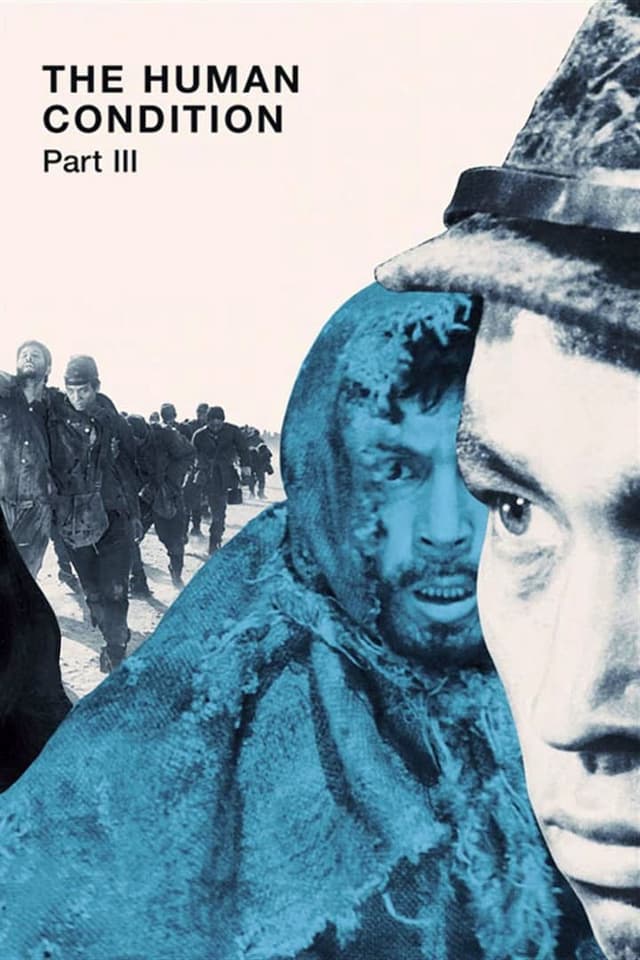
The Human Condition III: A Soldier's Prayer Budget
Updated
Synopsis
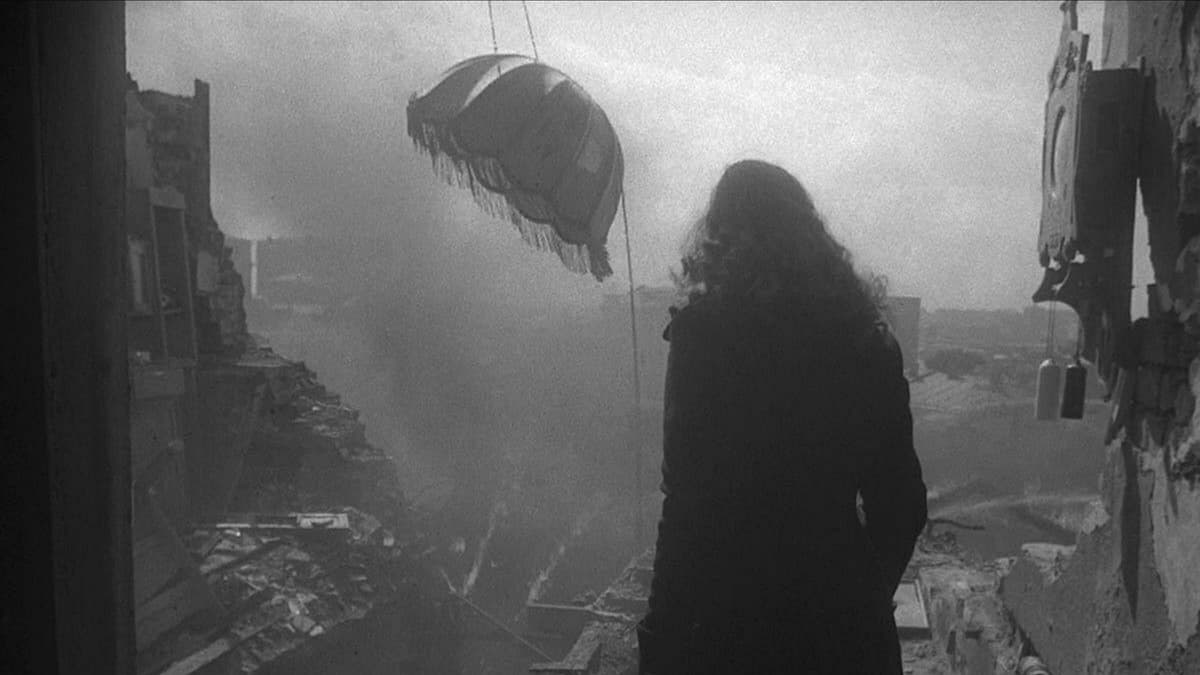
After the Japanese defeat in Manchuria in August 1945, Kaji leads his last remaining men through the Soviet-occupied territory, intent on returning home to his wife Michiko. As he and his small group encounter Soviet forces, displaced civilians, and other retreating Japanese soldiers, Kaji is captured and held in a brutal Soviet POW camp. The final installment of Masaki Kobayashi's nine-and-a-half-hour epic completes Kaji's journey toward the bare possibility of preserving his humanity against an inhuman world.
What Is the Budget of The Human Condition III: A Soldier's Prayer (1961)?
The Human Condition III: A Soldier's Prayer (1961), directed by Masaki Kobayashi and adapted from Junpei Gomikawa's 1958 six-volume novel Ningen no Joken, was produced on an estimated budget of approximately 150,000,000 to 200,000,000 Japanese yen (~$420,000 to $560,000 in 1961 U.S. dollars). The figure has not been formally disclosed by Shochiku or Ninjin Club, but the substantial Manchurian-set period production, the 190-minute runtime, and the scale of the post-war Soviet-detention sequences support a figure consistent with the broader Human Condition trilogy production scale, which Shochiku's Yagi Yasutaro budget records have suggested totaled approximately 500,000,000 yen across the three parts.
The film was financed and produced by Shochiku and Ninjin Club (Kobayashi and producer Shigeru Wakatsuki's production company). Kobayashi co-produced through Ninjin Club alongside Wakatsuki. Shochiku released the film theatrically in Japan on January 28, 1961, completing the three-part Human Condition cycle that began with No Greater Love (1959) and continued with Road to Eternity (1959).
Key Budget Allocation Categories
The estimated $420,000 to $560,000 budget covered the final installment of a three-part epic following Kaji's journey through Manchuria across the final years of WWII and the post-war Soviet-detention period:
- Above-the-Line Talent: Tatsuya Nakadai anchored as Kaji across all three installments at a then-emerging Shochiku contract-actor rate at the start of the trilogy that escalated to established-leading-actor rate by the third film. Michiyo Aratama, Tamao Nakamura, Yusuke Kawazu, Chishū Ryū, Taketoshi Naitō, Kyôko Kishida, and Reiko Hitomi filled out the supporting ensemble at Shochiku contract-supporting-actor rates.
- Director and Writer Package: Masaki Kobayashi directed and co-wrote the screenplay at a post-Human Condition I and II established-director rate. Kobayashi also produced through Ninjin Club, integrating director and producer compensation. Co-writers Koichi Inagaki and Zenzō Matsuyama contributed at Shochiku contract-writer rates.
- Source Material: Junpei Gomikawa's 1958 six-volume novel Ningen no Joken supported the substantial source-material rights deal across the three-installment adaptation. The novel had been a major contemporary best-seller in Japan, supporting Shochiku's commitment to the epic scale.
- Hokkaido and Studio Production: Principal photography took place primarily on Hokkaido for the Manchurian and Siberian exterior sequences, with additional studio work at Shochiku's Ōfuna studios. The Hokkaido shoot supported the substantial location footprint required for the post-war retreat, the Soviet POW camp sequences, and the final snow-bound death-march finale.
- Period Production Design: The film's 1945 Manchurian, Soviet POW camp, and surrounding-territory setting required substantial period-correct production design including Japanese Imperial Army uniforms, Soviet military uniforms, civilian wardrobe across multiple ethnic groups (Japanese, Chinese, Korean, Russian), and the camp-and-barracks set construction.
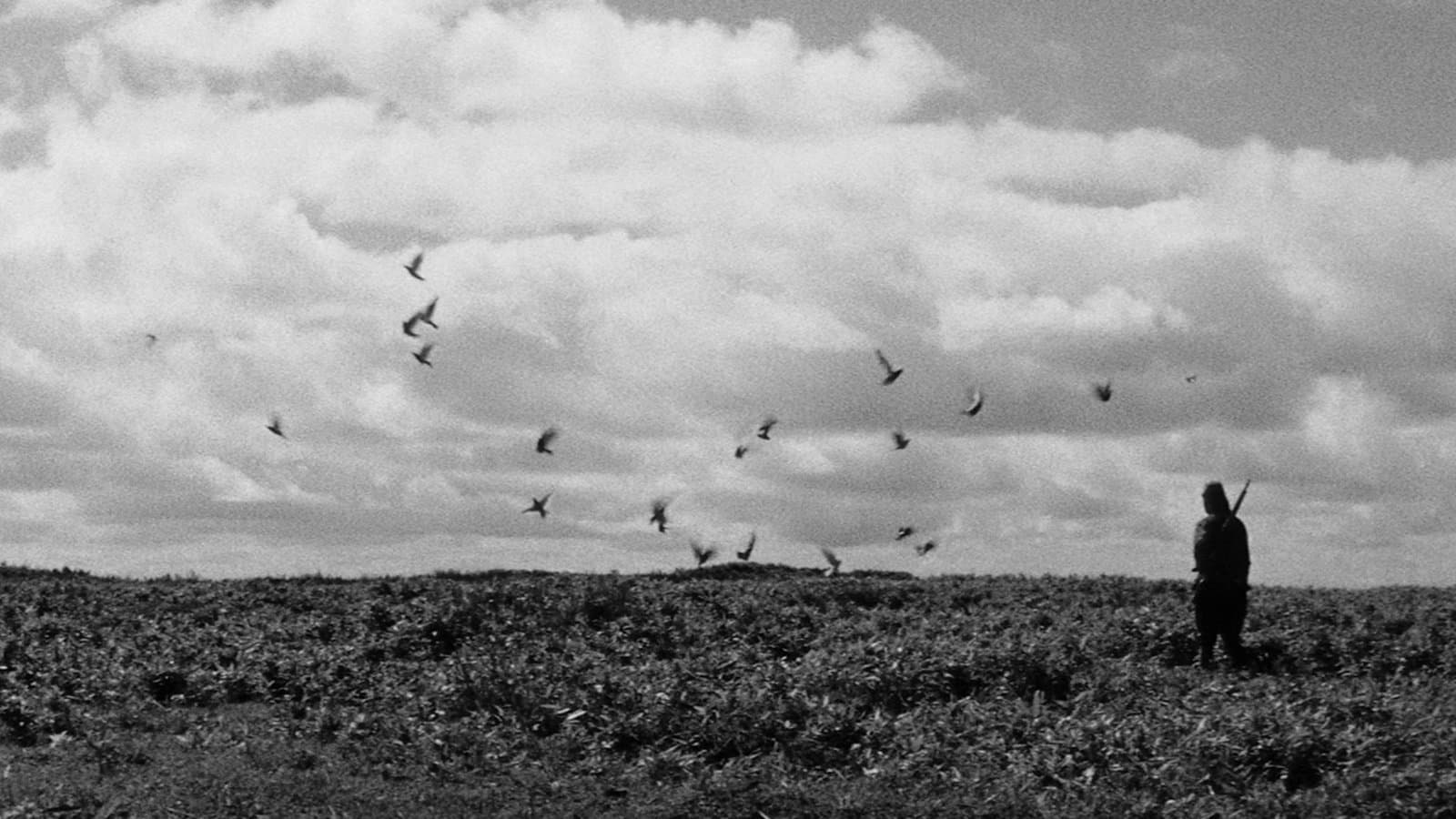
- Cinematography: Director of photography Yoshio Miyajima shot the film in widescreen ShochikuGrandScope black-and-white, with the rigorous compositional discipline that distinguished Kobayashi's mature work. The Hokkaido winter-exterior shooting required substantial cinematography line items.
- Score and Post: Composer Chūji Kinoshita scored the film, completing the trilogy's musical continuity. Editorial, sound mix, and Shochiku theatrical delivery completed the finishing pipeline ahead of the January 28, 1961 Japanese theatrical premiere.
How Does The Human Condition III: A Soldier's Prayer's Budget Compare to Similar Films?
The Human Condition III sits in the post-WWII Japanese epic-cinema landscape alongside comparable era peers:
- Seven Samurai (1954): Budget approximately 210,000,000 Japanese yen (~$580,000) | Worldwide Toho theatrical release. Akira Kurosawa's Toho samurai epic at modestly higher budget represents the closest Japanese epic-period peer.
- Throne of Blood (1957): Budget approximately 100,000,000 Japanese yen (~$280,000) | Worldwide Toho theatrical release. Kurosawa's Toho Macbeth adaptation at smaller budget represents another Japanese-prestige peer.
- Harakiri (1962): Budget approximately 150,000,000 Japanese yen (~$420,000) | Japanese theatrical release. Kobayashi's subsequent Shochiku samurai film at comparable budget represents the director's immediate post-Human-Condition peer.
- Lawrence of Arabia (1962): Budget approximately $15,000,000 | Worldwide $70,000,000. David Lean's Columbia Pictures epic at roughly 30 times the Human Condition III budget represents the contemporary English-language epic-cinema reference.
The Human Condition III: A Soldier's Prayer Box Office Performance
The Human Condition III: A Soldier's Prayer released theatrically in Japan on January 28, 1961 through Shochiku, completing the three-part cycle. The trilogy as a whole earned substantial Japanese theatrical revenue across the 1959 to 1961 release period and continued to draw substantial subsequent revenue through Shochiku's international art-house distribution, the Janus Films and Criterion Collection home-video releases, and academic-rental licensing.
Against the estimated $420,000 to $560,000 production budget for Part III specifically, the financial breakdown:
Box Office Breakdown
The Human Condition III: A Soldier's Prayer (1961)

The Human Condition III returned modest theatrical profit at its original release window. The trilogy's positioning in the post-war Japanese-cinema canon has supported substantial subsequent library-catalog value across more than six decades, including Criterion Collection home-video releases, Janus Films academic distribution, and continued repertory-cinema and university-screening exposure.
The Human Condition III: A Soldier's Prayer Production History
The Human Condition III: A Soldier's Prayer concluded a three-film cycle that Masaki Kobayashi began with The Human Condition I: No Greater Love (1959) and continued with The Human Condition II: Road to Eternity (1959). Kobayashi adapted the three films from Junpei Gomikawa's 1958 six-volume novel Ningen no Joken, a thinly fictionalized account of the author's own experiences as a Japanese conscript and Soviet POW in Manchuria during the final years of WWII and its immediate aftermath. Kobayashi himself had been a Japanese Army conscript in Manchuria, and the trilogy was a substantially autobiographical project for the director.
The third installment covered Kaji's journey across the post-war Manchurian retreat, capture by Soviet forces, the harsh Soviet POW-camp conditions, and his eventual death-march escape through the Manchurian winter snow. The film completed the trilogy's larger argument about the impossibility of preserving human dignity under the militarized social structures that produced the war.
Principal photography for the third installment took place primarily on Hokkaido during 1960. Tatsuya Nakadai returned as Kaji, joined by Michiyo Aratama as his wife Michiko (in dream and flashback sequences) and a supporting ensemble that included Tamao Nakamura, Yusuke Kawazu, Chishū Ryū, Taketoshi Naitō, Kyôko Kishida, and Reiko Hitomi. Shochiku released the film theatrically in Japan on January 28, 1961.
Awards and Recognition
The Human Condition III: A Soldier's Prayer received a Kinema Junpo Best Director award nomination for Masaki Kobayashi and recognition across the major Japanese critic-circle votes for 1961. The complete trilogy has subsequently been recognized as one of the central works of Japanese post-war cinema, with the Criterion Collection box-set release securing the trilogy's permanent place in the international film canon. Tatsuya Nakadai's lead performance across all three installments remains widely cited as one of the great sustained performances in cinema history.
Critical Reception
The Human Condition III: A Soldier's Prayer received broadly positive contemporary reviews. The film holds a 100% approval rating on Rotten Tomatoes based on a modest count of retrospective critic reviews aggregated across decades, with a critical consensus that praised Masaki Kobayashi's epic ambition, Tatsuya Nakadai's lead performance, and the trilogy's larger moral argument. Metacritic did not formally aggregate the film given its 1961 vintage. CinemaScore did not poll the film.
Subsequent retrospective criticism has positioned the trilogy as one of the most accomplished works of Japanese post-war cinema. Roger Ebert called the third installment "the most overwhelming of the three films, an unrelenting confrontation with the cost of war that earns every minute of its 190-minute runtime through Tatsuya Nakadai's performance and Masaki Kobayashi's compositional discipline." Jonathan Rosenbaum and the broader retrospective critical consensus have positioned the trilogy alongside Akira Kurosawa's Seven Samurai (1954) and Yasujirō Ozu's Tokyo Story (1953) as one of the three signature post-war Japanese epics. Common reservations from contemporary critics cited the trilogy's nine-and-a-half-hour combined runtime. The film closed a trilogy that has remained one of the central works of world cinema and supported Masaki Kobayashi's subsequent work on Harakiri (1962), Kwaidan (1964), and Samurai Rebellion (1967).
Frequently Asked Questions
How much did it cost to make The Human Condition III: A Soldier's Prayer (1961)?
The production budget for the third installment has not been formally disclosed but is estimated at approximately 150,000,000 to 200,000,000 Japanese yen (~$420,000 to $560,000 in 1961 U.S. dollars). The complete three-film trilogy is estimated to have cost approximately 500,000,000 yen total.
Is The Human Condition III based on a book?
Yes. All three Human Condition films adapt Junpei Gomikawa's 1958 six-volume novel Ningen no Joken, a thinly fictionalized account of the author's own experiences as a Japanese Army conscript and Soviet POW in Manchuria during WWII and its immediate aftermath. The novel was a major contemporary best-seller in Japan.
Who directed The Human Condition III?
Masaki Kobayashi directed all three Human Condition films. His subsequent work includes Harakiri (1962), Kwaidan (1964), and Samurai Rebellion (1967), all widely recognized as masterpieces of Japanese cinema.
Who stars in The Human Condition III?
Tatsuya Nakadai stars as Kaji, the central character across all three installments. The supporting ensemble for the third installment includes Michiyo Aratama as Michiko (in dream and flashback sequences), Tamao Nakamura, Yūsuke Kawazu, Chishū Ryū, Taketoshi Naitō, Kyôko Kishida, and Reiko Hitomi.
Where was The Human Condition III filmed?
Principal photography took place primarily on Hokkaido during 1960 for the Manchurian and Siberian exterior sequences, with additional studio work at Shochiku's Ōfuna studios. The Hokkaido shoot supported the post-war retreat, Soviet POW camp, and snow-bound death-march finale.
When did The Human Condition III release?
Shochiku released the film theatrically in Japan on January 28, 1961, completing the trilogy that began with The Human Condition I: No Greater Love (January 15, 1959) and continued with The Human Condition II: Road to Eternity (November 20, 1959).
How long is The Human Condition III?
The third installment runs 190 minutes (3 hours 10 minutes). The complete three-film trilogy runs approximately 9 hours 47 minutes, which has earned the Human Condition cycle a reputation as one of the longest mainstream-narrative cinematic works ever produced.
Did The Human Condition III win any awards?
The film received a Kinema Junpo Best Director nomination for Masaki Kobayashi and broad recognition across the major Japanese critic-circle votes for 1961. The complete trilogy has subsequently been included in the Criterion Collection and is widely cited in best-films-ever-made retrospective lists.
Is The Human Condition III the final film in the trilogy?
Yes. The Human Condition III: A Soldier's Prayer concludes the three-film cycle that began with The Human Condition I: No Greater Love (1959) and continued with The Human Condition II: Road to Eternity (1959). All three films are adapted from Junpei Gomikawa's six-volume novel.
What did critics think of The Human Condition III?
Reviews were broadly positive at original release and have grown more positive across decades of retrospective reassessment. Roger Ebert called the third installment the most overwhelming of the three films, and Jonathan Rosenbaum and the broader retrospective critical consensus have positioned the trilogy alongside Seven Samurai and Tokyo Story as one of the three signature post-war Japanese epics.
Filmmakers
The Human Condition III: A Soldier's Prayer (1961)

Official Trailer
Build budgets like this one in Saturation
Start from an industry-standard feature film template, import the schedule and rates you already have, and let the cost report keep itself current as you spend. Real-time collaboration, no spreadsheets.