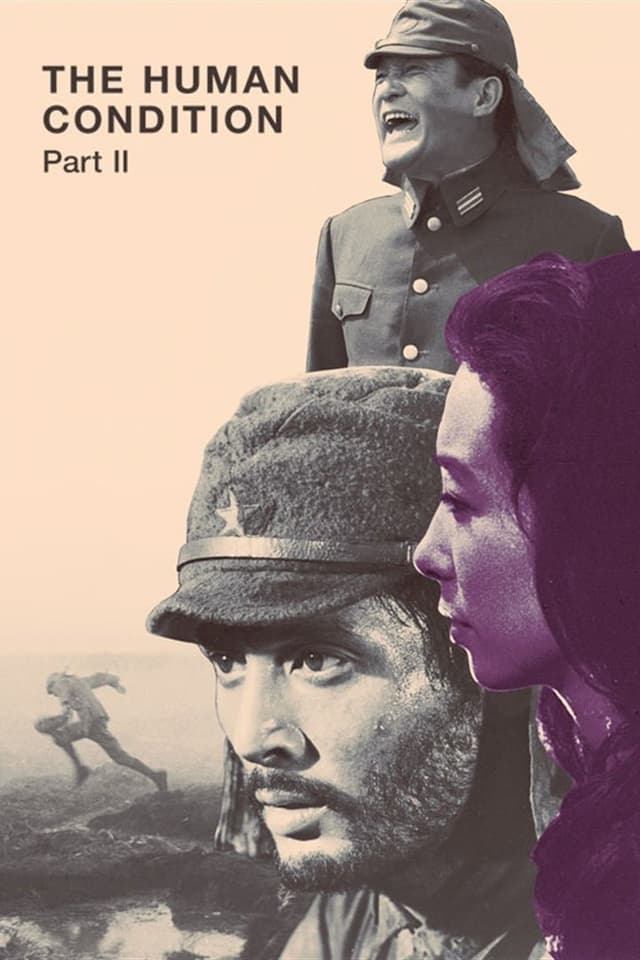
The Human Condition II Road to Eternity Budget
Updated
Synopsis
Drafted into the Imperial Japanese Army in 1944 Manchuria, the pacifist Kaji is subjected to the institutional brutality of basic training, where his commitment to humane treatment of his fellow soldiers and to the Korean comfort women near the base brings him into conflict with the officer corps. As the war turns against Japan and the Soviet Red Army prepares to cross the border, Kaji is sent to the front lines.
What Is the Budget of The Human Condition II: Road to Eternity (1959)?
Ningen no Joken II, known internationally as The Human Condition II: Road to Eternity (1959), was directed by Masaki Kobayashi and released by Shochiku and Ninjin Club in Japan on November 20, 1959. The film is the second installment of Kobayashi's nine-and-a-half-hour three-part epic adapting Junpei Gomikawa's six-volume 1956 to 1958 novel of the same name. Production budgets for late-1950s Japanese studio films of this scale are not publicly documented in modern terms, but contemporary trade reporting and Kobayashi's own published accounts (in interviews and the Criterion Collection's 2009 essay package) describe the combined three-part epic as one of the most expensive Japanese productions of its era, with Kobayashi clashing repeatedly with the Shochiku studio leadership over the project's ballooning scope.
The Human Condition trilogy as a whole had been financed by Shochiku as a flagship prestige production despite the studio's reluctance to back a nine-and-a-half-hour anti-war epic adapted from a still-controversial pacifist novel. Producer Shigeru Wakatsuki and Kobayashi's production company Ninjin Club had used the commercial success of the first installment (Ningen no Joken, released January 1959) to secure continued funding for Part II (November 1959) and Part III (January 1961). Each installment carried a substantial period production cost in late-1950s Japanese terms, with extensive Manchurian-landscape location shooting, full Imperial Japanese Army uniforms and weapons reproduction, and a vast extras cast for the basic-training and front-line set pieces.
Key Budget Allocation Categories
The production budget for The Human Condition II: Road to Eternity covered:
- Above-the-Line Talent: Tatsuya Nakadai, then in his early career and just starting to emerge as one of Japan's defining post-war screen presences, headlined as Kaji across all three installments. Michiyo Aratama returned as his wife Michiko. Director Masaki Kobayashi was compensated through Shochiku's standard prestige-production director arrangement, and screenwriter Zenzo Matsuyama (Kobayashi's frequent collaborator and brother-in-law) was paid at the upper end of late-1950s Japanese screenwriting rates.
- Manchurian Landscape Location Shooting: The film required extensive landscape shooting in northern Japan to stand in for Manchurian terrain, with cinematographer Yoshio Miyajima moving the production across cold-weather Hokkaido locations to capture the harsh visual conditions of the 1944 to 1945 Manchurian front. Location-services costs for a multi-week cold-weather shoot at this scale were exceptionally high in the late-1950s Japanese production context.
- Period Production Design: The 1944 to 1945 setting required full Imperial Japanese Army uniform reproduction, period weapons (rifles, sidearms, artillery, vehicles), and reproduction of front-line barracks, transit camps, and combat-zone infrastructure. Production designer Kazue Hirataka led the period reconstruction across multiple locations and built-set environments.
- Vast Extras Cast: The basic-training set pieces and the front-line combat sequences required hundreds of background extras playing soldiers, officers, and civilians. The production reportedly drew on local civilian extras throughout the Hokkaido location shoots, plus professional extras hired from Tokyo.
- Cinematography and Lighting: Yoshio Miyajima's 2.35:1 widescreen Tohoscope photography required additional lighting and camera capacity beyond standard Japanese productions of the era, with cold-weather equipment protection adding incremental cost to the camera and grip departments.
- Music and Score: Composer Chuji Kinoshita delivered an orchestral score that built on the first installment's musical identity, with new motifs covering the basic-training and front-line dimensions of Part II.
- Marketing and Distribution: Shochiku handled domestic theatrical distribution directly through its national exhibition network, with marketing emphasizing the continuation of the breakthrough first installment's critical reception. International festival programming followed in 1960 to 1962 through Shochiku's overseas distribution arm.
How Does The Human Condition II: Road to Eternity's Budget Compare to Similar Films?
The Human Condition trilogy operated at the upper end of late-1950s Japanese prestige production. The comparison set illustrates how the property's economics align with peer Japanese epic productions:
- The Human Condition I (1959): Production budget undisclosed; comparable scale. The first installment, released January 1959, generated the commercial and critical success that secured continued Shochiku funding for Parts II and III.
- The Human Condition III: A Soldier's Prayer (1961): Production budget undisclosed; comparable scale. The trilogy finale completed the nine-and-a-half-hour epic and confirmed the project as one of Japanese cinema's most ambitious post-war productions.
- Seven Samurai (1954): Production budget undisclosed; widely cited as the most expensive Japanese production of its era at the time of release. Akira Kurosawa's landmark for Toho operated at a similar prestige-production scale five years before The Human Condition's late-1950s production.
- Throne of Blood (1957): Production budget undisclosed. Kurosawa's Macbeth adaptation for Toho provides a contemporaneous reference for late-1950s Japanese prestige production.
- Harakiri (1962): Production budget undisclosed. Kobayashi's next major film for Shochiku, three years after The Human Condition concluded, demonstrates that the director continued to work at the upper end of Japanese studio production through the early 1960s.
The Human Condition II: Road to Eternity Box Office Performance
The Human Condition II: Road to Eternity opened on November 20, 1959 in Japan and was a strong commercial performer in the domestic Shochiku exhibition network, building on the success of the first installment's January 1959 release. Modern box-office records for late-1950s Japanese films are incomplete, but contemporary trade reporting and the Shochiku and Ninjin Club commitment to continued production of Part III (released January 1961) indicate that Part II's domestic theatrical performance was sufficient to secure the trilogy's completion. The film received subsequent international festival exposure starting in 1960 to 1962 through Shochiku's overseas distribution. Modern theatrical re-releases and the Criterion Collection 2009 home-video release have generated additional documented revenue:
Box Office Breakdown
The Human Condition II Road to Eternity

The Human Condition trilogy's commercial standing in the modern home-video era has been substantial. The Criterion Collection released the complete nine-and-a-half-hour trilogy on Blu-ray in 2009 as a five-disc set, and the package has remained in continuous catalog availability since. Janus Films has theatrically re-released the trilogy at art-house venues in major US cities periodically since the 1980s, most recently in 2019 for the 60th-anniversary cycle. The trilogy's status as a foundational work of Japanese cinema has sustained continuous commercial activity well beyond the original 1959 to 1961 theatrical releases.
Tatsuya Nakadai's career-defining lead performance across all three installments established him as one of Japan's most important post-war screen actors. His subsequent collaborations with Kobayashi (Harakiri, Samurai Rebellion) and with Akira Kurosawa (Yojimbo, Sanjuro, Kagemusha, Ran) extended directly from the visibility The Human Condition trilogy provided.
The Human Condition II: Road to Eternity Production History
Adapting Junpei Gomikawa's six-volume 1956 to 1958 novel Ningen no Joken had been a long-running ambition for Masaki Kobayashi, who had served in the Imperial Japanese Army during the war and shared the novel's pacifist convictions. Gomikawa's novel had been a publishing sensation in Japan, selling more than two million copies during its initial 1956 to 1958 serialization and prompting widespread cultural conversation about Japanese war guilt and institutional brutality. Shochiku and Kobayashi's Ninjin Club production company secured the adaptation rights in 1957 and began production on the first installment in 1958.
The decision to split the adaptation into three feature-length installments rather than condense it into a single film was driven by Kobayashi's creative commitment to fidelity. Each installment runs approximately three hours and roughly corresponds to two volumes of the source novel, with Part II (Road to Eternity) covering Kaji's conscription into the Imperial Japanese Army, his basic training, and the gradual approach of the Soviet invasion of Manchuria in August 1945. The three-part structure was also a commercial necessity given the late-1950s Japanese theatrical conventions, which did not accommodate single-screening lengths beyond roughly three and a half hours.
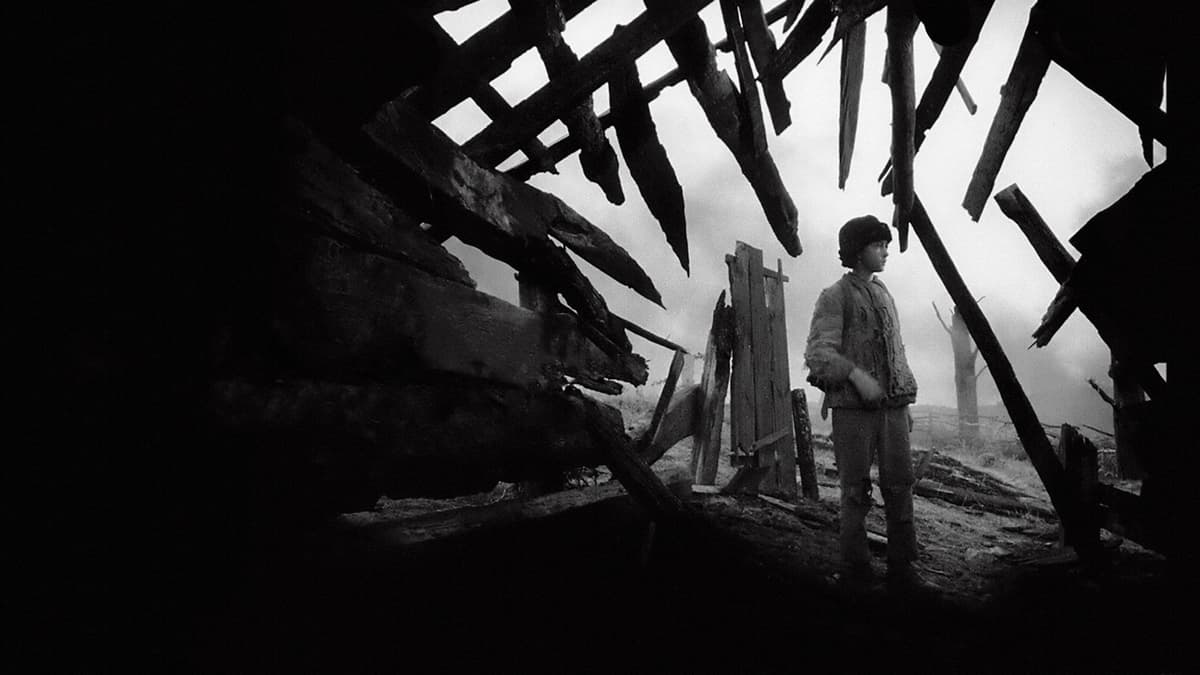
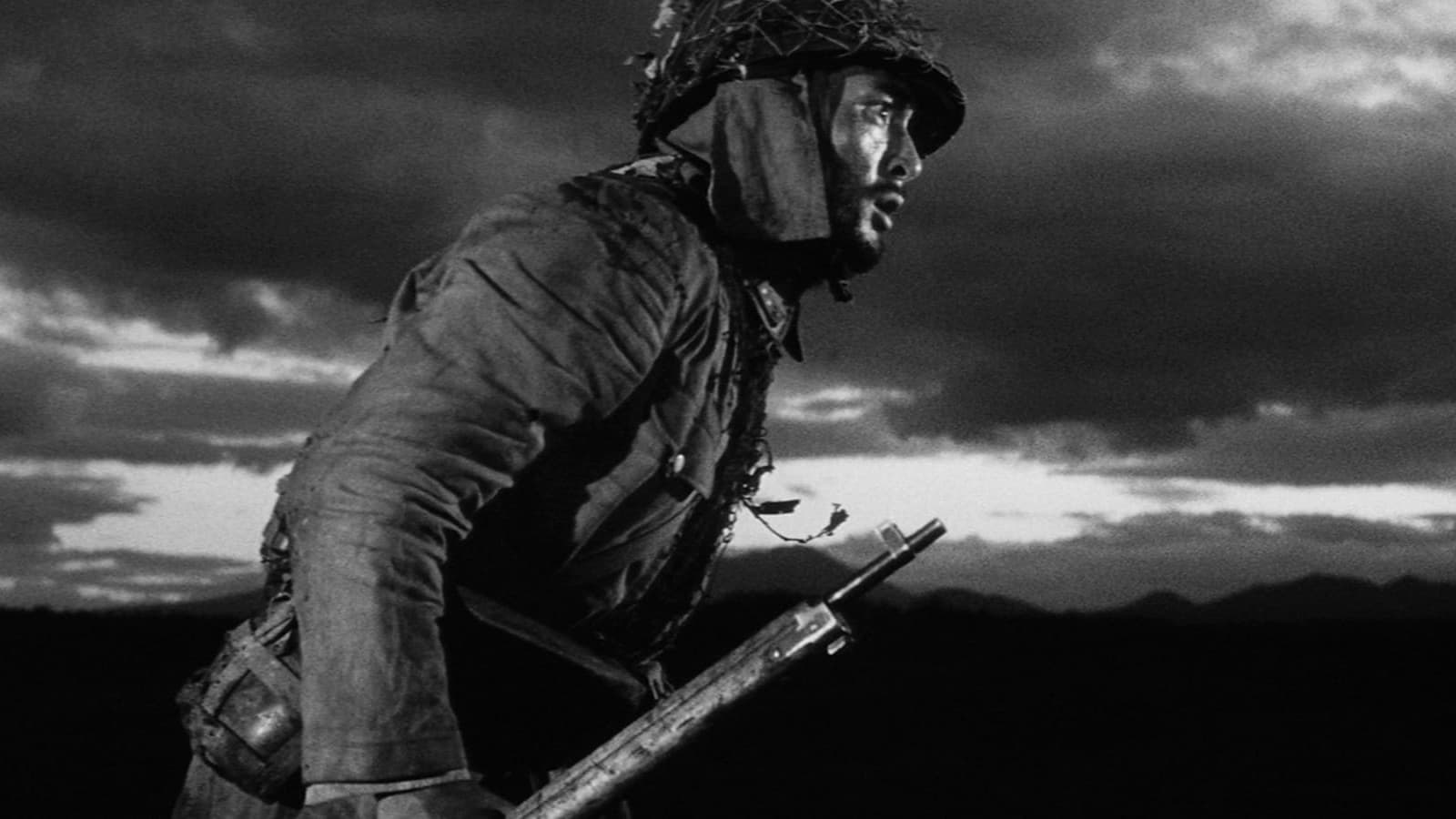
Principal photography on Part II ran in 1959 in Hokkaido, with the cold-weather northern Japanese terrain standing in for Manchurian landscapes. Cinematographer Yoshio Miyajima shot in 2.35:1 widescreen Tohoscope, deliberately framing the human figures against vast empty landscapes to underscore the moral isolation of the central character. The production endured difficult shooting conditions including extreme cold, snow, and remote-location logistics, with Kobayashi pushing the schedule across multiple weeks to capture the seasonal-progression cues that the screenplay required.
Tatsuya Nakadai's lead performance across all three installments became one of the most demanding screen performances in Japanese cinema, requiring physical and emotional endurance across a combined nine and a half hours of finished material. Kobayashi shot Part II and Part III consecutively in 1959 to 1960, with Part II releasing in November 1959 and Part III completing post-production and releasing in January 1961. The combined production schedule of more than two years across all three parts was unusual for Japanese studio production of the era.
Awards and Recognition
The Human Condition II: Road to Eternity received the 1960 Mainichi Film Award for Best Cinematography for Yoshio Miyajima, recognizing the widescreen Tohoscope photography that became one of the trilogy's most distinctive technical achievements. The film also received the 1960 Kinema Junpo Award for Best Cinematography. Tatsuya Nakadai's lead performance was recognized at the Mainichi Film Awards for Best Actor (the prize ultimately went to a different film that year).
The full trilogy received subsequent retrospective recognition. The Criterion Collection released the complete trilogy on Blu-ray in 2009 with extensive contextual essays, video introductions, and documentary supplements positioning the work within the broader history of Japanese cinema. The Sight & Sound critics' poll of the greatest films ever made has periodically included The Human Condition in its 100-greatest lists, and the trilogy is widely cited in academic and critical writing on anti-war cinema, post-war Japanese cinema, and the Kobayashi filmography.
Critical Reception
The Human Condition II: Road to Eternity received critical acclaim at its 1959 Japanese release and has subsequently grown in stature as one of the foundational works of post-war Japanese cinema. Modern critical aggregation does not apply to the original release in the same way it does to contemporary films, but the Criterion Collection's 2009 Blu-ray release prompted a wave of modern critical reassessment that placed the trilogy among the defining anti-war films of any national cinema. The Rotten Tomatoes score for the full trilogy (where critics can rate the work as a unified epic) sits in the high 90s on a small but exceptionally favorable critic-review sample.
The New York Times' Bosley Crowther praised the trilogy at its 1960s international festival screenings, and modern critics including The New Yorker's Richard Brody, Sight & Sound's Geoff Andrew, and Slant Magazine's Eric Henderson have written extensively on the trilogy's formal accomplishment and political urgency. Brody, in his 2010 New Yorker reassessment, called the trilogy "one of the great moral and artistic achievements of Japanese cinema, structured around a pacifist protagonist whose principles are tested to destruction by the institutional forces that shaped 1940s Japan." The Guardian's Peter Bradshaw, reviewing the 2019 BFI Southbank theatrical re-release, called the work "a film of staggering moral seriousness that demands and rewards the viewer's investment in its full nine-and-a-half-hour scope."
Less commonly cited critical perspectives focus on the trilogy's pacing and the difficulty of its full nine-and-a-half-hour scope for modern audiences. Some commentators have noted that the trilogy's pacifist commitments occasionally lead to didactic dialogue exchanges that disrupt the otherwise rigorous visual storytelling. Within those reservations, the consensus across modern critical writing places The Human Condition II: Road to Eternity (and the trilogy as a whole) among the towering achievements of Japanese and world cinema, with Masaki Kobayashi's direction and Tatsuya Nakadai's lead performance widely cited as career-defining work for both.
Frequently Asked Questions
How long is The Human Condition II: Road to Eternity?
The film runs 181 minutes (just over three hours). It is the middle installment of Masaki Kobayashi's three-part Human Condition trilogy, which runs a combined nine and a half hours across the three films. Each installment was released as a separate theatrical feature in Japan between 1959 and 1961.
Is The Human Condition II based on a book?
Yes. The trilogy is adapted from Junpei Gomikawa's six-volume 1956 to 1958 novel Ningen no Joken, which sold more than two million copies during its initial Japanese serialization and prompted widespread cultural conversation about Japanese war guilt and institutional brutality. Each installment of the film trilogy corresponds to approximately two volumes of the source novel.
Who directed The Human Condition trilogy?
Masaki Kobayashi directed all three installments. Kobayashi had served in the Imperial Japanese Army during World War II and shared the source novel's pacifist convictions. His direction across the trilogy became one of his defining career achievements and established his subsequent collaborations with Tatsuya Nakadai on Harakiri (1962) and Samurai Rebellion (1967).
Who plays Kaji in The Human Condition?
Tatsuya Nakadai plays Kaji across all three installments. Nakadai was in his early career at the time of the trilogy's 1959 to 1961 production, and the role established him as one of Japan's most important post-war screen actors. His subsequent collaborations include Akira Kurosawa's Yojimbo (1961), Sanjuro (1962), Kagemusha (1980), and Ran (1985).
Where was The Human Condition II filmed?
Principal photography ran in 1959 primarily in Hokkaido, the northernmost main island of Japan. The cold-weather northern Japanese terrain stood in for Manchurian landscapes for the 1944 to 1945 setting of the film. Cinematographer Yoshio Miyajima shot the film in 2.35:1 widescreen Tohoscope.
Is The Human Condition trilogy available on Blu-ray?
Yes. The Criterion Collection released the complete nine-and-a-half-hour trilogy on Blu-ray in 2009 as a five-disc set with extensive contextual essays, video introductions, and documentary supplements. The package has remained in continuous catalog availability since.
What is The Human Condition II about?
The film follows Kaji, a pacifist Japanese man drafted into the Imperial Japanese Army in 1944 Manchuria. Subjected to the institutional brutality of basic training, Kaji's commitment to humane treatment of his fellow soldiers and to the Korean comfort women near the base brings him into conflict with the officer corps. As the war turns and the Soviet Red Army prepares to cross the border, Kaji is sent to the front lines.
When was The Human Condition II released?
The film was released in Japan on November 20, 1959, roughly 10 months after the first installment's January 1959 release. The third installment, A Soldier's Prayer, followed in January 1961, completing the trilogy's release window across more than two years.
Did The Human Condition II win any awards?
The film received the 1960 Mainichi Film Award for Best Cinematography for Yoshio Miyajima and the 1960 Kinema Junpo Award for Best Cinematography. The full trilogy has subsequently received broad retrospective recognition, including periodic placement in Sight & Sound critics' poll lists of the greatest films ever made.
What did critics think of The Human Condition II: Road to Eternity?
The film received critical acclaim at its 1959 Japanese release and has subsequently grown in stature as one of the foundational works of post-war Japanese cinema. Modern critics including The New Yorker's Richard Brody, Sight & Sound's Geoff Andrew, and The Guardian's Peter Bradshaw have written extensively on the trilogy's formal accomplishment and political urgency, with widespread consensus placing the work among the towering achievements of Japanese and world cinema.
Filmmakers
The Human Condition II Road to Eternity

Official Trailer
Build budgets like this one in Saturation
Start from an industry-standard feature film template, import the schedule and rates you already have, and let the cost report keep itself current as you spend. Real-time collaboration, no spreadsheets.