Ivan's Childhood Budget
Updated
Synopsis
On the Eastern Front during the Second World War, a twelve-year-old Soviet boy whose family has been killed by German forces volunteers for Red Army reconnaissance work behind enemy lines. The film weaves Ivan's frontline missions with reveries of his lost childhood, ending with a terse coda that reveals the consequences of his fate.
What Is the Budget of Ivan's Childhood (1962)?
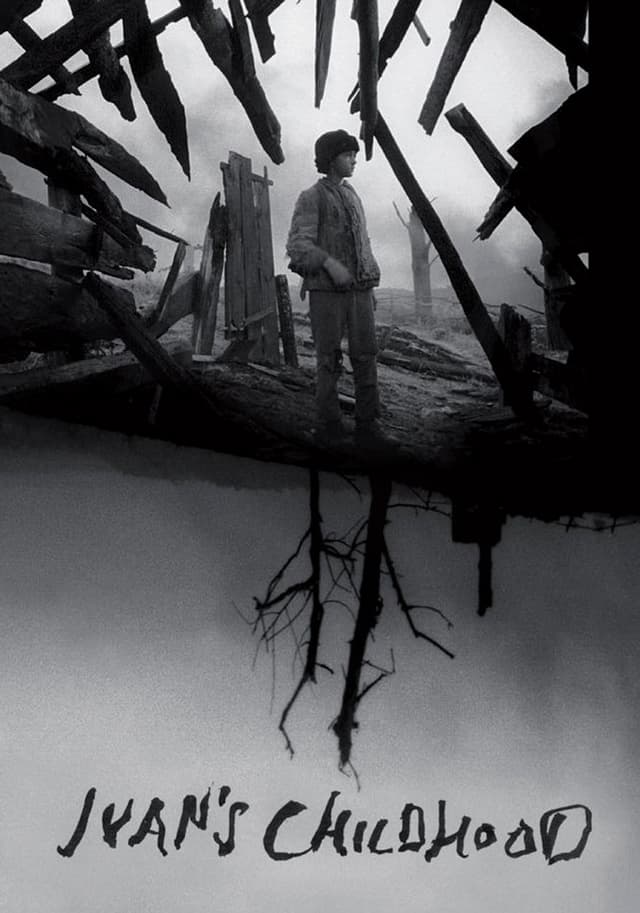
Ivan's Childhood is a 1962 Soviet war drama directed by Andrei Tarkovsky in his feature directorial debut. The film was produced by Mosfilm, the principal state-owned film studio of the Soviet Union, under the centralized production financing regime of the Soviet film industry, in which budgets were assigned by the Goskino state cinema committee. As a state-financed production, the film does not have a budget figure in the conventional capitalist sense.
Goskino budget allocations to Mosfilm features of the early 1960s were calibrated to a fixed national cost structure and the directors' standing within the studio system. Comparable Mosfilm features of the period were produced for the ruble equivalent of $500,000 to $1,500,000 in 1962 USD purchasing power, though precise figures for Tarkovsky's debut have never been published in Western trade press. The film was distributed worldwide and produced significant hard-currency export revenue for Mosfilm.
Key Budget Allocation Categories
Ivan's Childhood's production budget was distributed across several core cost categories:
- Mosfilm Studio Infrastructure: Production took place at Mosfilm's main studio complex outside Moscow, with the studio providing crew, equipment, sound stages, costume departments, and post-production facilities under the centralized Soviet production model. These costs were absorbed into the Mosfilm operating overhead rather than billed as a discrete production line item.
- Above-the-Line Talent (State Salaries): Director Andrei Tarkovsky, then a recent VGIK graduate making his feature debut, worked at standard junior Soviet director rates set by Goskino. The cast, including Nikolai Burlyayev, Valentin Zubkov, Evgeny Zharikov, Nikolai Grinko, and Irma Raush, drew the union scale rates standard to the Mosfilm contract structure.
- Eastern Front Location Shoot: Principal photography included extensive exterior work on the Dnieper River and in marshlands intended to evoke the Belarus and Ukraine Eastern Front theater of the Second World War. The shoot incorporated period military equipment and Red Army uniforms from Mosfilm's archives.
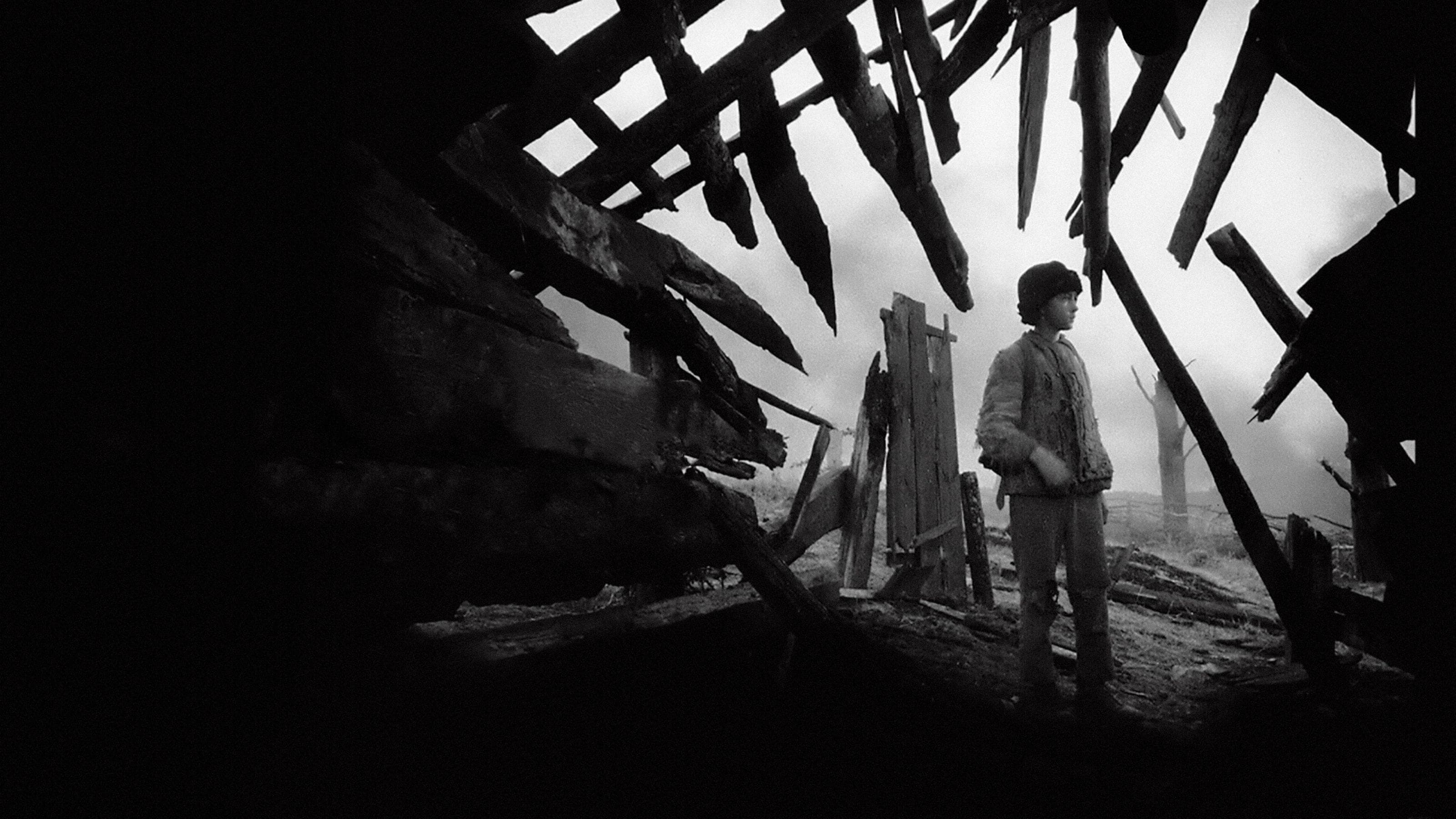
- Cinematography: Cinematographer Vadim Yusov, who would later shoot Andrei Rublev and Solaris for Tarkovsky, photographed the film in 35mm black-and-white with an emphasis on mirror reflections, water imagery, and dream-sequence overlays that became signature elements of the Tarkovsky visual vocabulary.
- Original Score and Sound Design: Composer Vyacheslav Ovchinnikov scored the film, weaving orchestral cues with diegetic Soviet wartime material. The score was recorded by Mosfilm's in-house orchestra under the studio's standard music production arrangement.
- Print, Subtitles, and International Distribution: Following its Soviet release in April 1962, the film was prepared in subtitled prints by Sovexportfilm, the state foreign distribution arm, for international festival circulation and theatrical release across Europe, the United States, and beyond.
How Does Ivan's Childhood's Budget Compare to Similar Films?
Ivan's Childhood operates at the high end of early-1960s Soviet war drama and as a benchmark feature debut. Useful reference points include:
- The Cranes Are Flying (1957): Mosfilm production | Worldwide festival circuit (Palme d'Or). Mikhail Kalatozov's Cannes-winning war romance establishes the Soviet wartime drama tradition that Tarkovsky inherited and developed.
- Ballad of a Soldier (1959): Mosfilm production | Worldwide festival circuit. Grigori Chukhrai's Oscar-nominated wartime drama provides the closest immediate precursor in tone and structure to Tarkovsky's debut.
- Come and See (1985): Belarusfilm production | Worldwide festival circuit. Elem Klimov's Eastern Front masterwork from a generation later forms the natural Soviet war-film bracket around Tarkovsky's debut.
- Andrei Rublev (1966): Mosfilm production | Worldwide festival circuit. Tarkovsky's subsequent feature, at a more ambitious budget, illustrates the director's elevated standing within Mosfilm following Ivan's Childhood's international success.
- Forbidden Games (1952): Budget undisclosed | Worldwide festival circuit (Golden Lion). Rene Clement's French war-and-childhood drama, also a Golden Lion winner, sets the international canon Ivan's Childhood entered upon its 1962 Venice triumph.
Ivan's Childhood Box Office Performance
Ivan's Childhood opened theatrically in the Soviet Union on April 6, 1962, distributed domestically by Mosfilm and internationally by Sovexportfilm. The Soviet domestic theatrical model did not produce capitalist box-office data in the form aggregated by Box Office Mojo or The Numbers, with Goskino instead tracking attendance figures. The film attracted an estimated 16,000,000 Soviet admissions in its first release window, an extraordinarily high figure that signaled major domestic reach.
Internationally, the film received the Golden Lion at the 1962 Venice Film Festival and was widely released across Western Europe, the United States, and Japan, generating significant hard-currency revenue for Sovexportfilm. The financial breakdown is as follows:
Box Office Breakdown
Ivan's Childhood

The economic case is structured around Soviet domestic attendance, Sovexportfilm hard-currency international receipts, and the long-tail catalog and home-video value the film has built over the past sixty-plus years. Ivan's Childhood remains in active distribution worldwide through The Criterion Collection in the United States and through restored 4K and Blu-ray editions in multiple territories.
Ivan's Childhood Production History
Ivan's Childhood originated as a Mosfilm production based on the 1957 short story Ivan by Vladimir Bogomolov. Mosfilm initially assigned the project to director Eduard Abalov, but Goskino removed Abalov from the production after dissatisfaction with the early footage. Andrei Tarkovsky, then a 30-year-old VGIK graduate whose feature directorial debut was being arranged, was assigned to the project on the recommendation of cinematographer Vadim Yusov.
Tarkovsky reworked the script with Vladimir Bogomolov, with uncredited contributions from Andrei Konchalovsky and Mikhail Papava, adding the four dream sequences that became the film's most celebrated formal element and giving the project its final structure. Principal photography took place in 1961 across Mosfilm soundstages and on Eastern Front locations along the Dnieper River and in marshlands intended to evoke the Belarus and Ukraine theaters of the Second World War.
Following its April 6, 1962 Soviet release, the film was selected for the 1962 Venice Film Festival, where it won the Golden Lion in a co-award with Valerio Zurlini's Family Diary. International release followed across Western Europe, the United States, and Japan. Tarkovsky's standing at Mosfilm rose dramatically as a result, enabling the more ambitious Andrei Rublev production that followed.
Awards and Recognition
Ivan's Childhood received major international awards recognition. The film won the Golden Lion at the 1962 Venice International Film Festival, shared with Valerio Zurlini's Family Diary, and won the Golden Gate Award at the 1962 San Francisco International Film Festival. The Soviet Union submitted the film as its entry for the Academy Award for Best Foreign Language Film at the 36th Academy Awards, where it was shortlisted but not nominated.
Domestically, the film established Andrei Tarkovsky as one of the major filmmakers of his generation within the Soviet system. The Golden Lion at Venice provided rare international validation for a 30-year-old VGIK graduate's feature debut, and the recognition contributed materially to Goskino's willingness to authorize the substantially more ambitious Andrei Rublev production that followed.
Critical Reception
Ivan's Childhood has been the subject of universal critical acclaim across the past six decades. The film holds a 100 percent approval rating on Rotten Tomatoes based on the aggregated critic reviews available. Metacritic and CinemaScore do not survey older international releases. Ingmar Bergman famously called the film "like a miracle," and Jean-Paul Sartre, writing in 1963 in L'Unita, defended the film against socialist-realist critics in one of the most influential pieces of mid-century film criticism.
The film established the formal vocabulary that Tarkovsky would develop across his subsequent six features: dream-sequence overlays, water and mirror imagery, slow tracking shots through architectural interiors, and a moral seriousness that braids the personal with the historical. Critics including Andrei Bazin, Susan Sontag, and David Thomson have written extensively on the film as a foundational work of postwar art cinema and of Soviet new wave filmmaking.
Contemporary critical reception remains strongly positive. The Criterion Collection released a restored Blu-ray edition in 2015 with extensive supplementary material, and the film continues to play in repertory theatrical programs worldwide. Letterboxd ranks the film among the highest-rated debut features in the platform's database, and it appears on numerous critic best-of-all-time lists including the BFI Sight & Sound poll.
Frequently Asked Questions
How much did it cost to make Ivan's Childhood (1962)?
Ivan's Childhood was state-financed by Goskino through Mosfilm under the centralized Soviet production model, which did not produce budget figures in the conventional capitalist sense. Comparable Mosfilm features of the early 1960s were produced for the ruble equivalent of $500,000 to $1,500,000 in 1962 USD purchasing power.
How did Ivan's Childhood perform at the box office?
The film attracted an estimated 16,000,000 Soviet admissions in its initial domestic release, an extraordinarily high figure. Internationally, it generated significant hard-currency revenue for Sovexportfilm across Western Europe, the United States, and Japan after its Golden Lion win at Venice.
Who directed Ivan's Childhood?
Andrei Tarkovsky directed Ivan's Childhood as his feature directorial debut at age 30. Tarkovsky was a recent graduate of the VGIK film school in Moscow when he was assigned to the project. He went on to direct six additional features including Andrei Rublev, Solaris, Stalker, and Nostalghia.
Is Ivan's Childhood based on a book?
Yes. The film is based on the 1957 short story Ivan by Soviet writer Vladimir Bogomolov, who co-wrote the screenplay with Mikhail Papava. Tarkovsky added the four dream sequences during pre-production that became the film's most celebrated formal element.
Was Ivan's Childhood a debut film?
Yes. Ivan's Childhood was Andrei Tarkovsky's feature directorial debut. He had previously made student films at the VGIK film school, including the diploma project The Steamroller and the Violin (1960), but Ivan's Childhood was his first full-length theatrical feature.
Did Ivan's Childhood win the Golden Lion?
Yes. Ivan's Childhood won the Golden Lion at the 1962 Venice International Film Festival, shared with Valerio Zurlini's Family Diary. The Golden Lion is the top prize at the Venice festival and is widely considered one of the most prestigious awards in international cinema.
Where was Ivan's Childhood filmed?
Principal photography took place at Mosfilm soundstages outside Moscow and on Eastern Front locations along the Dnieper River and in marshlands intended to evoke the Belarus and Ukraine theaters of the Second World War. The shoot incorporated period military equipment and Red Army uniforms from Mosfilm's archives.
What is Ivan's Childhood about?
The film follows a twelve-year-old Soviet boy whose family has been killed by German forces during the Second World War. He volunteers for Red Army reconnaissance work behind enemy lines, with the narrative weaving his frontline missions with dream sequences of his lost childhood, ending in a terse coda that reveals his fate.
Who stars in Ivan's Childhood?
The lead is played by Nikolai Burlyayev as Ivan Bondarev. Supporting roles are filled by Valentin Zubkov as Captain Kholin, Evgeny Zharikov as Lieutenant Galtsev, Nikolai Grinko as Lieutenant Colonel Gryaznov, and Irma Raush as Ivan's mother.
What did critics think of Ivan's Childhood?
The film has been the subject of universal critical acclaim across six decades, with a 100 percent approval rating on Rotten Tomatoes. Ingmar Bergman called the film "like a miracle," and Jean-Paul Sartre defended it in a 1963 essay as one of the most beautiful films he had ever seen. The Criterion Collection released a restored Blu-ray edition in 2015.
Filmmakers
Ivan's Childhood

Build budgets like this one in Saturation
Start from an industry-standard feature film template, import the schedule and rates you already have, and let the cost report keep itself current as you spend. Real-time collaboration, no spreadsheets.