The Human Centipede 3 (Final Sequence) Budget
 Horror1h 43m
Updated
Synopsis
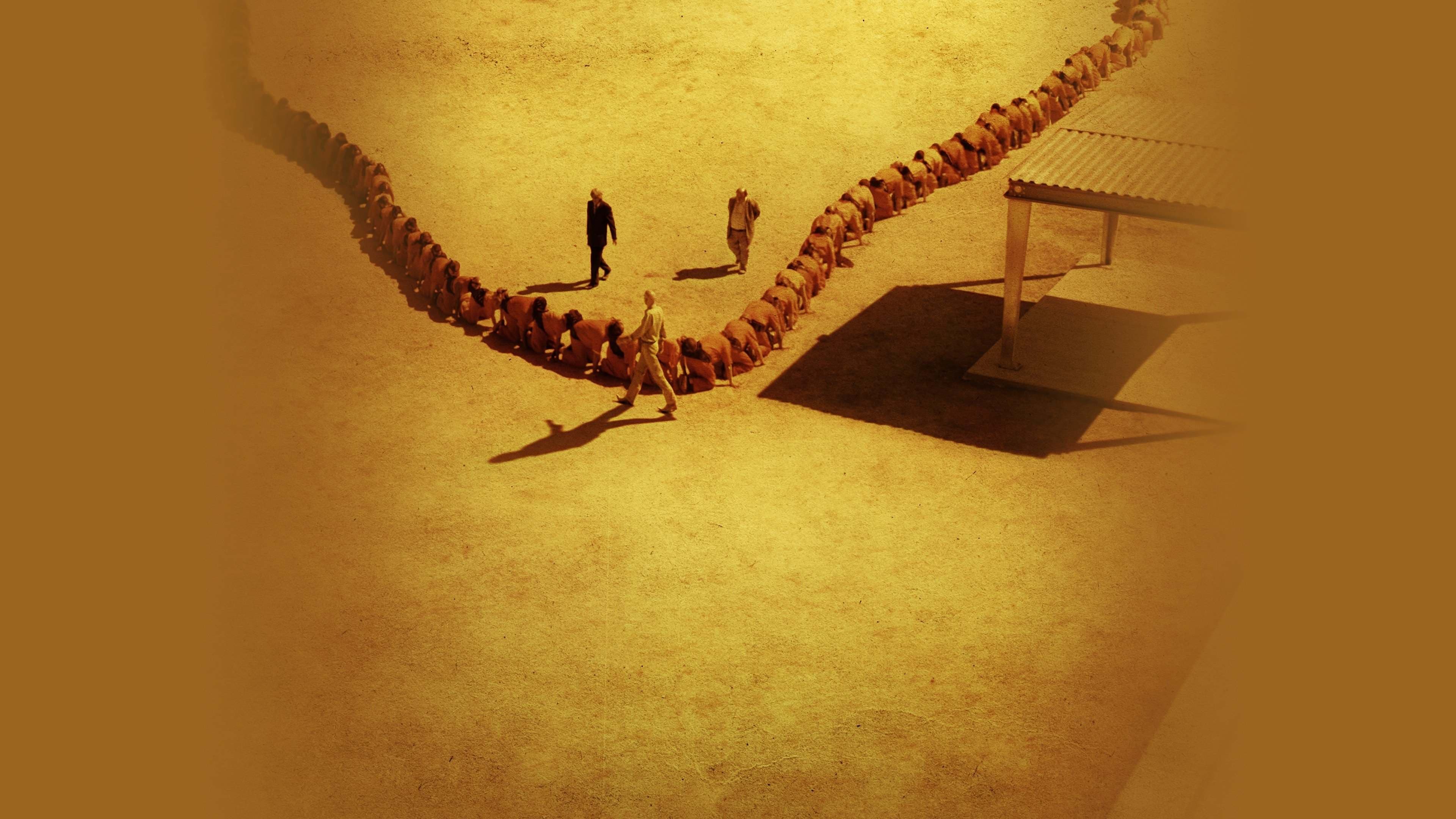
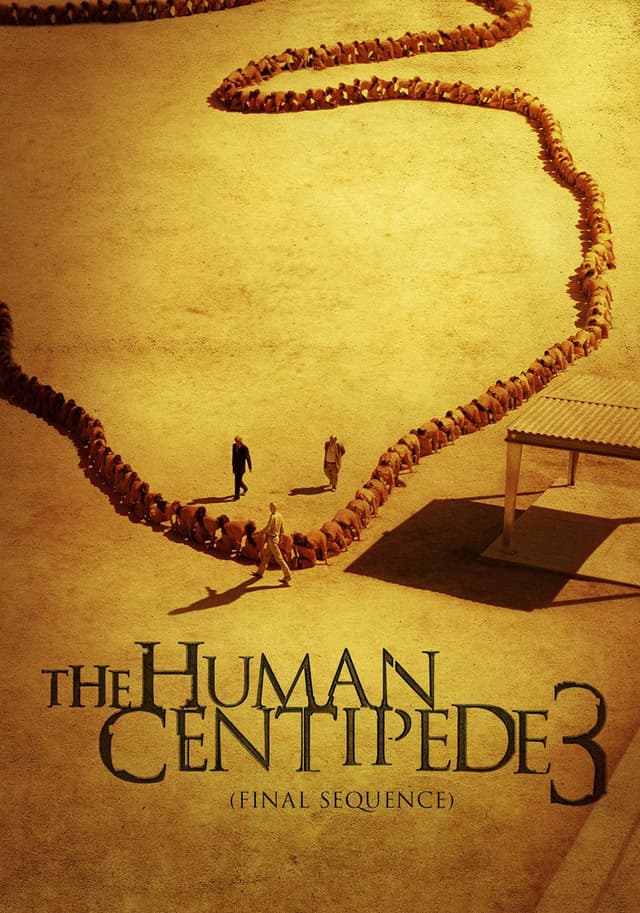
A corrupt American prison warden and his demented accountant struggle to enforce order at the violent George H.W. Bush State Prison. They consult the original Human Centipede films for inspiration, then attempt a 500-inmate centipede as the ultimate disciplinary spectacle.
What Is the Budget of The Human Centipede 3 (Final Sequence) (2015)?
The Human Centipede 3 (Final Sequence) (2015), written and directed by Tom Six and distributed by IFC Midnight, was produced on a reported budget of approximately $2,500,000. The film closed the Human Centipede trilogy, building on the global notoriety of Tom Six's low-budget original Dutch shocker The Human Centipede (First Sequence) (2009) and its UK-based sequel The Human Centipede 2 (Full Sequence) (2011). Six self-financed and produced through his Six Entertainment Company banner with IFC Films acquiring North American rights.
The expanded scope, including a 500-inmate centipede climax, US prison setting, and the casting of returning trilogy stars Dieter Laser and Laurence R. Harvey in entirely new roles, drove a substantially higher production cost than the first film's reported €1,500,000 budget. Six shot the film in the Mojave Desert at the former Tehachapi prison facility and surrounding locations to deliver an authentically American look.
Key Budget Allocation Categories
The Human Centipede 3's estimated $2,500,000 budget was distributed across these production areas:
- Above-the-Line Talent: Dieter Laser, returning from the original First Sequence in the new role of Warden Bill Boss, and Laurence R. Harvey, returning from Full Sequence as accountant Dwight Butler, anchored the cast. Eric Roberts and Bree Olson took supporting roles at indie genre rates.
- Tehachapi Prison Location: Filming at the former California State Prison in Tehachapi and surrounding Mojave Desert locations drove the location budget. The decommissioned prison provided authentic interiors that an Eastern European stage shoot could not replicate.
- Director and Writer Fees: Tom Six wrote, directed, edited, and produced the film, with above-the-line compensation absorbed into the production company's ownership stake in the property.
- Special Effects and Practical Makeup: The centipede prosthetics, surgical effects, and the elaborate 500-inmate climax required substantial practical effects work, with the practical-first approach driving makeup department costs above genre averages.
- Cinematography and Production Design: David Meadows shot the film in widescreen 2.40:1, with production designer Sylvia Six (the director's sister) constructing the prison interiors and surgical theatre on practical sets.
- Score and Music: Composer Misha Segal scored the film with an original orchestral approach atypical for the genre, driving a modest but real music budget.
How Does The Human Centipede 3's Budget Compare to Similar Films?
Human Centipede 3 sits in the upper indie horror tier, expanded substantially from its predecessors:
- The Human Centipede (First Sequence) (2009): Budget €1,500,000 | Worldwide $252,207. Tom Six's breakthrough cost less than half the third film and became a global cult phenomenon via VOD and streaming despite limited theatrical revenue.
- The Human Centipede 2 (Full Sequence) (2011): Budget €1,500,000 | Worldwide $147,386. The middle film matched the first's budget and earned less theatrically while sustaining the trilogy's notoriety on home video.
- A Serbian Film (2010): Budget €1,000,000 | Worldwide $189,300. The contemporaneous Serbian extreme-horror release offers a comparable scale and notoriety-driven distribution model.
- Cabin Fever (2002): Budget $1,500,000 | Worldwide $30,500,000. Eli Roth's indie horror breakout offers a comparative point for low-budget genre filmmaking at the same era of indie horror commerce.
The Human Centipede 3 Box Office Performance
The Human Centipede 3 (Final Sequence) opened on May 22, 2015 in limited US release through IFC Midnight, with a same-day VOD release that mirrored the platform's standard genre strategy. Theatrical revenue was minimal, reflecting the niche audience and IFC Midnight's VOD-first economics.
Against an estimated $2,500,000 production budget, the financial breakdown is as follows:
Box Office Breakdown
The Human Centipede 3 (Final Sequence)

The IFC Midnight day-and-date VOD release model meant that theatrical gross was never the primary commercial measure for the film. The Human Centipede trilogy's commercial value was concentrated in VOD, streaming licensing, home video, and the ongoing cultural notoriety that drove catalog discovery over the subsequent decade.
Tom Six confirmed before release that the third film would close the trilogy definitively, and no subsequent Human Centipede projects have been produced, leaving the third film as the franchise capstone.
The Human Centipede 3 Production History
Tom Six developed the third film as the trilogy capstone, with the express creative intent of escalating the centipede concept beyond what the first two films had attempted. Casting Dieter Laser and Laurence R. Harvey in new American roles, rather than returning their original characters, allowed Six to use the franchise's most recognizable performers in fresh contexts.
Principal photography took place in California in 2014, with the former state prison in Tehachapi providing the central location. The Mojave Desert location work and the prison interiors anchored the production. The 500-inmate climax sequence was staged using a combination of practical extras, prosthetics, and tightly choreographed staging within the prison yard.
IFC Films acquired North American distribution rights ahead of the May 2015 release. International rights were sold across multiple territories. Six's decision to incorporate a fictionalized version of himself and references to the prior two films into the screenplay drove much of the film's meta-commentary on its own franchise.
Awards and Recognition
The Human Centipede 3 (Final Sequence) received no significant mainstream awards recognition. It featured on multiple critics' worst-of-2015 lists and received Razzie consideration but no nominations. The film holds a notable cultural footprint within extreme-horror community and academic horror studies discussions.
The trilogy as a whole has been the subject of academic and critical retrospectives examining extreme horror, body horror, and the commercial mechanics of cult genre filmmaking, with Tom Six maintaining the franchise's notoriety through ongoing public statements.
Critical Reception
The Human Centipede 3 (Final Sequence) received almost universally negative reviews. The film holds a 6% approval rating on Rotten Tomatoes based on 36 critic reviews, with a critical consensus that called it the weakest entry in the trilogy and a self-indulgent exercise in transgression without purpose. On Metacritic, the film scored 5 out of 100, indicating overwhelming dislike, among the lowest scores recorded for a widely-reviewed release that year.
Critics objected to the screenplay's reliance on shock value over narrative, the broadly comedic register that undercut the body horror, and Dieter Laser's performance, which several critics described as overplayed even by genre standards. The Guardian's Peter Bradshaw called it "a tedious final chapter," while Variety's Joe Leydon noted that the film "trades on its own notoriety as a substitute for ideas."
Defenders within extreme-horror press argued that the film delivers exactly what its audience expects, with Dread Central and Bloody Disgusting offering mildly more favorable assessments. The mixed-to-hostile critical reception did not prevent the trilogy from sustaining its cultural footprint through streaming catalogs and academic study of extreme horror cinema.
Frequently Asked Questions
How much did it cost to make The Human Centipede 3 (2015)?
The reported production budget was approximately $2,500,000, an increase from the €1,500,000 budgets of the first two films. Tom Six self-financed and produced through his Six Entertainment Company banner, with IFC Films acquiring North American distribution rights.
How much did The Human Centipede 3 earn at the box office?
The film grossed approximately $120,495 in limited theatrical release. IFC Midnight's day-and-date VOD release model meant that theatrical gross was never the primary commercial measure, with downstream VOD, home video, and streaming licensing driving the bulk of the trilogy's revenue.
Who directed The Human Centipede 3?
Tom Six wrote, directed, edited, and produced the film, as he did the previous two Human Centipede films. The Dutch filmmaker built the entire franchise across the 2009 First Sequence, the 2011 Full Sequence, and the 2015 Final Sequence.
Is The Human Centipede 3 the final film in the trilogy?
Yes. Tom Six confirmed before release that the third film would close the trilogy definitively, and no subsequent Human Centipede projects have been produced. The final scene featuring the 500-inmate centipede was designed as the trilogy capstone.
Where was The Human Centipede 3 filmed?
Principal photography took place in California in 2014, with the former California State Prison in Tehachapi and the surrounding Mojave Desert providing the central locations. The decommissioned prison provided authentic interiors that anchored the production.
Do Dieter Laser and Laurence R. Harvey return?
Yes, but in entirely new roles. Dieter Laser, who played Dr. Heiter in First Sequence, plays Warden Bill Boss in the third film. Laurence R. Harvey, who played Martin Lomax in Full Sequence, plays accountant Dwight Butler. Tom Six also appears as a fictionalized version of himself.
How long is The Human Centipede in the third film?
The climactic sequence in The Human Centipede 3 features a 500-inmate centipede, a substantial escalation from the 3-person centipede in the original First Sequence and the 12-person centipede in Full Sequence. The escalation was the central creative driver of the third film.
What rating is The Human Centipede 3?
The film was released unrated in the United States, in line with IFC Midnight's standard genre distribution practice. The MPAA rating system was bypassed in favor of unrated theatrical and VOD release with explicit content advisories.
Where can you watch The Human Centipede 3?
The film has been available across multiple streaming and rental platforms over time, including Amazon, iTunes, Vudu, and Tubi. IFC Films and Six Entertainment Company have maintained the trilogy's catalog distribution.
What did critics think of The Human Centipede 3?
The film received almost universally negative reviews, with a 6% approval rating on Rotten Tomatoes and a Metacritic score of 5 out of 100. Critics objected to the screenplay's reliance on shock value, the broadly comedic register that undercut the body horror, and what many described as a self-indulgent exercise in transgression without purpose.
Filmmakers
The Human Centipede 3 (Final Sequence)

Official Trailer
Build budgets like this one in Saturation
Start from an industry-standard feature film template, import the schedule and rates you already have, and let the cost report keep itself current as you spend. Real-time collaboration, no spreadsheets.