The Holdovers Budget
 DramaComedy2h 13m
Updated
Synopsis
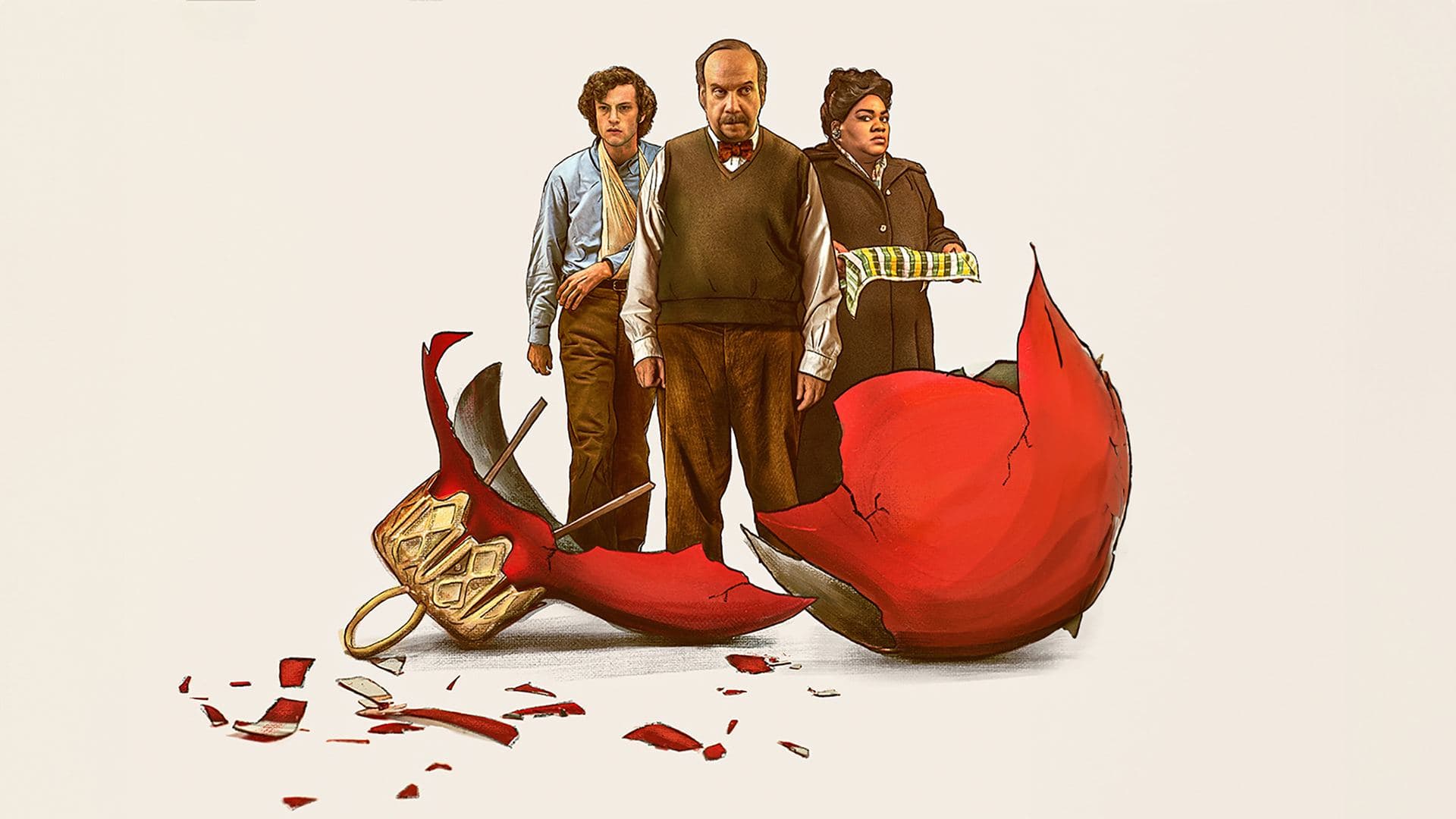
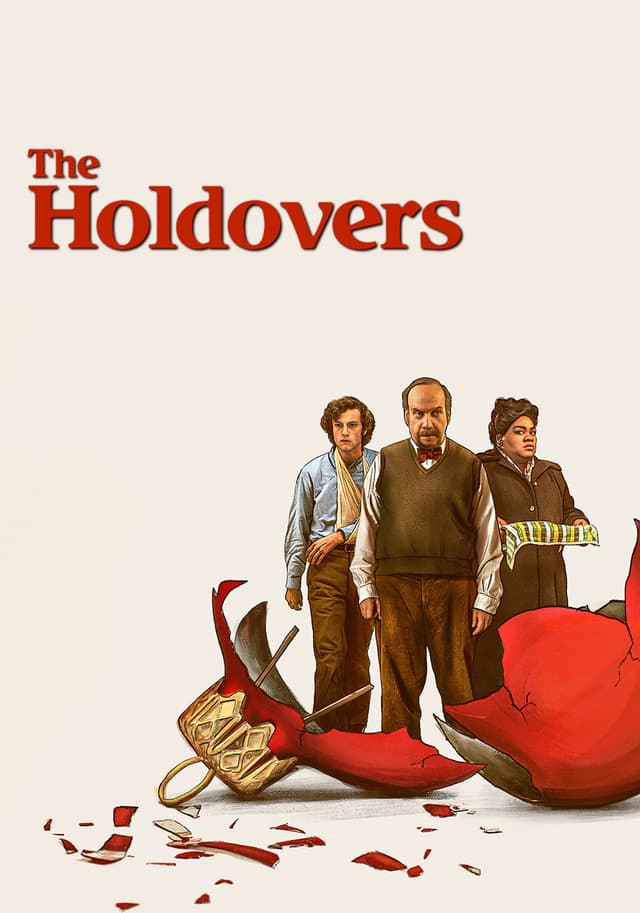
A curmudgeonly instructor at a New England prep school is forced to remain on campus during Christmas break to babysit the handful of students with nowhere to go. Eventually, he forms an unlikely bond with one of them — a damaged, brainy troublemaker — and with the school’s head cook, who has just lost a son in Vietnam.
What is the budget of The Holdovers?
"The Holdovers," a drama released in 2023, was directed by Alexander Payne and stars Paul Giamatti, Dominic Sessa. The production budget was $13,000,000, placing it in the low-budget range for drama productions of its era.
Key Budget Allocation Categories
While specific budget breakdowns are not publicly available, typical cost drivers for a drama production like this include:
- Above-the-Line Talent: Drama films live or die on the strength of their performances.
- Location Filming & Period Production Design: Authentic locations , whether contemporary or historical , require scouting, permits, travel, lodging, and often significant dressing to match the story's time period.
- Post-Production, Color Grading & Score: The editorial process for dramas is typically longer than genre films, with careful attention to pacing and tone.
- Filming & Locations: Filming began in Massachusetts on January 27, 2022, and wrapped in late March.
What were the major cost factors in The Holdovers?
Several factors contributed to the overall production costs of "The Holdovers."
- Above-the-Line Talent: Above-the-Line Talent is one of the primary cost drivers in drama productions of this scale.
- Location Filming: Location Filming & Period Production Design is one of the primary cost drivers in drama productions of this scale.
- Post-Production: Post-Production, Color Grading & Score is one of the primary cost drivers in drama productions of this scale.
How Does The Holdovers's Budget Compare to Similar Films?
At $13,000,000, The Holdovers sits in the low-budget range. Here is how it compares to productions with a similar budget:
- Miss Sloane (2016): Budget $13,000,000, Worldwide Gross $9,101,546
- RoboCop (1987): Budget $13,000,000, Worldwide Gross $53,424,681
- The Godfather Part II (1974): Budget $13,000,000, Worldwide Gross $102,600,000
- In the Name of the Father (1993): Budget $13,000,000, Worldwide Gross $65,796,862
- Black Swan (2010): Budget $13,000,000, Worldwide Gross $329,398,046
The median budget for wide-release drama films in the 2020s ranges from $30 to 80M for mid-budget to $150M+ for tentpoles.
The Holdovers Box Office Performance
"The Holdovers" earned $20,355,375 domestically and $42,513,270 worldwide at the box office. Against a production budget of $13,000,000, the film performed strongly at the box office.
A film typically needs to earn approximately twice its production budget to cover marketing and distribution costs. For "The Holdovers," that break-even threshold was roughly $26,000,000. With worldwide earnings of $42,513,270, the film cleared that threshold comfortably.
Box Office Breakdown
The Holdovers

At 227%, "The Holdovers" earned roughly $3.27 for every $1 invested in production.
The Holdovers Production History
Filming began in Massachusetts on January 27, 2022, and wrapped in late March. Location manager Kai Quinlan, who had worked on other films set in New England like Spotlight and Black Mass, drew on her Massachusetts upbringing for the film. Similarly, Giamatti drew on his experience attending Choate Rosemary Hall in the 1980s, including his memories of a strict teacher whom he described as "not a happy man." To create the fictional Barton Academy, the film crew shot on location at five real-life Massachusetts schools: Groton School (the chapel and the Nashua River), Northfield Mount Hermon School (the chapel and building exteriors), Deerfield Academy (the front lawn and building exteriors), St.
Original music for The Holdovers was composed by Mark Orton. Peter Krasinski was the Choral Music Arranger, Organist providing on-screen music ten minutes into the movie, and Off-Screen Music Advisor, in addition to his on-screen role as the Choir Leader directing singers in "O Little Town of Bethlehem" and whose voice opens the movie. The soundtrack also features several classic Christmas songs, and other songs from the 1970s by The Allman Brothers Band, Tony Orlando and Dawn, Labi Siffre, Badfinger, Shocking Blue, Damien Jurado, Herb Alpert, Gene Autry, Temptations, Chet Baker, Artie Shaw, and Cat Stevens.
Awards and Recognition
Won 1 Oscar. 137 wins & 209 nominations total
Critical Reception
Audiences polled by CinemaScore gave the film an average grade of "A" on an A+ to F scale, while those polled by PostTrak gave it an 80% overall positive score. Patrick Ryan, writing for USA Today, compared it to Frank Capra's It's a Wonderful Life, noting that both films grapple with troubled pasts and shattered dreams at Christmastime. Critics have also compared it to the films of Hal Ashby, such as Harold and Maude and The Last Detail.
Frequently Asked Questions
How much did it cost to make The Holdovers (2023)?
The production budget was $13,000,000, covering principal photography, cast and crew salaries, locations, sets, post-production, and music. Marketing and distribution (P&A) costs are estimated at an additional $6,500,000 - $10,400,000, bringing the total studio investment to approximately $19,500,000 - $23,400,000.
How much did The Holdovers (2023) earn at the box office?
The Holdovers grossed $20,355,375 domestic, $22,157,895 international, totaling $42,513,270 worldwide.
Was The Holdovers (2023) profitable?
Yes. Against a production budget of $13,000,000 and estimated total costs of ~$32,500,000, the film earned $42,513,270 theatrically - a 227% ROI on production costs alone.
What were the biggest costs in producing The Holdovers?
The primary cost drivers were above-the-line talent (Paul Giamatti, Dominic Sessa, Da'Vine Joy Randolph); talent compensation, authentic period production design, and meticulous post-production.
How does The Holdovers's budget compare to similar drama films?
At $13,000,000, The Holdovers is classified as a low-budget production. The median budget for wide-release drama films in the 2020s ranges from $30 - 80M for mid-budget to $150M+ for tentpoles. Comparable budgets: Miss Sloane (2016, $13,000,000); RoboCop (1987, $13,000,000); The Godfather Part II (1974, $13,000,000).
Did The Holdovers (2023) go over budget?
There are no widely reported accounts of significant budget overruns for this production. However, studios rarely disclose precise budget overrun figures publicly. The reported production budget reflects the final estimated cost.
What was the return on investment (ROI) for The Holdovers?
The theatrical ROI was 227.0%, calculated as ($42,513,270 − $13,000,000) ÷ $13,000,000 × 100. This measures gross revenue against production budget only - it does not account for P&A or exhibitor shares.
What awards did The Holdovers (2023) win?
Won 1 Oscar. 137 wins & 209 nominations total.
Who directed The Holdovers and who were the key crew members?
Directed by Alexander Payne, written by David Hemingson, shot by Eigil Bryld, with music by Mark Orton, edited by Kevin Tent.
Where was The Holdovers filmed?
The Holdovers was filmed in United States of America. Filming began in Massachusetts on January 27, 2022, and wrapped in late March. Location manager Kai Quinlan, who had worked on other films set in New England like Spotlight and Black Mass, drew on her Massachusetts upbringing for the film.
Filmmakers
The Holdovers

Official Trailer
Build budgets like this one in Saturation
Start from an industry-standard feature film template, import the schedule and rates you already have, and let the cost report keep itself current as you spend. Real-time collaboration, no spreadsheets.