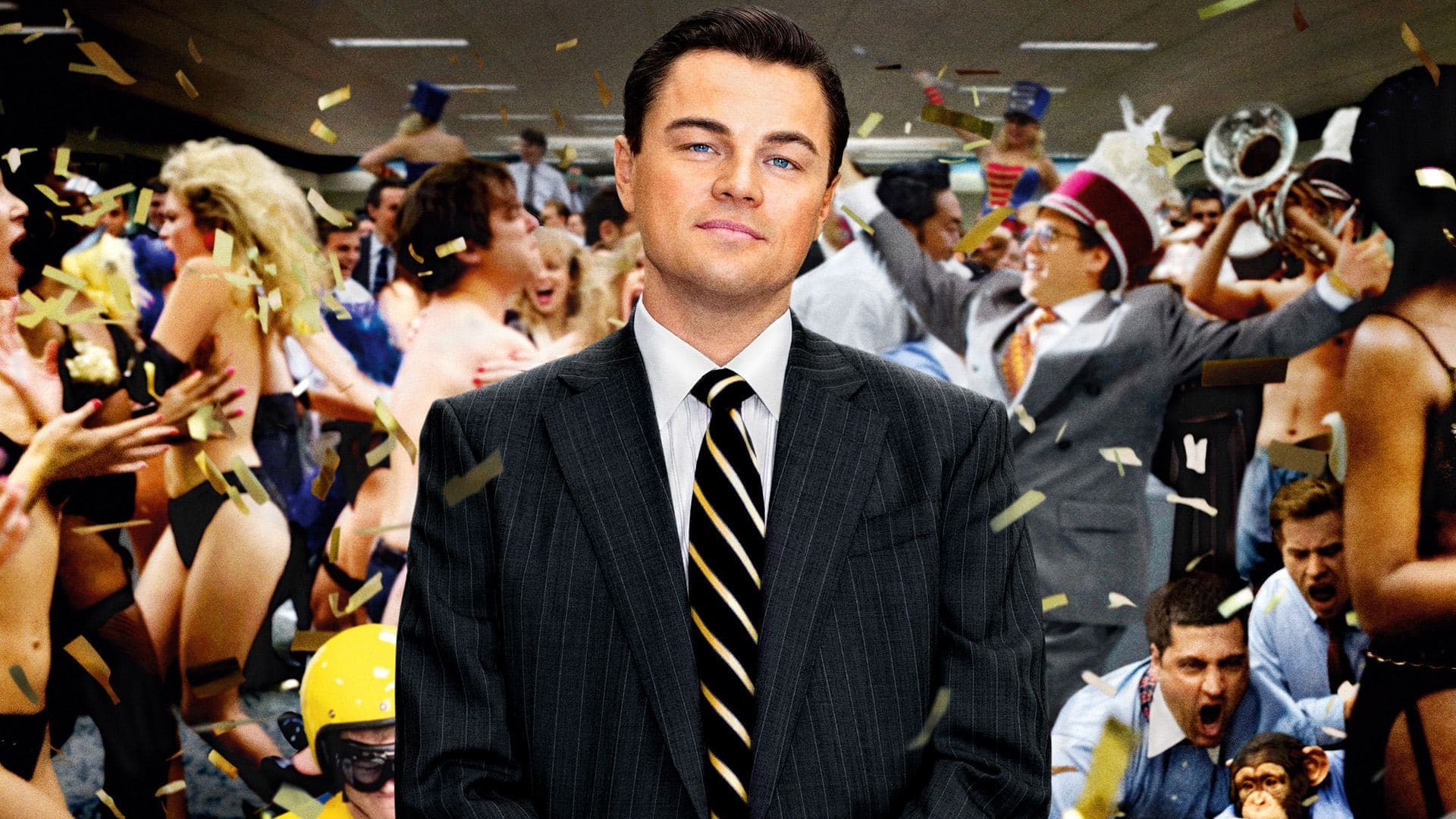
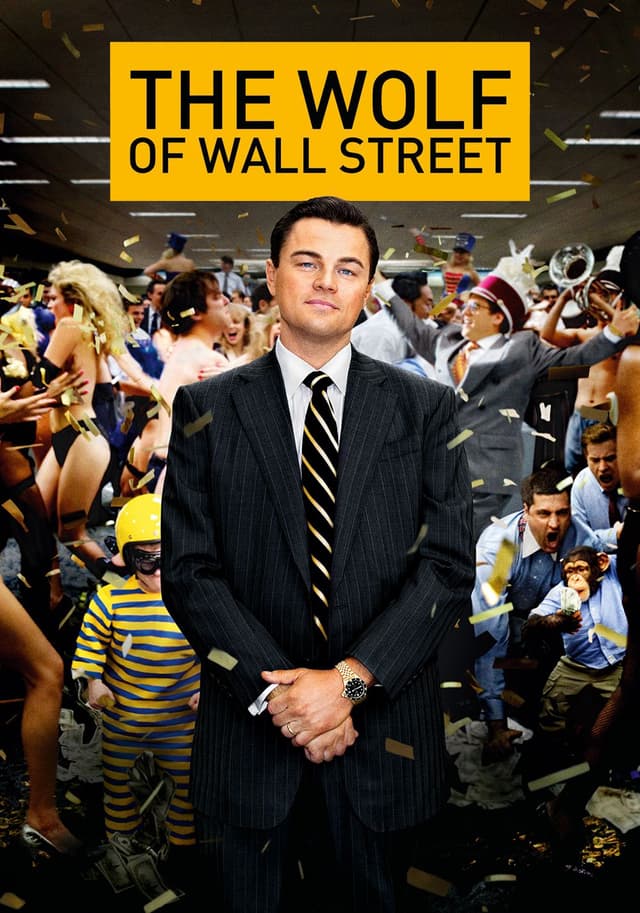
The Wolf of Wall Street Budget
 CrimeDramaComedy3h
Updated
Synopsis
Martin Scorsese directs the story of New York stockbroker Jordan Belfort. From the American dream to corporate greed, Belfort goes from penny stocks and righteousness to IPOs and a life of corruption in the late 80s. Excess success and affluence in his early twenties as founder of the brokerage firm Stratton Oakmont warranted Belfort the title "The Wolf of Wall Street."
What is the budget of The Wolf of Wall Street?
"The Wolf of Wall Street," a crime released in 2013, was directed by Martin Scorsese and stars Leonardo DiCaprio, Jonah Hill. The production budget was $100,000,000, placing it in the high-budget range for crime productions of its era.
Key Budget Allocation Categories
While specific budget breakdowns are not publicly available, typical cost drivers for a crime production like this include:
- Talent & Director Compensation: Thrillers depend on compelling lead performances to sustain tension, making cast compensation a primary budget concern. Directors with proven thriller credentials command premium fees.
- Cinematography & Location Photography: Thriller aesthetics demand specific visual languages , surveillance-style photography, claustrophobic framing, or expansive location work across multiple cities or countries.
- Editorial & Sound Post-Production: Precision editing , controlling information flow, building suspense through pacing, and orchestrating reveals , requires extended post-production schedules.
- Development: In 2007, DiCaprio and Warner Bros.
What were the major cost factors in The Wolf of Wall Street?
Several factors contributed to the overall production costs of "The Wolf of Wall Street."
- Talent: Talent & Director Compensation is one of the primary cost drivers in crime productions of this scale.
- Cinematography: Cinematography & Location Photography is one of the primary cost drivers in crime productions of this scale.
- Editorial: Editorial & Sound Post-Production is one of the primary cost drivers in crime productions of this scale.
How Does The Wolf of Wall Street's Budget Compare to Similar Films?
At $100,000,000, The Wolf of Wall Street sits in the high-budget range. Here is how it compares to productions with a similar budget:
- 1917 (2019): Budget $100,000,000, Worldwide Gross $446,064,352
- American Gangster (2007): Budget $100,000,000, Worldwide Gross $269,755,430
- Bad Boys: Ride or Die (2024): Budget $100,000,000 , Gross $404,547,819
- Batman Forever (1995): Budget $100,000,000, Worldwide Gross $336,529,144
- Bicentennial Man (1999): Budget $100,000,000, Worldwide Gross $87,423,861
The median budget for wide-release crime films in the 2010s ranges from $30 to 80M for mid-budget to $150M+ for tentpoles.
The Wolf of Wall Street Box Office Performance
"The Wolf of Wall Street" earned $116,900,694 domestically and $407,038,432 worldwide at the box office. Against a production budget of $100,000,000, the film performed strongly at the box office.
A film typically needs to earn approximately twice its production budget to cover marketing and distribution costs. For "The Wolf of Wall Street," that break-even threshold was roughly $200,000,000. With worldwide earnings of $407,038,432, the film cleared that threshold comfortably.
Box Office Breakdown
The Wolf of Wall Street

At 307%, "The Wolf of Wall Street" earned roughly $4.07 for every $1 invested in production.
The Wolf of Wall Street Production History
In 2007, DiCaprio and Warner Bros. won a bidding war for the rights to Belfort's memoir The Wolf of Wall Street, with Belfort making $1 million off the deal. Having worked on the film's script, Scorsese was considered to direct the film but abandoned the project to work on Shutter Island (2010).
Filming began on August 8, 2012, in New York City. Hill announced on Twitter that his first day of shooting was September 4, 2012. Filming also took place in Closter, New Jersey, and Harrison, New York.
The film's soundtrack features both original and preexisting music tracks. It was released on December 17, 2013, for digital download. More than 60 songs are used in the film, but only 16 are on the official soundtrack. Among the notable exceptions are original compositions by Theodore Shapiro.
Awards and Recognition
Nominated for 5 Oscars. 38 wins & 180 nominations total
- National Board of Review: Top Ten Films
Critical Reception
Peter Travers of Rolling Stone magazine named The Wolf of Wall Street as the third-best movie of 2013, behind 12 Years a Slave and Gravity. Mick LaSalle of the San Francisco Chronicle wrote, "it is the best and most enjoyable American film to be released this year." Richard Brody of The New Yorker called the film "Olympian", saying that if it was Scorsese's last film it "would rank among the most harshly awe-inspiring farewells of the cinema." The Chicago Sun-Times's Richard Roeper gave the film a B+, calling it "good, not great Scorsese".
Frequently Asked Questions
How much did it cost to make The Wolf of Wall Street (2013)?
The production budget was $100,000,000, covering principal photography, cast and crew salaries, locations, sets, post-production, and music. Marketing and distribution (P&A) costs are estimated at an additional $50,000,000 - $80,000,000, bringing the total studio investment to approximately $150,000,000 - $180,000,000.
How much did The Wolf of Wall Street (2013) earn at the box office?
The Wolf of Wall Street grossed $116,900,694 domestic, $290,137,738 international, totaling $407,038,432 worldwide.
Was The Wolf of Wall Street (2013) profitable?
Yes. Against a production budget of $100,000,000 and estimated total costs of ~$250,000,000, the film earned $407,038,432 theatrically - a 307% ROI on production costs alone.
What were the biggest costs in producing The Wolf of Wall Street?
The primary cost drivers were above-the-line talent (Leonardo DiCaprio, Jonah Hill, Margot Robbie); talent compensation, location cinematography, and tension-driven editorial.
How does The Wolf of Wall Street's budget compare to similar crime films?
At $100,000,000, The Wolf of Wall Street is classified as a big-budget production. The median budget for wide-release crime films in the 2010s ranges from $30 - 80M for mid-budget to $150M+ for tentpoles. Comparable budgets: 1917 (2019, $100,000,000); American Gangster (2007, $100,000,000); Bad Boys: Ride or Die (2024, $100,000,000).
Did The Wolf of Wall Street (2013) go over budget?
There are no widely reported accounts of significant budget overruns for this production. However, studios rarely disclose precise budget overrun figures publicly. The reported production budget reflects the final estimated cost.
What was the return on investment (ROI) for The Wolf of Wall Street?
The theatrical ROI was 307.0%, calculated as ($407,038,432 − $100,000,000) ÷ $100,000,000 × 100. This measures gross revenue against production budget only - it does not account for P&A or exhibitor shares.
What awards did The Wolf of Wall Street (2013) win?
Nominated for 5 Oscars. 38 wins & 180 nominations total.
Who directed The Wolf of Wall Street and who were the key crew members?
Directed by Martin Scorsese, written by Terence Winter, shot by Rodrigo Prieto, edited by Thelma Schoonmaker.
Where was The Wolf of Wall Street filmed?
The Wolf of Wall Street was filmed in United States of America. Filming began on August 8, 2012, in New York City. Hill announced on Twitter that his first day of shooting was September 4, 2012.
Filmmakers
The Wolf of Wall Street

Official Trailer
Build budgets like this one in Saturation
Start from an industry-standard feature film template, import the schedule and rates you already have, and let the cost report keep itself current as you spend. Real-time collaboration, no spreadsheets.