The Happytime Murders Budget
 ActionCrimeComedy1h 31m
Updated
Synopsis
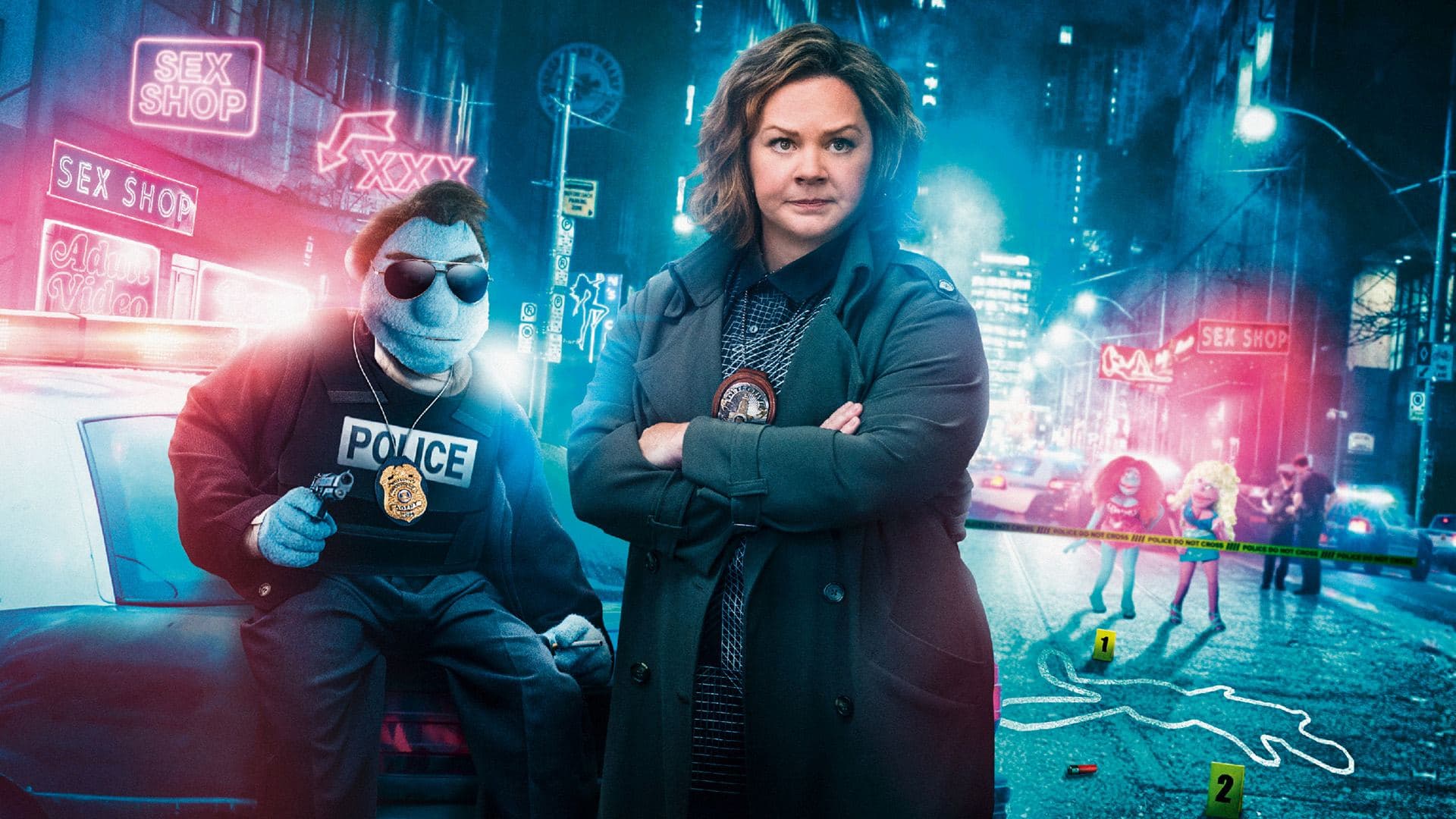
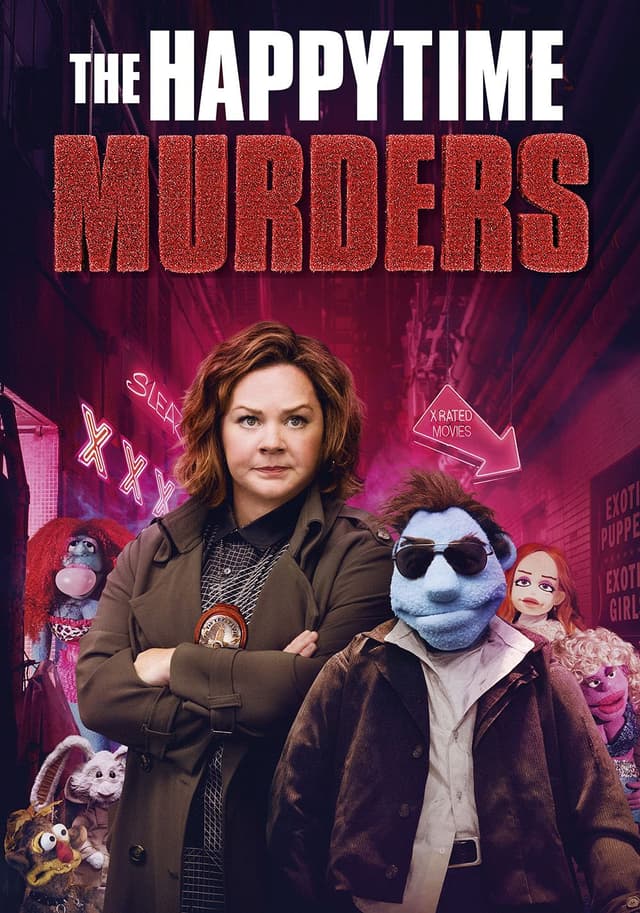
In a world where humans coexist with puppets—who are seen as lesser citizens—cast members of a beloved 1990s children's television series begin getting murdered one by one. Puppet Phil Philips, an ex-LAPD detective-turned-private eye, takes on the case at the request of his old boss in order to assist his former partner, Detective Connie Edwards.
What Is the Budget of The Happytime Murders?
The Happytime Murders was produced with a budget of $40 million. For an R-rated comedy built around a mix of practical puppetry and live-action performances, that figure reflects the considerable technical demands of the production. Every puppet sequence required a team of skilled puppeteers from Henson Alternative, Jim Henson's adult-oriented entertainment division, working alongside a cast of human actors on sets designed to accommodate both.
STXfilms financed and distributed the project, betting that the combination of Melissa McCarthy's box office draw, the Henson brand, and the novelty of an R-rated puppet movie would attract a broad audience. The film was directed by Brian Henson, son of Jim Henson and a veteran of puppet filmmaking through projects like The Muppet Christmas Carol and Muppet Treasure Island.
Key Budget Allocation Categories
The $40 million production budget covered the specialized requirements of blending puppet performance with live-action filmmaking:
- Puppet Design and Fabrication covered the creation of dozens of puppet characters, each requiring custom builds with articulated features, realistic hair, and wardrobe. The Henson Alternative workshop built every puppet from scratch to match the film's noir aesthetic.
- Puppeteering and Performance Crew represented a significant line item because each puppet scene required multiple puppeteers per character, working in cramped positions beneath sets or behind practical rigs. This labor-intensive approach added crew costs well beyond a typical comedy.
- Above-the-Line Talent included Melissa McCarthy's salary as the lead, along with supporting cast members Maya Rudolph, Joel McHale, and Elizabeth Banks. McCarthy was coming off several major comedy hits, making her compensation a substantial portion of the budget.
- Set Construction and Rigging required building sets with raised floors, hidden access points, and removable sections so puppeteers could operate from below while cameras captured the action at puppet eye level. This doubled the complexity of standard set builds.
- Visual Effects and Post-Production handled the removal of puppeteer rods, hands, and rigging from every frame, along with compositing work to blend puppet and human performances seamlessly. The R-rated content also required careful VFX work for comedic violence and adult gags.
- Marketing and Distribution costs, handled by STXfilms, pushed the total investment well beyond the production budget. The studio mounted an aggressive campaign centered on the film's provocative tagline and R-rated puppet concept.
How Does The Happytime Murders's Budget Compare to Similar Films?
Comparing The Happytime Murders to other puppet-driven and R-rated comedy films puts its $40 million budget in context:
- Team America: World Police (2004) had a budget of $32 million and grossed $50.8 million worldwide. Trey Parker and Matt Stone's marionette satire proved that adult puppet comedy could find an audience, though it relied on a different puppetry style and a much smaller creative team.
- Sausage Party (2016) cost $19 million and earned $140.7 million globally. While animated rather than practical, it targeted the same R-rated comedy audience and delivered a far stronger return, suggesting the concept of adult-oriented "kid format" entertainment had real commercial potential.
- The Muppets (2011) was produced for $45 million and grossed $165.2 million worldwide. As a family-friendly Henson property, it had broader audience appeal but also demonstrated the production costs inherent in large-scale puppet filmmaking.
- Ted (2012) cost $50 million and earned $549.4 million worldwide. Seth MacFarlane's R-rated teddy bear comedy used CGI rather than practical puppets but proved the enormous commercial ceiling for adult comedies built around a non-human character.
- Keanu (2016) had a modest $15 million budget and grossed $20.4 million. As a similarly niche R-rated comedy, its comparable domestic performance to The Happytime Murders shows how difficult it is for mid-budget comedies to break out without a high-concept hook that audiences fully embrace.
The Happytime Murders Box Office Performance
The Happytime Murders opened on August 24, 2018, and was a significant commercial disappointment against its $40 million production budget:
- Domestic Opening Weekend: $10.0 million from 3,256 theaters, averaging $3,072 per screen. The opening fell below studio projections and signaled weak audience reception despite McCarthy's star power.
- Total Domestic Gross: $20,719,164, meaning the film failed to recover even half its production budget from North American ticket sales alone.
- International Gross: $6,787,288, bringing the worldwide total to $27,506,452. Limited international appeal compounded the domestic shortfall.
- Break-Even Threshold: With marketing and distribution costs, the total investment likely exceeded $80 million (roughly 2x the production budget). The $27.5 million worldwide gross left the film approximately $52.5 million short of break-even.
- Return on Investment: Using the formula (Worldwide Gross minus Budget) / Budget x 100, the ROI was approximately -31.2%, representing a substantial loss before accounting for the additional marketing spend.
- Second Weekend Drop: The film dropped 53.2% in its second weekend, earning $4.7 million. The steep decline reflected poor word-of-mouth driven by negative reviews and audience dissatisfaction.
The theatrical run was a clear financial loss for STXfilms, though home video, streaming licensing, and ancillary revenue likely softened the total deficit over time.
The Happytime Murders Production History
The Happytime Murders had one of the longer development timelines in recent comedy history, spending roughly a decade moving from concept to screen. Writer Todd Berger first developed the screenplay around 2008, imagining a world where puppets and humans coexist in Los Angeles and puppets occupy the lower rungs of society. The noir detective premise combined with raunchy humor drew interest from the Henson family early on.
Brian Henson, who had directed The Muppet Christmas Carol (1992) and Muppet Treasure Island (1996), signed on to direct. The project was developed under Henson Alternative, the adult entertainment label Jim Henson's company created specifically for content that fell outside the family-friendly Muppet brand. The distinction mattered: Henson Alternative gave the filmmakers creative freedom to push the material into R-rated territory without the constraints of the Muppet franchise.
Casting took several turns over the years before Melissa McCarthy came aboard as Detective Connie Edwards, the human partner to puppet private investigator Phil Philips (performed by veteran Muppet performer Bill Barretta). Maya Rudolph joined as Phil's secretary Bubbles, with Joel McHale and Elizabeth Banks rounding out the supporting cast.
Principal photography took place in Los Angeles, with the production building elaborate puppet-scale sets that required hidden compartments and raised platforms for the puppeteering team. Before the film's release, Sesame Workshop filed a lawsuit against STXfilms over the marketing tagline "No Sesame. All Street," arguing it tarnished the Sesame Street brand. A federal judge dismissed the case, ruling that the tagline was clearly a parody and that no reasonable viewer would confuse The Happytime Murders with a Sesame Street production.
Awards and Recognition
The Happytime Murders received no positive awards recognition during the 2018-2019 season. Instead, the film earned four nominations at the 39th Golden Raspberry Awards (Razzies): Worst Picture, Worst Actress for Melissa McCarthy, Worst Supporting Actress for McCarthy in a dual role disguise, and Worst Screenplay. The film did not "win" in any category, as other films took those dubious honors.
Despite the critical and commercial reception of the final product, the puppetry work itself drew some acknowledgment from industry professionals who recognized the technical skill required to execute the film's complex puppet sequences. The Henson Alternative team's craftsmanship in designing and performing the puppet characters represented genuine artistry, even if the material surrounding that work failed to connect with audiences and critics.
Critical Reception
The Happytime Murders was met with overwhelmingly negative reviews, earning a 22% approval rating on Rotten Tomatoes from 150 critics. The critical consensus pointed to the film's reliance on shock value over genuine wit, with most reviewers arguing that the novelty of R-rated puppet behavior wore thin quickly and left little substance underneath.
Melissa McCarthy's performance drew mixed reactions. Some critics acknowledged her commitment to the material and her improvisational energy, while others felt the script gave her too little to work with. The puppet noir premise was widely described as a one-joke concept that never developed into a satisfying story, with the mystery plot receiving particular criticism for being predictable and undercooked.
Audiences gave the film a more moderate but still negative reception, with a CinemaScore of "C" indicating that even viewers who chose to see the film left largely unsatisfied. The gap between the film's marketing promise of irreverent comedy and the actual theatrical experience contributed to the steep second-weekend drop and poor word-of-mouth that defined its brief theatrical run.
Frequently Asked Questions
How much did it cost to make The Happytime Murders (2018)?
The production budget was $40,000,000, covering principal photography, visual effects, cast and crew salaries, locations, sets, post-production, and music. Marketing and distribution (P&A) costs are estimated at an additional $20,000,000 - $32,000,000, bringing the total studio investment to approximately $60,000,000 - $72,000,000.
How much did The Happytime Murders (2018) earn at the box office?
The Happytime Murders grossed $27,506,452 worldwide.
Was The Happytime Murders (2018) profitable?
The film did not break even theatrically, earning $27,506,452 against an estimated $100,000,000 needed. Ancillary revenue may have improved the picture.
What were the biggest costs in producing The Happytime Murders?
The primary cost drivers were above-the-line talent (Melissa McCarthy, Bill Barretta, Leslie David Baker); visual effects, practical stunts, and A-list talent compensation; international production across China, United States of America.
How does The Happytime Murders's budget compare to similar action films?
At $40,000,000, The Happytime Murders is classified as a mid-budget production. The median budget for wide-release action films in the 2010s ranges from $30 - 80M for mid-budget to $150M+ for tentpoles. Comparable budgets: 42 (2013, $40,000,000); A Few Good Men (1992, $40,000,000); Big Trouble (2002, $40,000,000).
Did The Happytime Murders (2018) go over budget?
There are no widely reported accounts of significant budget overruns for this production. However, studios rarely disclose precise budget overrun figures publicly. The reported production budget reflects the final estimated cost.
What was the return on investment (ROI) for The Happytime Murders?
The theatrical ROI was -31.2%, calculated as ($27,506,452 − $40,000,000) ÷ $40,000,000 × 100. This measures gross revenue against production budget only - it does not account for P&A or exhibitor shares.
Who directed The Happytime Murders and who were the key crew members?
Directed by Brian Henson, written by Todd Berger, Dee Austin Robertson, shot by Mitchell Amundsen, with music by Christopher Lennertz, edited by Brian Scott Olds.
Where was The Happytime Murders filmed?
The Happytime Murders was filmed in China, United States of America. Principal photography on the film began in Los Angeles, California, on September 11, 2017. To accommodate the puppeteers, all of the sets were built up so that the puppeteers could stand on the floor, since their optimum way to operate the puppets is if they are standing with straight arms.
Filmmakers
The Happytime Murders

Official Trailer
Build budgets like this one in Saturation
Start from an industry-standard feature film template, import the schedule and rates you already have, and let the cost report keep itself current as you spend. Real-time collaboration, no spreadsheets.