Mongol Budget
Updated
Synopsis
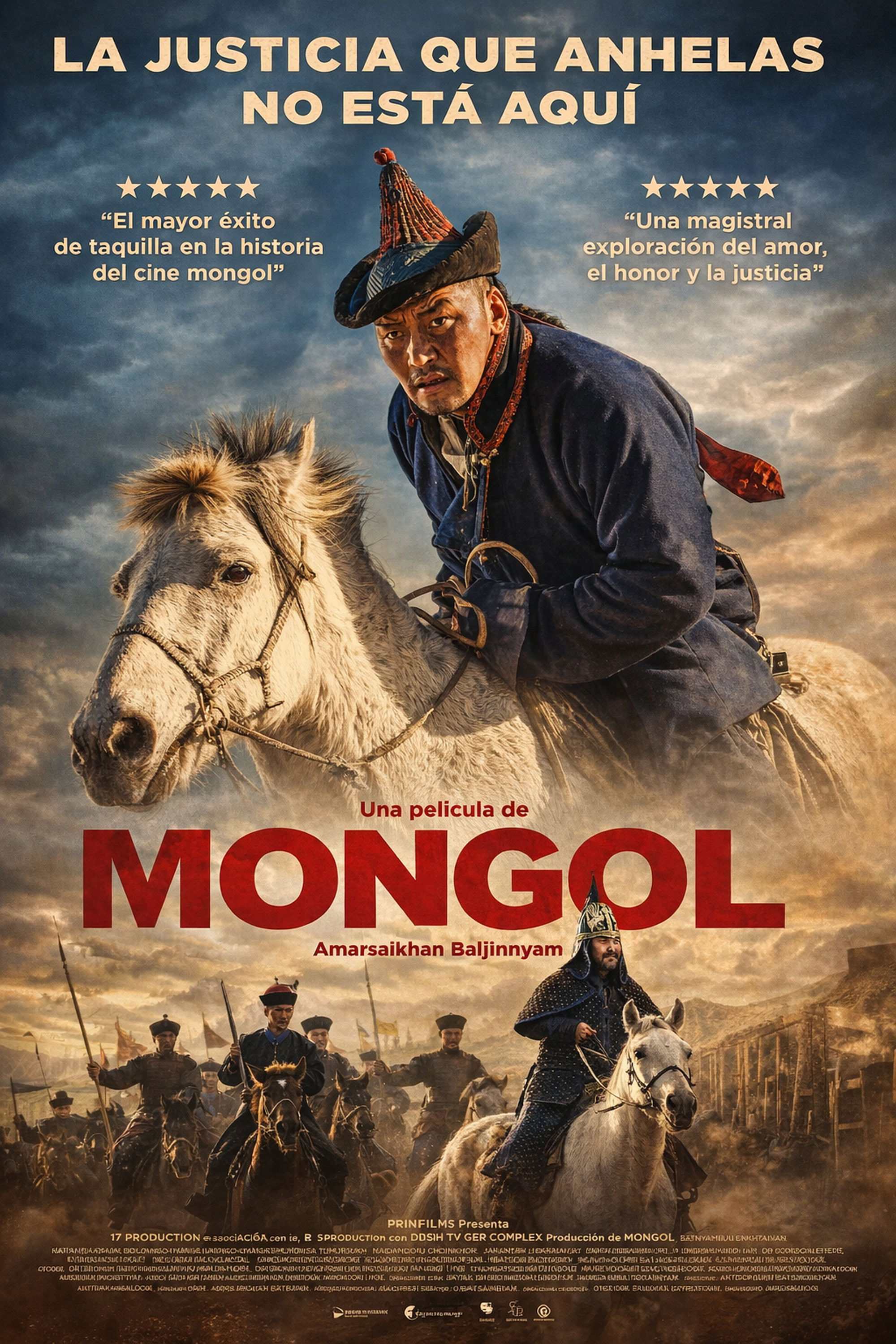
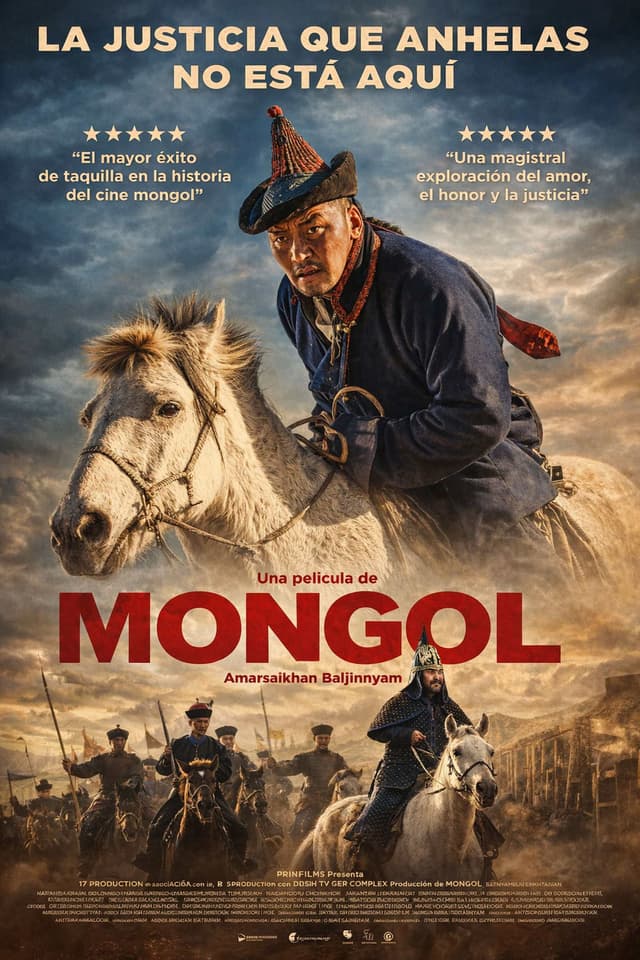
Mongol (2008) chronicles the early life of Temüjin (Tadanobu Asano), the future Genghis Khan, from his childhood as a Mongol clan heir through his enslavement, escape, and rise as the unifier of the Mongol confederation. The Sergei Bodrov-directed Russian-German-Kazakhstani-Mongolian co-production renders the future Khan's rise in Mongolian-language dialogue with extensive horseback battle sequences shot across Kazakhstan, Mongolia, and Inner Mongolia, anchored by his bond with blood-brother Jamukha (Honglei Sun) and first wife Börte (Khulan Chuluun).
What Is the Budget of Mongol (2008)?
Mongol: The Rise of Genghis Khan (2008), the Sergei Bodrov-directed Russian-German-Kazakhstani-Mongolian co-production also known as Mongol: The Rise to Power of Genghis Khan, was made on a reported budget of approximately $20,000,000. The historical epic, the first installment in Bodrov's planned Genghis Khan trilogy, was financed through an international consortium led by Russia's CTB Film Company, with German co-production partners X-Filme Creative Pool and Andreevsky Flag Film, Kazakhstan's Kinokompaniya Eurasia, and Mongolian state-cinema partners contributing equity and in-kind production support.
The $20,000,000 figure was extraordinarily ambitious for a non-English-language historical epic of the late 2000s, particularly for one shot across four countries (Kazakhstan, Mongolia, Russia, and China) in Mongolian-language dialogue with extensive horseback battle sequences. The budget reflected the international co-production model that anchored Bodrov's production, with each financing partner contributing equity, location access, and crew in exchange for distribution rights in their respective territories.
Key Budget Allocation Categories
Mongol's reported $20,000,000 budget was distributed across the cost centres typical of an international historical epic, with several show-specific items reflecting the four-country shoot and Mongolian-language casting:
- Above-the-Line Cast: Japanese star Tadanobu Asano commanded a recognisable Asian-cinema lead premium as Temüjin (the future Genghis Khan), with Chinese actor Honglei Sun as blood-brother Jamukha, Kazakh actress Khulan Chuluun as wife Börte, and Bayertsetseg Erdenebat as young Börte rounding out the principal ensemble. The cast worked entirely in Mongolian-language dialogue, an unusual commercial choice for a $20,000,000 production.
- Kazakhstan, Mongolia, China Location Production: Principal photography ran across multiple international locations, including extensive Kazakhstani steppe work that doubled for the Mongolian heartland, Mongolian-territory shoots near the Khentii Mountains, and Inner Mongolia (China) sequences for the climactic battle. The cross-border shoot absorbed significant logistics, travel, customs, and currency-management overhead.
- Cavalry, Livestock, and Horseback Action: The film's defining set pieces required hundreds of mounted extras, large herds of horses, and recurring weeks-long cavalry-battle choreography. The recurring wrangler, animal-handling, and stunt-rider line items represented one of the largest budget categories.
- Period Production Design and Costume: Twelfth-and-thirteenth-century Mongol-territory production design required full construction of yurt encampments, fortified outposts, Tangut Xi Xia siege sets, and the elaborate cavalry-armor, weaponry, and ceremonial-wardrobe builds rendered with research-grade period detail.
- Practical Effects, Stunts, and Squibs: Frequent period weaponry, arrow-flight choreography, cavalry-charge stunts, and Xi Xia siege-warfare set pieces required a recurring practical-effects and stunt-coordination spend. The film used predominantly practical squibs and limited digital muzzle-flash augmentation.
- Visual Effects: Tomek Bagiński's effects house Platige Image and supporting Russian and German vendors contributed digital crowd extension, weather augmentation, and selective period-environment cleanup. VFX represented a meaningful share of post-production cost despite the predominantly practical approach.
- Original Music: Tuomas Kantelinen (Finnish composer best known for The Messengers) composed the orchestral score, with throat-singing and traditional Mongolian instrumentation woven into the soundtrack. The score recording across multiple international orchestras absorbed a meaningful music budget line.
- Post-Production and International Delivery: Picture editing, sound, ADR, and delivery for multiple international territories required parallel post-production pipelines and language-version mastering. The film delivered theatrical release versions in Russia, Germany, Kazakhstan, Mongolia, and subsequently across European, Asian, and North American festival and theatrical markets.
How Does Mongol's Budget Compare to Similar Films?
At a reported $20,000,000, Mongol sat in the upper-mid tier of non-English-language historical epics of the late 2000s, well below the $80,000,000-and-up Hollywood epic tariff and comfortably above standard arthouse and festival-circuit budgets. The comparison set illustrates how its scale stacked up:
- Hero (2002): Budget $31,000,000 | Worldwide $177,394,432. Zhang Yimou's Chinese-language Jet Li historical epic cost roughly 55% more than Mongol and earned more than six times the worldwide gross, illustrating the commercial ceiling of non-English-language historical epic when paired with a major star and a Miramax international release strategy.
- House of Flying Daggers (2004): Budget $12,000,000 | Worldwide $92,898,486. Zhang Yimou's wuxia romance cost roughly half Mongol's budget and earned more than three times the worldwide gross, reflecting the international audience pull of star-led Chinese-language epic in the mid-2000s.
- Crouching Tiger, Hidden Dragon (2000): Budget $17,000,000 | Worldwide $213,525,736. Ang Lee's wuxia romance, the structural antecedent for the Mongol-era international-co-production model, cost less than Mongol and earned almost eight times its worldwide gross, defining the upper ceiling of non-English-language historical-epic commercial performance.
- Apocalypto (2006): Budget $40,000,000 | Worldwide $120,720,287. Mel Gibson's Mayan-language pre-Columbian epic cost twice Mongol's budget and earned more than four times the gross, with comparable language-and-period ambition and a much larger US theatrical release.
- Genghis Khan (1965): Budget approximately $7,000,000 (period-adjusted approximately $65,000,000 today). The earlier Henry Levin Genghis Khan film starring Omar Sharif anchors the older Hollywood Mongol-cinema lineage and cost period-adjusted considerably more than Bodrov's 2008 international co-production.
- Mulan (1998): Budget $90,000,000 | Worldwide $304,320,254. Disney's animated Chinese-territory legend cost more than four times Mongol's live-action budget and earned more than eleven times the gross, illustrating the broader gap between mainstream-Hollywood animated period epic and international-co-production live-action historical epic.
Mongol Box Office Performance
Mongol opened theatrically in Russia on September 20, 2007, and subsequently rolled out across European, Asian, and North American territories through 2008. Picturehouse acquired US distribution rights and released the film on June 6, 2008 in a limited New York and Los Angeles platform release, gradually expanding to a peak 175-theatre count. Against a reported production budget of $20,000,000, the film needed approximately $50,000,000 in worldwide gross to reach profitability after marketing and distribution costs. Here is the financial breakdown:
Box Office Breakdown
Mongol

Mongol returned approximately $0.60 to $0.78 in theatrical revenue for every $1 invested when measured against total estimated production and marketing spend, placing it among the marginal commercial performers of the 2008 non-English-language theatrical year. The domestic share of the worldwide gross was $5,705,761 against an international share of $21,441,588, a 21/79 split heavily weighted toward Russia, Europe, and Asia and a clear signal that the film travelled strongly outside North America despite its limited US theatrical footprint.
The film's commercial performance was significantly outpaced by its critical reception. The Academy Award for Best Foreign Language Film nomination in early 2008 (Kazakhstan's official submission) drove the US theatrical platform release, with the Picturehouse limited rollout achieving strong per-screen averages but never breaking through to a wide commercial audience. Picturehouse's closure later in 2008 further limited the film's potential US expansion. Planned sequels in Bodrov's trilogy framework (initially titled The Great Khan and an unnamed third installment) were never produced, with the commercial economics of the first film failing to support the planned multi-film budget commitment.
Mongol Production History
Russian filmmaker Sergei Bodrov, best known for Prisoner of the Mountains (1996) and Nomad: The Warrior (2005), developed Mongol as the first installment of a planned Genghis Khan trilogy. Bodrov co-wrote the screenplay with Arif Aliyev, drawing on Lev Gumilev's historiographic work on Mongol-era Central Asia rather than on the more popularly known Secret History of the Mongols. The script reframed Temüjin's rise from steppe captive to unifying Khan through the lens of his bond with blood-brother Jamukha and his love for first wife Börte, with the cross-border production model anchored by CTB Film Company in Russia and X-Filme Creative Pool and Andreevsky Flag Film in Germany. Principal photography took place across Kazakhstan, Mongolia, Russia, and Inner Mongolia (China) across 2005 and 2006.
Casting Tadanobu Asano as Temüjin was an unusual choice for a Mongolian-historical lead, with Bodrov publicly explaining that he prioritised dramatic gravitas and pan-Asian commercial reach over strict ethno-national casting. The decision generated commentary at the time but did not significantly affect the film's critical reception. Honglei Sun (the Chinese actor) joined as blood-brother Jamukha, with Kazakh actress Khulan Chuluun cast as adult Börte and Bayertsetseg Erdenebat playing young Börte. The cast worked entirely in Mongolian-language dialogue, an unusual commercial choice that anchored the film's historical-authenticity framing.
The Kazakhstani steppe sequences anchored the bulk of the production, with the country's national cinema infrastructure providing crew, location access, and currency-management support through Kinokompaniya Eurasia. Mongolian-territory shoots near the Khentii Mountains rendered Temüjin's childhood and homecoming sequences. The climactic Xi Xia (Tangut) siege battle was filmed in Inner Mongolia (China), with Chinese co-production partners contributing crew and extras for the large-scale cavalry sequences. The production employed hundreds of mounted extras and substantial horse herds across the cross-border shoot.
Post-production was completed across Russian, German, and Polish vendor houses, with Tomek Bagiński's Platige Image contributing significant visual-effects work including digital crowd extension, weather augmentation, and selective period-environment cleanup. Tuomas Kantelinen's orchestral score, blending traditional Mongolian throat-singing and instrumentation with full orchestral arrangement, anchored the film's sonic identity. The film premiered theatrically in Russia on September 20, 2007 and received Kazakhstan's official Academy Award submission in the Best Foreign Language Film category, securing a January 2008 nomination that drove its subsequent US theatrical platform release through Picturehouse on June 6, 2008.
Bodrov publicly described his intent to follow Mongol with two further installments tracing Temüjin's consolidation of the Mongol confederation and the post-Khan-unification military campaigns westward through Central Asia and into Eastern Europe. The planned sequels never reached production, with the commercial economics of the first film failing to support the multi-film budget commitment and with Picturehouse's 2008 US-distribution closure limiting the franchise's American theatrical pathway.
Awards and Recognition
Mongol received its most significant recognition at the 80th Academy Awards in February 2008, where it was nominated for Best Foreign Language Film as Kazakhstan's official submission. The film lost the category to Austria's The Counterfeiters but the nomination drove the US theatrical platform release and the film's subsequent international visibility.
At the Russian Nika Awards (the country's national film prize), Mongol won six awards in 2008 including Best Film, Best Director (Sergei Bodrov), Best Cinematography (Sergey Trofimov and Rogier Stoffers), Best Production Design, Best Sound, and Best Costume Design. The Nika sweep cemented the film's standing as one of the most decorated Russian productions of the late 2000s. The film additionally received Russia's Golden Eagle Award nominations and won in multiple craft categories.
At international festivals, Mongol screened in competition at the Toronto International Film Festival in September 2007 and at the Sundance Film Festival in January 2008. The film won the Best Foreign Language Film award at the Russian Guild of Film Critics. Tadanobu Asano's lead performance received recognition at multiple Asian-cinema awards, and the film's production design and craft work received steady international award and craft-society recognition across 2008.
Critical Reception
Mongol received broadly positive critical reception. The film holds an 87% approval rating on Rotten Tomatoes based on approximately 120 critic reviews, with a Metacritic score of 74 out of 100, indicating generally favorable reviews. Critics praised Sergei Bodrov's direction, the cavalry-battle set pieces, Tadanobu Asano's lead performance, Tuomas Kantelinen's score, and the film's commitment to Mongolian-language dialogue and historical-authenticity framing.
Roger Ebert called Mongol "a sweeping, visually arresting Mongol-era epic that earns every minute of its two-hour runtime," awarding the film 3.5 of 4 stars and highlighting Bodrov's "patience with character and conviction with scale." The Los Angeles Times's Kenneth Turan praised the film's "extraordinary cinematography and the strength of Tadanobu Asano's anchoring performance," while Variety's Derek Elley wrote that the film "delivers historical-epic ambition on a budget that should have been twice as large."
A minority of reviewers raised concerns about the film's historical scope, with The New York Times's A.O. Scott noting that the Bodrov-Aliyev screenplay compresses Temüjin's rise into a more romantic-arc framework than the historiography supports. Mongolian-cinema and Mongol-history scholars have offered mixed appraisals of the film's cultural-authenticity framing, with debates over the Asano casting and the screenplay's romantic framing of the Temüjin-Börte and Temüjin-Jamukha relationships continuing in academic-cinema and Mongolian-cinema discussions. The film's overall critical reputation has remained strong, with retrospective lists frequently citing it among the most accomplished international historical epics of the 2000s.
Frequently Asked Questions
How much did it cost to make Mongol (2008)?
The reported production budget for Mongol was approximately $20,000,000, financed through an international consortium led by Russia's CTB Film Company with German co-production partners X-Filme Creative Pool and Andreevsky Flag Film, Kazakhstan's Kinokompaniya Eurasia, and Mongolian state-cinema partners contributing equity and in-kind production support.
How much did Mongol earn at the box office?
The film grossed $5,705,761 domestically (United States) and $21,441,588 internationally, for a worldwide total of $27,147,349. The domestic figure reflects Picturehouse's limited US platform release beginning June 6, 2008; the international figure reflects strong performance across Russia, Germany, Kazakhstan, Mongolia, and broader European and Asian markets.
Who directed Mongol (2008)?
Russian filmmaker Sergei Bodrov directed the film, working from a screenplay he co-wrote with Arif Aliyev. Bodrov's previous credits include Prisoner of the Mountains (1996, also Academy Award nominated) and Nomad: The Warrior (2005). Bodrov developed Mongol as the first installment of a planned Genghis Khan trilogy, although the planned sequels were never produced.
Where was Mongol filmed?
Principal photography took place across Kazakhstan, Mongolia, Russia, and Inner Mongolia (China) during 2005 and 2006. The Kazakhstani steppe sequences anchored the bulk of the production through national cinema infrastructure partner Kinokompaniya Eurasia, with Mongolian-territory shoots near the Khentii Mountains and Inner Mongolian shoots for the climactic Xi Xia siege battle.
Was Mongol nominated for an Academy Award?
Yes. Mongol was nominated for Best Foreign Language Film at the 80th Academy Awards in February 2008 as Kazakhstan's official submission. The film lost the category to Austria's The Counterfeiters, but the nomination drove the US theatrical platform release through Picturehouse and the film's subsequent international visibility.
Did Mongol win the Russian Nika Awards?
Yes. At the 2008 Russian Nika Awards, the country's national film prize, Mongol won six awards including Best Film, Best Director (Sergei Bodrov), Best Cinematography (Sergey Trofimov and Rogier Stoffers), Best Production Design, Best Sound, and Best Costume Design. The Nika sweep cemented the film's standing as one of the most decorated Russian productions of the late 2000s.
Why is Genghis Khan played by a Japanese actor in Mongol?
Director Sergei Bodrov cast Japanese star Tadanobu Asano as Temüjin (the future Genghis Khan), publicly explaining that he prioritised dramatic gravitas and pan-Asian commercial reach over strict ethno-national casting. The decision generated commentary at the time but did not significantly affect the film's critical reception. Honglei Sun (Chinese) played blood-brother Jamukha, and Khulan Chuluun (Kazakh) played wife Börte.
Is Mongol in Mongolian language?
Yes. The film was shot entirely in Mongolian-language dialogue, an unusual commercial choice for a $20,000,000 international co-production. The cast worked with Mongolian dialect coaches across the production, with the language commitment anchoring the film's historical-authenticity framing alongside the cross-border steppe-location shoots and the practical cavalry-and-livestock approach to the battle sequences.
How does Mongol compare to other historical epics like Hero or Crouching Tiger?
Mongol cost $20,000,000 compared to Zhang Yimou's Hero (2002) at $31,000,000 and earned $27,147,349 worldwide against Hero's $177,394,432 and Crouching Tiger, Hidden Dragon's (2000) $213,525,736. The gap illustrates the commercial ceiling of non-English-language historical epic when paired with a major star and a major-studio international release strategy, both of which the Bodrov-Picturehouse Mongol distribution model lacked.
Were there sequels to Mongol?
No. Director Sergei Bodrov initially planned a Genghis Khan trilogy continuing Temüjin's consolidation of the Mongol confederation and the post-unification westward military campaigns. The planned sequels were never produced, with the commercial economics of the first film failing to support the multi-film budget commitment and with US distributor Picturehouse's 2008 closure limiting the franchise's American theatrical pathway.
Filmmakers
Mongol

Official Trailer
Build budgets like this one in Saturation
Start from an industry-standard feature film template, import the schedule and rates you already have, and let the cost report keep itself current as you spend. Real-time collaboration, no spreadsheets.