The Grinch Budget
 FamilyComedyAnimationFantasy1h 25m
Updated
Synopsis
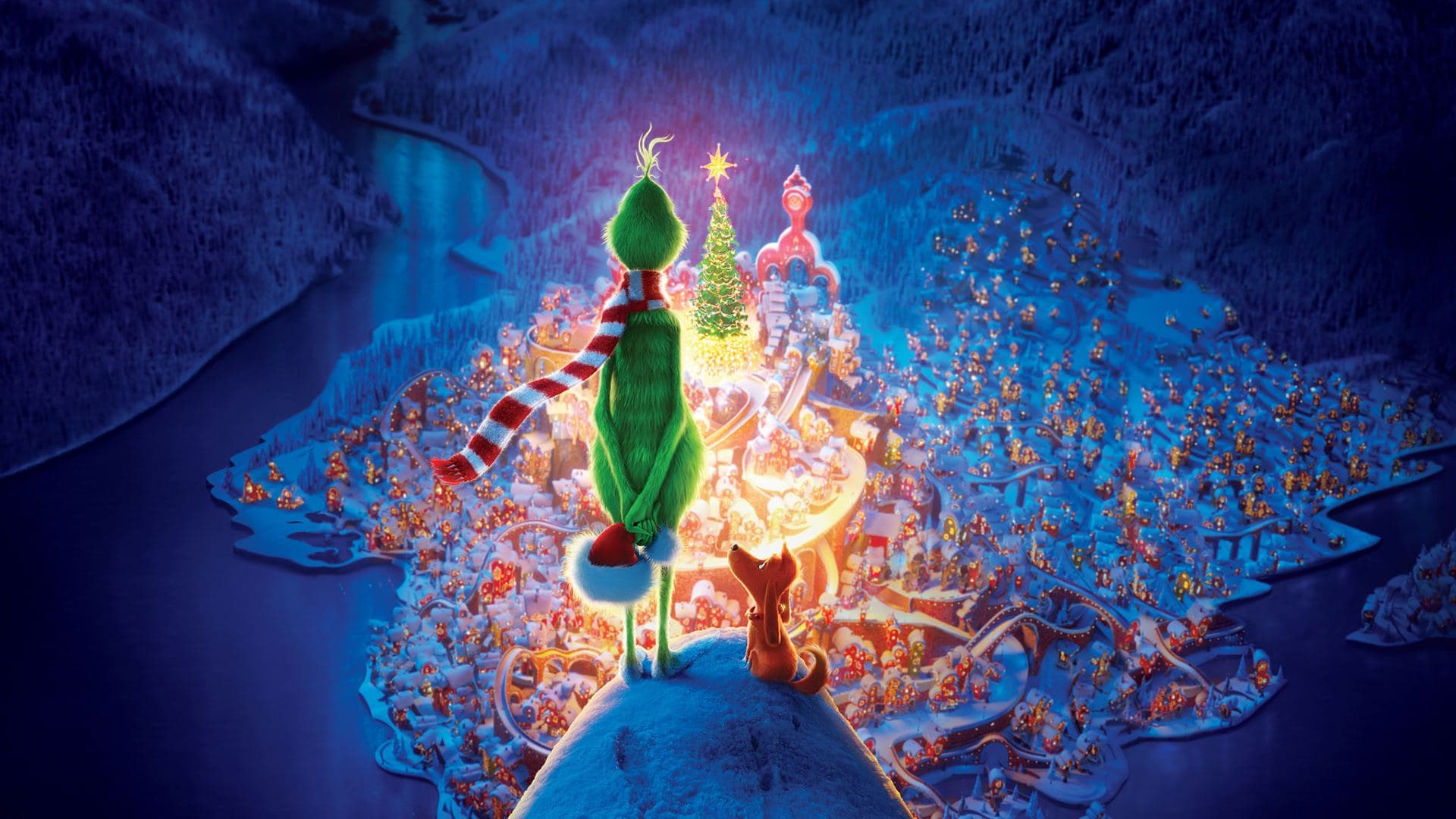
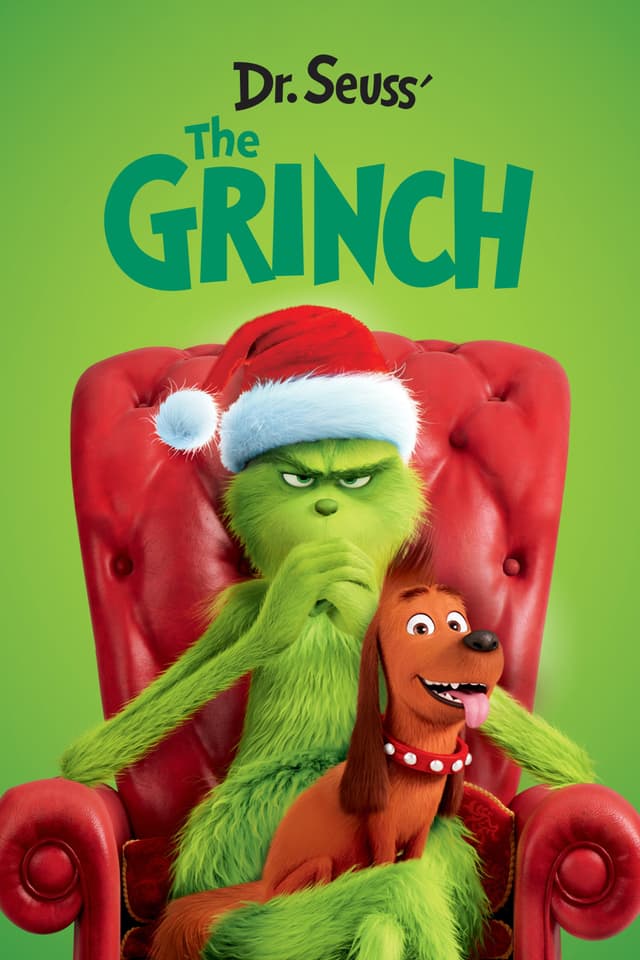
The Grinch, a grumpy green recluse, hatches a scheme to ruin Christmas when the residents of Whoville plan their merriest celebration yet. With his loyal dog Max in tow, he disguises himself as Santa Claus to steal every present, tree, and trimming in town, only to discover that the warm-hearted Cindy-Lou Who has a Christmas wish of her own that may change his bitter heart forever.
What Is the Budget of The Grinch (2018)?
The Grinch (2018), directed by Yarrow Cheney and Scott Mosier and distributed by Universal Pictures, was produced on a reported budget of $75,000,000. Illumination, the Paris-based animation studio behind the Despicable Me franchise, financed the production with Universal as part of its long-standing first-look distribution deal. The film served as the third theatrical adaptation of Dr. Seuss' 1957 children's book, following Chuck Jones' 1966 television special and Ron Howard's 2000 live-action feature, and the first to be rendered entirely in CG animation.
At $75,000,000, the budget reflected Illumination's signature cost-discipline model: significantly lower than DreamWorks Animation or Pixar features of the same era, which typically ran from $135,000,000 to $200,000,000. The figure covered roughly two and a half years of animation production at Illumination Mac Guff in Paris, plus voice talent led by Benedict Cumberbatch as the title character, an original Danny Elfman score, and music supervision from Pharrell Williams who also narrated.
Key Budget Allocation Categories
The reported $75,000,000 budget was distributed across the following core production areas:
- Animation Production at Illumination Mac Guff: The bulk of the budget covered roughly two and a half years of CG animation work at Illumination's Paris-based production house, which employed several hundred artists at peak staffing. Illumination Mac Guff's proprietary pipeline, refined across Despicable Me, Minions, and The Secret Life of Pets, is consistently cited by trade press as the reason the studio's features cost roughly half what a Pixar or DreamWorks Animation equivalent does.
- Voice Cast: Benedict Cumberbatch headlined as the Grinch, supported by Rashida Jones as Donna Who, Kenan Thompson as Bricklebaum, Cameron Seely as Cindy-Lou Who, and Angela Lansbury as the Mayor of Whoville in one of her final on-screen credits. Pharrell Williams served as narrator. Illumination historically pays voice talent below the rates DreamWorks and Pixar command, but a Cumberbatch-led top line still required meaningful above-the-line spend.
- Music and Score: Danny Elfman composed the original orchestral score, his first collaboration with Illumination. Pharrell Williams oversaw a curated soundtrack that included an original Tyler, The Creator track ("I Am The Grinch") and a Pentatonix recording of "You're a Mean One, Mr. Grinch." Music licensing, original composition, orchestra recording, and music-supervision fees collectively represented a substantial line item.
- Character and World Design: Production designer Colin Stimpson and his team built Whoville and the surrounding mountain environments from the ground up, departing from the Boris Karloff-narrated 1966 special's flat 2D aesthetic and the prosthetic-heavy 2000 Ron Howard film. The redesigned Grinch, Max the dog, the reindeer Fred, and the Who citizens each required full rigging and texture pipelines.
- Lighting and Rendering: The snow-covered Whoville exteriors, interior light-strung holiday sets, and the Grinch's cave interior demanded substantial lighting and rendering resources. Snow simulation, fur shading on Max and the Grinch, and the holiday-light volumetrics inside Whoville drove render-farm utilization in the final twelve months of production.
- Marketing-Adjacent Production Costs: While theatrical prints and advertising sit outside the production budget, Illumination and Universal coordinated extensive in-production asset creation for the marketing campaign, including dedicated short content for the November 2018 release window, holiday tie-in commercials, and brand partner integrations with retailers such as Macy's, IHOP, and Xfinity.
- Producer and Director Compensation: Illumination founder Chris Meledandri and Janet Healy produced. The directorial team paired Illumination veteran Yarrow Cheney, who had served as production designer on Despicable Me and The Secret Life of Pets, with first-time animation director Scott Mosier, best known as Kevin Smith's long-time producer on Clerks, Mallrats, and Chasing Amy.
How Does The Grinch's Budget Compare to Similar Films?
At $75,000,000, The Grinch sits at the heart of Illumination's well-documented cost-efficient production model. The comparison set illustrates how the budget aligns with the studio's house economics and undercuts every major competitor in CG animation:
- How the Grinch Stole Christmas (2000): Budget $123,000,000 | Worldwide $345,141,403. Ron Howard's live-action Jim Carrey vehicle cost 64% more than the Illumination film and earned 35% less worldwide, a comparison that anchored most of the 2018 release's pre-release financial framing.
- Despicable Me (2010): Budget $69,000,000 | Worldwide $543,113,985. Illumination's studio-launching debut established the Mac Guff cost model that The Grinch inherited eight years later, with nearly identical economics in both directions.
- Minions (2015): Budget $74,000,000 | Worldwide $1,159,444,662. The franchise spinoff matched The Grinch's budget almost exactly and grossed more than double, illustrating how the Illumination cost discipline scales across very different commercial outcomes.
- Sing (2016): Budget $75,000,000 | Worldwide $634,151,679. The Garth Jennings musical comedy was budgeted identically to The Grinch and out-grossed it by roughly $100,000,000, reflecting a stronger international play.
- The Secret Life of Pets (2016): Budget $75,000,000 | Worldwide $887,949,232. The Chris Renaud original, another Illumination cost-twin of The Grinch, more than doubled its worldwide haul, again proving the wide variance the studio can capture from a stable production-cost base.
- The Super Mario Bros. Movie (2023): Budget $100,000,000 | Worldwide $1,361,997,403. Five years later Illumination still hit a budget that came in well under Pixar or DreamWorks comparables, even on a global-IP tentpole sized larger than The Grinch.
The Grinch Box Office Performance
The Grinch opened on November 9, 2018 to $67,572,855 domestically, the largest opening weekend ever for a holiday-themed release and the biggest debut of Illumination's history at that point. It held the number one slot for three consecutive weekends, fending off Fantastic Beasts: The Crimes of Grindelwald and Ralph Breaks the Internet, and finished its theatrical run as the third-highest-grossing film of November-December 2018 worldwide.
Against a reported production budget of $75,000,000, the film needed roughly $200,000,000 worldwide to clear marketing and distribution costs. The financial breakdown:
Box Office Breakdown
The Grinch

The Grinch returned approximately $2.57 to $3.01 in worldwide theatrical revenue for every $1 invested when measured against total estimated production and marketing spend, comfortably profitable before factoring in home video, streaming, and television licensing. The domestic share of the gross was $271,609,165 against an international share of $254,625,060, an unusually balanced 52/48 split for a culturally American holiday property.
The commercial outcome confirmed Illumination as a top-tier theatrical animation operator and validated the studio's strategy of revisiting public-domain or licensed family IP at a fraction of the cost of original DreamWorks or Pixar projects. The Grinch passed Madagascar 3 to become the highest-grossing Christmas-themed film at the worldwide box office, a record it held until subsequent inflation-adjusted recalibrations.
The Grinch Production History
Development on a new CG Grinch adaptation began at Illumination in 2013, with founder Chris Meledandri and producer Janet Healy negotiating with Audrey Geisel, widow of Theodor Seuss Geisel, and the Dr. Seuss Enterprises estate for the rights. The deal was announced publicly in February 2013, alongside a parallel agreement for the Pets and Grinch projects that would define Illumination's late-2010s slate. Tommy Swerdlow and Michael LeSieur shared screenplay credit, with revisions handled in-house at the studio.
Production was housed entirely at Illumination Mac Guff in Paris, the studio's long-standing animation production partner. The Mac Guff pipeline, integrated with Illumination since the studio's founding in 2007, relies on a leaner artist-to-shot ratio than the U.S. CG studios, in-house proprietary rigging tools, and a flatter management structure, all of which compress per-shot cost. France's animation tax credit (the Crédit d'impôt audiovisuel international, or TRIP) also provided meaningful rebate value across the production cycle.
The voice cast was assembled in 2017. Benedict Cumberbatch was offered the role in March 2017, in part on the strength of his vocal range demonstrated in Doctor Strange and the Sherlock series; he recorded his performance over multiple sessions in London and Los Angeles. Rashida Jones, Kenan Thompson, and Angela Lansbury joined later in the year, with Pharrell Williams attached as narrator. First-time animation director Scott Mosier, a long-time Kevin Smith collaborator, was paired with Illumination production-design veteran Yarrow Cheney specifically to balance live-action character work with house animation expertise.
Danny Elfman delivered an original orchestral score grounded in the chord palette he had refined across his Tim Burton collaborations. Pharrell Williams produced supplementary material including the Tyler, The Creator original "I Am The Grinch" and a Pentatonix cover of the Albert Hague/Theodor Geisel-penned 1966 standard "You're a Mean One, Mr. Grinch." The film entered final picture lock in September 2018 ahead of the November 9 theatrical release, with the November Friday slot deliberately chosen by Universal to anchor the family corridor between Halloween and Thanksgiving.
Awards and Recognition
The Grinch received scattered recognition reflective of its commercial rather than critical positioning. At the 46th Annie Awards, the film earned one nomination, for Outstanding Achievement in Editorial in a Feature Production for Chris Cartagena, though it lost to Spider-Man: Into the Spider-Verse, which swept the ceremony. The film was not nominated for the Academy Award for Best Animated Feature, with the 2018 slate going to Spider-Man: Into the Spider-Verse, Incredibles 2, Isle of Dogs, Mirai, and Ralph Breaks the Internet.
The Grinch was nominated for Favorite Movie at the 2019 Nickelodeon Kids' Choice Awards, losing to Incredibles 2, and earned a Hollywood Music in Media Award nomination for Tyler, The Creator's "I Am The Grinch" original song. It received no recognition at the Golden Globes, BAFTAs, or Critics' Choice Awards. The critical and industry response reflected an established pattern for Illumination releases: strong consumer enthusiasm and family-segment dominance, modest critical regard, and limited award-circuit traction relative to Pixar, Laika, or Sony Pictures Animation's prestige peers.
Critical Reception
The Grinch received mixed reviews. The film holds a 59% approval rating on Rotten Tomatoes based on 224 critic reviews, with a critical consensus that called it visually polished but emotionally thin. On Metacritic, the film scored 51 out of 100, indicating mixed or average reviews. Audiences surveyed by CinemaScore gave the film an A-, an unusually strong audience grade that contrasted sharply with the cooler critical response and helped fuel the film's extended theatrical legs through Christmas.
Critics widely praised the animation craftsmanship, Benedict Cumberbatch's vocal performance, and the production design of Whoville, while objecting to a softened, more sympathetic Grinch that diluted the protagonist's established meanness, the addition of subplots involving Cindy-Lou's working single mother that critics deemed padding, and the film's general avoidance of the darker satirical edge that distinguished the 1966 Chuck Jones special. The New York Times' A.O. Scott called it "a bright, busy, mildly diverting redo," while Variety's Owen Gleiberman wrote that the film "delivers its modest pleasures with technical skill, even if it lacks the bite of the original."
Genre-press reaction split along expected lines. Animation-focused outlets including Cartoon Brew and Animation Magazine praised the Mac Guff pipeline work and Yarrow Cheney's production-design lineage from the Despicable Me films, while mainstream family-entertainment critics noted the film's commercial cleverness even when they faulted its narrative caution. The combination of mixed reviews and a robust A- CinemaScore proved characteristic of Illumination releases: critics-resistant, audience-friendly, and consistently profitable.
Frequently Asked Questions
How much did it cost to make The Grinch (2018)?
The reported production budget was $75,000,000, financed by Illumination Entertainment and distributed by Universal Pictures. Production was carried out at Illumination Mac Guff in Paris over roughly two and a half years and benefited from France's international animation tax credit.
How much did The Grinch (2018) earn at the box office?
The film grossed $271,609,165 domestically and $254,625,060 internationally, for a worldwide total of $526,234,225. It opened to $67,572,855 in the United States, the largest opening weekend ever for a holiday-themed release at the time.
Was The Grinch (2018) profitable?
Yes, decisively. Against a $75,000,000 production budget and an estimated $100,000,000 to $130,000,000 in marketing spend, the film returned approximately $2.57 to $3.01 in worldwide theatrical revenue for every $1 invested, well before factoring in home video, streaming, and television licensing.
Who voices the Grinch in the 2018 movie?
Benedict Cumberbatch voices the title character. Supporting voice cast includes Rashida Jones as Donna Who, Kenan Thompson as Bricklebaum, Cameron Seely as Cindy-Lou Who, and Angela Lansbury as the Mayor of Whoville, with Pharrell Williams serving as narrator.
Who directed The Grinch (2018)?
The film was co-directed by Yarrow Cheney and Scott Mosier. Cheney was an Illumination veteran who had served as production designer on Despicable Me and The Secret Life of Pets, while Mosier was making his animation directorial debut after a long career producing Kevin Smith films including Clerks, Mallrats, and Chasing Amy.
Where was The Grinch (2018) animated?
Production was housed entirely at Illumination Mac Guff in Paris, France, the studio's long-standing animation partner since Illumination's founding in 2007. France's animation tax credit (the Crédit d'impôt audiovisuel international, or TRIP) provided meaningful rebate value across the production cycle.
How does The Grinch (2018) compare to the Jim Carrey 2000 version?
Ron Howard's 2000 live-action How the Grinch Stole Christmas cost $123,000,000, roughly 64% more than the 2018 animated film, and grossed $345,141,403 worldwide. The 2018 Illumination version cost $75,000,000 and grossed $526,234,225 worldwide, outperforming the Carrey vehicle by roughly $180,000,000 at a much lower investment.
Who composed the music for The Grinch (2018)?
Danny Elfman composed the original orchestral score, his first collaboration with Illumination. Pharrell Williams oversaw a curated soundtrack that included an original Tyler, The Creator track titled "I Am The Grinch" and a Pentatonix recording of the 1966 standard "You're a Mean One, Mr. Grinch."
Did The Grinch (2018) win any awards?
The film received minimal awards recognition. It earned one Annie Award nomination, for Outstanding Achievement in Editorial in a Feature Production for Chris Cartagena, losing to Spider-Man: Into the Spider-Verse. It was not nominated for the Academy Award for Best Animated Feature.
What did critics think of The Grinch (2018)?
The film received mixed reviews, with a 59% approval rating on Rotten Tomatoes (based on 224 critics) and a 51 out of 100 score on Metacritic. Audiences surveyed by CinemaScore gave it an A-, an unusually strong audience grade. Critics praised the animation craft and Benedict Cumberbatch's vocal performance but objected to a softened, more sympathetic Grinch that diluted the protagonist's established meanness.
Filmmakers
The Grinch

Official Trailer
Build budgets like this one in Saturation
Start from an industry-standard feature film template, import the schedule and rates you already have, and let the cost report keep itself current as you spend. Real-time collaboration, no spreadsheets.