The Great Silence Budget
Updated
Synopsis
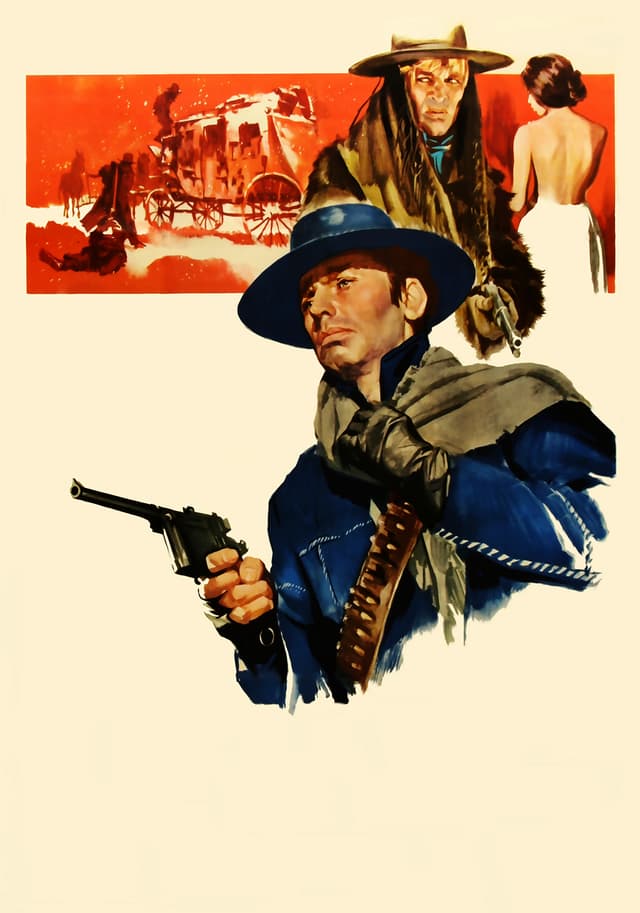
A mute gunslinger fights in the defense of a group of outlaws and a vengeful young widow, against a group of ruthless bounty hunters.
What is known about the production of The Great Silence?
"The Great Silence," a western released in 1968, was directed by Sergio Corbucci and stars Jean-Louis Trintignant, Klaus Kinski. The production budget has not been publicly disclosed, though Les Films Corona, Adelphia Compagnia Cinematografica produced the film, making it a notable entry in the western landscape whose financial details remain private.
Key Budget Allocation Categories
While specific budget breakdowns are not publicly available, typical cost drivers for a western production like this include:
- Casting: Corbucci hired established German actor Klaus Kinski to play Loco, a character who was partially intended to emulate Gorca, the vampire played by Boris Karloff in Mario Bava's Black Sabbath, which served as a major stylistic influence on The Great Silence.
- Filming & Locations: Location filming began in late 1967
- Post-Production: Following the film's completion, The Great Silence was, as per standard procedure for a Spaghetti Western, edited in its final, completed form and dubbed into five languages: Italian, French, Spanish, German and English.
- Music & Score: The Great Silences soundtrack was composed by Ennio Morricone, Corbucci's frequent musical collaborator since Navajo Joe, and conducted by Bruno Nicolai.
What were the major cost factors in The Great Silence?
Several factors contributed to the overall production costs of "The Great Silence."
- Casting: Casting is one of the primary cost drivers in western productions of this scale.
- Filming: Filming & Locations is one of the primary cost drivers in western productions of this scale.
- Post-Production: Post-Production is one of the primary cost drivers in western productions of this scale.
The Great Silence Box Office Performance
"The Great Silence" earned $53,074 worldwide at the box office.
The Great Silence Production History
Corbucci hired established German actor Klaus Kinski to play Loco, a character who was partially intended to emulate Gorca, the vampire played by Boris Karloff in Mario Bava's Black Sabbath, which served as a major stylistic influence on The Great Silence.
Location filming began in late 1967 Most of the Snow Hill scenes filmed at Elios were shot at night so that the fake "snow" looked more convincing; 26 tons of shaving cream was used to give the street a snowbound look. Camera overexposure was also occasionally used to avoid continuity errors. The film's costumes were designed by Enrico Job (the husband of director Lina Wertmüller), and were influenced by hippie fashion styles, including mufflers, shawls, and outfits made of fur and leather; Corbucci was known for standing heavily against the hippie subculture.
The Great Silences soundtrack was composed by Ennio Morricone, Corbucci's frequent musical collaborator since Navajo Joe, and conducted by Bruno Nicolai. A melancholic, emotive score, Morricone personally viewed it as his best Spaghetti Western soundtrack aside from his compositions for Sergio Leone. A limited edition LP (consisting of 500 copies) was released by Dagored in April 2016.
Awards and Recognition
1 win total
Critical Reception
During its North American 2017-2018 theatrical run, The Great Silence received enthusiastic notices from several reviewers, who tended to note its influence on Tarantino's work. The New York Times' A. O. Scott felt that the film's "brazen mixing of incompatible elements that defies categorization, imitation or even sober critical assessment.
Frequently Asked Questions
How much did it cost to make The Great Silence (1968)?
The production budget has not been publicly disclosed.
How much did The Great Silence (1968) earn at the box office?
The Great Silence grossed $53,074 domestic, totaling $53,074 worldwide.
Was The Great Silence (1968) profitable?
Insufficient data for a profitability assessment.
What were the biggest costs in producing The Great Silence?
Specific cost breakdowns are not publicly available.
How does The Great Silence's budget compare to similar western films?
Without a confirmed budget, comparison is not possible.
Did The Great Silence (1968) go over budget?
There are no widely reported accounts of significant budget overruns for this production. However, studios rarely disclose precise budget overrun figures publicly. The reported production budget reflects the final estimated cost.
What awards did The Great Silence (1968) win?
1 win total.
Who directed The Great Silence and who were the key crew members?
Directed by Sergio Corbucci, written by Mario Amendola, Bruno Corbucci, Sergio Corbucci, Vittoriano Petrilli, shot by Silvano Ippoliti, with music by Ennio Morricone, edited by Amedeo Salfa.
Where was The Great Silence filmed?
The Great Silence was filmed in Italy, France. Location filming began in late 1967 Most of the Snow Hill scenes filmed at Elios were shot at night so that the fake "snow" looked more convincing; 26 tons of shaving cream was used to give the street a snowbound look. Camera overexposure was also occasionally used to avoid continuity errors.
Filmmakers
The Great Silence

Official Trailer
Build budgets like this one in Saturation
Start from an industry-standard feature film template, import the schedule and rates you already have, and let the cost report keep itself current as you spend. Real-time collaboration, no spreadsheets.