The Game Plan Budget
 Comedy
Updated
Synopsis
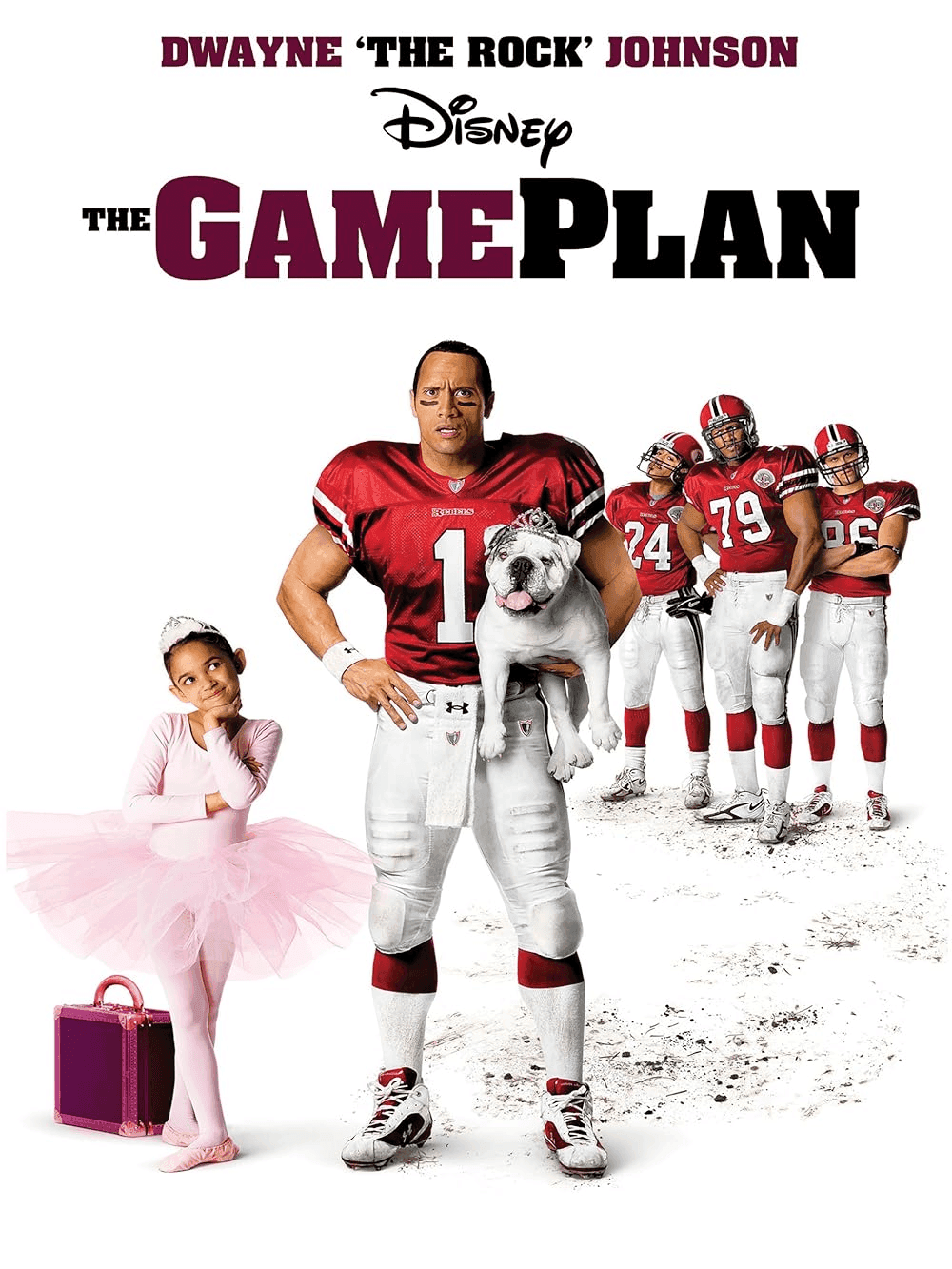
Cocky NFL quarterback Joe Kingman, leading the Boston Rebels toward the playoffs, has his bachelor life upended when an eight-year-old girl named Peyton arrives at his door claiming to be the daughter he never knew he had. As Joe scrambles to balance the Super Bowl run with sudden fatherhood and ballet recitals, he learns what genuinely matters.
What Is the Budget of The Game Plan (2007)?
The Game Plan (2007), directed by Andy Fickman and distributed by Walt Disney Pictures, was produced on a reported budget of $22,000,000. The family-friendly sports comedy starring Dwayne Johnson was financed by Disney in partnership with Mayhem Pictures, with Disney handling worldwide distribution. The $22,000,000 commitment was modest by Disney studio standards, reflecting the contained NFL-football setting, the limited cast, and the deliberate Disney positioning as a Friday-night family-comedy alternative to the larger studio fall releases.
The financial structure was built around Dwayne Johnson's ongoing transition from WWE professional wrestling stardom to mainstream feature-film leading-man positioning. Johnson, then still credited as "The Rock" in some marketing materials and transitioning to his given name, took a feature-lead rate that reflected his post-Walking Tall and Be Cool visibility but predated his fully-established A-list rates of the 2010s. The bulk of the budget went to the cast, location shooting in Boston and Los Angeles, the practical NFL-stadium sequences (with substantial NFL licensing), and a Nathan Wang score with substantial pop-music licensing for the dance and montage sequences.
Key Budget Allocation Categories
The $22,000,000 budget for The Game Plan was distributed across several core production areas:
- Above-the-Line Talent: Dwayne Johnson led the cast as Joe Kingman at a feature-lead rate reflective of his 2007 transition from WWE wrestling stardom to mainstream feature-film leading-man positioning. Newcomer Madison Pettis played the eight-year-old daughter Peyton, with Kyra Sedgwick as the team agent, Roselyn Sánchez as the ballet teacher Monique, Morris Chestnut as Joe's best friend Travis, and Brian White as the football rival Kyle. Director Andy Fickman commanded a feature-director rate appropriate to his She's the Man and post-television visibility.
- Boston Location Work: The film shot extensively on location in Boston, with the fictional Boston Rebels football team's stadium and city sequences covering Fenway Park-adjacent neighborhoods, downtown Boston, and the Massachusetts Turnpike. The Boston location work was a deliberate Disney choice to anchor the film in a specific city rather than the generic American-suburban settings of many family comedies.
- NFL Licensing and Stadium Sequences: The film required substantial NFL licensing for the football-game sequences, with practical NFL-jersey reproductions for the fictional Boston Rebels team and game-day stadium sequences shot at multiple NFL stadiums standing in for the Rebels' home field. The licensing fees and practical stadium-rental costs were a meaningful production-budget line item.
- Practical Ballet and Dance Sequences: The film required substantial dance choreography for the ballet recital and Joe-and-Peyton dance sequences, with choreography handled by veteran dance designers and rehearsal time built into the production schedule. The practical dance work was a deliberate Disney choice to differentiate the film from generic NFL comedies through the unexpected fish-out-of-water dance content.
- Nathan Wang Score and Pop-Music Licensing: Composer Nathan Wang, primarily known for his television work, scored the film with a contemporary pop-orchestral approach. The soundtrack budget also covered substantial licensing of contemporary pop and hip-hop needle drops used in the football, ballet recital, and dance-sequence montages, with the licensing fees adding a meaningful line item.
- Marketing and Theatrical Release: Disney opened the film wide on September 28, 2007 on 3,103 screens, with an estimated prints and advertising spend in the $25,000,000 to $35,000,000 range to support the early-fall family-comedy positioning. The marketing campaign emphasized Dwayne Johnson's transition from wrestling to mainstream family entertainment, the comedic mismatch between NFL machismo and ballet, and the broad family-comedy appeal across the Disney audience.
How Does The Game Plan's Budget Compare to Similar Films?
At $22,000,000, The Game Plan sits in the typical range for mid-2000s family-comedy releases. The comparison set illustrates how its commercial outcome diverged from peers:
- The Pacifier (2005): Budget $56,000,000 | Worldwide $198,663,544. Vin Diesel's previous Disney action-star-to-family-comedy transition cost more than twice The Game Plan and grossed roughly 35% more worldwide, providing the closest direct comparison for the formula and illustrating how The Game Plan's lower budget yielded a superior return on investment.
- Are We There Yet? (2005): Budget $20,000,000 | Worldwide $97,891,727. The Ice Cube family-comedy cost essentially the same as The Game Plan and grossed roughly two-thirds worldwide, providing a near-direct apples-to-apples comparison.
- Cheaper by the Dozen 2 (2005): Budget $45,000,000 | Worldwide $129,729,250. The Steve Martin family-comedy sequel cost more than twice The Game Plan and grossed slightly less worldwide, showing how the lower-budget The Game Plan substantially outperformed on return-on-investment percentage.
- Daddy Day Care (2003): Budget $60,000,000 | Worldwide $164,341,617. The Eddie Murphy family-comedy cost nearly three times The Game Plan and grossed slightly more worldwide, providing further evidence of The Game Plan's commercial efficiency.
- College Road Trip (2008): Budget $28,000,000 | Worldwide $50,925,886. Disney's subsequent Martin Lawrence and Raven-Symoné family-comedy cost slightly more than The Game Plan and grossed roughly a third worldwide, illustrating how The Game Plan stood out as a clear winner within the Disney family-comedy slate.
The Game Plan Box Office Performance
The Game Plan opened wide on September 28, 2007 on 3,103 screens, earning $22,956,453 in its opening weekend and finishing first at the domestic box office, beating both the second weekend of Resident Evil: Extinction and the new openers Feast of Love and The Kingdom. The opening was a substantial result for a Disney family comedy in the early-fall window and demonstrated Dwayne Johnson's emerging crossover commercial appeal beyond the WWE wrestling demographic.
Against a $22,000,000 production budget, the film needed approximately $55,000,000 worldwide to reach profitability after marketing. Here is the financial breakdown:
Box Office Breakdown
The Game Plan (2007)

The Game Plan returned approximately $2.73 in worldwide theatrical revenue for every $1 invested when measured against total estimated production and marketing spend, making it one of the most efficient Disney family-comedy releases of 2007 on a percentage basis. The domestic share of $90,648,202 against an international share of $56,317,000 was a 62/38 split that suggested the family-comedy formula traveled reasonably well to European and Latin American markets, although the NFL setting limited international resonance to some extent.
The film's commercial success cemented Dwayne Johnson's positioning as a family-friendly leading man capable of carrying mid-budget Disney releases, which directly enabled his subsequent Race to Witch Mountain (2009), Tooth Fairy (2010), and the broader 2010s Disney-and-Disney-adjacent family-feature collaboration. Home video and pay-television licensing through 2008 and 2009 added substantial further return, with the film becoming a regular cable-channel staple through the late 2000s and 2010s.
The Game Plan Production History
Development began at Disney in 2005 when writers Nichole Millard and Kathryn Price delivered the original screenplay, structured around the deliberate mismatch between an NFL quarterback bachelor's life and the sudden arrival of an eight-year-old daughter. Producer Gordon Gray of Mayhem Pictures, fresh off Miracle (2004) and his earlier Disney sports-family collaborations, optioned the screenplay and brought it to Disney. The studio recognized the project as a strong vehicle for Dwayne Johnson's ongoing transition from WWE wrestling to mainstream family entertainment.
Andy Fickman was attached to direct in 2006 on the strength of She's the Man (2006), with Audrey Wells brought in to do additional script revisions. Casting Dwayne Johnson as Joe Kingman in late 2006 was a deliberate Disney choice to position the film as a star vehicle for Johnson's evolving brand. Newcomer Madison Pettis was cast as Peyton through extensive Los Angeles audition, with the role requiring substantial chemistry-test work with Johnson before the offer was finalized. Kyra Sedgwick, Roselyn Sánchez, Morris Chestnut, and Brian White rounded out the supporting cast.
Principal photography ran from January to April 2007 in Boston (city exteriors, downtown sequences, and the fictional Boston Rebels stadium and city footprint) and Los Angeles (interior sequences, the ballet-recital sequences, and the dance choreography). The NFL stadium-game sequences were shot at multiple actual NFL stadiums standing in for the Rebels' home field, with substantial NFL licensing and game-day staging coordination. The ballet and dance choreography sequences required several weeks of rehearsal between Madison Pettis, Dwayne Johnson, and the choreography team before principal-photography day.
Nathan Wang recorded the contemporary pop-orchestral score in summer 2007, with the soundtrack also incorporating substantial pop and hip-hop needle drops in the football and dance-sequence montages. The film was completed for a September 28, 2007 release, and the marketing campaign emphasized Dwayne Johnson's transition from wrestling to mainstream family entertainment. The film opened to a strong $22,956,453 first weekend and held with notably strong weekend-over-weekend retention through the fall, ultimately exceeding Disney's commercial expectations by a substantial margin.
Awards and Recognition
The Game Plan received no major awards nominations. The film failed to register at the Academy Awards, Golden Globes, BAFTA Awards, or any of the major industry honors. Dwayne Johnson's lead performance, while broadly praised in trade press for its mainstream-family-comedy appeal, did not generate awards traction.
At the 2008 Kids' Choice Awards and the 2008 Teen Choice Awards, the film and Dwayne Johnson received nominations for Favorite Family Film and Favorite Hissy Fit (Johnson's on-screen frustrated-dad reactions to ballet), with Johnson winning the Kids' Choice Award for Favorite Movie Actor. Madison Pettis received Young Artist Award recognition for her supporting performance. The film has retained substantial cable-and-streaming visibility through the 2010s and remains a regular Saturday-and-Sunday family-comedy fixture across the Disney Channel and ABC Family programming.
Critical Reception
The Game Plan received mixed reviews. The film holds a 30% approval rating on Rotten Tomatoes based on 110 critic reviews, with a critical consensus that called Dwayne Johnson charming but the screenplay formulaic and predictable. On Metacritic, the film scored 40 out of 100, indicating mixed or average reviews. Audiences surveyed by CinemaScore gave the film an A, well above the critical aggregate and one of the highest possible exit-survey scores, a clear signal that the target family-comedy demographic responded enthusiastically to the material.
Critics broadly praised Dwayne Johnson's charm and physical comedy timing, Madison Pettis's precocious supporting performance, the practical dance choreography, and Andy Fickman's family-comedy pacing, but objected to the formulaic structure, the heavy reliance on bachelor-life-meets-daughter clichés, and the predictability of the third-act football-game-versus-ballet-recital climax. Roger Ebert in the Chicago Sun-Times gave the film two stars and wrote that "Dwayne Johnson is reliably likable, but the screenplay never lets him do anything that any other family-comedy lead couldn't do." Variety's Joe Leydon called it "a competent if unremarkable family comedy that gets by on Johnson's charm."
Family-and-children's press response was substantially more enthusiastic. Common Sense Media praised the film's positive father-daughter messaging, and Disney's own promotional press received strong family-publication response. The mixed critical reception combined with the strongly enthusiastic audience response has positioned The Game Plan as a clear sleeper-hit success for Disney and a critical step in Dwayne Johnson's mid-2000s transition from WWE wrestling stardom to A-list mainstream family-feature leading-man positioning that would extend through Race to Witch Mountain, Tooth Fairy, and the 2010s family-feature collaboration with Disney and Walt Disney Animation Studios.
Frequently Asked Questions
How much did The Game Plan (2007) cost to make?
The reported production budget was $22,000,000. Walt Disney Pictures financed the film in partnership with Gordon Gray's Mayhem Pictures. The budget covered Dwayne Johnson's feature-lead compensation, the Boston and Los Angeles location work, substantial NFL licensing for the game-day stadium sequences, practical dance choreography for the ballet recital, and Nathan Wang's score with substantial pop-music licensing.
How much did The Game Plan earn at the box office?
The film grossed $90,648,202 domestically and $56,317,000 internationally, for a worldwide total of $146,965,202. It opened to $22,956,453 in the United States on September 28, 2007, finishing first at the domestic box office in its opening weekend and demonstrating Dwayne Johnson's emerging crossover commercial appeal beyond the WWE wrestling demographic.
Was The Game Plan a box office success?
Yes. Against a $22,000,000 production budget and an estimated $25,000,000 to $35,000,000 in marketing spend, the film returned approximately $2.73 in worldwide gross for every $1 invested. Disney earned an estimated theatrical profit of around $90,000,000, with home video and pay-television licensing adding substantial further return through 2008 and 2009.
Who directed The Game Plan?
Andy Fickman directed the film. Fickman was attached on the strength of She's the Man (2006). The screenplay was credited to Nichole Millard and Kathryn Price, with additional revisions by Audrey Wells. Producer Gordon Gray of Mayhem Pictures, fresh off Miracle (2004), anchored the project.
Where was The Game Plan filmed?
Principal photography took place from January to April 2007 in Boston (city exteriors, downtown sequences, and the fictional Boston Rebels stadium and city footprint) and Los Angeles (interior sequences, the ballet-recital sequences, and the dance choreography). The NFL stadium-game sequences were shot at multiple actual NFL stadiums standing in for the Rebels' home field, with substantial NFL licensing.
Who plays Joe Kingman in The Game Plan?
Dwayne Johnson plays Joe Kingman, the cocky Boston Rebels quarterback whose bachelor life is upended by the arrival of an eight-year-old daughter. The role was a deliberate Disney choice to position the film as a star vehicle for Johnson's ongoing transition from WWE wrestling to mainstream feature-film leading-man positioning, with Johnson then transitioning from his "The Rock" wrestling credit to his given name.
Who plays Peyton in The Game Plan?
Newcomer Madison Pettis plays the eight-year-old Peyton, Joe Kingman's previously-unknown daughter. Pettis was cast through extensive Los Angeles audition, with the role requiring substantial chemistry-test work with Dwayne Johnson before the offer was finalized. The role launched Pettis's subsequent Disney Channel and family-feature career, including significant television work through the late 2000s and 2010s.
Is The Game Plan based on a true story?
No. The film is an original screenplay by Nichole Millard and Kathryn Price, with revisions by Audrey Wells. The screenplay was structured as a deliberate mismatch between an NFL quarterback bachelor's life and the sudden arrival of an eight-year-old daughter, drawing on family-comedy formula conventions rather than any specific real-life inspiration.
What did critics think of The Game Plan?
The film received mixed reviews, with a 30% approval rating on Rotten Tomatoes and a 40 out of 100 score on Metacritic. Audiences gave it an A CinemaScore, one of the highest possible exit-survey scores. Roger Ebert gave it two stars but noted that Dwayne Johnson was "reliably likable." Critics praised Johnson's charm and physical comedy timing but objected to the formulaic structure.
Did The Game Plan win any awards?
Yes, modestly. Dwayne Johnson won the 2008 Kids' Choice Award for Favorite Movie Actor for the role, and Madison Pettis received Young Artist Award recognition for her supporting performance. The film also received Teen Choice Award nominations for Favorite Family Film. The Game Plan received no major industry awards nominations at the Academy Awards, Golden Globes, or BAFTA Awards.
Filmmakers
The Game Plan (2007)

Build budgets like this one in Saturation
Start from an industry-standard feature film template, import the schedule and rates you already have, and let the cost report keep itself current as you spend. Real-time collaboration, no spreadsheets.