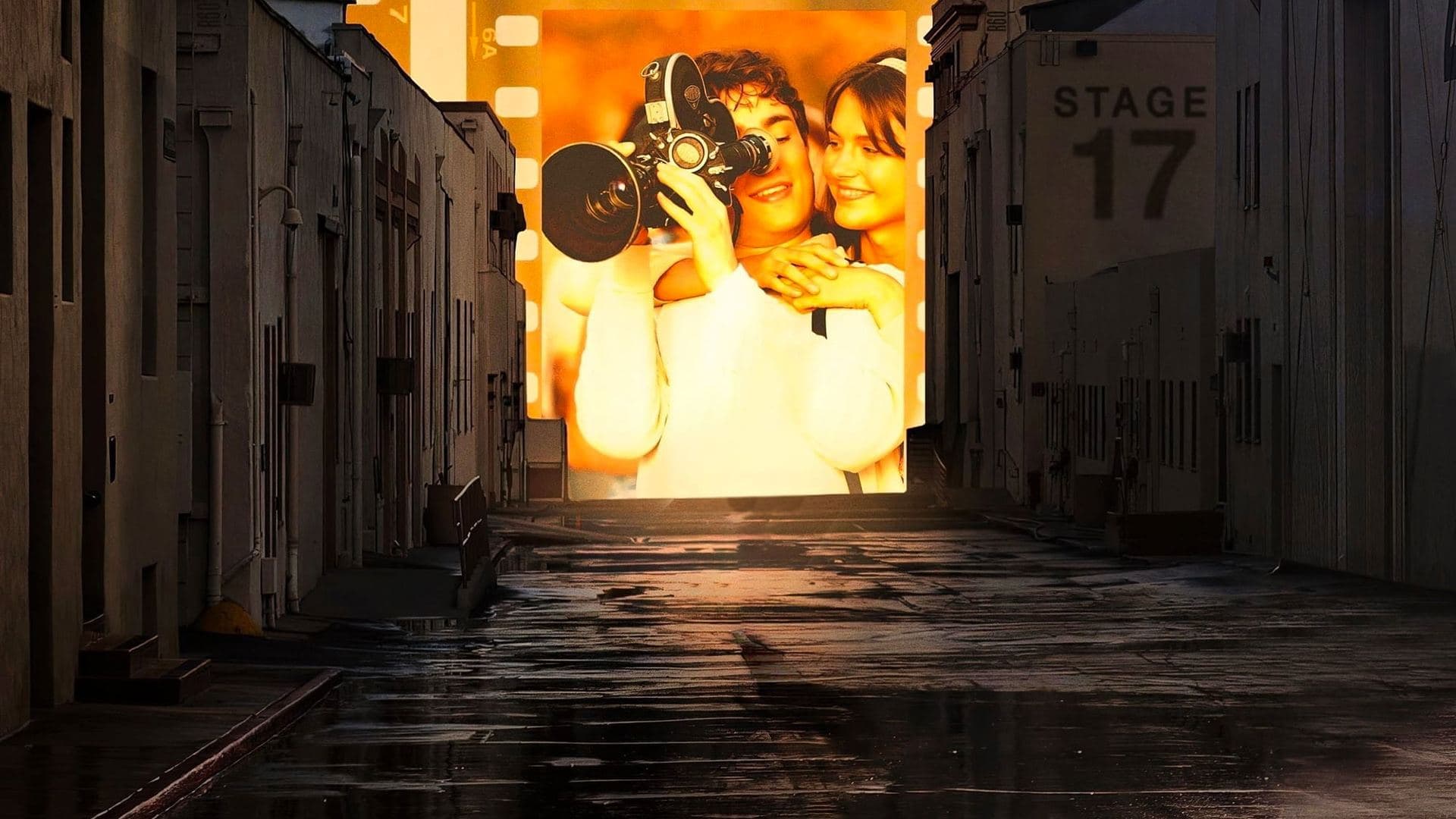
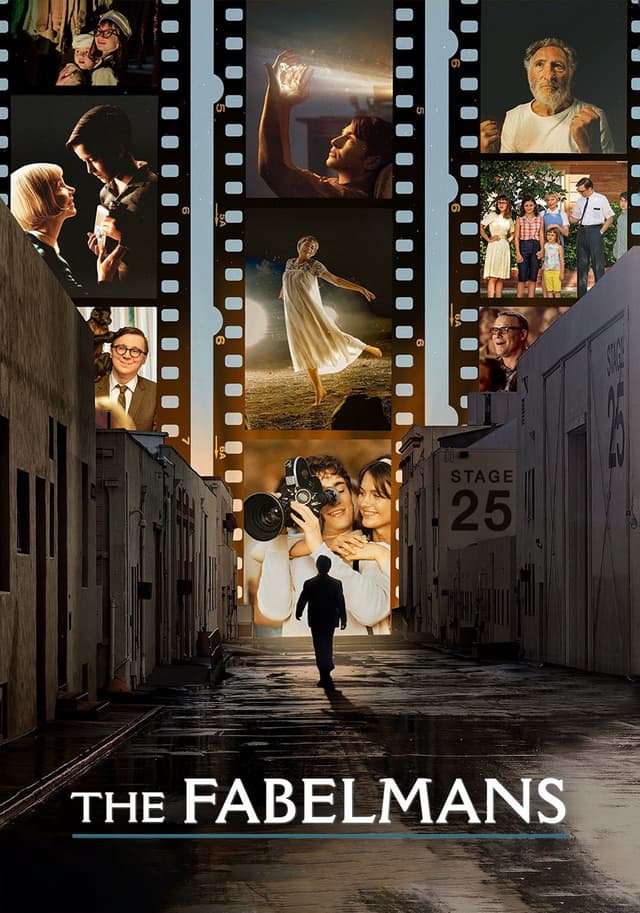
The Fabelmans
Synopsis
Growing up in post-World War II era Arizona, young Sammy Fabelman aspires to become a filmmaker as he reaches adolescence, but soon discovers a shattering family secret and explores how the power of films can help him see the truth.
Production Budget Analysis
What was the production budget for The Fabelmans?
Directed by Steven Spielberg, with Michelle Williams, Paul Dano, Seth Rogen leading the cast, The Fabelmans was produced by Amblin Entertainment with a confirmed budget of $40,000,000, placing it in the mid-budget category for drama films.
With a $40,000,000 budget, The Fabelmans sits in the mid-range of studio releases. Marketing costs for a wide release at this level typically add $30–60 million, putting the break-even point near $100,000,000.
Budget Comparison — Similar Productions
• 42 (2013): Budget $40,000,000 | Gross $95,020,213 → ROI: 138% • A Few Good Men (1992): Budget $40,000,000 | Gross $243,240,178 → ROI: 508% • Big Trouble (2002): Budget $40,000,000 | Gross $8,493,890 → ROI: -79% • Boomerang (1992): Budget $40,000,000 | Gross $131,052,444 → ROI: 228% • Fifty Shades of Grey (2015): Budget $40,000,000 | Gross $569,651,467 → ROI: 1324%
Key Budget Allocation Categories
▸ Above-the-Line Talent Drama films live or die on the strength of their performances. Securing award-caliber actors and experienced directors represents the single largest budget line item, often consuming 30–40% of the total production budget.
▸ Location Filming & Period Production Design Authentic locations — whether contemporary or historical — require scouting, permits, travel, lodging, and often significant dressing to match the story's time period. Period dramas add the cost of era-accurate props, vehicles, and set decoration.
▸ Post-Production, Color Grading & Score The editorial process for dramas is typically longer than genre films, with careful attention to pacing and tone. Color grading, a nuanced musical score, and detailed sound mixing are critical to achieving the emotional resonance that defines the genre.
Key Production Personnel
CAST: Michelle Williams, Paul Dano, Seth Rogen, Gabriel LaBelle, Mateo Zoryan Francis-DeFord Key roles: Michelle Williams as Mitzi Fabelman; Paul Dano as Burt Fabelman; Seth Rogen as Benny Loewy; Gabriel LaBelle as Sammy Fabelman
DIRECTOR: Steven Spielberg CINEMATOGRAPHY: Janusz Kamiński MUSIC: John Williams EDITING: Michael Kahn, Sarah Broshar PRODUCTION: Amblin Entertainment, Reliance Entertainment FILMED IN: United States of America
Box Office Performance
The Fabelmans earned $17,348,945 domestically and $28,280,964 internationally, for a worldwide total of $45,629,909. Revenue was split 38% domestic / 62% international.
Break-Even Analysis
Using the industry-standard 2.5x multiplier (P&A + exhibitor shares of 40–50% + distribution fees), The Fabelmans needed approximately $100,000,000 to break even. The film fell $54,370,091 short in theatrical revenue. Ancillary streams (home media, streaming, TV) may have bridged the gap.
Return on Investment (ROI)
Revenue: $45,629,909 Budget: $40,000,000 Net: $5,629,909 ROI: 14.1%
Profitability Assessment
VERDICT: Modestly Profitable
The Fabelmans earned $45,629,909 against a $40,000,000 budget (14% ROI). Full profitability was likely achieved through ancillary revenue streams.
INDUSTRY IMPACT
Filmmaker Denis Villeneuve praised the film, calling it "...the best movie ever made about the power of cinema. It's a miracle. To say that I was deeply moved by this movie is an understatement. The Fabelmans is a pure act of artistic generosity made by one of the greatest filmmakers of our time." Other filmmakers, including S. S. Rajamouli, Guillermo del Toro, Judd Apatow, and Arnaud Desplechin, as well as actor Tom Cruise, also praised the film. Apatow, in particular, felt seen by the film and its portrayal of growing up in an ever-changing world and how it affects life itself, saying "As a child of divorce, I felt a deep connection to this story about a family struggling to hold together, how the traumas of a disintegrating marriage affect a young man and how it leads to him developing his creative muscles as a way to process his pain and interpret the world ...It's a terrifying endeavor to open up oneself and your family — to share the most personal details that shaped you.
PRODUCTION NOTES
▸ Writing
In 2004, while working on Munich, Spielberg told screenwriter Tony Kushner his life story, with Kushner telling him in response: "Someday you're going to have to make a film about this." Spielberg, at that time, felt that the climate caused by the pandemic convinced him that the time was now right to make the film, saying:
He shared script drafts with his sisters, Sue and Nancy, to incorporate their memories and ensure accuracy.
▸ Casting
Spielberg emphasized authenticity in casting, seeking actors who evoked a profound personal connection and reminded him of his parents. In March 2021, Michelle Williams was in negotiations to star as Mitzi Fabelman, the role inspired by Spielberg's mother (Leah Adler), but with "an original voice". Spielberg envisioned Williams in the role after seeing her in Blue Valentine (2010) and Fosse/Verdon (2019). That same month, it was reported that Seth Rogen joined the cast to play Bennie Loewy, the role inspired by Bernie Adler, "the favorite uncle of young Spielberg", while Williams was confirmed to have been cast. On April 8, 2021, Paul Dano joined the cast as Burt Fabelman, the role inspired by Spielberg's father Arnold. Dano found the role intimidating, noting that portraying one of Spielberg's most influential figures carried high stakes.
After a three-month search with over 2,000 contenders, Gabriel LaBelle entered final negotiations in May 2021 for the lead role of Sammy Fabelman. His casting was confirmed in June alongside Julia Butters as Reggie Fabelman, based on Spielberg's sister Anne. Later that June, Sam Rechner was cast as well. In July, Chloe East, Oakes Fegley, Isabelle Kusman, Jeannie Berlin, Judd Hirsch, Robin Bartlett and Jonathan Hadary were added to the cast. Hadary was cast as the spirit of Sammy's grandfather in a cut scene where Sammy claims to have seen him after his death, sparking a debate between his grandmothers. Kushner explained why it was cut, deeming it "unnecessary" and to keep the runtime under two and a half hours, while adding "This is a kind of epic story, it travels across 12, 15 years of time — and in order for it to have momentum, we couldn't afford to have it linger anywhere." In August, Gabriel Bateman, Nicolas Cantu, Gustavo Escobar, Lane Factor, Cooper Dodson and Stephen Matthew Smith were cast. They were later followed by newcomers Keeley Karsten, Birdie Borria, Alina Brace, Sophia Kopera, and Mateo Zoryan Francis-DeFord.
▸ Pre-Production
In March 2021, Spielberg was announced as director and co-screenwriter, his first writing role since A.I. Artificial Intelligence (2001). In September 2022, Spielberg expressed how personal the film was to him, saying that "This film is, for me, a way of bringing my mom and dad back. And it also brought my sisters, Annie, Susie, and Nancy, closer to me than I ever thought possible. And that was worth making the film."
▸ Production
To recreate the three houses that Spielberg lived in during his childhood in Haddon Township, New Jersey, Phoenix, Arizona, and Saratoga, California, production designer Rick Carter worked off floor plans that the director sketched from memory and then took artistic license with the spaces to fit the emotional mindset of Sammy. More attention was paid to the set in Phoenix, "...because, as a filmmaker, he became more himself. So not only the equipment that was there is accurate, but all the storyboards that Sammy used to make his movies. And Steven drew all the storyboards, and he still draws his storyboards the way he did as a teenager." Carter and set decorator Karen O'Hara also worked off photos and memories that Spielberg and his three sisters provided. All of the house interiors were built on soundstages. Carter also noted that the differences between the two houses had to do with him and his team having "the most pictures and home movies of the Phoenix house. The New Jersey [house] we had less, but we knew the rough plan and had a couple photos that at least indicated the tone of the paint color. It's not an exact re-creation, but the Phoenix house was especially close. My attempt the whole time was to have him to be able walk in and feel like he was close to being back."
The Los Gatos rental house that the family moved to in California was entirely fictional, as the Spielberg family actually lived in various rental apartments and temporary homes. According to Carter, the house in the film "served the function of the script to have them be in this one place they were moving into while waiting for this other house to get made. He's moving to the promised land, but it doesn't turn out to be so promised in California.
▸ Filming & Locations
Principal photography began in the midst of the COVID-19 pandemic in Los Angeles on July 17, 2021, lasting for 59 days until ending on September 27, 2021. Additional filming took place at Zuma Beach in Malibu, California for the "Ditch Day" scenes, Susan Miller Dorsey High School for the high school scenes, and on soundstages in Santa Clarita, California.
During the shoot, the cast gained access to home movies, photographs, and recollections from Spielberg's family's past to learn what they were like and how to portray the fictionalized versions of them (the Fabelman family) on screen, while making them feel fresh and original. Paul Dano reflected, "It was overwhelming and it was sort of a heavy cloak to bear because we were with someone who was having a big experience everyday, revisiting and reworking through a part of their life ... For somebody like Steven to share that much of himself with us – with the audience too – it was really a profound experience." In addition, Dano ordered and built a crystal radio set to get the feeling of how Arnold Spielberg was around electronics. Gabriel LaBelle also rewatched some of Spielberg's films, such as Empire of the Sun (1987) and constantly had conversations with Spielberg to learn more about his life in order to prepare for playing Sammy. Gabriel LaBelle's first two days on set involved a scene where Sammy and his friends film a recreation of Spielberg's World War II short film Escape to Nowhere (1961). On the experience, LaBelle remarked "It was a cool way to see how Steven walked and moved around back then ... I asked so many questions about Saving Private Ryan, because we were doing a war film. For the first two days, it was me, Steven, Tony, and Janusz, just hanging out.
▸ Visual Effects & Design
The film's tornado sequence was filmed using Industrial Light & Magic's StageCraft virtual production technology. Pablo Helman, who served as visual effects supervisor, suggested the idea to Spielberg and Kamiński after working with the technology on the Disney+ series The Mandalorian and Obi-Wan Kenobi and described the process as shooting "background plates with an array of cameras driving through the scene and then stitching those into a 360-degree plate we could move around wherever we wanted." The background plates were filmed digitally with a rig containing six Red Monstro 8K digital cameras with Nikon Nikkor zoom lenses and the team spent three weeks adding the tornado and other digital elements to make the scenery more "cloudy" and threatening, followed by two days of camera tests in the StageCraft Volume.
The final sequence was filmed on the LED stage at Manhattan Beach Studios, using an ARRI Alexa Mini LF camera and Panavision PVintage lenses to complement and seamlessly match the 35mm cinematography of the rest of the film. Helman revealed that Spielberg enjoyed experimenting with the new technology and that "StageCraft is a different way of working, and of course, some directors are shy of working far in advance and making commitments ... Steven has never been that way. After you finish a movie with him, two or three weeks later, you have your cut. He knows exactly what he needs for the edit and has a very specific shooting economy."
▸ Music & Score
The score was composed and conducted by John Williams, marking his 29th film collaboration with Spielberg and approaching the 50th anniversary of their first film The Sugarland Express, released in 1974. On June 23, 2022, Williams revealed that this and Indiana Jones and the Dial of Destiny may be the last two films he will score before retirement. Recording of the score began in March 2022, following Williams's concert performance with the Vienna Philharmonic at Vienna's Musikverein. In July, stills from the recording sessions were revealed by one of the film's crew members, revealing that scoring of the film is underway. Along with his usual orchestral style, Williams opted for a score mostly relying on piano, with Joanne Pearce Martin, principal pianist of the Los Angeles Philharmonic, providing the piano solos.
The film features source classical music selected by Spielberg himself, some of which are performed on piano in the film by the character of Mitzi Fabelman, from composers such as Friedrich Kuhlau, Erik Satie, Muzio Clementi, Johann Sebastian Bach and Joseph Haydn. The film's soundtrack was released digitally by Sony Classical on November 11, 2022, and was released on physical CD on December 9, 2022.
The film includes pop songs of the film's time period which are not featured on the soundtrack album, such as "Goodbye Cruel World" by James Darren, used to accompany the montage sequence of Sammy Fabelman documenting his high school's Ditch Day on film.
▸ Marketing & Release
The poster to promote the film's world premiere at TIFF was released on September 7, 2022, with the official theatrical release version of it being released on September 29, 2022. The trailer premiered online on September 11, 2022. The music for the trailer was composed by Felix Erskine of Cavalry Music. Universal spent approximately $8.5 million on the film's advertising campaign. Another trailer, set to Ben Folds' cover of The Beatles song "Golden Slumbers", was released on December 13, 2022.
AWARDS & RECOGNITION
Summary: Nominated for 7 Oscars. 32 wins & 298 nominations total
Awards Won: ★ Golden Globe Award for Best Motion Picture – Drama (80th Golden Globe Awards) ★ Toronto International Film Festival People's Choice Award
Nominations: ○ Academy Award for Best Writing, Original Screenplay (95th Academy Awards) ○ Academy Award for Best Supporting Actor (95th Academy Awards) ○ Academy Award for Best Picture (95th Academy Awards)
Additional Recognition: The Fabelmans received seven nominations at the 95th Academy Awards, including Best Picture, but failed to win any due to it receiving a divided reception by the academy and strong competition from Everything Everywhere All at Once, which won the award. It also received five nominations at the 80th Golden Globe Awards, winning Best Motion Picture – Drama and Best Director for Spielberg, and received 11 nominations at the 28th Critics' Choice Awards, including Best Picture, winning Best Young Performer for LaBelle, and two nominations at the 29th Screen Actors Guild Awards including Best Ensemble Cast of a Motion Picture and Best Supporting Actor (for Dano).
The Fabelmans also received two awards from the National Board of Review, including Best Director for Spielberg and Breakthrough Performance for LaBelle (shared with Danielle Deadwyler for Till), making this the second Spielberg film to win both of these awards together since 1987's Empire of the Sun. With his 53rd nomination for Best Original Score with this film, John Williams broke his own record as the most Oscar-nominated person alive at the age of 90. Williams also received a nomination for Best Score Soundtrack for Visual Media at the 66th Annual Grammy Awards for his work on the score, but lost to Ludwig Göransson for his score on Oppenheimer (2023).
CRITICAL RECEPTION
Audiences polled by CinemaScore gave the film an average grade of "A" on an A+ to F scale.
Chris Evangelista of /Film called it " ... one of Spielberg's warmest, funniest films" and highlighted Kamiński's cinematography. Steve Pond of TheWrap wrote, "That The Fabelmans is one of Steven Spielberg's most personal movies was never in doubt; that it's also one of his most original and most satisfying in years is a welcome bonus." Pete Hammond of Deadline Hollywood praised the performances of Williams, Dano, LaBelle and Butters, and referred to David Lynch's cameo as being "worth the price of admission alone". Peter Debruge of Variety named it the frontrunner for the Academy Award for Best Picture, while writing "...this endearing, broadly appealing account of how Spielberg was smitten by the medium – and why the prodigy nearly abandoned picture-making before his career even started – holds the keys to so much of the master's filmography."
David Ehrlich of IndieWire was mixed about the film and gave it a B+, writing that Spielberg " ...


Budget Templates
Build your own production budget
Create professional budgets with industry-standard feature film templates. Real-time collaboration, no spreadsheets.

Start Budgeting Free