Ernest & Celestine Budget
 AnimationFamilyCrimeDramaComedy1h 20m
Updated
Synopsis
In a divided world where bears live above ground and mice live below, an unlikely friendship forms between Ernest, a gruff vagabond bear, and Celestine, a young orphaned mouse with dreams of becoming an artist. Together they challenge the rigid laws that keep their two communities apart, building a fragile bond that defies prejudice on both sides.
What Is the Budget of Ernest & Celestine (2012)?
Ernest & Celestine (2012), directed by Stéphane Aubier, Vincent Patar, and Benjamin Renner and distributed internationally by GKIDS, was produced on a reported budget of $12,500,000. The film was financed as a French-Belgian-Luxembourgish co-production by Les Armateurs, Maybe Movies, La Parti Productions, Mélusine Productions, and StudioCanal, drawing on three distinct national funding pools to assemble the budget for a hand-drawn watercolor animated feature in an era dominated by computer-generated tentpoles.
The budget reflected a deliberate cultural strategy. Compared with American CG releases of the same year such as Brave ($185,000,000) or Wreck-It Ralph ($165,000,000), Ernest & Celestine spent less than 10 percent of those figures while delivering a feature-length traditional animation rooted in Gabrielle Vincent's beloved Belgian picture books. The economics depended on European public-broadcaster pre-sales, regional film fund support, and a tightly managed production schedule built around the small-studio pipelines at Les Armateurs.
Key Budget Allocation Categories
Ernest & Celestine's reported $12,500,000 budget was distributed across several core production areas:
- Above-the-Line Talent: Directors Stéphane Aubier and Vincent Patar (A Town Called Panic) co-directed with first-time feature director Benjamin Renner, an animation graduate of La Poudrière. Daniel Pennac, the celebrated French novelist, adapted the screenplay from Gabrielle Vincent's source books, commanding a literary-grade writing fee.
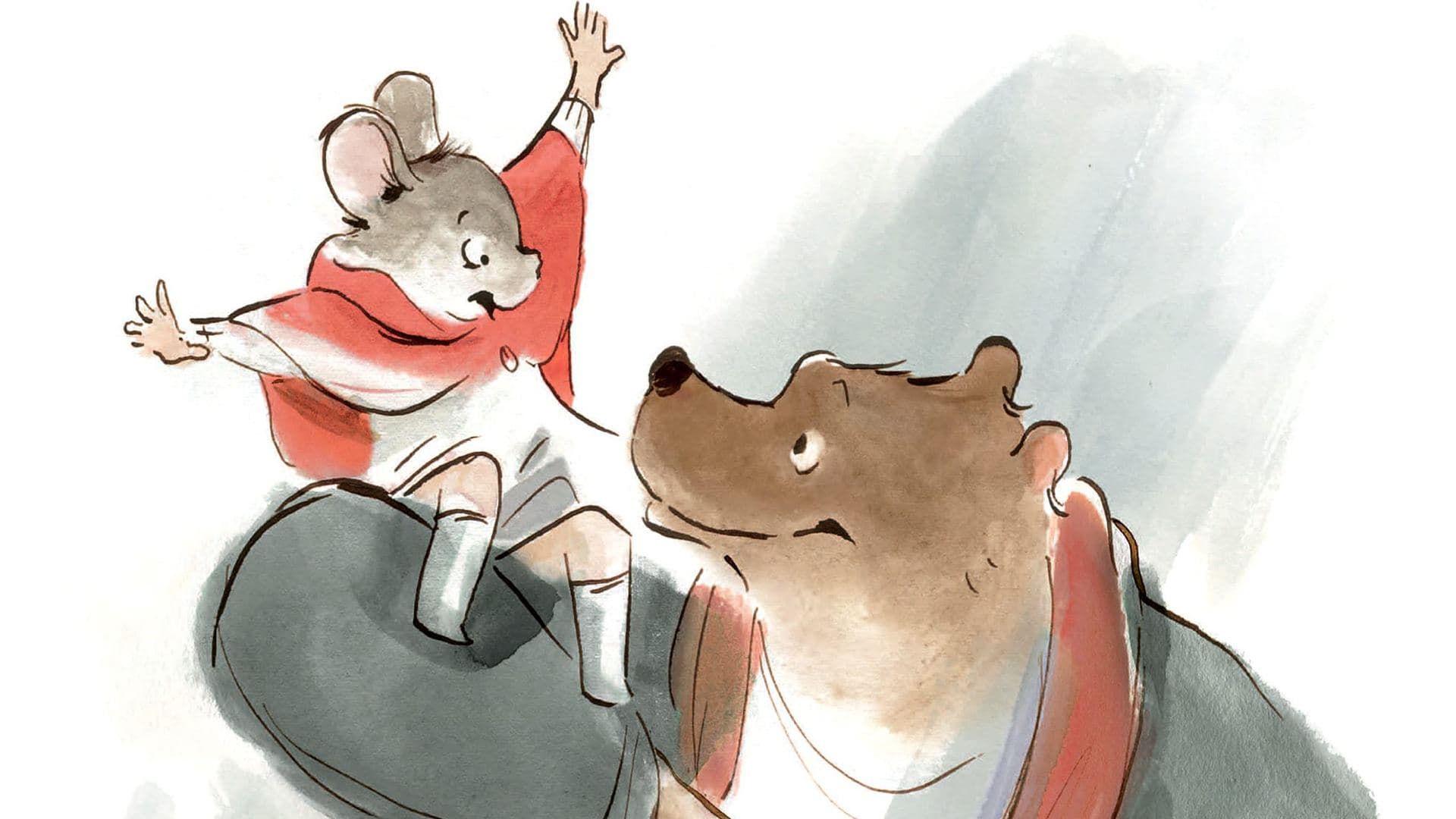
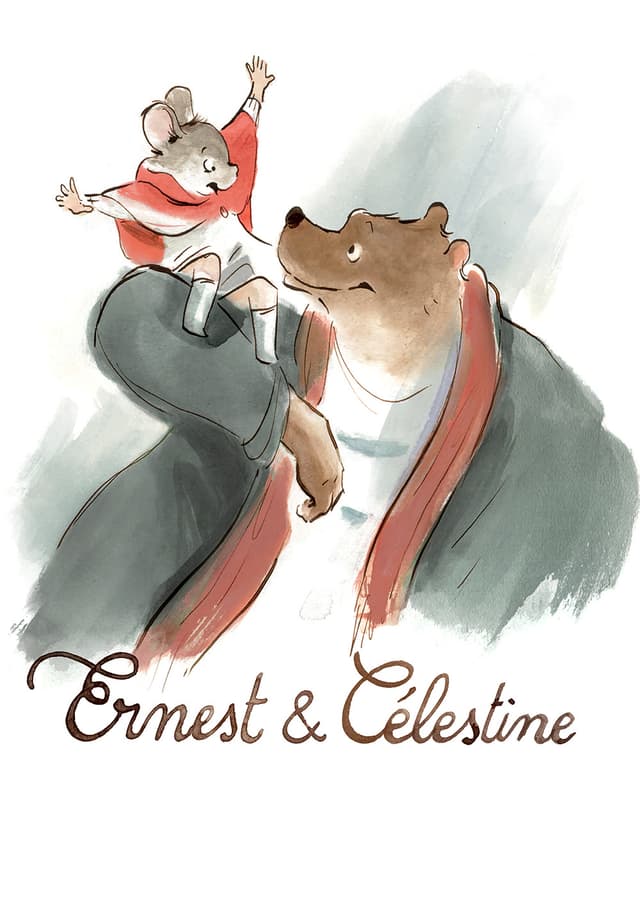
- Animation Production: The watercolor-and-ink visual style required hand-drawn 2D animation produced across studios in Paris, Brussels, and Luxembourg. The production employed roughly 150 animators and assistants over more than two years, with traditional pencil tests, ink-and-paint, and digital compositing replacing the cost savings of full CGI.
- Voice Cast: The French-language original featured Lambert Wilson as Ernest and Pauline Brunner as Celestine, with supporting voice work from Anne-Marie Loop, Patrice Melennec, and Brigitte Virtudes. The English dub assembled by GKIDS featured Forest Whitaker, Mackenzie Foy, Lauren Bacall, William H. Macy, and Paul Giamatti at scale-appropriate rates.
- Score and Music: French composer Vincent Courtois delivered a chamber-scale score built around cello, clarinet, and small ensemble textures, recorded with a modest orchestra in Brussels. The music budget covered original composition, recording sessions, and rights clearance for classical motifs woven through the film.
- European Co-Production Overhead: Three-country co-production structures impose meaningful administrative cost in legal fees, language deliverables, and split-rights accounting. The film qualified for the Centre national du cinéma fund in France, the Centre du Cinéma et de l'Audiovisuel in Belgium, and Film Fund Luxembourg support, each carrying compliance overhead.
- Post-Production and Sound: Post work in Brussels and Paris included color grading, sound design by Olivier Hespel and Bruno Schweisguth, ADR for the French cast, and creation of the English-language dub master that GKIDS used for North American release.
How Does Ernest & Celestine's Budget Compare to Similar Films?
At $12,500,000, Ernest & Celestine sits at the low end of feature animation budgets and well below the typical North American or Japanese major-studio range. The comparison set illustrates how European hand-drawn animation operates within a fundamentally different cost structure:
- Song of the Sea (2014): Budget $7,000,000 | Worldwide $1,000,000. Tomm Moore's Cartoon Saloon Irish-Belgian-Luxembourgish co-production was made for roughly half the cost using a similar European public-funding stack.
- Kubo and the Two Strings (2016): Budget $60,000,000 | Worldwide $77,510,977. Laika's American stop-motion feature illustrates how an artisanal animation pipeline in the United States runs five times the cost of the European 2D model.
- The Secret of Kells (2009): Budget $8,000,000 | Worldwide $1,000,000. Cartoon Saloon's earlier French-Belgian-Irish Oscar nominee operated on a comparable scale and demonstrated the funding template Les Armateurs adapted for Ernest & Celestine.
- Wreck-It Ralph (2012): Budget $165,000,000 | Worldwide $471,222,889. Disney's contemporaneous CG release cost more than 13 times what Ernest & Celestine spent, showing the structural gap between European 2D and American studio animation.
Ernest & Celestine Box Office Performance
Ernest & Celestine opened in France on December 12, 2012 through StudioCanal, with GKIDS handling a platform North American release that began on February 28, 2014 in New York. The film grossed approximately $3,300,000 worldwide in reported theatrical revenue, with the bulk coming from European territories. Here is the financial breakdown:
Box Office Breakdown
Ernest & Celestine

The theatrical performance was modest by absolute dollars, returning roughly $0.18 in worldwide box office for every $1 of total investment. Reading the film as a pure theatrical bet would mark it a loss, but European hand-drawn animation rarely earns out on theatrical alone.
Long-tail revenue from French television sales, home video releases, streaming licensing, and the subsequent television series and sequel film (Ernest & Celestine: A Trip to Gibberitia in 2022) substantially improved the property's lifetime economics. Les Armateurs and Studio Canal treat the title as catalogue equity rather than a single theatrical asset.
Ernest & Celestine Production History
Development began in 2007 at Les Armateurs in Angoulême, the French animation house behind The Triplets of Belleville and Kirikou and the Sorceress. Producer Didier Brunner, who had championed European 2D animation across two decades, acquired the rights to Gabrielle Vincent's Ernest et Célestine picture book series and engaged novelist Daniel Pennac to adapt the screenplay.
Benjamin Renner, a recent La Poudrière graduate whose short film A Mouse's Tale had impressed Brunner, was paired with established Belgian filmmakers Stéphane Aubier and Vincent Patar (A Town Called Panic) to co-direct. The three-director arrangement balanced Renner's fidelity to the source-book illustrations with Aubier and Patar's feature-direction experience.
Animation production unfolded across studios in France, Belgium, and Luxembourg between 2010 and 2012, with Maybe Movies, La Parti Productions, and Mélusine Productions each handling segments of the watercolor work. The studios coordinated through Brussels-based animation directors who safeguarded a unified visual style across the international pipeline.
The film premiered at the 2012 Cannes Film Festival in the Directors' Fortnight section before opening commercially in France that December. GKIDS acquired North American rights at Cannes and held the title for a 2013-2014 awards rollout that maximized eligibility for the Academy Award for Best Animated Feature.
Awards and Recognition
Ernest & Celestine received an Academy Award nomination for Best Animated Feature at the 86th Academy Awards in 2014, losing to Frozen. It won the César Award for Best Animated Film in 2013, the Magritte Award for Best Film in 2013, and the European Film Award for Best Animated Feature in 2013, sweeping the major French-language and European industry honors.
The film additionally won the Animated Feature Film prize at the Annecy International Animation Film Festival in 2012 and received nominations at the Annie Awards for Outstanding Achievement in Directing and Outstanding Achievement in Music in an Animated Feature Production. Its festival run included selections at Toronto, Telluride, Karlovy Vary, and the New York International Children's Film Festival.
Critical Reception
Ernest & Celestine received broadly positive reviews. The film holds a 97% approval rating on Rotten Tomatoes based on 95 critic reviews, with a critical consensus praising its hand-drawn beauty and emotional warmth. On Metacritic, the film scored 84 out of 100, indicating universal acclaim. The film did not receive a CinemaScore because of its platform release pattern in the United States.
Critics highlighted the watercolor visual style, Daniel Pennac's economical screenplay, and the gentle handling of themes around prejudice, friendship, and class. Manohla Dargis in The New York Times wrote that the film "achieves a rare lightness, a buoyancy of feeling and image that is the special province of the best children's books." The Hollywood Reporter's David Rooney called it "a hand-drawn delight that makes a quiet case for traditional animation in the age of CGI."
European reviews emphasized the film's faithful adaptation of Vincent's books and Pennac's ability to honor the source without sentimentalizing. The combined critical reception established Ernest & Celestine as a touchstone of 2010s European feature animation and a reference point for subsequent hand-drawn titles seeking international distribution.
Frequently Asked Questions
How much did it cost to make Ernest & Celestine (2012)?
The reported production budget was $12,500,000, financed as a French-Belgian-Luxembourgish co-production by Les Armateurs, Maybe Movies, La Parti Productions, Mélusine Productions, and StudioCanal, with support from the Centre national du cinéma in France, the Centre du Cinéma et de l'Audiovisuel in Belgium, and Film Fund Luxembourg.
How much did Ernest & Celestine earn at the box office?
The film grossed approximately $3,300,000 worldwide in reported theatrical revenue, with the bulk coming from European territories. GKIDS handled North American distribution through a platform release that opened in New York on February 28, 2014 and expanded gradually across art-house theaters.
Who directed Ernest & Celestine?
Three filmmakers co-directed the film: Stéphane Aubier and Vincent Patar (A Town Called Panic) and first-time feature director Benjamin Renner. Producer Didier Brunner paired Renner's graphic fidelity to the source books with Aubier and Patar's feature animation experience.
What is Ernest & Celestine based on?
The film adapts the Ernest et Célestine picture-book series by Belgian author and illustrator Gabrielle Vincent, originally published between 1981 and 2000. French novelist Daniel Pennac wrote the screenplay, distilling several books into a single feature narrative while preserving Vincent's watercolor visual style.
How was Ernest & Celestine animated?
The film used hand-drawn 2D animation rendered to evoke Gabrielle Vincent's original watercolor-and-ink illustrations. Roughly 150 animators across studios in Paris, Brussels, and Luxembourg worked on the production over more than two years, with traditional pencil tests followed by ink-and-paint and digital compositing.
Did Ernest & Celestine win any awards?
Yes. The film received an Academy Award nomination for Best Animated Feature in 2014, won the 2013 César Award for Best Animated Film, the 2013 Magritte Award for Best Film, the 2013 European Film Award for Best Animated Feature, and the Animated Feature Film prize at the 2012 Annecy festival.
Where was Ernest & Celestine made?
Animation production unfolded across studios in France, Belgium, and Luxembourg between 2010 and 2012. Les Armateurs in Angoulême led the production, with Maybe Movies in Paris, La Parti Productions in Brussels, and Mélusine Productions in Luxembourg each handling segments of the watercolor pipeline.
Who voiced the English-language version of Ernest & Celestine?
GKIDS assembled an English dub featuring Forest Whitaker as Ernest, Mackenzie Foy as Celestine, Lauren Bacall as the Grey One, William H. Macy as the Head Dentist, and Paul Giamatti as the Chief of the Mouse Police. The dub was recorded for the 2014 North American theatrical rollout.
What did critics think of Ernest & Celestine?
The film received broadly positive reviews, holding a 97% approval rating on Rotten Tomatoes based on 95 critics and an 84 out of 100 on Metacritic. Critics praised the watercolor visual style, Daniel Pennac's economical screenplay, and the gentle handling of themes around prejudice, friendship, and class.
Is there a sequel to Ernest & Celestine?
Yes. Ernest & Celestine: A Trip to Gibberitia, a feature-length sequel directed by Julien Chheng and Jean-Christophe Roger, was released in 2022. A French animated television series also debuted on France Télévisions in 2017, extending the property across multiple formats.
Filmmakers
Ernest & Celestine

Build budgets like this one in Saturation
Start from an industry-standard feature film template, import the schedule and rates you already have, and let the cost report keep itself current as you spend. Real-time collaboration, no spreadsheets.