The Deer Hunter Budget
 DramaWar3h 3m
Updated
Synopsis
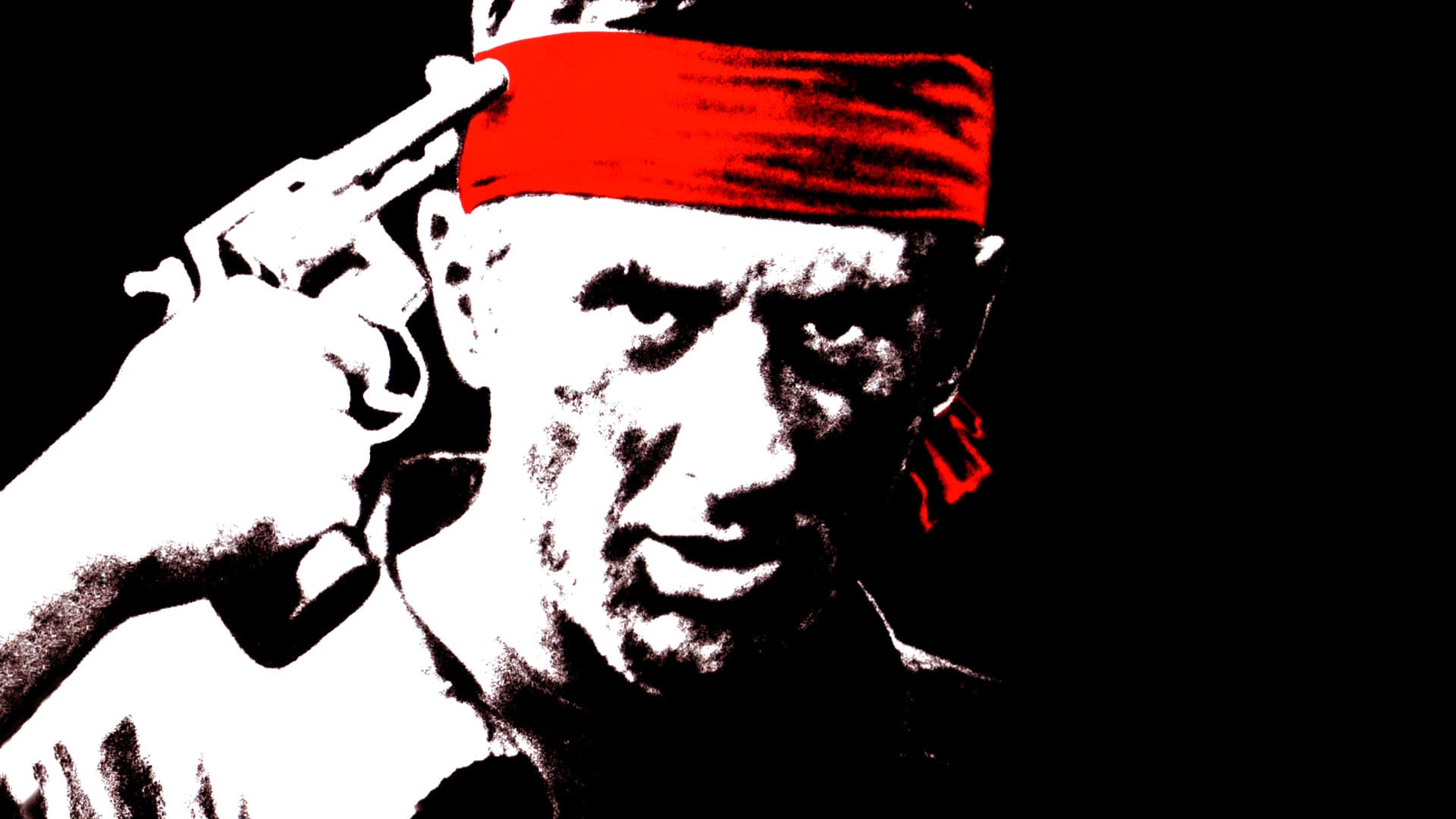
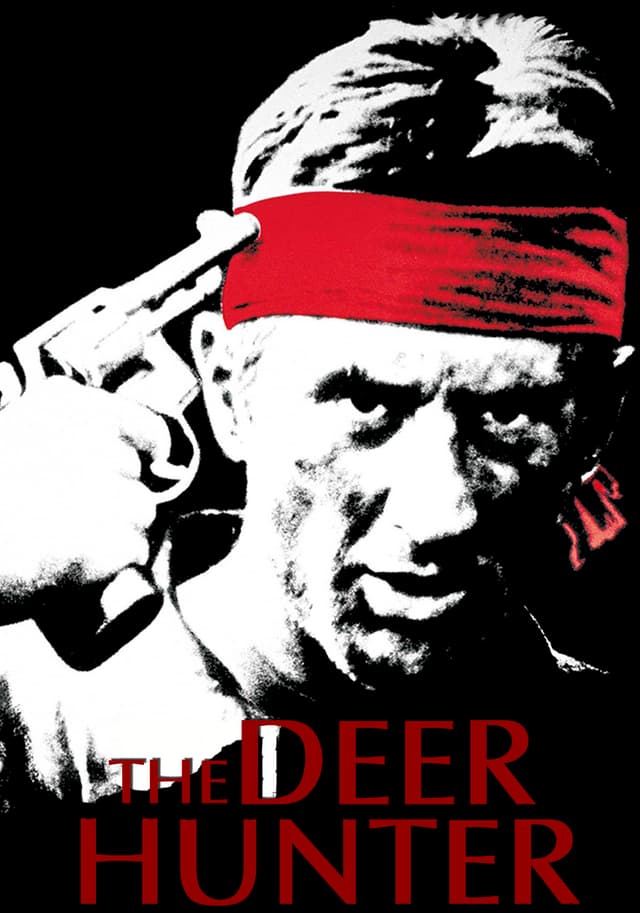
Three steelworkers enlist in the army and are sent to Vietnam, one leaving behind a rushed marriage, the others a shared love. What they encounter during the war changes their lives forever.
What Is the Budget of The Deer Hunter?
The Deer Hunter was produced with a budget of $15 million, a substantial sum for 1978 that reflected the film's ambitious scope and extended production schedule. Director Michael Cimino initially pitched a smaller project, but as the script expanded into a three-hour epic spanning three distinct acts, the budget grew to accommodate extensive location shooting across multiple states and overseas in Thailand.
Universal Pictures and EMI Films co-financed the production, with Universal handling North American distribution. The investment was considered a significant gamble at the time, as Vietnam War films had not yet proven commercially viable. The Deer Hunter became one of the first major studio releases to directly confront the war, and its financial success helped pave the way for Apocalypse Now and other Vietnam-era films that followed.
Key Budget Allocation Categories
- Cast Salaries accounted for a notable portion of the budget, with Robert De Niro commanding a leading-man fee following his Oscar win for The Godfather Part II. Christopher Walken, Meryl Streep, and John Savage were lesser-known at the time and came at lower rates, though John Cazale's participation required additional insurance costs due to his terminal illness.
- Location Shooting consumed a major share of the budget, as production moved between Clairton and Pittsburgh in Pennsylvania, Cleveland in Ohio, and locations throughout Thailand standing in for Vietnam. Each location required full crew mobilization, permits, and logistical coordination across international borders.
- Production Design demanded extensive period-accurate set dressing and construction, particularly for the Pennsylvania steel town sequences. The wedding reception scene alone required weeks of preparation to create an authentic Eastern European community celebration with hundreds of extras.
- Thailand Production involved substantial costs for the Vietnam War sequences, including building sets, coordinating local crews, managing equipment transport, and handling the challenges of shooting in remote areas during monsoon season.
- Post-Production was lengthy and complex, with editor Peter Zinner assembling the three-hour film from months of footage. The sound design required meticulous layering of steel mill ambience, gunfire, and Stanley Myers' score, including the iconic "Cavatina" guitar theme.
- Extended Schedule pushed costs higher than originally planned, as Cimino's perfectionist approach led to additional shooting days. The production ran over schedule during both the domestic and Thailand portions of the shoot.
How Does The Deer Hunter's Budget Compare to Similar Films?
- Apocalypse Now (1979) had a budget of $31.5 million, more than double The Deer Hunter's cost, and infamously ballooned from its original estimate due to typhoons, Brando's demands, and Coppola's breakdown in the Philippines. The Deer Hunter achieved comparable epic scope at roughly half the price.
- Coming Home (1978) cost approximately $7 million, about half of The Deer Hunter's budget. Hal Ashby's Vietnam drama took a more intimate, stateside approach and earned three Oscars, making it the most direct competitor for Best Picture that year.
- The Godfather Part II (1974) was produced for $13 million and similarly used De Niro in a career-defining role. Both films demonstrated that sprawling, multi-hour dramas with complex narratives could justify higher budgets through critical prestige and strong returns.
- Platoon (1986) cost just $6 million eight years later, using a leaner Filipino production to depict ground-level combat. Oliver Stone's film proved that Vietnam War stories could be told effectively at a fraction of the cost The Deer Hunter required.
The Deer Hunter Box Office Performance
The Deer Hunter delivered strong returns for Universal Pictures, building momentum through a limited release strategy timed for awards season before expanding nationwide after its Oscar wins.
Box Office Breakdown
The Deer Hunter

The film opened in limited release in December 1978 to qualify for the Academy Awards, then expanded into wide release in early 1979 after receiving its nominations. The Oscar wins, particularly Best Picture and Best Director, fueled a second wave of ticket sales that pushed the domestic total well past the break-even threshold. International grosses were modest compared to domestic, as the film's specifically American subject matter and three-hour runtime limited its appeal in some overseas markets.
The Deer Hunter Production History
The Deer Hunter originated from a speculative screenplay by Deric Washburn, based on a story concept developed by Michael Cimino and Washburn together with Louis Garfinkle and Quinn K. Redeker. Cimino initially conceived the project as a story about steelworkers from a small Pennsylvania town whose lives are shattered by the Vietnam War. The script went through significant revisions, with Cimino shaping the final version into the three-act structure that defines the finished film.
Robert De Niro signed on as the lead early in development, and his involvement helped secure financing from Universal Pictures. Casting brought together a remarkable ensemble: Christopher Walken was relatively unknown, Meryl Streep was in the earliest stages of her film career, and John Cazale was cast despite being terminally ill with lung cancer. Cazale's participation became one of the production's most poignant subplots. He was visibly weakening throughout the shoot, and the studio initially wanted to replace him. De Niro and Streep (who was Cazale's partner at the time) fought to keep him in the film, with De Niro reportedly offering to cover insurance costs himself. Cazale completed his scenes but died in March 1978, months before the film's release. The Deer Hunter was his fifth and final film, following a perfect run of The Godfather, The Conversation, The Godfather Part II, and Dog Day Afternoon.
Principal photography began in the summer of 1977 and stretched across multiple locations. The Pennsylvania steel town sequences were filmed in Clairton, Duquesne, and surrounding Pittsburgh communities, with the Orthodox church wedding scene shot at St. Theodosius Cathedral in Cleveland. The production then moved to Thailand for the Vietnam sequences, shooting in and around Bangkok and on the River Kwai. Working conditions in Thailand were demanding, with extreme heat, monsoon weather, and the logistical complexity of staging war sequences in remote locations.
The Russian roulette scenes, which became the film's most iconic and controversial element, were entirely fictional. No documented cases of forced Russian roulette in Vietnamese prisoner-of-war camps existed, and the sequences drew criticism from some veterans and historians who felt they misrepresented the war. Cimino maintained that the scenes were metaphorical rather than literal, representing the randomness and psychological destruction of combat. Cinematographer Vilmos Zsigmond shot the film with a naturalistic, sometimes documentary-like approach that gave both the domestic and war sequences a visceral immediacy.
Awards and Recognition
The Deer Hunter won five Academy Awards at the 51st ceremony in 1979, cementing its place as one of the most honored war films in Oscar history. The wins included Best Picture, Best Director for Michael Cimino, Best Supporting Actor for Christopher Walken, Best Film Editing for Peter Zinner, and Best Sound for Richard Portman, William McCaughey, Aaron Rochin, and Darin Knight.
The film received nine nominations total, with additional nods for Robert De Niro (Best Actor), Meryl Streep (Best Supporting Actress), Vilmos Zsigmond (Best Cinematography), and Deric Washburn (Best Original Screenplay). The Supporting Actor win launched Walken into stardom, and the Supporting Actress nomination was an early milestone in Streep's historic awards career.
Beyond the Oscars, The Deer Hunter won Best Picture honors from the Directors Guild of America (Best Director for Cimino), the New York Film Critics Circle, and the National Board of Review. The film was selected for preservation in the United States National Film Registry by the Library of Congress in 1996, recognizing it as "culturally, historically, or aesthetically significant." The American Film Institute ranked it among the greatest American films in multiple lists, and it remains a cornerstone of the Vietnam War film genre.
Critical Reception
The Deer Hunter holds a 93% approval rating on Rotten Tomatoes, reflecting widespread critical acclaim that has endured for nearly five decades. Upon release, critics praised the film's emotional power, its performances, and Cimino's ability to capture both the warmth of working-class community life and the horror of war within a single narrative.
Roger Ebert called the film "one of the most emotionally shattering films ever made," highlighting De Niro's performance and the wedding sequence as particular achievements. Pauline Kael was more critical, arguing that the film's power came from emotional manipulation rather than genuine insight into the war, a divide that reflected broader debate about whether The Deer Hunter was a profound antiwar statement or a politically simplistic one. Vincent Canby of The New York Times praised Cimino's direction as confident and visually stunning, noting the film's unusual structure as both a strength and a challenge for audiences.
The film's legacy has grown steadily over the decades. It is widely credited with breaking the cultural taboo around depicting the Vietnam War on screen, opening the door for films like Apocalypse Now, Platoon, and Full Metal Jacket. The performances launched or elevated multiple careers: Walken became a leading character actor, Streep began her ascent to the most nominated performer in Oscar history, and De Niro solidified his reputation as his generation's finest actor. The Russian roulette scenes remain among the most debated in American cinema, simultaneously praised for their visceral intensity and questioned for their historical accuracy.
Frequently Asked Questions
How much did it cost to make The Deer Hunter (1978)?
The production budget was $15,000,000, covering principal photography, cast and crew salaries, locations, sets, post-production, and music. Marketing and distribution (P&A) costs are estimated at an additional $7,500,000 - $12,000,000, bringing the total studio investment to approximately $22,500,000 - $27,000,000.
How much did The Deer Hunter (1978) earn at the box office?
The Deer Hunter grossed $48,979,328 domestic, $20,672 international, totaling $49,000,000 worldwide.
Was The Deer Hunter (1978) profitable?
Yes. Against a production budget of $15,000,000 and estimated total costs of ~$37,500,000, the film earned $49,000,000 theatrically - a 227% ROI on production costs alone.
What were the biggest costs in producing The Deer Hunter?
The primary cost drivers were above-the-line talent (Robert De Niro, Christopher Walken, John Cazale); talent compensation, authentic period production design, and meticulous post-production; international production across United Kingdom, United States of America.
How does The Deer Hunter's budget compare to similar drama films?
At $15,000,000, The Deer Hunter is classified as a low-budget production. The median budget for wide-release drama films in the era ranges from $30 - 80M for mid-budget to $150M+ for tentpoles. Comparable budgets: A Dangerous Method (2011, $15,000,000); Ben-Hur (1959, $15,000,000); Land of the Dead (2005, $15,000,000).
Did The Deer Hunter (1978) go over budget?
There are no widely reported accounts of significant budget overruns for this production. However, studios rarely disclose precise budget overrun figures publicly. The reported production budget reflects the final estimated cost.
What was the return on investment (ROI) for The Deer Hunter?
The theatrical ROI was 226.7%, calculated as ($49,000,000 − $15,000,000) ÷ $15,000,000 × 100. This measures gross revenue against production budget only - it does not account for P&A or exhibitor shares.
What awards did The Deer Hunter (1978) win?
Won 5 Oscars. 24 wins & 27 nominations total.
Who directed The Deer Hunter and who were the key crew members?
Directed by Michael Cimino, written by Deric Washburn, Quinn K. Redeker, Michael Cimino, Louis Garfinkle, shot by Vilmos Zsigmond, with music by Stanley Myers, edited by Peter Zinner.
Where was The Deer Hunter filmed?
The Deer Hunter was filmed in United Kingdom, United States of America. The Deer Hunter began principal photography on June 20, 1977. Meryl Streep accepted the role of the "vague, stock girlfriend" to remain for the duration of filming with John Cazale, who had been diagnosed with lung cancer. De Niro had spotted Streep in the stage production of The Cherry Orchard and suggested that she play his girlfriend Linda.
Filmmakers
The Deer Hunter

Official Trailer
Build budgets like this one in Saturation
Start from an industry-standard feature film template, import the schedule and rates you already have, and let the cost report keep itself current as you spend. Real-time collaboration, no spreadsheets.