The Darkest Minds Budget
 ActionAdventureSci-Fi1h 45m
Updated
Synopsis
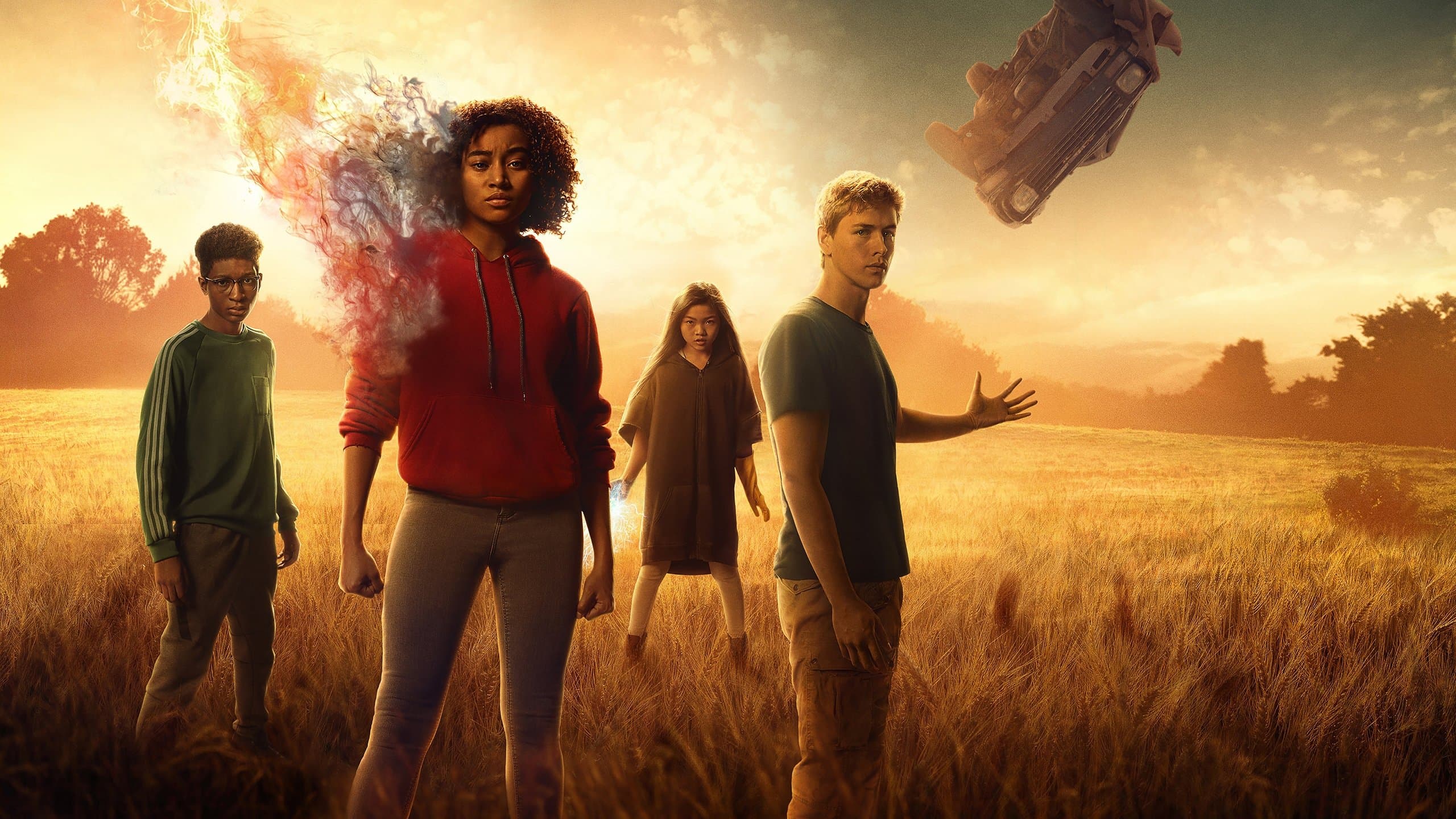
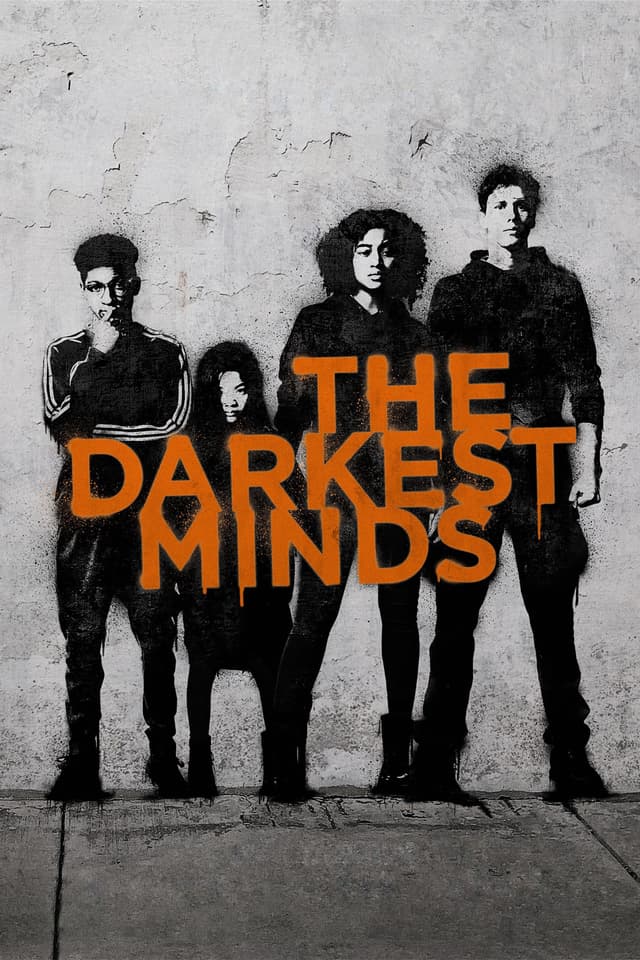
After a mysterious disease wipes out most of America's children, 16-year-old Ruby Daly and the other survivors develop dangerous supernatural abilities that the government deems a threat. Detained and graded by the strength of her powers, Ruby escapes a brutal rehabilitation camp and joins a group of fellow runaways searching for a rumored safe haven, while a ruthless bounty hunter tracks her across a fractured America.
What Is the Budget of The Darkest Minds (2018)?
The Darkest Minds (2018), directed by Jennifer Yuh Nelson and distributed by 20th Century Fox, was produced on a reported budget of $34,000,000. The project was developed by Fox 2000 Pictures alongside 21 Laps Entertainment, Shawn Levy's production company that had recently delivered Stranger Things for Netflix and was actively building a young-adult genre slate. The film served as Jennifer Yuh Nelson's live-action directorial debut after she earned an Academy Award nomination for Kung Fu Panda 2 (2011) and directed Kung Fu Panda 3 (2016).
The relatively modest $34,000,000 budget reflected a calculated bet on the established young-adult dystopian audience that had fueled The Hunger Games, Divergent, and The Maze Runner franchises. Fox positioned The Darkest Minds as the launch of a planned multi-film series adapted from Alexandra Bracken's bestselling novel trilogy, with the modest first-film investment intended to limit downside risk while preserving sequel optionality.
Key Budget Allocation Categories
The reported $34,000,000 budget was distributed across several core production areas:
- Above-the-Line Talent: First-time live-action director Jennifer Yuh Nelson commanded a modest fee. Star Amandla Stenberg, then 18 and coming off The Hate U Give and Everything, Everything, headlined a young ensemble that included Harris Dickinson, Skylan Brooks, Miya Cech, and Patrick Gibson, alongside veteran adult actors Mandy Moore and Gwendoline Christie. The youth-heavy cast kept compensation well below comparable adult-led genre productions.
- Atlanta-Based Production: Principal photography took place in and around Atlanta, Georgia, taking advantage of Georgia's 30% film tax credit. Studio work at EUE/Screen Gems Studios Atlanta and location shooting in surrounding wooded areas, abandoned military facilities, and small-town settings stretched the budget further than a comparable Los Angeles or Vancouver shoot would have allowed.
- Visual Effects: The film required digital effects work for the children's telekinetic and electrokinetic powers, particularly Ruby's mind-altering abilities and the climactic confrontations. Visual effects work was distributed across multiple mid-tier vendors rather than concentrated at a major house, a budget-conscious choice that limited shot complexity but kept overall VFX spend within constraint.
- Practical Sets and Locations: Production designer Jon Billington built the East River rehabilitation camp interiors on Atlanta soundstages while leveraging exterior locations for the road-trip sequences. The camp sets emphasized institutional bleakness and required relatively limited set decoration, helping control production design costs.
- Music and Soundtrack: Composer Benjamin Wallfisch wrote the score. The soundtrack budget covered both original composition and licensing of contemporary pop songs used as needle drops, with the music supervision team negotiating youth-skewing licensing deals appropriate to the target demographic.
- Marketing Tier: Fox's marketing investment was significant relative to the production budget, with an estimated $40,000,000 to $50,000,000 in worldwide P&A spend, reflecting the studio's ambition to establish The Darkest Minds as a franchise platform rather than a one-off release.
How Does The Darkest Minds' Budget Compare to Similar Films?
At $34,000,000, The Darkest Minds was modestly budgeted relative to the YA dystopian franchises it sought to emulate. Comparing it with peers:
- Divergent (2014): Budget $85,000,000 | Worldwide $288,886,939. Lionsgate's franchise launcher cost two and a half times as much and grossed seven times The Darkest Minds, demonstrating the gulf between an established YA brand at peak market interest and a late-cycle entry.
- The Maze Runner (2014): Budget $34,000,000 | Worldwide $348,319,861. Fox's previous YA dystopian launch carried an identical production budget and grossed more than eight times as much, a direct same-studio benchmark that exposed the rapid collapse of YA audience appetite between 2014 and 2018.
- The Hunger Games (2012): Budget $78,000,000 | Worldwide $694,394,724. The genre-defining adaptation cost more than twice as much and grossed roughly seventeen times The Darkest Minds, the most extreme cautionary case for late-cycle entries trying to capture lightning that had moved on.
- Mortal Engines (2018): Budget $100,000,000 | Worldwide $83,683,275. Universal's same-year YA dystopian misfire cost three times as much and grossed roughly twice as much, with both films illustrating how thoroughly the YA dystopian genre had collapsed by 2018.
- The 5th Wave (2016): Budget $38,000,000 | Worldwide $109,889,425. Sony's YA alien-invasion film cost slightly more and earned nearly three times The Darkest Minds worldwide, suggesting that even diminished genre demand had a higher floor in 2016 than two years later.
The Darkest Minds Box Office Performance
The Darkest Minds opened domestically on August 3, 2018, earning $5,842,609 in its opening weekend and finishing seventh at the U.S. box office. That figure was less than one third of analyst projections and well below the $15-20 million opening typical of a YA franchise launch. Word of mouth among the target audience was tepid, and the film fell sharply in subsequent weeks.
Against a $34,000,000 production budget, the film required approximately $80,000,000 in worldwide gross to reach profitability after marketing and distribution costs. The financial breakdown:
Box Office Breakdown
The Darkest Minds

The Darkest Minds returned approximately $0.49 to $0.55 in theatrical revenue for every $1 invested when measured against total estimated production and marketing spend, placing it among the clearest commercial failures of the YA dystopian cycle's late period. The domestic share of the gross was $12,695,691 against an international share of $28,446,688, a 31/69 split heavily weighted toward international markets where the franchise mechanics carried slightly more residual goodwill.
The disappointing performance led Fox to shelve the planned sequels, which would have adapted the second and third novels in Alexandra Bracken's trilogy. The 20th Century Fox-Disney merger announced months later further reduced the likelihood of franchise continuation, as Disney subsequently focused Fox's output on different priorities.
The Darkest Minds Production History
Fox 2000 Pictures acquired the screen rights to Alexandra Bracken's 2012 novel The Darkest Minds in 2014, shortly after the book's publication and the success of similarly themed adaptations. Shawn Levy and Dan Levine's 21 Laps Entertainment came aboard as producing partners. Chad Hodge wrote the adapted screenplay, distilling Bracken's 488-page novel into a brisk feature that preserved the central romance and the road-trip structure while compressing the broader political conspiracy.
Jennifer Yuh Nelson was attached to direct in mid-2017, making her live-action debut after directing the second and third Kung Fu Panda animated features for DreamWorks. Casting began in summer 2017, with Amandla Stenberg attached as Ruby Daly. Principal photography ran from August to November 2017 in Atlanta, Georgia, leveraging the state's 30% film tax credit. Locations included EUE/Screen Gems Studios Atlanta, surrounding wooded areas standing in for forest hideouts, and abandoned industrial and military facilities standing in for the East River rehabilitation camp.
Visual effects work was distributed across multiple vendors and completed in spring 2018. The film was screened for test audiences in May 2018 and received what trade reports characterized as mixed responses, with younger viewers responding to the romance and older viewers finding the world-building thin. Marketing leaned heavily on Stenberg's rising profile and emphasized the romance over the dystopian world-building, a positioning that arguably undersold the genre stakes to the YA audience and oversold a teen romance to a market that had moved past it.
Awards and Recognition
The Darkest Minds received minimal awards recognition. The film was largely absent from year-end critics' lists and the major industry awards circuit. It earned a single Teen Choice Award nomination in 2018 for Choice Sci-Fi/Fantasy Movie, which it did not win. Amandla Stenberg's performance was noted by some YA-focused outlets as a highlight in a weak production, but Stenberg's subsequent The Hate U Give release in October 2018 commanded the awards-season attention that The Darkest Minds did not.
Jennifer Yuh Nelson received industry recognition for the live-action transition itself, though not in the form of nominations. The film's commercial underperformance largely defined its industry reputation and ended the project's status as a franchise candidate, but it did not lastingly damage the careers of its lead participants. Stenberg went on to star in Bodies Bodies Bodies (2022) and the Hunger Games prequel The Ballad of Songbirds & Snakes (2023), and Nelson continued working in animation and emerging genre projects.
Critical Reception
The Darkest Minds received mixed-to-negative reviews. The film holds a 16% approval rating on Rotten Tomatoes based on 159 critic reviews, with a critical consensus that called it "another in a long line of derivative YA dystopian films" and "a clunky knockoff that fails to ignite either the world-building or the romance at its center." On Metacritic, the film scored 39 out of 100, indicating generally unfavorable reviews. Audiences surveyed by CinemaScore gave the film a B+, a notable disconnect between critics and ticket buyers that reflected fan response to the source novel's romance.
Critics broadly objected to the thinness of the world-building, the under-explained mechanics of the children's powers, and what reviewers characterized as a recycled YA dystopian framework. Owen Gleiberman in Variety called the film "a half-cocked franchise non-starter" that "delivers little we haven't already seen, and seen better, in The Hunger Games and Divergent." The Hollywood Reporter's Justin Lowe wrote that the film "lacks the emotional ballast or the conceptual originality to distinguish itself from the genre's diminishing returns."
Defenders pointed to Amandla Stenberg's committed performance, the warm chemistry within the young ensemble, and the relative restraint of Jennifer Yuh Nelson's direction compared with the bombast of other YA dystopian entries. The A.V. Club's A.A. Dowd offered a mixed review that acknowledged the film's "modest virtues" while concluding that "the genre has run its course, and this entry is too tired to revive it." The film has acquired a small fan following among readers of Bracken's novels but has not undergone the kind of critical reappraisal that has elevated other initially poorly received YA adaptations.
Frequently Asked Questions
How much did it cost to make The Darkest Minds (2018)?
The reported production budget was $34,000,000. Costs were controlled by youth-heavy casting, Atlanta-based principal photography that leveraged Georgia's 30% film tax credit, and visual effects work distributed across multiple mid-tier vendors rather than concentrated at a major house.
How much did The Darkest Minds earn at the box office?
The film grossed $12,695,691 domestically and $28,446,688 internationally, for a worldwide total of $41,142,379. It opened to $5,842,609 in the United States, finishing seventh on its August 3, 2018 opening weekend, less than one third of analyst projections.
Was The Darkest Minds a box office bomb?
Yes. Against a $34,000,000 production budget and an estimated $40-50 million in marketing, the film returned approximately $0.49 in worldwide gross for every $1 invested. The disappointing performance led 20th Century Fox to shelve the planned sequels.
Who directed The Darkest Minds?
Jennifer Yuh Nelson directed the film, marking her live-action debut after directing the second and third Kung Fu Panda animated features for DreamWorks. She earned an Academy Award nomination for Best Animated Feature for Kung Fu Panda 2 in 2011.
Where was The Darkest Minds filmed?
Principal photography took place from August to November 2017 in and around Atlanta, Georgia, taking advantage of the state's 30% film tax credit. Locations included EUE/Screen Gems Studios Atlanta, surrounding wooded areas, and abandoned industrial and military facilities standing in for the East River rehabilitation camp.
Is The Darkest Minds based on a book?
Yes. The film adapts the 2012 novel of the same name by Alexandra Bracken, the first book in a trilogy that also includes Never Fade (2013) and In the Afterlight (2014). Chad Hodge wrote the screenplay, condensing Bracken's 488-page novel into a feature-length adaptation that preserved the central romance and road-trip structure.
Why did The Darkest Minds fail at the box office?
The film arrived late in the YA dystopian cycle, which had effectively collapsed between 2014 and 2018. Marketing leaned heavily on the romance rather than the dystopian world-building, an approach that arguably undersold the genre stakes to fans of the books and oversold a teen romance to a market that had largely moved past the form.
How does The Darkest Minds compare to The Hunger Games and Divergent?
The Darkest Minds grossed $41 million worldwide on a $34 million budget. By comparison, The Hunger Games (2012) earned $694 million on a $78 million budget, and Divergent (2014) earned $289 million on an $85 million budget. The Darkest Minds is widely cited as evidence of how thoroughly YA dystopian audience appetite collapsed by 2018.
What did critics think of The Darkest Minds?
The film received mixed-to-negative reviews, with a 16% approval rating on Rotten Tomatoes (159 critics) and a 39 score on Metacritic. Audiences gave it a B+ CinemaScore, indicating a sharper divide between critics and ticket buyers. Critics objected to thin world-building and derivative YA framing, while defenders pointed to Amandla Stenberg's committed performance.
Will there be a sequel to The Darkest Minds?
No. 20th Century Fox shelved the planned sequels, which would have adapted Never Fade and In the Afterlight, after the first film's box office failure. The subsequent Disney-Fox merger further reduced the likelihood of franchise continuation, as Disney refocused Fox's output on different priorities.
Filmmakers
The Darkest Minds

Build budgets like this one in Saturation
Start from an industry-standard feature film template, import the schedule and rates you already have, and let the cost report keep itself current as you spend. Real-time collaboration, no spreadsheets.