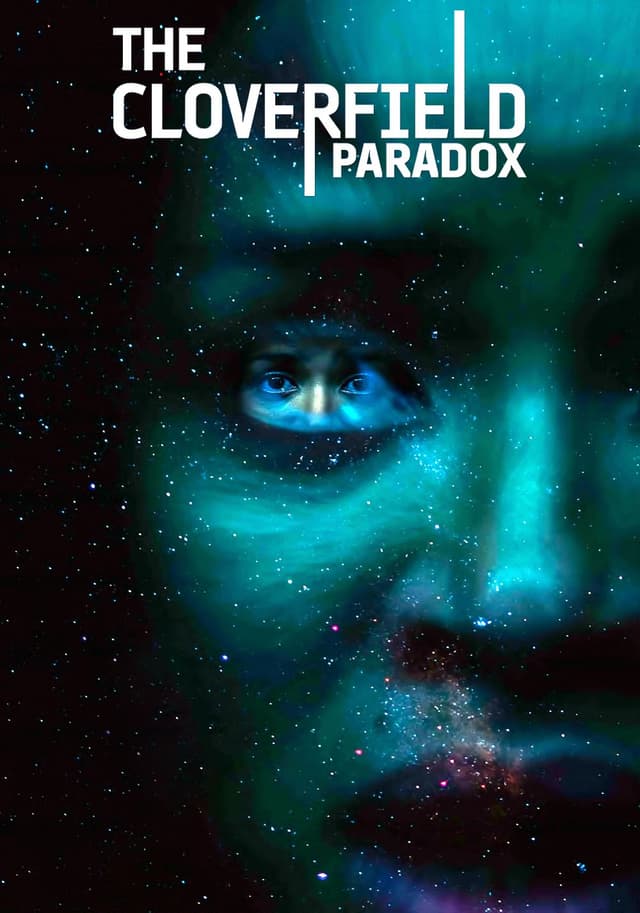
The Cloverfield Paradox Budget
 HorrorMysteryScience Fiction1h 42m
Updated
Synopsis
Orbiting a planet on the brink of war, scientists test a device to solve an energy crisis, and end up face-to-face with a dark alternate reality. As the crew of the space station Cloverfield struggle to find their way home, they discover the device has trapped them in a dimensional rift where the laws of physics fail and personal identity becomes uncertain.
What Is the Budget of The Cloverfield Paradox (2018)?
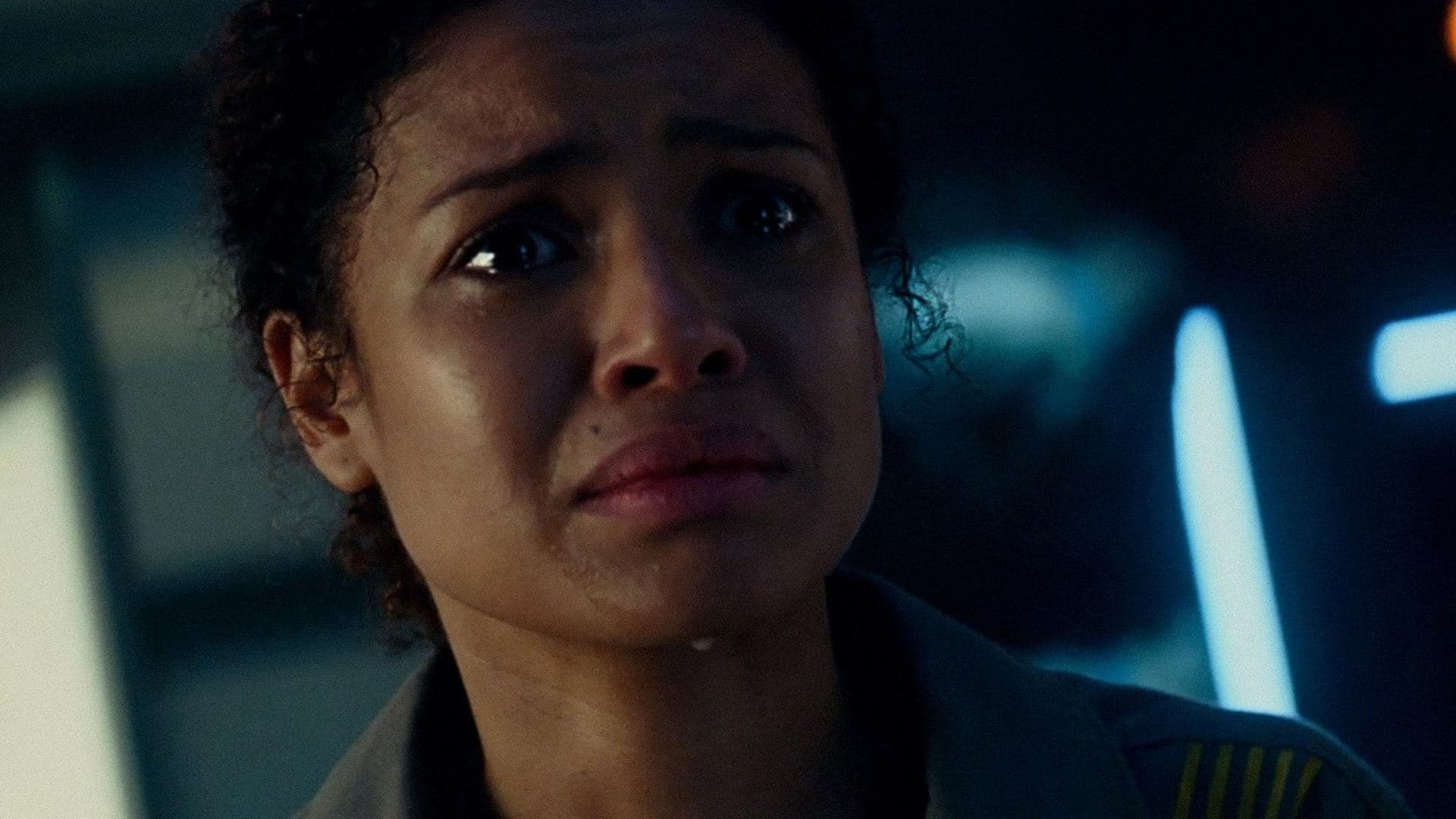
The Cloverfield Paradox (2018), directed by Julius Onah and acquired by Netflix for streaming distribution, was produced on a reported budget of $45,000,000. The film, originally titled God Particle and developed as a standalone Paramount Pictures release, was retrofitted into the Cloverfield franchise during post-production and sold to Netflix shortly before its February 2018 release. Gugu Mbatha-Raw headlined as space-station scientist Ava Hamilton, with David Oyelowo, Daniel Brühl, John Ortiz, Chris O'Dowd, and Aksel Hennie filling out the multinational crew.
The investment reflected a calculated mid-budget sci-fi play that Paramount had originally positioned as a theatrical release. Bad Robot Productions, J. J. Abrams's production company, produced through its standing Paramount deal, with the script originally written by Oren Uziel as a standalone sci-fi thriller titled God Particle. Paramount reportedly grew concerned during post-production about the film's commercial prospects in a crowded 2018 theatrical corridor, and the decision to sell streaming rights to Netflix represented one of the most-discussed studio-to-streamer transactions of the decade.
Key Budget Allocation Categories
The Cloverfield Paradox's reported $45,000,000 budget was distributed across several core production areas:
- Above-the-Line Talent: Director Julius Onah commanded a feature-director rate appropriate to a mid-budget studio production, his first major studio assignment after the indie The Girl Is in Trouble (2015). Gugu Mbatha-Raw (Belle, Beyond the Lights), David Oyelowo (Selma), Daniel Brühl (Captain America: Civil War), Chris O'Dowd (Bridesmaids), John Ortiz (American Gangster), and Aksel Hennie (Hercules) anchored an internationally recognizable ensemble.
- Soundstage Space-Station Build: Production designer Doug Meerdink and his department constructed the Cloverfield space station interior and the alternate-reality space station across multiple soundstages at Pinewood Atlanta Studios, with the build representing one of the production's single largest line items. The space-station corridor, the laboratory, the engineering deck, and the airlock sequences all required bespoke construction.
- Visual Effects: The film required approximately 1,200 visual effects shots, supervised by Pierre Buffin and delivered primarily by BUF Compagnie, with additional vendor work from Method Studios and Atomic Fiction. The shot count covered the Earth-orbit establishing sequences, the dimensional-rift transition effects, the alternate-reality space-station discovery, the worm-and-arm body-horror sequence, and the climactic Cloverfield monster reveal that retrofitted the film into the franchise.
- Costume and Special-Effects Makeup: Costume designer Mary Vogt designed the period-appropriate space-station wardrobes for the principal cast, with Howard Berger's KNB EFX Group handling the body-horror prosthetic work, including the celebrated wall-crew-member sequence and the disembodied arm gag.
- Score by Bear McCreary: Composer Bear McCreary scored the film, building on themes from the broader Cloverfield franchise. The soundtrack budget covered original composition and orchestra recording with the Hollywood Studio Symphony.
- Cloverfield Retrofitting Reshoots: Reshoots in mid-2017 added the final-scene Cloverfield monster reveal and several connective sequences that linked the production to the broader franchise mythology. The reshoots, including model work and additional VFX shots, represented a meaningful budget addition in late post-production.
How Does The Cloverfield Paradox's Budget Compare to Similar Films?
At a reported $45,000,000, The Cloverfield Paradox sat in the lower mid-range of late-2010s sci-fi space-station thrillers. The comparison set frames its production context:
- Life (2017): Budget $58,000,000 | Worldwide $100,541,806. Sony's Daniel Espinosa-directed space-station thriller released eleven months earlier cost 29% more and earned modest theatrical returns, the in-house Sony comparison that informed Paramount's commercial caution.
- Annihilation (2018): Budget $40,000,000 | Worldwide $43,068,166. Alex Garland's Paramount sci-fi released two weeks after The Cloverfield Paradox cost 11% less, was similarly sold to Netflix for international rights (Paramount retained domestic theatrical), and earned modest theatrical returns.
- 10 Cloverfield Lane (2016): Budget $15,000,000 | Worldwide $108,286,422. The previous Cloverfield franchise installment cost one third and earned 2.4 times the projected box-office ceiling Paramount had modeled for The Cloverfield Paradox, the in-franchise comparison that informed the streaming sale.
- Bird Box (2018): Budget $19,800,000 | Worldwide N/A (Netflix Original). The Susanne Bier-Netflix sci-fi thriller released ten months later cost 56% less, premiered exclusively on Netflix without a theatrical window, and reportedly drove 80 million household first-month streams. The contrast with The Cloverfield Paradox's muted reception became a frequently cited Netflix marketing case study.
- Cloverfield (2008): Budget $25,000,000 | Worldwide $172,394,236. The original Matt Reeves Cloverfield film cost 44% less and earned 3.8 times the worldwide total The Cloverfield Paradox would have needed to be theatrically profitable.
The Cloverfield Paradox Box Office Performance
The Cloverfield Paradox did not receive a theatrical release. Netflix acquired global streaming rights from Paramount in late January 2018 for a reported $50,000,000 (which exceeded the production budget) and dropped the film on the platform immediately after Super Bowl LII on February 4, 2018, with a now-famous surprise trailer that promised the film would be available later that night.
Because the film bypassed theatrical exhibition, the standard production-marketing-revenue breakdown does not apply. Here is the financial structure as understood from trade-press reporting:
Box Office Breakdown
The Cloverfield Paradox

The Cloverfield Paradox returned approximately $1.11 to Paramount for every $1 invested in production, with Netflix absorbing both the upside and downside risk on the consumer-streaming side. The transaction has been cited in trade press as one of the cleanest examples of studio-to-streamer rights sales in the late 2010s, with Paramount avoiding what it projected as a substantial theatrical loss in exchange for an above-budget acquisition payment.
Netflix's release strategy itself became a heavily discussed industry case study. The decision to drop the film immediately after the Super Bowl LII broadcast without prior marketing generated significant initial buzz, but the muted critical reception that followed within 24 hours of release converted that buzz into a high-profile cautionary tale about the limits of surprise-drop release strategies for tentpole-priced content. Netflix's subsequent original sci-fi releases (Annihilation's international rights, Bright, The Discovery) absorbed lessons from the Cloverfield Paradox reception cycle.
The Cloverfield Paradox Production History
Development on what became The Cloverfield Paradox began at Paramount in 2012 when Oren Uziel pitched a sci-fi thriller titled God Particle to Bad Robot Productions. The script, set on a space station running experiments that accidentally trigger a dimensional rift, was acquired in early 2013 and assigned to develop through Bad Robot's standing Paramount deal.
Julius Onah attached as director in 2015 following his work on the indie The Girl Is in Trouble (2015). Casting began in early 2016, with Gugu Mbatha-Raw attaching as the lead in February 2016, David Oyelowo and Daniel Brühl joining in March 2016, and the remaining ensemble (Chris O'Dowd, John Ortiz, Aksel Hennie, Zhang Ziyi, Elizabeth Debicki) confirmed by spring 2016.
Principal photography began on June 6, 2016 at Pinewood Atlanta Studios in Georgia, taking advantage of the state's production tax credit. The unit shot exclusively on Pinewood's soundstages, with no significant location work given the space-station setting. Shooting wrapped in late August 2016 after a roughly twelve-week schedule.
Post-production ran through 2016 and into 2017, with the visual effects work compressed into approximately fourteen months. During post-production, Paramount and Bad Robot retrofitted the film into the Cloverfield franchise, adding the final-scene monster reveal and several connective sequences. The Cloverfield retrofit reshoots took place in mid-2017, with the title changed from God Particle to The Cloverfield Paradox in late 2017.
Paramount tested the film throughout 2017 and reportedly grew concerned about its theatrical prospects in a crowded 2018 corridor that included Annihilation, Pacific Rim Uprising, and Solo: A Star Wars Story. The studio shopped streaming rights to multiple platforms in late 2017 and early 2018, with Netflix acquiring global rights for a reported $50,000,000 in January 2018. The Super Bowl LII surprise drop was conceived in the final weeks before release as a way to maximize launch awareness without conventional theatrical marketing.
Awards and Recognition
The Cloverfield Paradox received no major industry awards recognition. The film was not nominated at the Academy Awards, the Golden Globes, the Saturn Awards, or any of the principal critics' organizations.
Bear McCreary's score received a Hollywood Music in Media Award nomination for Best Original Score in a Feature Film (Streaming), which it did not win. The broader awards-season absence reflected the muted critical reception, the unconventional streaming-only release, and the project's positioning as franchise content rather than a prestige drama.
Critical Reception
The Cloverfield Paradox received negative reviews. The film holds a 21% approval rating on Rotten Tomatoes based on 207 critic reviews, with the consensus calling it a muddled franchise extension that wastes a strong cast on an underdeveloped premise. On Metacritic, the film scored 37 out of 100, indicating generally unfavorable reviews. Because the film bypassed theatrical exhibition, no CinemaScore was conducted.
A. O. Scott in The New York Times wrote that the film "reaches for big sci-fi ideas and never closes its fingers around them," and Variety's Owen Gleiberman called it "the rare Cloverfield entry that feels assembled rather than directed." The Guardian's Peter Bradshaw observed that "the Cloverfield retrofit reveals itself as exactly that: a marketing solution to a creative problem."
Genre-press reaction was uniformly negative, with Ain't It Cool News, Bloody Disgusting, and io9 all panning the film and arguing that the surprise-drop release strategy could not compensate for fundamental structural problems with the screenplay. The reception has cemented The Cloverfield Paradox's reputation as a cautionary example of how franchise retrofitting and streaming-platform surprise drops can amplify rather than offset weak source material.
Frequently Asked Questions
How much did it cost to make The Cloverfield Paradox (2018)?
The reported production budget was $45,000,000. Paramount Pictures originally produced the film through Bad Robot Productions, with the film originally titled God Particle before being retrofitted into the Cloverfield franchise.
Did The Cloverfield Paradox receive a theatrical release?
No. Netflix acquired global streaming rights from Paramount in late January 2018 for a reported $50,000,000 (which exceeded the production budget) and dropped the film on the platform immediately after Super Bowl LII on February 4, 2018, with a now-famous surprise trailer that promised the film would be available later that night.
Was The Cloverfield Paradox profitable?
For Paramount, yes, marginally. The Netflix acquisition price of approximately $50,000,000 exceeded the $45,000,000 production budget, generating approximately $5,000,000 in net return (before deferred-participation accounting). Netflix absorbed both the upside and downside risk on the consumer-streaming side, with the film's muted critical reception limiting its eventual streaming performance.
Who directed The Cloverfield Paradox?
Julius Onah directed the film, working from a screenplay by Oren Uziel and Doug Jung. Onah attached to the project in 2015 following his work on the indie The Girl Is in Trouble (2015). This represented his first major studio assignment.
Where was The Cloverfield Paradox filmed?
Principal photography began on June 6, 2016 at Pinewood Atlanta Studios in Georgia, taking advantage of the state's production tax credit. The unit shot exclusively on Pinewood's soundstages, with no significant location work given the space-station setting. Shooting wrapped in late August 2016.
Who stars in The Cloverfield Paradox?
Gugu Mbatha-Raw plays the lead role of space-station scientist Ava Hamilton. Supporting cast includes David Oyelowo, Daniel Brühl, Chris O'Dowd, John Ortiz, Aksel Hennie, Zhang Ziyi, and Elizabeth Debicki, with the multinational casting designed to reflect the international space-station setting.
Was The Cloverfield Paradox originally called God Particle?
Yes. The script was originally pitched and developed under the title God Particle, a reference to the Higgs boson particle that anchors the film's in-story experiment. The Cloverfield retrofit took place during post-production in 2017, with the title change to The Cloverfield Paradox occurring in late 2017 ahead of the Netflix sale.
What did critics think of The Cloverfield Paradox?
The film received negative reviews, with a 21% approval rating on Rotten Tomatoes (based on 207 critics) and a 37 out of 100 score on Metacritic. A. O. Scott in The New York Times called it muddled franchise content, and Variety's Owen Gleiberman noted that the Cloverfield retrofit revealed itself as a marketing solution to a creative problem.
Why did Paramount sell The Cloverfield Paradox to Netflix?
Paramount tested the film throughout 2017 and reportedly grew concerned about its theatrical prospects in a crowded 2018 corridor that included Annihilation, Pacific Rim Uprising, and Solo: A Star Wars Story. The studio shopped streaming rights to multiple platforms in late 2017 and early 2018, with Netflix acquiring global rights for a reported $50,000,000 in January 2018, an amount that exceeded the production budget and avoided what Paramount projected as a substantial theatrical loss.
How does The Cloverfield Paradox connect to the rest of the Cloverfield franchise?
The Cloverfield Paradox's final scene reveals a Cloverfield monster, and several connective sequences positioned the film as a prequel-style explanation for the dimensional rift that allows the original Cloverfield (2008) monster to attack Earth. The connection was added during post-production reshoots in mid-2017 and was not part of the original God Particle screenplay. The Cloverfield franchise has since released no further entries, with multiple proposed sequels remaining in development.
Filmmakers
The Cloverfield Paradox

Official Trailer
Build budgets like this one in Saturation
Start from an industry-standard feature film template, import the schedule and rates you already have, and let the cost report keep itself current as you spend. Real-time collaboration, no spreadsheets.