Shark Night 3D Budget
 ThrillerHorror1h 31m
Updated
Synopsis
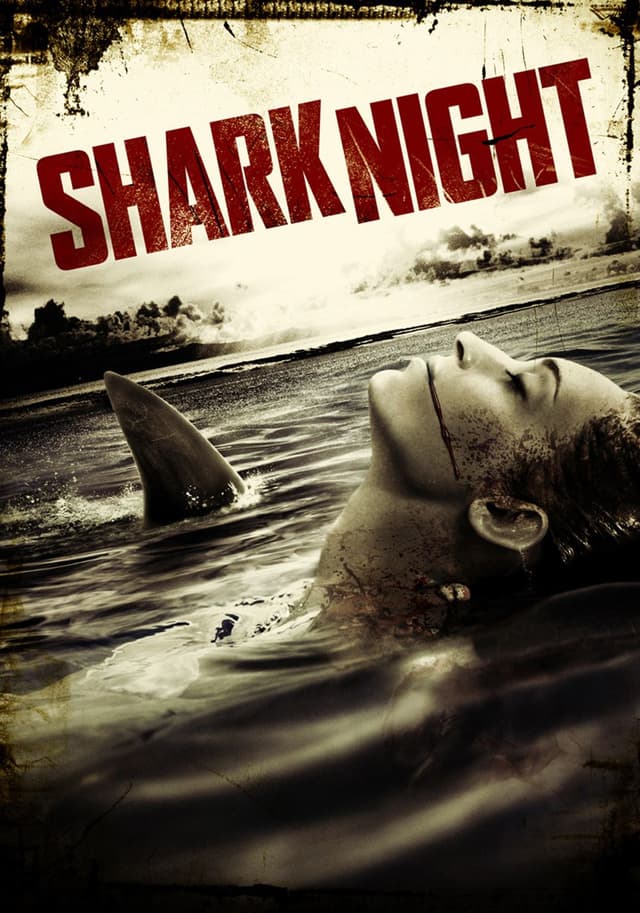
A sexy summer weekend turns into a blood-soaked nightmare for a group of college students trapped on an island surrounded by voracious underwater predators in Shark Night 3D. Arriving by boat at her family's Louisiana lake island cabin, Sara and her friends quickly strip down to their swimsuits for a weekend of fun in the sun. But when star football player Malik stumbles from the salt-water lake with his arm torn off, the party mood quickly evaporates. Assuming the injury was caused by a freak wake-boarding accident, the group realizes they have to get Malik to a hospital on the other side of the lake, and fast.
But as they set out in a tiny speedboat, the college friends discover the lake has been stocked with hundreds of massive, flesh-eating sharks! As they face one grisly death after another, Sara and the others struggle desperately to fend off the sharks, get help and stay alive long enough to reach the safety of dry land.
What is the budget of Shark Night 3D?
"Shark Night 3D," a thriller released in 2011, was directed by David R. Ellis and stars Sara Paxton, Dustin Milligan. The production budget was $28,000,000, placing it in the mid-budget range for thriller productions of its era.
Key Budget Allocation Categories
While specific budget breakdowns are not publicly available, typical cost drivers for a thriller production like this include:
- Talent & Director Compensation: Thrillers depend on compelling lead performances to sustain tension, making cast compensation a primary budget concern. Directors with proven thriller credentials command premium fees.
- Cinematography & Location Photography: Thriller aesthetics demand specific visual languages , surveillance-style photography, claustrophobic framing, or expansive location work across multiple cities or countries.
- Editorial & Sound Post-Production: Precision editing , controlling information flow, building suspense through pacing, and orchestrating reveals , requires extended post-production schedules.
- Production: Principal photography took place in the fall of 2010 in Louisiana around the Ark-La-Tex and at Caddo Lake in Uncertain, Texas.
What were the major cost factors in Shark Night 3D?
Several factors contributed to the overall production costs of "Shark Night 3D."
- Talent: Talent & Director Compensation is one of the primary cost drivers in thriller productions of this scale.
- Cinematography: Cinematography & Location Photography is one of the primary cost drivers in thriller productions of this scale.
- Editorial: Editorial & Sound Post-Production is one of the primary cost drivers in thriller productions of this scale.
How Does Shark Night 3D's Budget Compare to Similar Films?
At $28,000,000, Shark Night 3D sits in the mid-budget range. Here is how it compares to productions with a similar budget:
- Agent Cody Banks (2003): Budget $28,000,000, Worldwide Gross $58,795,814
- Beverly Hills Cop II (1987): Budget $28,000,000, Worldwide Gross $299,965,036
- Fight Valley (2016): Budget $27,000,000
- A Hologram for the King (2016): Budget $30,000,000, Worldwide Gross $9,169,507
- A Lot Like Love (2005): Budget $30,000,000, Worldwide Gross $42,886,719
The median budget for wide-release thriller films in the 2010s ranges from $30 to 80M for mid-budget to $150M+ for tentpoles.
Shark Night 3D Box Office Performance
"Shark Night 3D" earned $18,877,153 domestically and $10,126,458 worldwide at the box office. Against a production budget of $28,000,000, the film faced challenges in theatrical release. Home video, streaming, and ancillary revenue may have contributed to its overall performance.
A film typically needs to earn approximately twice its production budget to cover marketing and distribution costs. For "Shark Night 3D," that break-even threshold was roughly $56,000,000. With worldwide earnings of $10,126,458, the film did not reach break-even in theatrical release.
Box Office Breakdown
Shark Night 3D

At -63.8%, "Shark Night 3D" did not recoup its production budget through theatrical release alone.
Awards and Recognition
1 nomination total
Critical Reception
Shark Night received negative reviews from critics. Rotten Tomatoes reports that the film holds a 19% approval rating from 75 critics, with an average score of 3.42/10. The critics consensus reads, "A joyless excursion into the water that doesn't even produce good gore or nudity thanks to the neutered PG-13 rating." The film has a weighted average score of 22 out of 100 on Metacritic, indicating "generally unfavorable" reviews.
Frequently Asked Questions
How much did Shark Night 3D cost to make?
The production budget was $25,000,000. Relativity Media and Incentive Filmed Entertainment financed the 3D horror feature, with Sierra/Affinity handling international sales.
How much did Shark Night 3D earn at the box office?
The film grossed $18,879,331 domestically and $21,200,000 internationally, for a worldwide total of approximately $40,100,000. It opened to $8,309,000 on September 2, 2011, finishing fourth in the Labor Day weekend.
Who directed Shark Night 3D?
David R. Ellis directed the film. Ellis had previously directed Final Destination 2 (2003), Snakes on a Plane (2006), and The Final Destination (2009). Shark Night 3D was his final feature before his death in January 2013.
Who stars in Shark Night 3D?
Sara Paxton plays Sara, with Dustin Milligan, Chris Carmack, Joel David Moore, Donal Logue, Sinqua Walls, Alyssa Diaz, and Katharine McPhee rounding out the college-student ensemble. The cast was assembled from working television actors at moderate quote levels to manage the modest budget.
Why was Shark Night 3D rated PG-13?
The production targeted a PG-13 rating to maximize the teen-audience addressable market, a deliberate choice in a horror subgenre where R ratings are typical. Critics widely cited the PG-13 restriction as a key contributor to the film's muted critical reception, with on-screen violence noticeably softer than the Piranha 3D (2010) R-rated counterpart.
Where was Shark Night 3D filmed?
Principal photography took place at Lake Pontchartrain and Lake of Egypt in Louisiana, taking advantage of the state's 30% film production tax credit. Louisiana freshwater lakes substituted for the saltwater Louisiana bayou described in the script.
What did critics think of Shark Night 3D?
The film was widely panned, with a 16% approval rating on Rotten Tomatoes and a 27 out of 100 score on Metacritic. Critics objected to the PG-13 tonal restraint, weak shark visual effects, and a third-act plot reveal involving snuff-film production that struck many reviewers as ill-advised.
Was Shark Night 3D profitable?
The theatrical run produced a loss. Against the $25,000,000 production budget and an estimated $20,000,000 to $25,000,000 in marketing spend, the worldwide gross of approximately $40,100,000 fell short of theatrical break-even. Home video and television syndication revenue have brought the film into modest aggregate recovery.
How does Shark Night 3D compare to Piranha 3D?
Shark Night 3D ($25,000,000 budget, $40,100,000 worldwide) substantially underperformed the comparable Piranha 3D (2010, $24,000,000 budget, $83,200,000 worldwide). The PG-13 versus R rating difference is widely cited as the key commercial differentiator between the two films.
Where can I stream Shark Night 3D?
The film is available for digital rental and purchase on Amazon Prime Video, Apple TV, and Google Play. It periodically rotates through ad-supported streaming tiers including Tubi, Pluto TV, and Freevee.
Official Trailer
Build budgets like this one in Saturation
Start from an industry-standard feature film template, import the schedule and rates you already have, and let the cost report keep itself current as you spend. Real-time collaboration, no spreadsheets.