The Circle Budget
 Thriller/Suspense
Updated
Synopsis
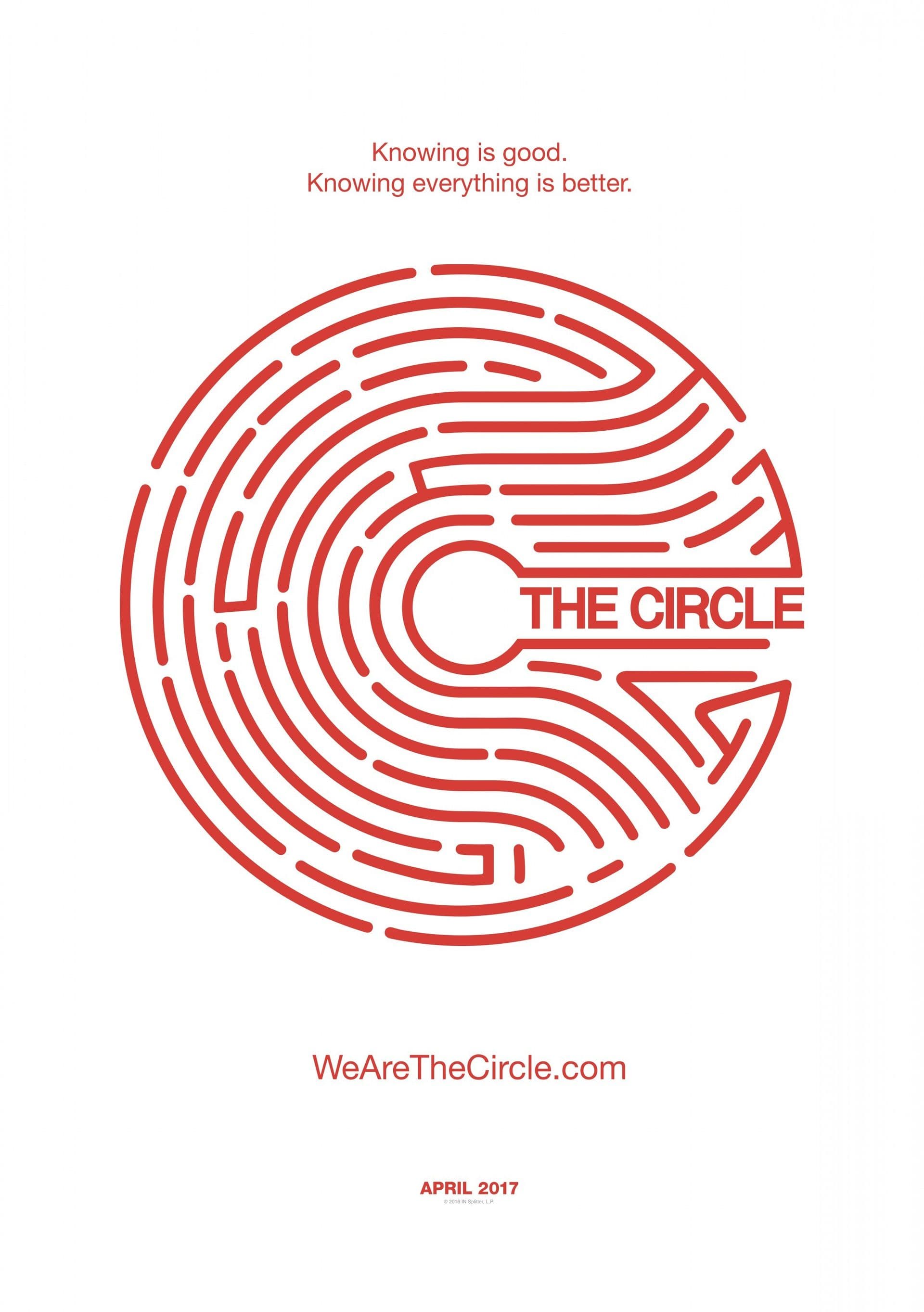
A bright young woman named Mae Holland lands her dream job at The Circle, the world's most powerful tech and social-media company, where the charismatic founder Eamon Bailey has built a transparent corporate utopia around the idea that "knowing everything is good." When Mae is invited to participate in an experiment that pushes the limits of privacy, surveillance, and personal freedom, she finds herself at the center of decisions that affect the lives of her family, her friends, and humanity itself.
What Is the Budget of The Circle (2017)?
The Circle (2017), directed by James Ponsoldt and distributed by STX Entertainment, was produced on a budget of $18,000,000. Gary Goetzman, Anthony Bregman, James Ponsoldt, and Tom Hanks produced through Playtone (Hanks's production company), Likely Story, and Image Nation Abu Dhabi, with STX Entertainment providing studio finance and theatrical distribution. The film was an adaptation of Dave Eggers's 2013 novel of the same name, which had been a critically acclaimed satire of Silicon Valley social-media culture.
The budget reflected the cost discipline of an adult-skewing tech thriller adapted from a literary property. STX Entertainment, then a young studio aggressively building its slate through star-driven mid-budget properties, priced the film below the studio-tentpole tier, betting that the Emma Watson-Tom Hanks pairing combined with the timely surveillance-and-social-media subject matter could anchor a theatrical performance ahead of substantial home-entertainment revenue. The math required the film to clear roughly $45,000,000 worldwide to break even after marketing, a target the film essentially matched.
Key Budget Allocation Categories
The Circle's $18,000,000 budget was distributed across several core production areas:
- Above-the-Line Talent: Tom Hanks took the founder role of Eamon Bailey at a reduced rate appropriate to the independent-tier budget, well below his post-Saving Mr. Banks studio-tentpole highs. Emma Watson, transitioning from the Harry Potter franchise into prestige independent work and her live-action Beauty and the Beast (released earlier in 2017), commanded a significant lead fee with back-end participation. Supporting players John Boyega (in a post-Star Wars: The Force Awakens role), Karen Gillan, Patton Oswalt, Ellar Coltrane (Boyhood), and Bill Paxton (in what would be his final completed performance) filled out the principal ensemble.
- Los Angeles and Atlanta Location Shoot: Principal photography ran in late 2015 and into 2016 across the Los Angeles area and on Atlanta locations and stages, leveraging Georgia's aggressive transferable film tax credit. The Circle's fictional Silicon Valley headquarters was built across a combination of Los Angeles modern-corporate exteriors and dressed Atlanta-area stages, with the production deliberately avoiding actual Bay Area shooting for cost-control reasons.
- Production Design: Production designer Gerald Sullivan designed the Circle's fictional corporate campus, evoking the visual texture of Apple, Google, and Facebook headquarters without directly referencing any single company. The set design required custom Circle-branded props, signage, products, and corporate-environment dressing, anchoring the film's visual identity around the tech-utopia setting.
- Visual Effects and User-Interface Design: The film required significant visual-effects work for the Circle's user-interface graphics, the SeeChange surveillance-camera overlay sequences, and the various screen-based interactions that drove the screenplay's plot. Vendor work was distributed across multiple Los Angeles boutique VFX houses, with custom motion-graphic design for the Circle's branding handled by a dedicated UI design team.
- Score and Music Licensing: Composer Danny Elfman wrote the original score with a contemporary electronic-orchestral palette appropriate to the Silicon Valley setting. The soundtrack featured a Beck needle drop and other licensed tracks that drove the film's principal montage sequences.
- Post-Production: The film's post-production extended through 2016 and into early 2017, with editor Lisa Lassek (The Avengers, Cabin in the Woods) assembling the dense tech-thriller plot under significant studio pressure. The editing room handled extensive structural revision as STX recalibrated the third act, with the final cut diverging meaningfully from Eggers's novel in its closing beats.
How Does The Circle's Budget Compare to Similar Films?
At $18,000,000, The Circle sits in the lower-middle range of mid-2010s mid-budget tech thrillers. The comparison set illustrates the cycle's commercial range:
- Ex Machina (2014): Budget $15,000,000 | Worldwide $36,869,414. Alex Garland's contemporaneous A24 release cost 17% less than The Circle and earned slightly less worldwide, the closest cycle comparison in subject matter and tone.
- The Social Network (2010): Budget $40,000,000 | Worldwide $224,920,315. David Fincher's Facebook origin drama cost more than twice The Circle and earned more than 5.5x its worldwide gross, the cycle's commercial high-water mark and a clear illustration of the gap between auteur-driven prestige tech drama and STX's mid-budget play.
- Snowden (2016): Budget $40,000,000 | Worldwide $37,338,322. Oliver Stone's surveillance drama cost more than twice The Circle and earned slightly less worldwide, the cycle's clearest commercial bust.
- Steve Jobs (2015): Budget $30,000,000 | Worldwide $34,488,375. Danny Boyle's Sorkin-scripted biopic cost 67% more than The Circle and earned 15% less worldwide, illustrating the difficulty of monetizing literary tech material at theatrical scale.
- Anon (2018): Budget $13,000,000 | Worldwide $1,335,000. Andrew Niccol's surveillance thriller cost less than The Circle and earned essentially nothing at theatrical, with Netflix acquiring international rights and effectively absorbing the film into its streaming catalog.
The Circle Box Office Performance
The Circle opened on April 28, 2017, debuting to $9,260,000 in its opening weekend across 3,163 theaters, finishing fourth on the chart. The film modestly underperformed STX's pre-release tracking, which had projected an $11M to $13M opening, but held competitively against How to Be a Latin Lover, The Fate of the Furious, and The Boss Baby in a competitive April marketplace.
Against an $18,000,000 production budget, The Circle needed roughly $45,000,000 in worldwide gross to reach profitability when accounting for marketing and distribution costs. Here is the financial breakdown:
Box Office Breakdown
The Circle (2017)

The Circle returned approximately $0.95 in theatrical revenue for every $1 invested when measured against total estimated production and marketing spend, an essentially break-even outcome before downstream rights. The domestic share of the gross was $20,486,200 against an international share of $20,170,218, a nearly even split that confirmed the surveillance-themed material played comparably across markets despite the Silicon Valley setting.
STX recouped its investment through home entertainment, television licensing, and streaming windows, with the Hanks-Watson combination sustaining sub-license earnings over multiple years. The Circle has subsequently been treated as a representative example of mid-budget mid-2010s tech thrillers that received tepid theatrical reception but maintained downstream value through their timely subject matter and casting. The film's eventual streaming-platform durability has been particularly strong, with the surveillance-and-social-media themes gaining increased resonance through the late 2010s and early 2020s.
The Circle Production History
Development began in 2013, immediately after Dave Eggers's novel was published to critical acclaim. Anthony Bregman's Likely Story company optioned the rights, with James Ponsoldt (The Spectacular Now, The End of the Tour) attached to direct in 2014. Tom Hanks's Playtone production company joined as a co-producer in 2014, with Hanks himself committing to play the Circle's founder Eamon Bailey shortly after. The Image Nation Abu Dhabi partnership brought international finance to the project, and STX Entertainment, then a young studio aggressively building its slate, acquired North American rights in 2015.
Emma Watson, transitioning from the Harry Potter franchise into prestige independent work and her upcoming Beauty and the Beast (March 2017), committed to the lead role of Mae Holland in 2015. John Boyega, then post-Star Wars: The Force Awakens (2015), signed as Ty Lafitte, Karen Gillan (Guardians of the Galaxy) as Mae's college friend Annie, Patton Oswalt as the executive Tom Stenton, and Ellar Coltrane (Boyhood) as Mae's ex-boyfriend Mercer. Bill Paxton was cast as Mae's father in what would be his final completed performance; he died in February 2017 before the film's release.
Principal photography ran from September through November 2015 across Los Angeles and on Atlanta locations and stages, leveraging Georgia's aggressive 20%-30% transferable film tax credit. The Circle's fictional Silicon Valley headquarters was built across a combination of Los Angeles modern-corporate exteriors and dressed Atlanta-area stages, with the production deliberately avoiding Bay Area shooting for cost-control reasons. Pickup work in early 2016 added several short sequences.
Post-production extended through 2016 and into early 2017, with extensive structural revision as STX recalibrated the third act. The final cut diverged meaningfully from Eggers's novel in its closing beats, an editorial decision that drew specific criticism from book-faithful reviewers. STX positioned the film for an April 28, 2017 release, with marketing emphasizing the Watson-Hanks pairing, the surveillance-and-social-media subject matter, and Boyega's post-Star Wars profile.
Awards and Recognition
The Circle received no positive industry awards recognition. It was not nominated at the Academy Awards, Golden Globes, BAFTAs, SAG Awards, or Critics' Choice Awards.
At the Razzies, the film received two Golden Raspberry Award nominations: Worst Supporting Actress (Emma Watson) and Worst Screen Combo (Emma Watson and her "Big Brother smile"), though it won neither. The film's commercial underperformance and mixed critical reception became a frequently-cited case study in trade press regarding the difficulty of adapting Dave Eggers's satirical prose into theatrical-scale narrative form, and STX subsequently shifted its mid-budget adult-drama slate toward properties with more accessible commercial hooks.
Critical Reception
The Circle received broadly negative reviews. The film holds a 16% approval rating on Rotten Tomatoes based on 246 critic reviews, with a critical consensus that called it a clumsy, satire-free adaptation of Dave Eggers's nuanced novel. On Metacritic, the film scored 43 out of 100, indicating mixed-to-negative reviews. Audiences surveyed by CinemaScore gave the film a C, the cycle's clear floor for theatrical word-of-mouth.
Critics broadly objected to the screenplay's failure to dramatize the novel's satirical core, with several reviewers calling the central thematic argument muddled. The New York Times' Manohla Dargis wrote that "the film deflates every uncomfortable question the novel raised." Variety's Owen Gleiberman called it "a Silicon Valley thriller that never decides what it actually thinks about Silicon Valley." Rolling Stone's Peter Travers awarded the film one star, writing that "Emma Watson and Tom Hanks deserve far better than this airless adaptation."
A vocal minority of critics defended specific performance work, particularly Watson's commitment to the Mae Holland role and Bill Paxton's final completed performance as her ailing father. Several technology and media commentators noted that the film's central premise (the dangers of corporate-controlled surveillance and oversharing) gained increased real-world resonance in the years following its release, with the Cambridge Analytica scandal (2018), Facebook's WhatsApp-tracking controversies, and the broader 2020s reckoning with platform power all retrospectively validating the novel's thematic concerns. Critical retrospectives have generally treated The Circle as a missed opportunity rather than a disaster, an adaptation whose subject matter aged better than its execution.
Frequently Asked Questions
How much did it cost to make The Circle (2017)?
The production budget was $18,000,000. The film was produced by Playtone (Tom Hanks's production company), Likely Story, and Image Nation Abu Dhabi, and distributed by STX Entertainment in North America with international rights distributed separately.
How much did The Circle earn at the box office?
The film grossed $20,486,200 domestically and $20,170,218 internationally, for a worldwide total of $40,656,418. It opened to $9,260,000 across 3,163 theaters on April 28, 2017, finishing fourth on the chart.
Was The Circle profitable?
Roughly break-even at the theatrical window. Against an $18M production budget and an estimated $20M to $25M in marketing spend, the film returned approximately $0.95 in worldwide gross for every $1 invested. Home entertainment, television, and streaming revenue produced modest overall profitability.
Who directed The Circle?
James Ponsoldt directed the film. Ponsoldt had previously directed The Spectacular Now (2013) and The End of the Tour (2015), both prestige independent dramas. The Circle was his largest-budget studio feature to that point, and Ponsoldt also co-wrote the screenplay with novelist Dave Eggers.
Where was The Circle filmed?
Principal photography ran from September through November 2015 across Los Angeles and on Atlanta, Georgia locations and stages, leveraging Georgia's 20%-30% transferable film tax credit. The fictional Silicon Valley headquarters was built across a combination of Los Angeles modern-corporate exteriors and dressed Atlanta-area stages, deliberately avoiding actual Bay Area shooting for cost-control reasons.
Is The Circle based on a book?
Yes. The film is an adaptation of Dave Eggers's 2013 novel of the same name, a satire of Silicon Valley social-media culture that drew widespread critical attention upon publication. Eggers and director James Ponsoldt co-wrote the screenplay, though the final cut diverged meaningfully from the novel in its closing beats.
Who stars in The Circle?
Emma Watson stars as new Circle employee Mae Holland, with Tom Hanks as the Circle's charismatic founder Eamon Bailey. John Boyega plays the disillusioned engineer Ty Lafitte, Karen Gillan plays Mae's college friend Annie, Patton Oswalt is the executive Tom Stenton, Ellar Coltrane is Mae's ex-boyfriend Mercer, and Bill Paxton plays Mae's ailing father in what was his final completed performance.
Was The Circle Bill Paxton's final film?
It was his final completed performance. Paxton died in February 2017 from complications following heart surgery, two months before The Circle's April 2017 release. He had also completed work on Training Day (the CBS series), which aired posthumously beginning in February 2017.
How does The Circle compare to other tech thrillers?
The Circle earned $40.7M worldwide on an $18M budget. Ex Machina (2014) earned $36.9M on $15M. The Social Network (2010) earned $224.9M on $40M. Snowden (2016) earned $37.3M on $40M. The Circle's commercial performance was middling for the cycle.
What did critics think of The Circle?
The film holds a 16% approval rating on Rotten Tomatoes (246 reviews) and scored 43 out of 100 on Metacritic. Audiences gave it a C CinemaScore. Manohla Dargis of The New York Times wrote that "the film deflates every uncomfortable question the novel raised," and Variety's Owen Gleiberman called it "a Silicon Valley thriller that never decides what it actually thinks about Silicon Valley."
Filmmakers
The Circle (2017)

Build budgets like this one in Saturation
Start from an industry-standard feature film template, import the schedule and rates you already have, and let the cost report keep itself current as you spend. Real-time collaboration, no spreadsheets.