The Big Lebowski Budget
 ComedyCrime1h 57m
Updated
Synopsis
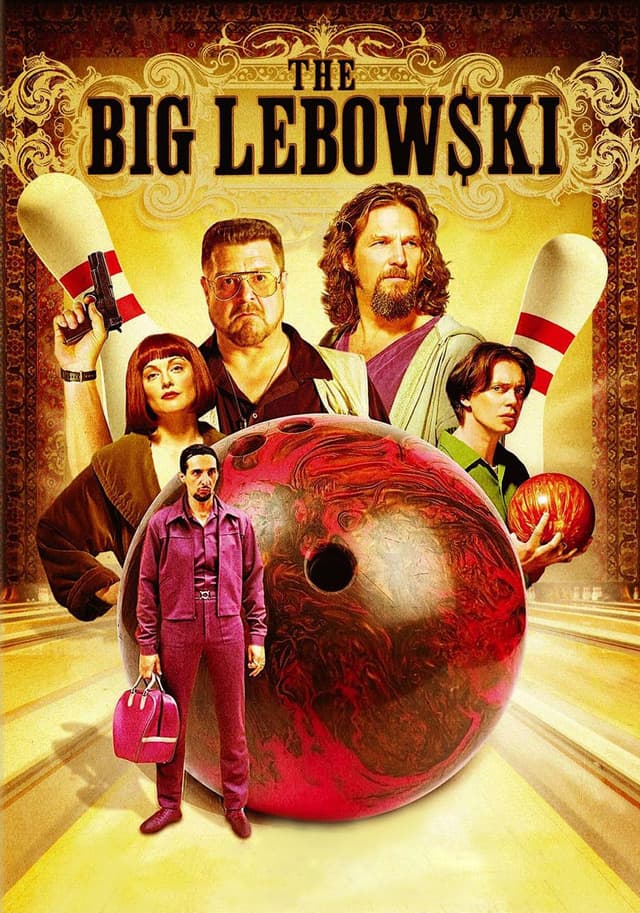
Jeffrey 'The Dude' Lebowski, a Los Angeles slacker who only wants to bowl and drink White Russians, is mistaken for another Jeffrey Lebowski, a wheelchair-bound millionaire, and finds himself dragged into a strange series of events involving nihilists, adult film producers, ferrets, errant toes, and large sums of money.
What is the budget of The Big Lebowski?
"The Big Lebowski," a comedy released in 1998, was directed by Joel Coen and stars Jeff Bridges, John Goodman. The production budget was $15,000,000, placing it in the low-budget range for comedy productions of the 1990s.
Key Budget Allocation Categories
While specific budget breakdowns are not publicly available, typical cost drivers for a comedy production like this include:
- Talent Salaries & Producing Deals: Established comedic talent can command $15 to 20 million per film, with top-tier stars earning even more through producing credits and backend deals.
- Production & Location Filming: While comedies generally avoid the VFX costs of action films, location shooting in recognizable cities or exotic locales adds meaningful production expense.
- Marketing & P&A (Prints & Advertising): Comedies rely heavily on marketing to build opening-weekend momentum.
- Pre-Production: PolyGram and Working Title Films, which had funded Fargo, backed The Big Lebowski with a budget of $15 million.
What were the major cost factors in The Big Lebowski?
Several factors contributed to the overall production costs of "The Big Lebowski."
- Talent Salaries: Talent Salaries & Producing Deals is one of the primary cost drivers in comedy productions of this scale.
- Production: Production & Location Filming is one of the primary cost drivers in comedy productions of this scale.
- Marketing: Marketing & P&A (Prints & Advertising) is one of the primary cost drivers in comedy productions of this scale.
How Does The Big Lebowski's Budget Compare to Similar Films?
At $15,000,000, The Big Lebowski sits in the low-budget range. Here is how it compares to productions with a similar budget:
- A Dangerous Method (2011): Budget $15,000,000, Worldwide Gross $27,462,041
- Ben-Hur (1959): Budget $15,000,000, Worldwide Gross $164,000,000
- Land of the Dead (2005): Budget $15,000,000, Worldwide Gross $47,074,133
- Into the Wild (2007): Budget $15,000,000, Worldwide Gross $56,255,142
- King's Ransom (2005): Budget $15,000,000, Worldwide Gross $4,139,856
The median budget for wide-release comedy films in the era ranges from $30 to 80M for mid-budget to $150M+ for tentpoles.
The Big Lebowski Box Office Performance
"The Big Lebowski" earned $19,488,923 domestically and $47,010,480 worldwide at the box office. Against a production budget of $15,000,000, the film performed strongly at the box office.
A film typically needs to earn approximately twice its production budget to cover marketing and distribution costs. For "The Big Lebowski," that break-even threshold was roughly $30,000,000. With worldwide earnings of $47,010,480, the film cleared that threshold comfortably.
Box Office Breakdown
The Big Lebowski

At 213.4%, "The Big Lebowski" earned roughly $3.13 for every $1 invested in production.
The Big Lebowski Production History
Actual filming took place over an eleven-week period with location shooting in and around Los Angeles, including all of the bowling sequences at the Hollywood Star Lanes (for three weeks) Joel Coen said that Jeff Bridges was upset there was no playback monitor so Bridges made them get a playback monitor at the end of the second week of production. The scenes in Jackie Treehorn's house were shot in the Sheats-Goldstein Residence, designed by John Lautner and built in 1963 in the Hollywood Hills. Deakins described the look of the fantasy scenes as being very crisp, monochromatic, and highly lit in order to afford greater depth of focus.
The original score was composed by Carter Burwell, a veteran of all the Coen Brothers' films. The Big Lebowski (Original Motion Picture Soundtrack) was released through Mercury Records on February 24, 1998, and was jointly produced by the Coens and the film's music supervisor T Bone Burnett.
Awards and Recognition
7 wins & 18 nominations total
Critical Reception
On review aggregator Rotten Tomatoes, the film holds an approval rating of 80% based on 191 reviews, with an average score of 7.40/10.
Frequently Asked Questions
How much did it cost to make The Big Lebowski (1998)?
The production budget was $15,000,000, covering principal photography, cast and crew salaries, locations, sets, post-production, and music. Marketing and distribution (P&A) costs are estimated at an additional $7,500,000 - $12,000,000, bringing the total studio investment to approximately $22,500,000 - $27,000,000.
How much did The Big Lebowski (1998) earn at the box office?
The Big Lebowski grossed $19,488,923 domestic, $27,521,557 international, totaling $47,010,480 worldwide.
Was The Big Lebowski (1998) profitable?
Yes. Against a production budget of $15,000,000 and estimated total costs of ~$37,500,000, the film earned $47,010,480 theatrically - a 213% ROI on production costs alone.
What were the biggest costs in producing The Big Lebowski?
The primary cost drivers were above-the-line talent (Jeff Bridges, John Goodman, Julianne Moore); star comedian salaries, location filming, and aggressive marketing campaigns; international production across United Kingdom, United States of America.
How does The Big Lebowski's budget compare to similar comedy films?
At $15,000,000, The Big Lebowski is classified as a low-budget production. The median budget for wide-release comedy films in the era ranges from $30 - 80M for mid-budget to $150M+ for tentpoles. Comparable budgets: A Dangerous Method (2011, $15,000,000); Ben-Hur (1959, $15,000,000); Land of the Dead (2005, $15,000,000).
Did The Big Lebowski (1998) go over budget?
There are no widely reported accounts of significant budget overruns for this production. However, studios rarely disclose precise budget overrun figures publicly. The reported production budget reflects the final estimated cost.
What was the return on investment (ROI) for The Big Lebowski?
The theatrical ROI was 213.4%, calculated as ($47,010,480 − $15,000,000) ÷ $15,000,000 × 100. This measures gross revenue against production budget only - it does not account for P&A or exhibitor shares.
What awards did The Big Lebowski (1998) win?
7 wins & 18 nominations total.
Who directed The Big Lebowski and who were the key crew members?
Directed by Joel Coen, written by Ethan Coen, Joel Coen, shot by Roger Deakins, with music by Carter Burwell, edited by Tricia Cooke, Ethan Coen.
Where was The Big Lebowski filmed?
The Big Lebowski was filmed in United Kingdom, United States of America. Actual filming took place over an eleven-week period with location shooting in and around Los Angeles, including all of the bowling sequences at the Hollywood Star Lanes (for three weeks) Joel Coen said that Jeff Bridges was upset there was no playback monitor so Bridges made them get a playback monitor at the end of the second week of production. The scenes in Jackie Treehorn's house were shot in the Sheats-Goldstein Residence, designed by John Lautner and built in 1963 in the Hollywood Hills. Deakins described the look of the fantasy scenes as being very crisp, monochromatic, and highly lit in order to afford greater depth of focus. However, with the Dude's apartment, Deakins said, "it's kind of seedy and the light's pretty nasty" with a grittier look.
Filmmakers
The Big Lebowski

Official Trailer
Build budgets like this one in Saturation
Start from an industry-standard feature film template, import the schedule and rates you already have, and let the cost report keep itself current as you spend. Real-time collaboration, no spreadsheets.