The Bachelor Budget
 Romantic Comedy
Updated
Synopsis
Commitment-averse San Francisco bachelor Jimmie Shannon learns that his eccentric grandfather has left him a $100 million inheritance, conditional on Jimmie being married before he turns 30 in less than 24 hours. After his girlfriend Anne rejects a botched proposal, Jimmie must race against time to find a willing bride before the deadline expires.
What Is the Budget of The Bachelor (1999)?
The Bachelor (1999), directed by Gary Sinyor and distributed by New Line Cinema, was produced on a reported budget of $51,000,000. The romantic comedy was co-financed by New Line, George Street Pictures, and The Lloyd Segan Company, with New Line handling worldwide theatrical release. Steve Cohen wrote the screenplay, adapting the 1925 Buster Keaton silent comedy Seven Chances directed by Buster Keaton.
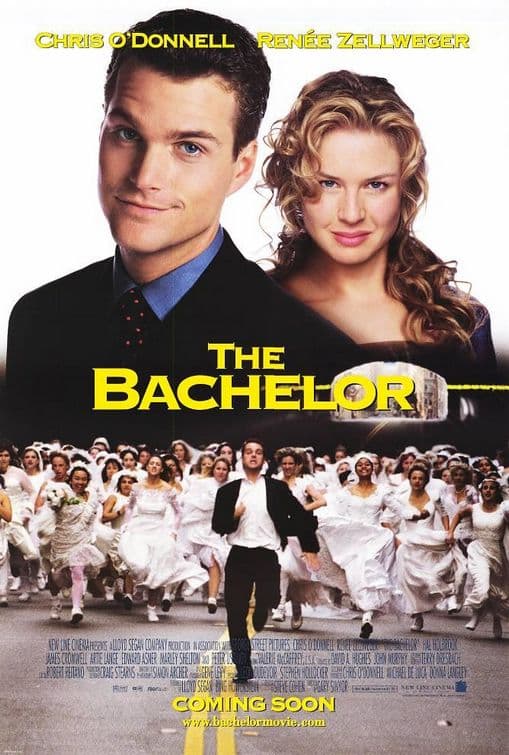
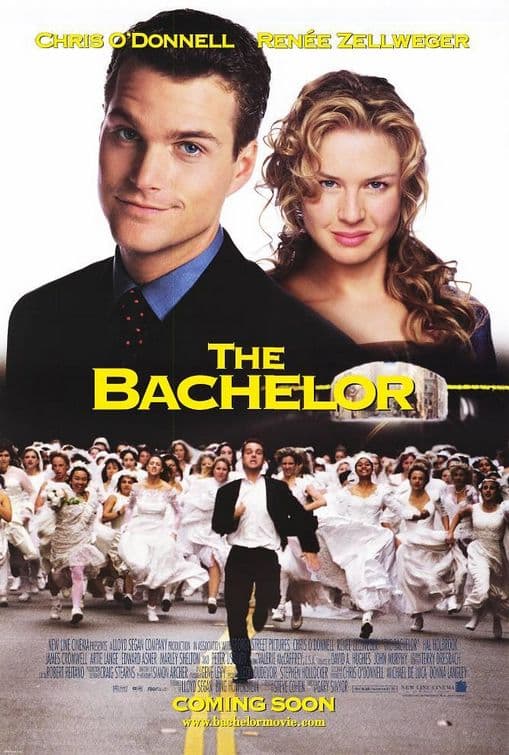
Chris O'Donnell and Renée Zellweger headlined the cast, with O'Donnell at his post-Batman & Robin (1997) box-office peak and Zellweger emerging as a leading lady after her Jerry Maguire (1996) breakthrough. The supporting cast included Hal Holbrook, James Cromwell, Artie Lange, Marley Shelton, Brooke Shields, and Sir Peter Ustinov. The mid-range budget reflected the project's positioning as a star-driven mainstream romantic comedy with elaborate set-piece moments including the climactic mass-wedding sequence.
Key Budget Allocation Categories
The $51,000,000 budget was distributed across these core production areas:
- Above-the-Line Talent: Chris O'Donnell and Renée Zellweger commanded star-tier compensation, with O'Donnell's post-Batman & Robin leverage and Zellweger's post-Jerry Maguire emergence both driving fees. The supporting cast including Peter Ustinov, Hal Holbrook, and James Cromwell added prestige veteran salaries.
- San Francisco Location Shoot: Principal photography took place primarily on location in San Francisco, with elaborate set pieces filmed across the city's landmarks. Location filming, traffic control, and the climactic mass-bride chase sequence on city streets anchored a significant share of the budget.
- Mass Wedding Sequence: The film's signature climax features hundreds of brides chasing Chris O'Donnell through downtown San Francisco. The sequence required hundreds of background extras, costuming for the bridal wardrobes, multi-day traffic management, and elaborate staging.
- Set Design and Costume: Production designer Jim Newport and costume designer Donfeld built San Francisco-period interiors, the wedding-chapel sequences, and the elaborate ensemble bride wardrobes for the climactic sequence.
- Score and Music Licensing: David A. Hughes and John Murphy composed the score. The soundtrack budget covered original composition and licensing of late-1990s romantic-comedy needle drops.
- Marketing and Distribution: New Line's P&A spend was estimated at approximately $25,000,000 to $35,000,000, with a Thanksgiving 1999 release positioned for the family-and-couples adult-audience window.
How Does The Bachelor's Budget Compare to Similar Films?
At $51,000,000, The Bachelor sat in the upper range of late-1990s romantic comedy productions:
- Runaway Bride (1999): Budget $70,000,000 | Worldwide $309,500,000. Paramount's contemporaneous Julia Roberts and Richard Gere romantic comedy cost 37% more than The Bachelor and earned more than eight times the worldwide gross, providing the year's commercial template the new film hoped to extend.
- Notting Hill (1999): Budget $42,000,000 | Worldwide $363,900,000. Universal's Julia Roberts and Hugh Grant romantic comedy cost less than The Bachelor and earned roughly ten times the worldwide gross, illustrating the dramatic upside available when the genre broke through.
- Best Friend's Wedding, My (1997): Budget $38,000,000 | Worldwide $299,300,000. TriStar's previous Julia Roberts romantic comedy cost 25% less and earned more than eight times the worldwide gross, anchoring the studio commercial expectations The Bachelor failed to meet.
- Sleepless in Seattle (1993): Budget $21,000,000 | Worldwide $227,800,000. TriStar's adult romantic comedy template cost less than half of The Bachelor and earned more than six times the worldwide gross, framing The Bachelor as overpriced for its eventual commercial outcome.
The Bachelor Box Office Performance
The Bachelor opened on November 5, 1999, debuting in second place with $7,477,498 over its opening weekend, trailing The Bone Collector. The opening was a disappointment for a film positioned for romantic-comedy success ahead of the holiday corridor. The financial breakdown:
Box Office Breakdown
The Bachelor (1999)

The Bachelor returned approximately $0.43 to $0.49 in worldwide theatrical revenue for every $1 invested. The domestic share of the gross was $21,633,331 against an international share of $15,278,286, a 59/41 split that reflected a modest international audience response. New Line recouped further through home video, cable, and television syndication in the years following, though the theatrical underperformance has left the film as a footnote in the late-1990s romantic-comedy cycle.
The Bachelor Production History
Steve Cohen adapted the screenplay from Roi Cooper Megrue's 1916 play "Seven Chances," which had previously been filmed as the 1925 Buster Keaton silent comedy of the same name. The premise of a bachelor inheriting a fortune contingent on marriage within hours had appeared in multiple stage and screen adaptations over the preceding decades.
British filmmaker Gary Sinyor was hired to direct after his work on Stiff Upper Lips (1997). Principal photography took place in 1998 primarily in San Francisco, California, with elaborate location work across the city's landmarks. The mass-bride chase climax required multi-day street closures and hundreds of background performers in wedding wardrobe.
New Line released the film in November 1999 in counterprogramming position against family-skewing competition and the early prestige-season releases. The Thanksgiving frame failed to lift the picture out of its soft opening weekend, and the film closed its run well below expectations. Co-star Peter Ustinov, in one of his final major film appearances, drew warm critical mentions despite the overall disappointment.
Awards and Recognition
The Bachelor received no significant awards recognition. The film was not nominated at any major industry ceremonies. It was nominated at the Razzies for Worst Original Song ("The Wedding Song") but did not win, with Wild Wild West winning that year's Razzie ceremonies. Renée Zellweger and Chris O'Donnell drew no individual recognition for their performances, though both went on to substantial subsequent careers.
Critical Reception
The Bachelor received predominantly negative reviews. The film holds an 8% approval rating on Rotten Tomatoes based on 64 critic reviews, with a critical consensus that the film wasted its appealing cast in a stale, sexist premise that had aged poorly since the Buster Keaton source material. On Metacritic, the film scored 28 out of 100, indicating generally unfavorable reviews.
Roger Ebert awarded the film one star out of four, writing that "the premise is creaky, the execution is leaden, and even Renée Zellweger can't save material this dated." The Hollywood Reporter called the film "an awkward attempt to retrofit a silent comedy for modern audiences," and Variety found it "professionally executed but creatively bankrupt." Peter Ustinov's posthumous-published-essay performance and Renée Zellweger's game commitment to the underwritten role drew the most sympathetic mentions, but the broader consensus framed the film as a misfire of premise and execution that wasted the cast's talents.
Frequently Asked Questions
How much did it cost to make The Bachelor (1999)?
The reported production budget was $51,000,000. The film was co-financed by New Line Cinema, George Street Pictures, and The Lloyd Segan Company, with New Line handling worldwide theatrical distribution.
How much did The Bachelor (1999) earn at the box office?
The film grossed $21,633,331 domestically and $15,278,286 internationally, for a worldwide total of $36,911,617. It opened to $7,477,498 in the United States, debuting in second place on the weekend of November 5, 1999.
Was The Bachelor (1999) profitable?
No. Against a $51,000,000 production budget and an estimated $25,000,000 to $35,000,000 in marketing spend, the film returned approximately $0.43 to $0.49 in worldwide gross for every $1 invested, a loss of approximately $39,000,000 to $49,000,000. New Line recouped further through home video, cable, and television syndication.
Who directed The Bachelor (1999)?
British filmmaker Gary Sinyor directed the film. Sinyor was previously known for Stiff Upper Lips (1997) and Solitaire for 2 (1995). Steve Cohen wrote the screenplay.
Is The Bachelor (1999) a remake?
Yes. Steve Cohen's screenplay was adapted from Roi Cooper Megrue's 1916 play "Seven Chances," which had previously been filmed as the 1925 Buster Keaton silent comedy of the same name. The premise of a bachelor inheriting a fortune contingent on marriage within hours had appeared in multiple stage and screen adaptations over the preceding decades.
Where was The Bachelor (1999) filmed?
Principal photography took place in 1998 primarily in San Francisco, California, with elaborate location work across the city's landmarks. The mass-bride chase climax required multi-day street closures and hundreds of background performers in wedding wardrobe.
Who is in the cast of The Bachelor (1999)?
Chris O'Donnell plays Jimmie Shannon and Renée Zellweger plays his girlfriend Anne. The supporting cast includes Artie Lange, Ed Asner, Hal Holbrook, James Cromwell, Marley Shelton, Peter Ustinov, and Brooke Shields. Ustinov's role was one of his final major film appearances.
How does The Bachelor (1999) compare to other 1999 romantic comedies?
The Bachelor cost $51,000,000 and earned $36,911,617 worldwide. By contrast, Runaway Bride (1999) cost $70,000,000 and earned $309,500,000, and Notting Hill (1999) cost $42,000,000 and earned $363,900,000. The Bachelor posted one of the year's most decisive romantic-comedy underperformances.
What did critics think of The Bachelor (1999)?
The film received predominantly negative reviews, with an 8% approval rating on Rotten Tomatoes and a 28 out of 100 Metacritic score. Roger Ebert awarded the film one star out of four. Peter Ustinov's performance and Renée Zellweger's game commitment to the underwritten role drew the most sympathetic mentions, but the broader consensus framed the film as a misfire.
Did The Bachelor (1999) win any awards?
No. The film received no significant awards recognition. It was nominated at the Razzies for Worst Original Song ("The Wedding Song") but did not win, with Wild Wild West winning that year's Razzie ceremonies.
Filmmakers
The Bachelor (1999)

Build budgets like this one in Saturation
Start from an industry-standard feature film template, import the schedule and rates you already have, and let the cost report keep itself current as you spend. Real-time collaboration, no spreadsheets.