The Ascent Budget
Updated
Synopsis
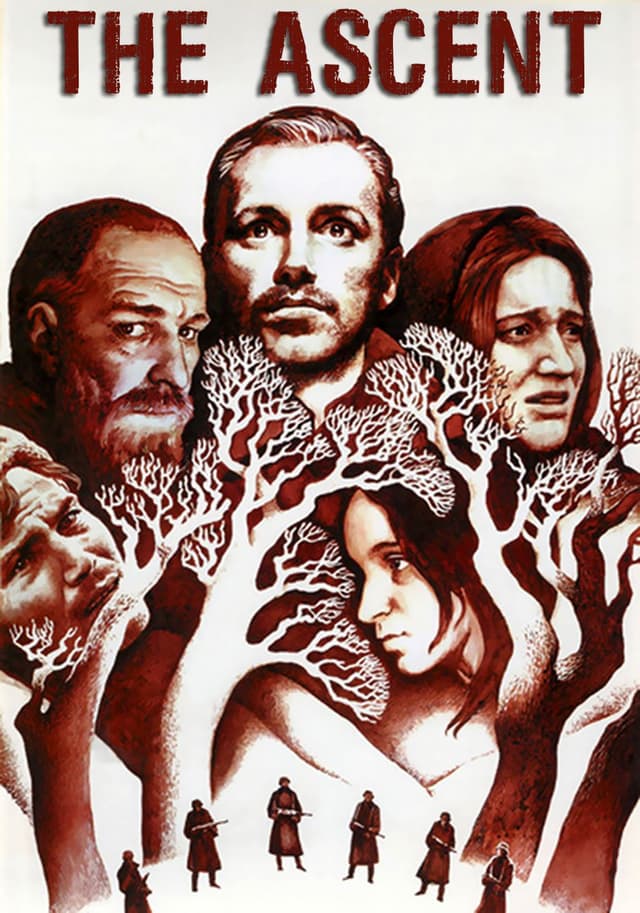
Two Soviet partisans, Sotnikov and Rybak, set off through the snow-blanketed Belarusian countryside to forage for food for their detachment. Captured by German forces and a collaborator, they face a moral test that will determine whether they die as men or as something less.
What Is the Budget of The Ascent (1977)?
The Ascent (Voskhozhdeniye, 1977), directed by Larisa Shepitko and produced by Mosfilm, was made under the Soviet state film system, meaning no Western-style production budget figure was ever published. Mosfilm allocated production resources to the project as a state-financed feature, with all crew, cast, equipment, and post-production handled through the Soviet centralized film infrastructure rather than itemized against a numerical budget.
Industry historians and Mosfilm archival researchers estimate the production's implied budget at the equivalent of approximately 250,000 to 400,000 Soviet rubles, the standard range for Mosfilm A-list dramatic features in the mid-1970s, which translates to roughly $300,000 to $500,000 in 1977 US dollars when converted at the prevailing official exchange rate. The film's production scale (extensive winter exteriors, multiple location relocations, large supporting cast) placed it at the upper end of standard Soviet A-list feature spending.
Key Budget Allocation Categories
The implied production resources for The Ascent were distributed across several core production areas under the Soviet centralized model:
- Above-the-Line Talent: Larisa Shepitko directed under the Soviet state contract system, drawing a Mosfilm director's salary rather than a market-rate fee. Lead actors Boris Plotnikov as Sotnikov and Vladimir Gostyukhin as Rybak were both relatively early-career performers signed to Mosfilm contracts. Sergei Yakovlev, Anatoli Solonitsyn (Tarkovsky's frequent collaborator), and Lyudmila Polyakova rounded out the cast.
- Belarusian and Russian Location Shoot: The film photographed extensively across snow-covered Belarusian and Russian rural locations, with the unit operating in extreme cold (temperatures reportedly reached minus 40 Celsius during the production). Location work in remote winter terrain required substantial logistical support, military equipment for the partisan-and-occupation sequences, and a sustained period of field production.
- Production Design and Period Detail: The 1942 wartime setting required full period reconstruction of occupied-village environments, Soviet partisan winter gear, Wehrmacht uniforms and equipment, civilian Belarusian wardrobe, and various interrogation and gallows set pieces. Mosfilm's in-house design and prop infrastructure handled this work as part of its centralized production resources.
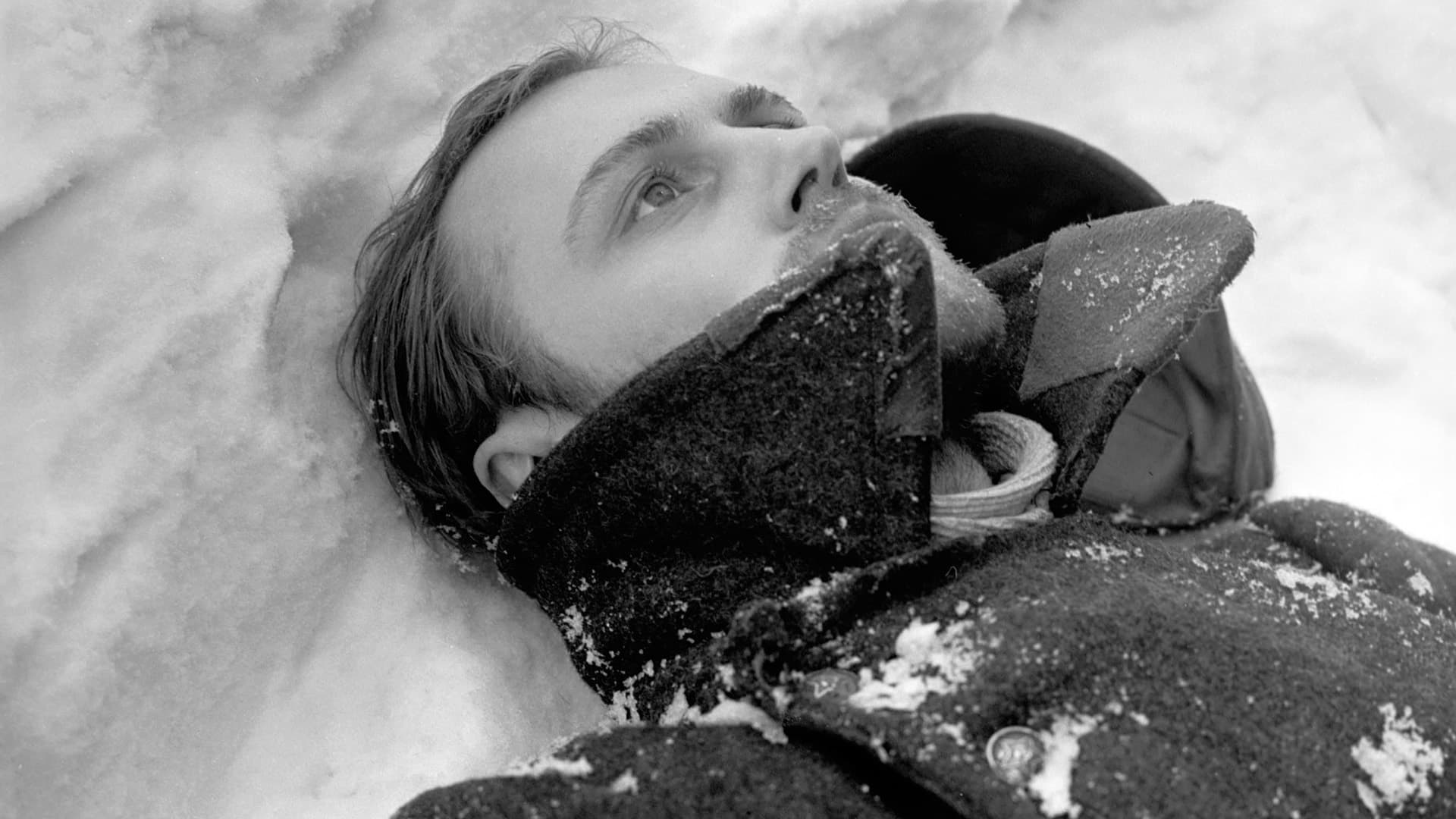
- Cinematography: Vladimir Chukhnov shot the film in 35mm black and white, with sustained outdoor coverage in extreme weather. The film's high-contrast visual approach and prolonged close-up work on the actors' faces required specialized cold-weather camera handling and lens management.
- Score and Music: Alfred Schnittke, one of the leading Soviet composers of the era, composed the score. Schnittke's collaboration represented a significant cultural commitment on a state-funded film and gave the project elevated prestige within the Mosfilm hierarchy.
- Post-Production and Distribution: Mosfilm's in-house editing, sound, and laboratory facilities handled all post work in Moscow. The film was distributed through the Sovkino theatrical chain across the Soviet Union, with international distribution handled through Sovexportfilm.
How Does The Ascent's Budget Compare to Similar Films?
The Ascent sits within the cohort of major Soviet auteur war films of the 1970s. The comparison set illustrates the implied resource context:
- Come and See (1985): Budget approximately 1,500,000 Soviet rubles (estimated equivalent to $1,900,000) | Worldwide unreported. Elem Klimov's Belarusian war film, considered the spiritual successor to The Ascent (Klimov was married to Shepitko, who died in a 1979 car accident before she could direct it), cost roughly four times what The Ascent did.
- Stalker (1979): Budget approximately 1,000,000 Soviet rubles (estimated equivalent to $1,300,000) | Worldwide unreported. Andrei Tarkovsky's contemporary Mosfilm production offered an auteur-cinema budget peer.
- The Mirror (1975): Budget approximately 600,000 Soviet rubles (estimated equivalent to $750,000) | Worldwide unreported. Tarkovsky's autobiographical Mosfilm feature offered another budget comparison for prestige Soviet auteur filmmaking.
- Cross of Iron (1977): Budget $6,000,000 | Worldwide $20,000,000. Sam Peckinpah's contemporary Western Eastern Front war film offered a Western-financed counterpoint, costing more than 12 times what The Ascent did.
The Ascent Box Office Performance
The Ascent received Soviet theatrical distribution beginning in 1977, achieving an attendance of approximately 10,000,000 admissions within the Soviet Union, a strong result for a serious wartime drama released across the Sovkino chain. Soviet-era box office was reported in admissions rather than gross dollars, and the centralized financing model meant the film did not need to recoup investment through ticket sales in the way Western releases do. The financial breakdown reflects the Soviet model:
Box Office Breakdown
The Ascent

International recognition was the film's decisive commercial dimension. The Ascent won the Golden Bear at the 1977 Berlin International Film Festival, securing Sovexportfilm international sales and festival placement across Western Europe, Latin America, and North America. The film became one of the most internationally successful Soviet films of the late Brezhnev era and a fixture of European and North American repertory cinema programming through the 1980s and beyond.
Restored versions released by Criterion Collection (US, 2008 standalone DVD and 2020 4K Blu-ray) and Kino-Lorber distribution have continued to generate downstream revenue, with the Criterion edition pairing The Ascent with Larisa Shepitko's earlier Wings (1966) in a single Eclipse box set.
The Ascent Production History
The project began with Larisa Shepitko's adaptation of Vasil Bykaŭ's 1970 Belarusian novella Sotnikov, which depicted the moral test facing two partisans captured by occupying German and Soviet collaborator forces in 1942. Shepitko and her screenwriter co-collaborator Yuri Klepikov delivered the script to Mosfilm's Sixth Creative Unit, which approved the project as part of the Soviet film industry's annual production slate.
Boris Plotnikov was cast as Sotnikov in his feature film debut after Shepitko spotted him in a Sverdlovsk theater production. Vladimir Gostyukhin (Aleksandr Sokurov's and Aleksei German's later collaborator) was cast as Rybak. Anatoli Solonitsyn, who had worked extensively with Andrei Tarkovsky on Andrei Rublev, Solaris, and Mirror, took the role of Portnov, the Soviet collaborator who interrogates the captured partisans.
Principal photography took place across late 1976 and early 1977 in Belarus and the Murom region of Russia. The production endured extreme winter conditions, with temperatures reportedly dropping to minus 40 Celsius during exterior shooting. Shepitko herself fell seriously ill during the shoot and continued directing from a stretcher in several reported instances. The film premiered at the Berlin International Film Festival in July 1977.
Awards and Recognition
The Ascent won the Golden Bear (Best Film) at the 27th Berlin International Film Festival in July 1977, the first time a Soviet film took the top prize at Berlin and the only Golden Bear ever won by a Soviet woman director. The award secured the film's international standing and triggered Sovexportfilm sales across Western Europe and North America.
The film won additional recognition at the FIPRESCI International Critics' Prize at Berlin and the Catholic Film Office (OCIC) Prize at the same festival. Within the Soviet Union, it received the USSR State Prize (Gosudarstvennaya Premiya SSSR) in 1979, the highest honor for Soviet cinematic achievement. The film is widely cited on critical surveys of the greatest war films ever made, including Sight & Sound and Senses of Cinema retrospectives.
Critical Reception
The Ascent received widely positive reviews internationally and is considered one of the greatest war films ever made. Contemporary reviews praised Shepitko's tonal control, the visual austerity of the snow-blanketed landscape, and the performances of Boris Plotnikov and Vladimir Gostyukhin. Subsequent retrospectives have only elevated the film's standing.
Critics consistently cite the film's religious and moral dimensions, with several reviewers noting its allegorical Christian framework (Sotnikov as Christ figure, Rybak as Judas) and its meditation on betrayal, sacrifice, and survival under occupation. Roger Ebert added the film to his Great Movies list, writing that "Shepitko's camera observes faces, terrain, and silences with an almost religious patience." The Criterion Collection essay by critic Mark Le Fanu called it "a masterpiece of unyielding moral focus and one of the high points of all Soviet cinema." Director Elem Klimov, who was Shepitko's husband, completed her unrealized project Farewell to Matyora after her 1979 death and dedicated his own Come and See (1985) partly to her memory; he has cited The Ascent as the single greatest film by any Soviet director.
Frequently Asked Questions
How much did The Ascent cost to make?
No Western-style budget figure was ever published. The Ascent was financed through the Soviet state film system at Mosfilm. Industry historians estimate the production at approximately 250,000 to 400,000 Soviet rubles, the standard range for Mosfilm A-list dramatic features in the mid-1970s, which translates to roughly $300,000 to $500,000 in 1977 US dollars.
Who directed The Ascent?
Larisa Shepitko directed The Ascent. Shepitko was a major Soviet auteur whose previous films included Wings (1966) and You and I (1971). She died in a car accident in 1979 at age 41 while scouting locations for Farewell to Matyora, which her husband Elem Klimov completed in 1983.
Is The Ascent based on a book?
Yes. The film is adapted from Vasil Bykaŭ's 1970 Belarusian novella Sotnikov. Larisa Shepitko and Yuri Klepikov wrote the screenplay, preserving Bykaŭ's focus on the moral test facing two partisans captured by German and collaborator forces in 1942.
Did The Ascent win at the Berlin Film Festival?
Yes. The Ascent won the Golden Bear at the 27th Berlin International Film Festival in 1977, the first Soviet film to take the top prize at Berlin and the only Golden Bear ever won by a Soviet woman director. It also won the FIPRESCI International Critics' Prize at the same festival.
Where was The Ascent filmed?
Principal photography took place across late 1976 and early 1977 in Belarus and the Murom region of Russia. The production endured extreme winter conditions, with temperatures reportedly dropping to minus 40 Celsius during exterior shooting.
Who composed the score for The Ascent?
Alfred Schnittke composed the score. Schnittke was one of the leading Soviet composers of the era and his collaboration on the film represented a significant cultural commitment from a state-funded prestige project.
Where can I watch The Ascent?
The Ascent is available in a restored 4K Blu-ray edition from the Criterion Collection (released 2020 in the US), and streams on the Criterion Channel. The film is also available through various international arthouse distributors and selected European streaming platforms.
What did critics think of The Ascent?
The Ascent received widely positive reviews internationally and is considered one of the greatest war films ever made. Roger Ebert added the film to his Great Movies list, and the Criterion Collection essay by Mark Le Fanu called it "a masterpiece of unyielding moral focus and one of the high points of all Soviet cinema."
How did The Ascent perform in the Soviet Union?
The Ascent achieved approximately 10,000,000 admissions within the Soviet Union, a strong result for a serious wartime drama released across the Sovkino chain. Soviet-era box office was reported in admissions rather than gross dollars under the centralized state distribution model.
What is the connection between The Ascent and Come and See?
Larisa Shepitko was married to director Elem Klimov, who made Come and See (1985), another major Soviet Belarusian war film. After Shepitko's 1979 death in a car accident, Klimov completed her unrealized project Farewell to Matyora and has cited The Ascent as the single greatest film by any Soviet director.
Filmmakers
The Ascent

Official Trailer
Build budgets like this one in Saturation
Start from an industry-standard feature film template, import the schedule and rates you already have, and let the cost report keep itself current as you spend. Real-time collaboration, no spreadsheets.