Texas Chainsaw 3D Budget
 Horror
Updated
Synopsis
Picking up immediately after the events of the 1974 original, the Sawyer family's Texas farmhouse is burned to the ground by a vigilante mob, leaving only the infant Heather Miller alive. Twenty years later, the now-adult Heather inherits a Texas estate from a grandmother she never knew, and her road-trip arrival in the small town of Newt unleashes the still-living Leatherface on her group of friends while reopening generations-old wounds about the Sawyer massacre.
What Is the Budget of Texas Chainsaw 3D (2013)?
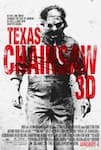
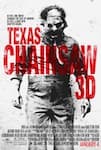
Texas Chainsaw 3D (2013), the seventh installment in the Texas Chainsaw Massacre franchise, was produced on a reported budget of $20,000,000. Lionsgate financed and distributed the project with co-financing from Millennium Films, Mainline Pictures, and Nu Image, and with continuing producer involvement from Carl Mazzocone and the Vortex Inc. estate that had held the franchise rights since the original 1974 Tobe Hooper film. The film served as a direct sequel to the 1974 original, deliberately ignoring the 1986 Tobe Hooper-directed Part 2 and the subsequent New Line, Platinum Dunes, and Dimension entries, in an attempt to reset the franchise continuity around the original Sawyer family.
The $20,000,000 figure was modest for a major-studio horror release but consistent with the post-Saw and post-Paranormal Activity production economics that Lionsgate had successfully built across the late 2000s and early 2010s. The investment covered the 3D post-conversion (the film was shot 2D and converted), Louisiana location work, practical creature and gore effects from KNB EFX Group, and a casting strategy that paired Alexandra Daddario (then known for the Percy Jackson franchise) with franchise-veteran cameos from Bill Moseley, Gunnar Hansen, and Marilyn Burns, the surviving cast from the original 1974 film.
Key Budget Allocation Categories
Texas Chainsaw 3D's $20,000,000 budget was distributed across several core production areas:
- Above-the-Line Talent: Alexandra Daddario received a step-up fee positioned at her post-Percy Jackson rate, her first major non-franchise lead. R&B singer Trey Songz was paid at scale-plus terms for his featured supporting role as her boyfriend. Bill Moseley, Gunnar Hansen, and Marilyn Burns received veteran-franchise scale fees for their cameo appearances. Dan Yeager took the Leatherface role at first-time-creature-actor rates. Director John Luessenhop received an established mid-budget genre directing fee.
- Louisiana Location Shoot: Principal photography ran from May 30, 2011 to July 25, 2011 in Shreveport and Caddo Parish, Louisiana, taking advantage of Louisiana's contemporary 30% transferable film tax credit. The Sawyer farmhouse, the Texas roadside diner sets, and the mansion that Heather inherits were all built or sourced in the Shreveport area.
- Practical Effects and Gore: KNB EFX Group, led by Greg Nicotero and Howard Berger (The Walking Dead, Kill Bill), supplied the practical creature effects for Leatherface and the extensive gore work for the chainsaw set pieces. The Leatherface costume, including the chainsaw, the leather mask, the apron, and the dental prosthetics for the unmasked Sawyer face, required dedicated build time across pre-production.
- 3D Post-Conversion: The film was shot in 2D on Arri Alexa and converted to 3D in post by Stereo D, the same company that handled major Marvel and Warner Bros. 3D conversions of the era. The conversion was a meaningful budget line item but cheaper than native 3D capture. Marketing emphasized the 3D format heavily, with chainsaw-thrust gags designed for the format.
- Cinematography: Cinematographer Anastas N. Michos shot the film on Arri Alexa with a grain-emphasized digital look designed to evoke the original 1974 film's 16mm aesthetic while supporting the 3D conversion. Day-exterior coverage at the farmhouse and roadside settings required hot-weather Louisiana scheduling and bug-and-heat contingencies.
- Production Design: Production designer William A. Elliott built the Sawyer farmhouse, the Heather Miller-inherited mansion (including the basement and Leatherface workshop), and the small-town Texas police station. The farmhouse facade was constructed for the opening burn-down sequence and rebuilt as the basement interior for the climax.
- Score and Music: Composer John Frizzell (Alien: Resurrection, Office Space) recorded the score with an orchestra in Los Angeles, blending industrial textures with the franchise's established acoustic-horror palette. The opening title sequence remixed Tobe Hooper's and Wayne Bell's original 1974 sound design.
How Does Texas Chainsaw 3D's Budget Compare to Similar Films?
At $20,000,000, Texas Chainsaw 3D sat in the upper-middle range of the contemporary slasher revival tier. The comparison set illustrates how its commercial outcome stacked up:
- The Texas Chain Saw Massacre (1974): Budget $140,000 | Worldwide $30,860,000. Tobe Hooper's original franchise opener cost less than 1% of Texas Chainsaw 3D in nominal dollars and earned roughly two thirds of the worldwide gross, making it the most profitable Texas Chainsaw film on a return-on-investment basis.
- The Texas Chainsaw Massacre (2003): Budget $9,500,000 | Worldwide $107,540,348. Platinum Dunes' Marcus Nispel-directed reboot cost less than half what Texas Chainsaw 3D spent and earned more than twice the worldwide gross, the genre revival ceiling for the franchise.
- Halloween (2007): Budget $15,000,000 | Worldwide $80,253,908. Dimension's Rob Zombie-directed Michael Myers reboot cost 25% less than Texas Chainsaw 3D and earned 70% more worldwide, the most successful comparable slasher revival of the post-Saw era.
- My Bloody Valentine 3D (2009): Budget $14,000,000 | Worldwide $100,711,272. Lionsgate's contemporaneous 3D slasher revival cost 30% less than Texas Chainsaw 3D and earned more than twice the worldwide gross, establishing the post-Saw 3D-slasher template.
- Final Destination 3 (2006): Budget $25,000,000 | Worldwide $117,800,000. New Line's contemporaneous horror sequel cost 25% more than Texas Chainsaw 3D and earned more than twice the worldwide gross.
Texas Chainsaw 3D Box Office Performance
Texas Chainsaw 3D opened on January 4, 2013, in 2,654 theaters and earned $21,738,005 over its opening weekend, finishing first at the domestic box office and beating Django Unchained, The Hobbit: An Unexpected Journey, and Les Misérables in its opening frame. The opening was a meaningful surprise for the franchise and the broader January horror release category, registering as one of the strongest January horror openings to that point.
Against a $20,000,000 production budget, the film needed approximately $50,000,000 in worldwide gross to reach profitability after marketing and distribution costs. Here is the financial breakdown:
Box Office Breakdown
Texas Chainsaw 3D (2013)

Texas Chainsaw 3D returned approximately $1.10 in worldwide theatrical revenue for every $1 invested when measured against total estimated production and marketing spend. The domestic share of the gross was $34,341,945 against an international share of $12,986,084, a 73/27 split heavily weighted toward North America and consistent with the franchise's historical pattern of strong US-domestic horror performance offset by limited overseas pull.
The opening-weekend top spot, while impressive, also marked the film's commercial peak. Theatrical legs were soft, with the film dropping 73% in its second weekend, a steep drop characteristic of horror genre releases. Lionsgate viewed the result as a modest success against the modest budget, and a sequel (Leatherface, 2017) entered development in 2014. The franchise was subsequently passed to Netflix for the 2022 reboot, ending the Lionsgate-Vortex theatrical era.
Texas Chainsaw 3D Production History
Development on Texas Chainsaw 3D began at Lionsgate in 2009 following the studio's commercial success with My Bloody Valentine 3D. Original story author Stephen Susco delivered the framework for a direct-sequel premise that would ignore the Tobe Hooper Part 2 and subsequent franchise entries, positioning the film as the true continuation of the original 1974 story. Screenwriters Adam Marcus, Debra Sullivan, and Kirsten Elms expanded the premise across multiple drafts, with significant late-development changes from director John Luessenhop after his attachment in late 2010.
Casting Alexandra Daddario as Heather Miller in early 2011 gave the project a recognizable post-Percy Jackson star. Veteran-cast cameos from Bill Moseley (who had played Chop Top in Tobe Hooper's 1986 Part 2) and the surviving original 1974 cast members Gunnar Hansen (Leatherface) and Marilyn Burns (Sally Hardesty) anchored the legacy-fan service. Trey Songz, then primarily a recording artist, was cast in his first major film role. Dan Yeager took the Leatherface role at 6'4" stature, the tallest Leatherface performer in the franchise's screen history.
Principal photography ran from May 30, 2011 to July 25, 2011 in Shreveport and Caddo Parish, Louisiana. Louisiana's 30% transferable film tax credit, combined with the state's well-developed regional production infrastructure, drove the location choice over Texas itself. The Sawyer farmhouse, the Texas roadside diner sets, and the mansion that Heather inherits were all built or sourced in the Shreveport area, with the farmhouse facade constructed for the opening burn-down sequence and rebuilt as the basement interior for the climax.
Post-production stretched across most of 2012, with Stereo D handling the 2D-to-3D conversion. The film was originally scheduled for an October 2012 release but was pushed to January 2013 for a counter-programmed slot against the Oscars-bait holiday releases. Composer John Frizzell recorded the score in Los Angeles. The film opened wide on January 4, 2013, in 2D, 3D, and IMAX formats.
Awards and Recognition
Texas Chainsaw 3D received minimal awards recognition. The film was nominated for the Fangoria Chainsaw Award for Best Killer (Dan Yeager as Leatherface) and Best Wide-Release Horror Film, with no wins. The film also received a Saturn Award nomination from the Academy of Science Fiction, Fantasy and Horror Films for Best Horror Film, though it did not win.
At the Razzie Awards, the film was nominated for Worst Prequel, Remake, Rip-Off or Sequel, reflecting the polarized critical reception. The Costume Designers Guild and Make-Up Artists and Hair Stylists Guild did not advance the film to nominations in their categories. Alexandra Daddario, Bill Moseley, and Dan Yeager received no individual awards traction. The film's awards profile remains the lightest of any Texas Chainsaw Massacre theatrical entry.
Critical Reception
Texas Chainsaw 3D received overwhelmingly negative reviews. The film holds a 19% approval rating on Rotten Tomatoes based on 96 critic reviews, with a critical consensus that called it a thinly conceived sequel that fails to honor the original. On Metacritic, the film scored 32 out of 100, indicating generally unfavorable reviews. Audiences surveyed by CinemaScore gave the film a C, a weak score even for a January slasher release.
Detractors objected to the screenplay's strained timeline (which set the film 20 years after the 1974 original yet positioned the 22-year-old Heather Miller as an infant survivor of those events, an internal-arithmetic problem that became a defining mockery point), the 3D conversion gimmicks, and a third-act tonal swing that recast Leatherface as a sympathetic Sawyer-family protector. Variety's Joe Leydon called the film "a sequel that doesn't earn its premise," and The Hollywood Reporter's Frank Scheck wrote that the film "wastes its franchise inheritance on plot mechanics nobody asked for."
Defenders praised the Bill Moseley, Gunnar Hansen, and Marilyn Burns cameos, the practical chainsaw effects from KNB EFX Group, and Alexandra Daddario's committed final-girl performance. Roger Ebert gave the film one and a half out of four stars and wrote that it "moves with reasonable efficiency through its motions" but flagged the timeline-arithmetic problem and the underdeveloped supporting cast. Texas Chainsaw 3D's critical reputation remains poor, but its opening-weekend commercial result keeps it on retrospective lists of January horror outperformers.
Frequently Asked Questions
How much did it cost to make Texas Chainsaw 3D (2013)?
The reported production budget was $20,000,000. Lionsgate financed and distributed the project with co-financing from Millennium Films, Mainline Pictures, and Nu Image, and with continuing producer involvement from the Vortex Inc. estate that had held the franchise rights since the original 1974 Tobe Hooper film.
How much did Texas Chainsaw 3D earn at the box office?
The film grossed $34,341,945 domestically and $12,986,084 internationally, for a worldwide total of $47,328,029. It opened to $21,738,005 over its January 4, 2013 weekend, finishing first at the domestic box office and beating Django Unchained, The Hobbit: An Unexpected Journey, and Les Misérables.
Was Texas Chainsaw 3D profitable?
Yes. Against an estimated $40,000,000 to $45,000,000 total investment (production plus marketing), the film returned approximately $1.10 in worldwide gross for every $1 invested, a modest theatrical profit. Lionsgate viewed the result as a success against the modest budget, and a sequel (Leatherface, 2017) entered development in 2014.
Who directed Texas Chainsaw 3D?
John Luessenhop directed the film. Luessenhop was attached in late 2010 and previously directed Takers (2010) at Sony. Texas Chainsaw 3D remains his most commercially successful directorial credit.
Is Texas Chainsaw 3D a direct sequel to the original?
Yes. Texas Chainsaw 3D was designed as a direct sequel to the 1974 Tobe Hooper original, deliberately ignoring the 1986 Tobe Hooper-directed Part 2 and the subsequent New Line, Platinum Dunes, and Dimension entries. The film attempted to reset the franchise continuity around the original Sawyer family. The strained timeline (in which the 22-year-old Heather Miller is positioned as an infant survivor of events set in 1974) became a defining mockery point.
Where was Texas Chainsaw 3D filmed?
Principal photography ran from May 30, 2011 to July 25, 2011 in Shreveport and Caddo Parish, Louisiana, taking advantage of Louisiana's 30% transferable film tax credit. The Sawyer farmhouse, the Texas roadside diner sets, and the mansion that Heather inherits were all built or sourced in the Shreveport area.
Did the original Leatherface appear in Texas Chainsaw 3D?
Yes. Gunnar Hansen, who played Leatherface in the 1974 original, made a cameo appearance as a different character (a Sawyer family member), and Marilyn Burns, who played Sally Hardesty in the original, also appeared in a cameo. Bill Moseley, who had played Chop Top in Tobe Hooper's 1986 Part 2, returned in a different role. Dan Yeager played Leatherface for the 2013 film at 6'4" stature, the tallest Leatherface performer in the franchise's screen history.
How does Texas Chainsaw 3D compare to other Texas Chainsaw films?
Texas Chainsaw 3D cost $20M and earned $47M worldwide, well behind The Texas Chainsaw Massacre (2003, $9.5M / $108M) and the 1974 original ($140K / $31M, the franchise's most profitable entry). It earned more than the franchise's direct-to-video and Tobe Hooper Part 2 entries but trailed the Platinum Dunes reboot in commercial impact.
What did critics think of Texas Chainsaw 3D?
The film received overwhelmingly negative reviews, with a 19% approval rating on Rotten Tomatoes (based on 96 critics) and a 32 out of 100 Metacritic score. Audiences gave it a C CinemaScore. Critics objected to the screenplay's strained timeline, the 3D conversion gimmicks, and the third-act recasting of Leatherface as a sympathetic Sawyer-family protector.
Did Texas Chainsaw 3D win any awards?
No. The film received Fangoria Chainsaw Award nominations for Best Killer and Best Wide-Release Horror Film and a Saturn Award nomination for Best Horror Film, with no wins. It was also nominated for a Razzie Award for Worst Prequel, Remake, Rip-Off or Sequel.
Filmmakers
Texas Chainsaw 3D (2013)

Build budgets like this one in Saturation
Start from an industry-standard feature film template, import the schedule and rates you already have, and let the cost report keep itself current as you spend. Real-time collaboration, no spreadsheets.