TÁR Budget
 MusicDrama2h 38m
Updated
Synopsis
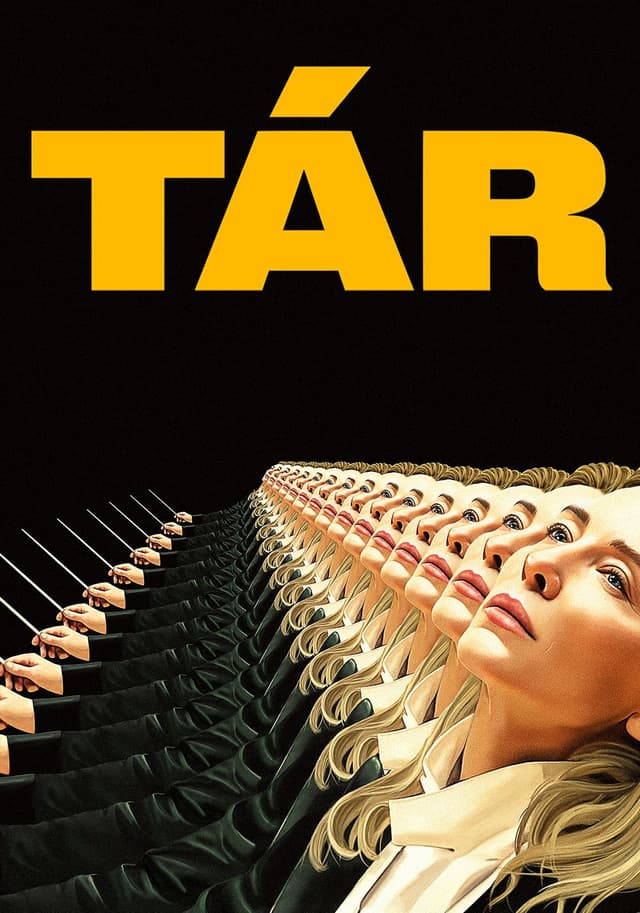
As celebrated conductor Lydia Tár starts rehearsals for a career-defining symphony, the consequences of her past choices begin to echo in the present.
What Is the Budget of TÁR?
TÁR was produced on a budget of approximately $35 million, a substantial investment for a character-driven drama with no genre elements and an art-house distribution strategy. The film was financed through Standard Film Company and Karman Entertainment and acquired by Focus Features for US distribution, a label associated with prestige independent cinema — previous Focus releases include Brokeback Mountain, Atonement, and Moonlight.
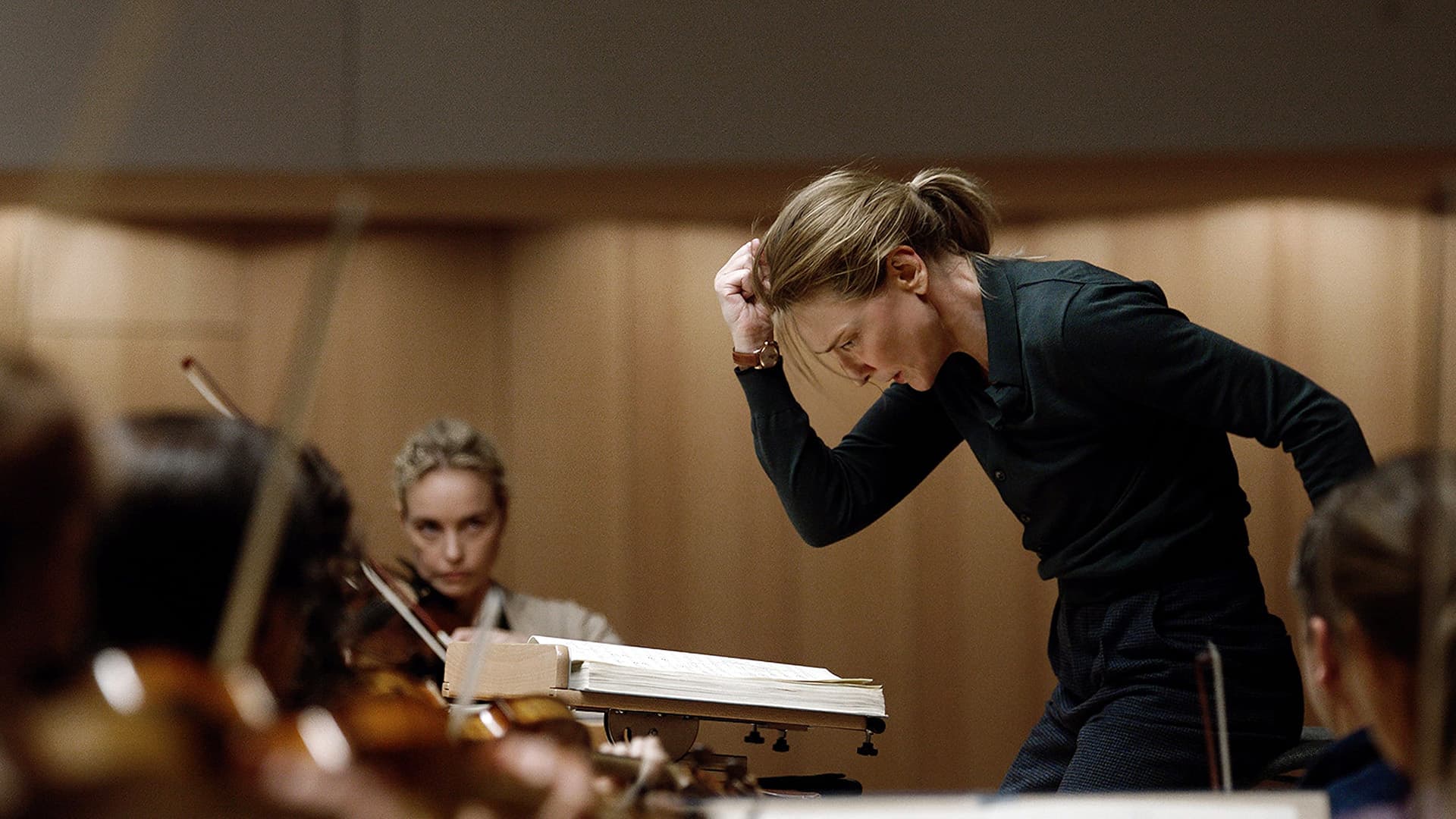
The $35 million budget reflected the cost of filming in Berlin with a European crew, recreating the professional world of a major symphony orchestra at a level of authenticity that required real musicians, genuine conducting instruction for the lead actress, and access to the Berliner Philharmonie. It also reflected the commercial calculus that a film of this ambition, with Cate Blanchett in the lead role and writer-director Todd Field returning after 16 years away, warranted a budget that could compete at the highest tier of awards season.
Key Budget Allocation Categories
- Cate Blanchett's Preparation and Performance: Blanchett's fee represented the largest above-the-line cost, but her preparation extended to months of conducting lessons, German language study, and immersion in the world of professional orchestral music. The investment in her preparation — essential to making the film's central performance credible — was part of the production's cost structure. Blanchett's co-stars Nina Hoss and Noémie Merlant brought additional European talent above-the-line.
- Berlin Production and the Berliner Philharmonie: Filming in Berlin, including at the Berliner Philharmonie — home of one of the world's great orchestras — required negotiation of access rights and coordination with an active cultural institution. The production employed real Berlin Philharmonic musicians as extras, contributing both authenticity and cost. The city's architecture and concert infrastructure provided production value that would have been impossible to replicate on a studio backlot.
- Florian Hoffmeister's Cinematography: Cinematographer Florian Hoffmeister, a German DP known for his work with major European directors, shot TÁR in a naturalistic style that required careful planning for the film's long, unbroken takes and complex concert sequences. The film's 2.39:1 aspect ratio and deliberate camera movement demanded a crew and equipment package suitable for a high-end European production.
- Hildur Gudnadottir Score: Icelandic composer Hildur Gudnadottir, who won the Oscar for Best Original Score for Joker (2019), composed TÁR's score. A film centered on classical music required exceptional music supervision and original composition that could credibly exist alongside the Mahler, Elgar, and other repertoire heard throughout the film. Music costs were significant.
- Post-Production: TÁR's 158-minute runtime reflects an editing process of unusual complexity, including the construction of the film's layered sound design in which classical music functions as both narrative and metaphor. The film's editing, nominated for an Academy Award, required extensive post-production time to assemble Field's long-take sequences into a coherent whole.
How Does TÁR's Budget Compare to Similar Films?
TÁR sat at the upper end of the adult drama market in 2022, where budgets for prestige independent films rarely exceeded $40 million. These comparisons illuminate its position in the awards-season landscape.
- The Banshees of Inisherin (2022): Budget $11M | Worldwide $21.2M | Martin McDonagh's Irish drama, TÁR's closest awards season rival, cost less than a third of TÁR's budget and earned less in worldwide gross, yet competed equally in major Oscar categories. The comparison illustrates how dramatically production costs varied across the 2022 best picture contenders.
- Little Women (2019): Budget $40M | Worldwide $218.9M | Greta Gerwig's Louisa May Alcott adaptation, a Focus Features predecessor, cost slightly more than TÁR and massively outperformed it commercially by targeting a broad family audience. The comparison shows TÁR's intentional positioning as a narrower, more challenging work.
- Little Children (2006): Budget $15M | Worldwide $9.5M | Todd Field's previous feature cost less than half of TÁR's budget and earned less at the box office, yet was also critically acclaimed and Oscar-nominated. The budget increase for TÁR reflects both inflation and the commercial confidence that Blanchett's casting inspired.
- Phantom Thread (2017): Budget $35M | Worldwide $27M | Paul Thomas Anderson's character study with Daniel Day-Lewis, also a Focus-acquired prestige drama centered on an obsessive creative genius, had an almost identical budget to TÁR and a comparable worldwide gross. Both films are recent data points for the commercial ceiling of high-end adult dramas without genre elements.
TÁR Box Office Performance
TÁR was released in limited release on October 7, 2022, expanding through October and November in the US market as part of a standard Focus Features awards-season rollout. The film earned $6.3 million domestically, a figure consistent with a challenging adult drama at limited art-house scale. Internationally, where classical music culture commands a broader mainstream audience, TÁR performed significantly better, contributing to a worldwide total of $38.9 million.
On a $35 million production budget, TÁR's worldwide gross slightly exceeded its production cost, but the full economics include a substantial Focus Features prints and advertising investment typically in the $15 to $20 million range for an awards contender of this profile. The film's total cost recovery from theatrical alone was unlikely to cover its full investment; its long-term commercial value comes from streaming and home video rights, awards publicity, and the permanent prestige of a film that dominated the 2022-23 awards conversation despite not winning the Oscar.
Box Office Breakdown
TÁR

TÁR earned roughly $1.11 for every $1 invested in production at the box office level, a narrow margin that understates the film's full commercial life. Streaming licensing revenue from Peacock and international platforms, combined with physical media and the film's permanent awards-season profile, make the overall investment picture more favorable than theatrical alone suggests.
TÁR Production History
TÁR began as a Todd Field project in the early 2020s, Field's first feature film development since Little Children in 2006. Field spent years writing the screenplay, constructing the figure of Lydia Tár through extensive research into the world of professional orchestral conducting, institutional power, and the specific culture of major European symphony orchestras. The fictional nature of the character was maintained as a deliberate strategy: Field and his producers created fake biographical materials, a fake Wikipedia page, and fake press materials to support the film's reality-adjacent presentation.
Cate Blanchett committed to the film early in development. Her preparation for the role extended over months of conducting lessons with real conductors, including working with the Dresden Philharmonic. She learned German to a functional level for the film's scenes set in German-language environments, studied piano to the point of performing on camera, and immersed herself in the world of classical music administration to the degree required by Field's observational style.
Production relocated to Berlin, a decision driven by the film's subject matter and the practical availability of the Berliner Philharmonie. The production employed members of the Berlin Philharmonic as extras in concert scenes, contributing an authenticity that studio-produced orchestral sequences rarely achieve. Florian Hoffmeister was engaged as cinematographer; his European background and experience with observational camera work aligned with Field's approach. The Berlin shoot was completed in 2021.
Post-production was extensive, with the film's complex sound design — classical music as both backdrop and psychological weapon — requiring careful attention to how Mahler, Elgar, and contemporary orchestral music functioned within the narrative. TÁR premiered at the Venice Film Festival on September 1, 2022, where Blanchett won the Silver Lion for Best Actress. Focus Features opened the film in the United States on October 7, 2022.
Awards and Recognition
TÁR received six Academy Award nominations at the 95th Academy Awards (March 2023): Best Picture, Best Director (Todd Field), Best Actress (Cate Blanchett), Best Original Screenplay (Todd Field), Best Cinematography (Florian Hoffmeister), and Best Film Editing (Monika Willi). The film did not win in any category, with Everything Everywhere All at Once dominating the ceremony. Blanchett's loss to Michelle Yeoh was among the most discussed results of the evening, given the near-universal critical consensus that her performance was the finest of the year.
Outside the Oscars, Blanchett won the Venice Film Festival Silver Lion, the Golden Globe, the BAFTA, the Screen Actors Guild Award, and the Critics Choice Award, among numerous others. TÁR set a record as the most decorated performance at the major precursor awards in recent memory without corresponding to an Oscar win. The film holds a 91 percent approval rating on Rotten Tomatoes.
Critical Reception
TÁR opened to near-unanimous critical acclaim. A.O. Scott in The New York Times called it "a masterpiece," writing that Blanchett's performance was "one for the ages." Richard Brody in The New Yorker argued the film was formally and intellectually at a level rarely achieved in contemporary American cinema. The Metacritic score of 91 out of 100 placed it among the most acclaimed films of 2022.
Some critics questioned the film's moral positioning, arguing that Field's treatment of Lydia Tár was more sympathetic than a male subject accused of similar abuses would receive, or that the film aestheticized power and control in ways that complicated its ostensible critique. These debates enriched the film's cultural life in awards season, generating the kind of sustained critical conversation that most films never achieve.
Audience reception was more divided than critical response. The film's length (158 minutes), deliberate pacing, and subject matter positioned it as demanding rather than accessible. Letterboxd and general audience metrics were lower than the critical consensus — a gap that reflected the film's intended audience rather than a failure of execution. TÁR was precisely the kind of film its director and star set out to make, which is why the critical consensus was as strong as it was.
Frequently Asked Questions
How much did it cost to make TÁR (2022)?
The production budget was $35,000,000, covering principal photography, cast and crew salaries, locations, sets, post-production, and music. Marketing and distribution (P&A) costs are estimated at an additional $17,500,000 - $28,000,000, bringing the total studio investment to approximately $52,500,000 - $63,000,000.
How much did TÁR (2022) earn at the box office?
TÁR grossed $6,773,650 domestic, $22,274,921 international, totaling $29,048,571 worldwide.
Was TÁR (2022) profitable?
The film did not break even theatrically, earning $29,048,571 against an estimated $87,500,000 needed. Ancillary revenue may have improved the picture.
What were the biggest costs in producing TÁR?
The primary cost drivers were above-the-line talent (Cate Blanchett, Nina Hoss, Noémie Merlant); talent compensation, authentic period production design, and meticulous post-production.
How does TÁR's budget compare to similar music films?
At $35,000,000, TÁR is classified as a low-budget production. The median budget for wide-release music films in the 2020s ranges from $30 - 80M for mid-budget to $150M+ for tentpoles. Comparable budgets: 1941 (1979, $35,000,000); Two for the Money (2005, $35,000,000); Ghost Ship (2002, $35,000,000).
Did TÁR (2022) go over budget?
There are no widely reported accounts of significant budget overruns for this production. However, studios rarely disclose precise budget overrun figures publicly. The reported production budget reflects the final estimated cost.
What was the return on investment (ROI) for TÁR?
The theatrical ROI was -17.0%, calculated as ($29,048,571 − $35,000,000) ÷ $35,000,000 × 100. This measures gross revenue against production budget only - it does not account for P&A or exhibitor shares.
What awards did TÁR (2022) win?
Nominated for 6 Oscars. 79 wins & 271 nominations total.
Who directed TÁR and who were the key crew members?
Directed by Todd Field, written by Todd Field, shot by Florian Hoffmeister, with music by Hildur Guðnadóttir, edited by Monika Willi.
Where was TÁR filmed?
TÁR was filmed in United States of America.
Filmmakers
TÁR

Build budgets like this one in Saturation
Start from an industry-standard feature film template, import the schedule and rates you already have, and let the cost report keep itself current as you spend. Real-time collaboration, no spreadsheets.