Sweet Smell of Success Budget
Updated
Synopsis
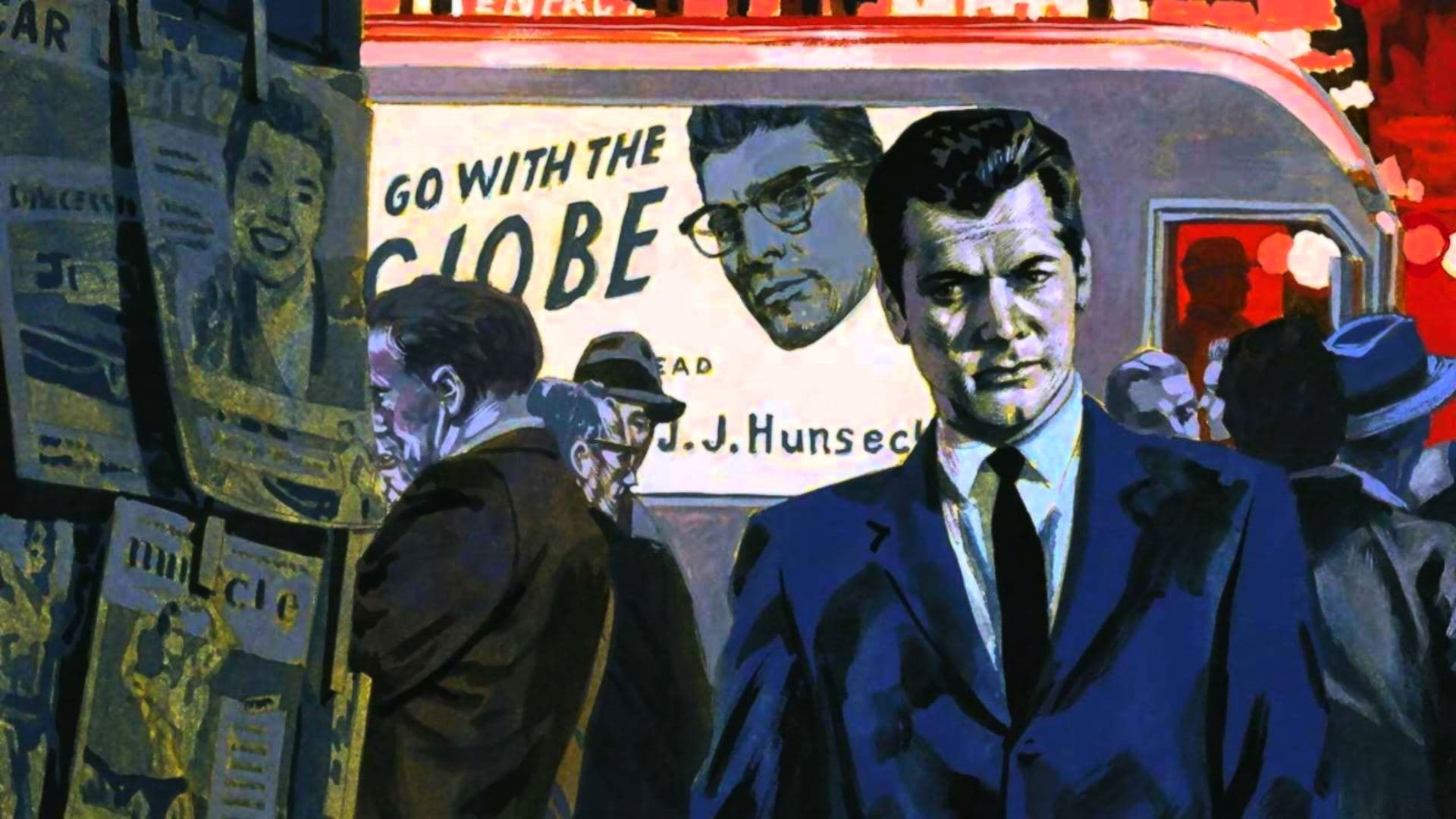
New York City newspaper writer J.J. Hunsecker holds considerable sway over public opinion with his Broadway column, but one thing that he can't control is his younger sister, Susan, who is in a relationship with aspiring jazz guitarist Steve Dallas. Hunsecker strongly disapproves of the romance and recruits publicist Sidney Falco to find a way to split the couple, no matter how ruthless the method.
What is the budget of Sweet Smell of Success?
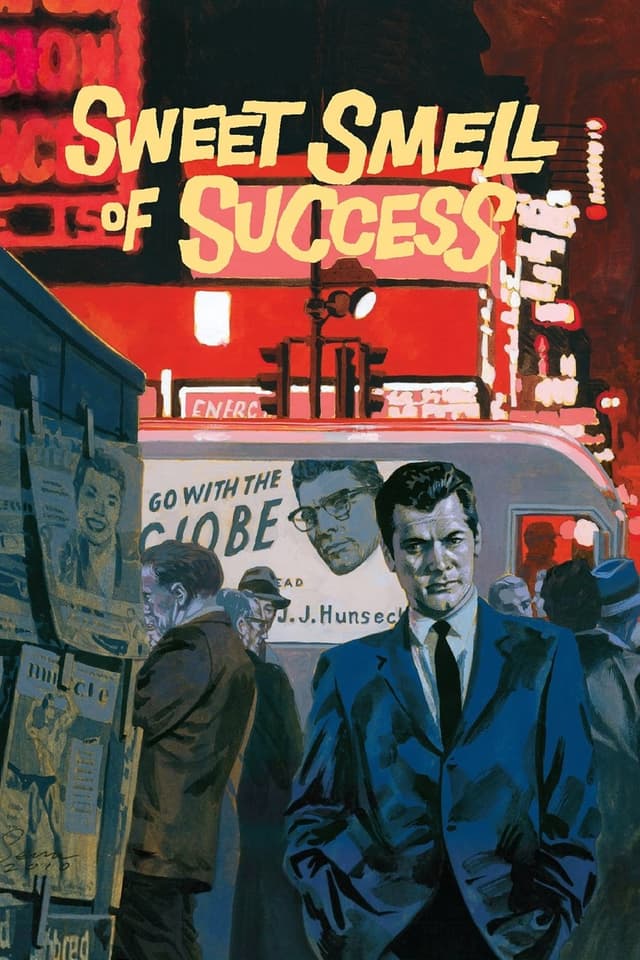
"Sweet Smell of Success," a drama released in 1957, was directed by Alexander Mackendrick and stars Burt Lancaster, Tony Curtis. The production budget was $3,400,000, placing it in the micro-budget range for drama productions of the 1950s.
Key Budget Allocation Categories
While specific budget breakdowns are not publicly available, typical cost drivers for a drama production like this include:
- Above-the-Line Talent: Drama films live or die on the strength of their performances.
- Location Filming & Period Production Design: Authentic locations , whether contemporary or historical , require scouting, permits, travel, lodging, and often significant dressing to match the story's time period.
- Post-Production, Color Grading & Score: The editorial process for dramas is typically longer than genre films, with careful attention to pacing and tone.
- Pre-Production: By the time Hecht-Hill-Lancaster acquired Success, Lehman was in position to adapt his novelette, produce and direct the film.
What were the major cost factors in Sweet Smell of Success?
Several factors contributed to the overall production costs of "Sweet Smell of Success."
- Above-the-Line Talent: Above-the-Line Talent is one of the primary cost drivers in drama productions of this scale.
- Location Filming: Location Filming & Period Production Design is one of the primary cost drivers in drama productions of this scale.
- Post-Production: Post-Production, Color Grading & Score is one of the primary cost drivers in drama productions of this scale.
How Does Sweet Smell of Success's Budget Compare to Similar Films?
At $3,400,000, Sweet Smell of Success sits in the micro-budget range. Here is how it compares to productions with a similar budget:
- City of God (2002): Budget $3,300,000, Worldwide Gross $30,641,770
- Whiplash (2014): Budget $3,300,000, Worldwide Gross $50,307,484
- Call Me by Your Name (2017): Budget $3,500,000, Worldwide Gross $43,143,046
- Kimi (2022): Budget $3,500,000
- Joe Bell (2020): Budget $3,500,000, Worldwide Gross $1,700,000
The median budget for wide-release drama films in the era ranges from $30 to 80M for mid-budget to $150M+ for tentpoles.
Sweet Smell of Success Box Office Performance
"Sweet Smell of Success" earned $2,250,000 domestically and $2,500,000 worldwide at the box office. Against a production budget of $3,400,000, the film faced challenges in theatrical release. Home video, streaming, and ancillary revenue may have contributed to its overall performance.
A film typically needs to earn approximately twice its production budget to cover marketing and distribution costs. For "Sweet Smell of Success," that break-even threshold was roughly $6,800,000. With worldwide earnings of $2,500,000, the film did not reach break-even in theatrical release.
Box Office Breakdown
Sweet Smell of Success

At -26.5%, "Sweet Smell of Success" did not recoup its production budget through theatrical release alone.
Sweet Smell of Success Production History
Mackendrick shot the film in late 1956, and was scared the entire time because Hecht-Hill-Lancaster had a reputation for firing their directors for any or even no reason at all. The filmmaker was used to extensive rehearsals before a scene was shot and often found himself shooting a script page one or two hours after Odets had written it. Susan Harrison went on to say: "Everyone was always there.
Awards and Recognition
Nominated for 1 BAFTA Award3 wins & 3 nominations total
Frequently Asked Questions
How much did it cost to make Sweet Smell of Success (1957)?
The production budget was $3,400,000, covering principal photography, cast and crew salaries, locations, sets, post-production, and music. Marketing and distribution (P&A) costs are estimated at an additional $1,700,000 - $2,720,000, bringing the total studio investment to approximately $5,100,000 - $6,120,000.
How much did Sweet Smell of Success (1957) earn at the box office?
Sweet Smell of Success grossed $2,250,000 domestic, $250,000 international, totaling $2,500,000 worldwide.
Was Sweet Smell of Success (1957) profitable?
The film did not break even theatrically, earning $2,500,000 against an estimated $8,500,000 needed. Ancillary revenue may have improved the picture.
What were the biggest costs in producing Sweet Smell of Success?
The primary cost drivers were above-the-line talent (Burt Lancaster, Tony Curtis, Susan Harrison); talent compensation, authentic period production design, and meticulous post-production.
How does Sweet Smell of Success's budget compare to similar drama films?
At $3,400,000, Sweet Smell of Success is classified as a micro-budget production. The median budget for wide-release drama films in the era ranges from $30 - 80M for mid-budget to $150M+ for tentpoles. Comparable budgets: City of God (2002, $3,300,000); Whiplash (2014, $3,300,000); Call Me by Your Name (2017, $3,500,000).
Did Sweet Smell of Success (1957) go over budget?
There are no widely reported accounts of significant budget overruns for this production. However, studios rarely disclose precise budget overrun figures publicly. The reported production budget reflects the final estimated cost.
What was the return on investment (ROI) for Sweet Smell of Success?
The theatrical ROI was -26.5%, calculated as ($2,500,000 − $3,400,000) ÷ $3,400,000 × 100. This measures gross revenue against production budget only - it does not account for P&A or exhibitor shares.
What awards did Sweet Smell of Success (1957) win?
Nominated for 1 BAFTA Award3 wins & 3 nominations total.
Who directed Sweet Smell of Success and who were the key crew members?
Directed by Alexander Mackendrick, written by Clifford Odets, Ernest Lehman, shot by James Wong Howe, with music by Elmer Bernstein, edited by Alan Crosland, Jr..
Where was Sweet Smell of Success filmed?
Sweet Smell of Success was filmed in United States of America. Mackendrick shot the film in late 1956, and was scared the entire time because Hecht-Hill-Lancaster had a reputation for firing their directors for any or even no reason at all. The filmmaker was used to extensive rehearsals before a scene was shot and often found himself shooting a script page one or two hours after Odets had written it.
Filmmakers
Sweet Smell of Success

Official Trailer
Build budgets like this one in Saturation
Start from an industry-standard feature film template, import the schedule and rates you already have, and let the cost report keep itself current as you spend. Real-time collaboration, no spreadsheets.