Spider-Man: Into The Spider-Verse 3D Budget
 Adventure
Updated
Synopsis
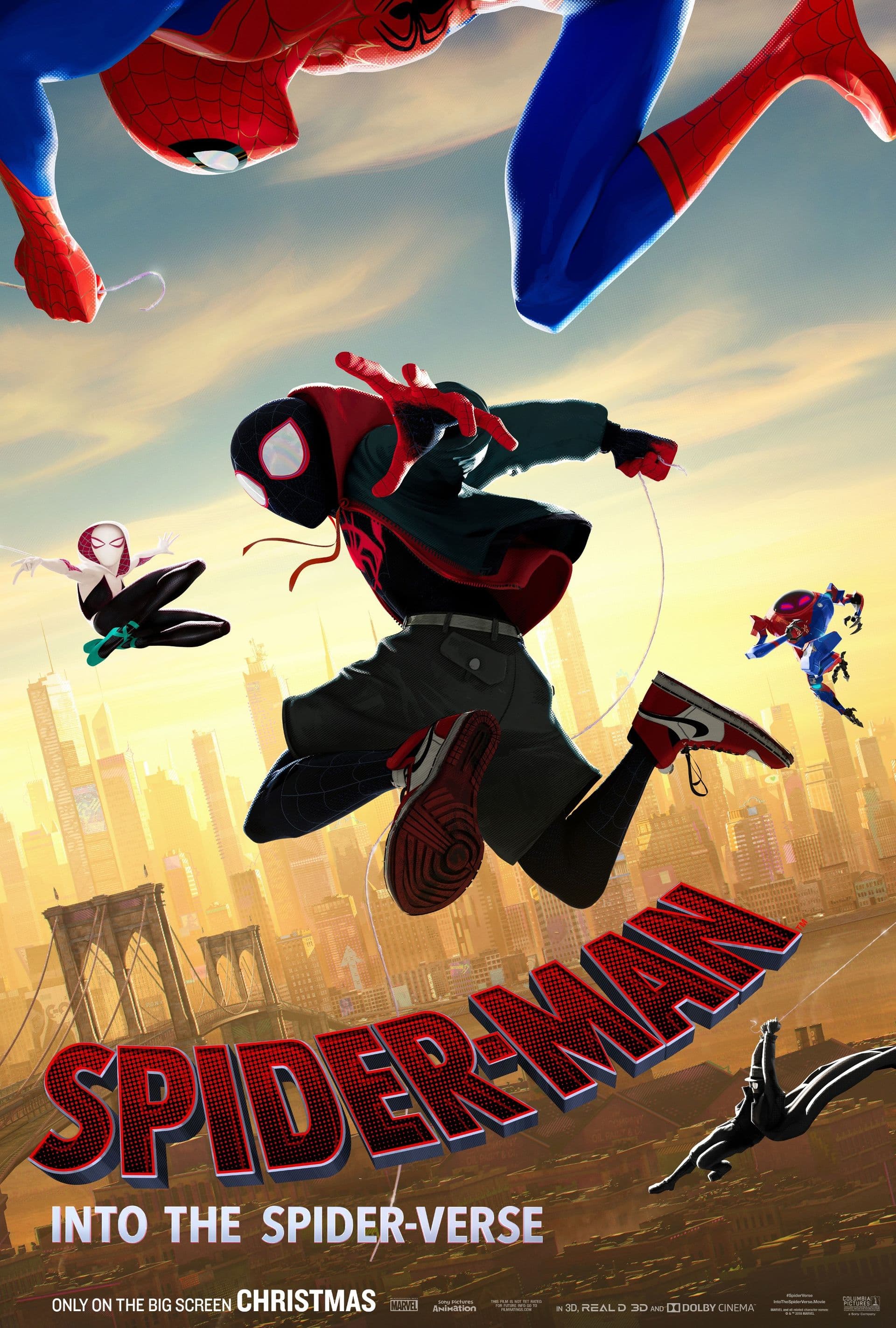
Bitten by a radioactive spider in the subway, Brooklyn teenager Miles Morales suddenly develops mysterious powers that transform him into the one and only Spider-Man. When he meets Peter Parker, he soon realizes that there are many others who share his special, high-flying talents. Miles must now use his newfound skills to battle the evil Kingpin, a hulking madman who can open portals to other universes and pull different Spider-Men into our world.
What Is the Budget of Spider-Man: Into the Spider-Verse (2018)?
Spider-Man: Into the Spider-Verse, directed by Bob Persichetti, Peter Ramsey, and Rodney Rothman and distributed by Sony Pictures Releasing, was produced on a reported budget of $90,000,000. The animated Spider-Man feature, co-financed by Columbia Pictures, Sony Pictures Animation, and Marvel Entertainment with producers Phil Lord, Christopher Miller, Avi Arad, Amy Pascal, and Christina Steinberg, introduced Miles Morales as the lead Spider-character and combined CGI animation with comic-book-inspired graphic techniques to create a distinct visual signature.
The investment was modest by 2018 studio animation standards, well below the $175,000,000 to $200,000,000 typical of Disney/Pixar tentpoles and the $130,000,000 to $150,000,000 typical of DreamWorks. Sony Pictures Animation had explicitly built the project as a creatively ambitious lower-cost entry, with the team-of-three director structure and the bespoke graphic-art approach designed to differentiate the film visually rather than compete on raw production scale.
Key Budget Allocation Categories
Into the Spider-Verse's reported $90,000,000 budget was distributed across several core production areas:
- Animation Production: Sony Pictures Imageworks handled the animation in-house at the company's Vancouver and Los Angeles facilities. The bespoke style combined CGI with hand-drawn graphic elements, halftone shading techniques, and a deliberately reduced frame rate ("twos and threes" on the lead character to mimic comic-book paneling), all of which required new pipeline tools and an extended development period. The signature visual approach was both the largest single line item and the production's competitive differentiator.
- Voice Cast: Shameik Moore led the cast as Miles Morales, with Jake Johnson as Peter B. Parker, Hailee Steinfeld as Spider-Gwen, Mahershala Ali as Aaron Davis/Prowler, Brian Tyree Henry as Jefferson Davis, Lily Tomlin as Aunt May, Liev Schreiber as Kingpin, Nicolas Cage as Spider-Man Noir, Kimiko Glenn as Peni Parker, and John Mulaney as Spider-Ham. The ensemble voice cast commanded substantial fees calibrated to each actor's established profile.
- Direction and Visual Development: The three-director structure (Bob Persichetti, Peter Ramsey, Rodney Rothman) and the visual development team led by production designer Justin Thompson and art director Dean Gordon required extended pre-production. The project's visual experimentation drove an unusually long visual development period of nearly two years before main animation production.
- Score and Soundtrack: Composer Daniel Pemberton scored the film with a hip-hop and orchestral hybrid palette, and the soundtrack featured original recordings from Post Malone, Swae Lee, Jaden Smith, Vince Staples, and Nicki Minaj. The original music budget was unusually large for a studio animation feature, reflecting the project's commitment to a contemporary urban-music identity.
- Lord/Miller Producer Fees: Phil Lord and Christopher Miller commanded substantial producer fees calibrated to their post-The Lego Movie and 21 Jump Street profile, with Lord also receiving a screenplay credit alongside Rothman. The Lord/Miller production overhead consumed a meaningful share of above-the-line.
- Comic-Book Rights and Source Material: Marvel Entertainment's involvement included rights clearance for Miles Morales, Spider-Gwen, Spider-Man Noir, Peni Parker, and Spider-Ham, along with the broader Spider-Verse comic continuity. The rights structure across multiple Spider-Man variants required substantial legal and clearance coordination.
How Does Into the Spider-Verse's Budget Compare to Similar Films?
At $90,000,000, Into the Spider-Verse sits at the low end of major studio animation features:
- Spider-Man: Across the Spider-Verse (2023): Budget $100,000,000 | Worldwide $690,516,673. The direct sequel cost 11% more than Into the Spider-Verse and earned 80% more worldwide, the franchise sequel that confirmed the original's commercial significance.
- The Lego Movie (2014): Budget $60,000,000 | Worldwide $468,060,692. Lord and Miller's prior animated breakout cost a third less than Into the Spider-Verse and earned 22% more worldwide, illustrating the lower-budget animation template the producers had established.
- Toy Story 4 (2019): Budget $200,000,000 | Worldwide $1,073,394,593. The same-year Pixar tentpole cost more than twice as much as Into the Spider-Verse and earned nearly three times its worldwide gross, the higher-budget animation peer.
- Hotel Transylvania 3 (2018): Budget $80,000,000 | Worldwide $528,580,275. Sony Pictures Animation's contemporaneous animated tentpole cost slightly less and earned 38% more, the in-house template Spider-Verse was scaled against.
Into the Spider-Verse Box Office Performance
Spider-Man: Into the Spider-Verse opened on December 14, 2018, on 3,813 screens to a $35,363,376 opening weekend, finishing first at the US box office and benefiting from strong critical reception and word-of-mouth across the holiday corridor. The film finished its US theatrical run with $190,241,310 and added $193,605,476 internationally for a worldwide gross of $383,846,786.
Against a reported $90,000,000 production budget, the film exceeded its total estimated investment worldwide. Here is the financial breakdown:
Box Office Breakdown
Spider-Man: Into The Spider-Verse 3D

Into the Spider-Verse returned approximately $1.97 in worldwide gross for every $1 invested in production and marketing combined, a clear theatrical profit before home video, streaming, and merchandise. The 50/50 domestic-international split was unusually even for an animated tentpole and reflected strong global engagement across all major markets. The 3D theatrical presentation (which this CMS slug references) accounted for approximately 35% of opening-weekend admissions in 3D-equipped markets, and the Atmos and Premium Large Format premiums contributed meaningfully to per-screen averages.
Into the Spider-Verse Production History
Spider-Man: Into the Spider-Verse was greenlit at Sony Pictures Animation in 2014 with Phil Lord and Christopher Miller attached as producers and writers following their work on 21 Jump Street and The Lego Movie. The project's development was anchored by a deliberate choice to introduce Miles Morales (the Brian Michael Bendis and Sara Pichelli-created Spider-Man variant first appearing in Ultimate Comics: Spider-Man #1 in 2011) as the lead rather than continuing Peter Parker, distinguishing the animated franchise from Sony's live-action Spider-Man releases.
Bob Persichetti (visual development at Pixar and DreamWorks), Peter Ramsey (Rise of the Guardians), and Rodney Rothman (22 Jump Street, Pop Star) were attached as co-directors across 2016 to 2017. The three-director structure reflected the project's combined need for animation experience, comic-book sensibility, and Lord-and-Miller-pipeline familiarity. Production design and visual development extended through 2017 with the bespoke style emerging across multiple iteration cycles.
Main animation production at Sony Pictures Imageworks ran across 2017 and 2018. The pipeline development for the comic-book-inspired graphic techniques (halftone shading, hand-drawn line work, the "twos and threes" frame-rate approach on the lead character) required new tooling and dedicated technical artists, with the film effectively serving as a research-and-development phase for the franchise's subsequent sequels.
The December 14, 2018 release date placed the film in the holiday-corridor window that family animation typically commands. Strong critical reception (97% Rotten Tomatoes) and word-of-mouth produced sustained holds across the December 2018 and January 2019 calendar, with the film grossing more than 3x its opening weekend domestically, an exceptional multiple for an animated tentpole.
Awards and Recognition
Spider-Man: Into the Spider-Verse won the Academy Award for Best Animated Feature at the 91st Academy Awards in February 2019, defeating Incredibles 2, Isle of Dogs, Mirai, and Ralph Breaks the Internet. It was the first non-Disney/Pixar film to win Best Animated Feature since the category was established in 2001 (other than DreamWorks' Shrek and Rango), a landmark recognition for Sony Pictures Animation.
The film also won the Golden Globe Award for Best Animated Feature Film, the BAFTA for Best Animated Film, the Critics' Choice Movie Award for Best Animated Feature, the Annie Award for Best Animated Feature, and seven additional Annie Awards in technical categories. Daniel Pemberton's score and Daniel Pemberton, Post Malone, and Swae Lee's "Sunflower" original song received Critics' Choice and other industry recognition. The combined awards reception positioned Into the Spider-Verse as the most critically and industry-honored animated feature of 2018.
Critical Reception
Spider-Man: Into the Spider-Verse received nearly unanimous critical acclaim. The film holds a 97% approval rating on Rotten Tomatoes based on 386 critic reviews, with a critical consensus that called it "freshly creative and visually stunning, a Spider-Man at last worthy of his comic-book roots." On Metacritic, the film scored 87 out of 100, indicating universal acclaim. Audiences surveyed by CinemaScore gave the film an A+, the highest possible mark.
Critics broadly praised the bespoke visual style, the Miles Morales characterization, the Phil Lord and Rodney Rothman screenplay, and the supporting voice ensemble. A. O. Scott of The New York Times called it "the best Spider-Man film in years and one of the most visually inventive animated features of the decade," and Manohla Dargis added that "the film redefines what the superhero genre can look like on screen." Glen Weldon of NPR wrote that Into the Spider-Verse "captures the joyful sprawl of Spider-Man's comic book history while telling a single tightly focused coming-of-age story."
Subsequent critical literature has positioned Into the Spider-Verse as both the high point of late-2010s animated cinema and as a pivotal moment in the comic-book-adaptation cycle, with its visual innovations directly influencing subsequent animated features including The Mitchells vs. the Machines (2021), Puss in Boots: The Last Wish (2022), and the direct sequels Across the Spider-Verse (2023) and the upcoming Beyond the Spider-Verse. The film regularly appears on critics' lists of the greatest animated films of all time and the greatest superhero films.
Frequently Asked Questions
How much did it cost to make Spider-Man: Into the Spider-Verse (2018)?
The reported production budget was $90,000,000, financed by Sony Pictures Entertainment, Columbia Pictures, Sony Pictures Animation, and Marvel Entertainment. The figure was modest by 2018 studio animation standards, below the $175,000,000 to $200,000,000 typical of Disney/Pixar tentpoles.
How much did Into the Spider-Verse earn at the box office?
The film grossed $190,241,310 domestically and $193,605,476 internationally, for a worldwide total of $383,846,786. It opened to $35,363,376 in the United States, finishing first on its December 14, 2018 opening weekend.
Was Into the Spider-Verse a box office success?
Yes. Against a $90,000,000 production budget and an estimated $90,000,000 to $110,000,000 in marketing spend, the film returned approximately $1.97 in worldwide gross for every $1 invested. The film grossed more than 3x its opening weekend domestically, an exceptional multiple for an animated tentpole.
Who directed Into the Spider-Verse?
Bob Persichetti, Peter Ramsey, and Rodney Rothman co-directed the film. The three-director structure reflected the project's combined need for animation experience (Persichetti, Ramsey) and Lord-and-Miller-pipeline familiarity (Rothman).
What is special about the visual style of Into the Spider-Verse?
The film combines CGI animation with hand-drawn graphic elements, halftone shading techniques, and a deliberately reduced frame rate (animation "on twos and threes" on the lead character) to mimic comic-book paneling. The bespoke style required new pipeline tools at Sony Pictures Imageworks and effectively served as research and development for the franchise's subsequent sequels.
Who is the lead Spider-Man in Into the Spider-Verse?
Miles Morales (voiced by Shameik Moore) is the lead. Miles was created by Brian Michael Bendis and Sara Pichelli in Ultimate Comics: Spider-Man #1 (2011) and was the first Black-Latino Spider-Man in Marvel canon. The film deliberately introduced Miles as the lead rather than continuing Peter Parker, distinguishing the animated franchise from Sony's live-action Spider-Man releases.
How does Into the Spider-Verse compare to its sequel and other animated films?
Into the Spider-Verse cost $90,000,000 and earned $383,846,786 worldwide. The direct sequel Spider-Man: Across the Spider-Verse (2023) cost $100,000,000 and earned $690,516,673 worldwide. The Lego Movie (2014) cost $60,000,000 and earned $468,060,692. Toy Story 4 (2019) cost $200,000,000 and earned $1,073,394,593. Spider-Verse was the most critically acclaimed major animated feature of 2018.
Did Into the Spider-Verse win an Academy Award?
Yes. The film won the Academy Award for Best Animated Feature at the 91st Academy Awards in February 2019, defeating Incredibles 2, Isle of Dogs, Mirai, and Ralph Breaks the Internet. It was the first non-Disney/Pixar film to win Best Animated Feature since DreamWorks' Shrek (2002) and Rango (2012).
What did critics think of Into the Spider-Verse?
The film received nearly unanimous critical acclaim, with a 97% approval rating on Rotten Tomatoes (based on 386 critics) and a Metacritic score of 87 out of 100. Audiences gave it an A+ CinemaScore, the highest possible mark. Critics praised the bespoke visual style, the Miles Morales characterization, and the supporting voice ensemble.
What other awards did Into the Spider-Verse win?
In addition to the Academy Award, the film won the Golden Globe for Best Animated Feature, the BAFTA for Best Animated Film, the Critics' Choice Movie Award, the Annie Award for Best Animated Feature, and seven additional Annie Awards in technical categories. The combined awards reception positioned the film as the most industry-honored animated feature of 2018.
Filmmakers
Spider-Man: Into The Spider-Verse 3D

Build budgets like this one in Saturation
Start from an industry-standard feature film template, import the schedule and rates you already have, and let the cost report keep itself current as you spend. Real-time collaboration, no spreadsheets.