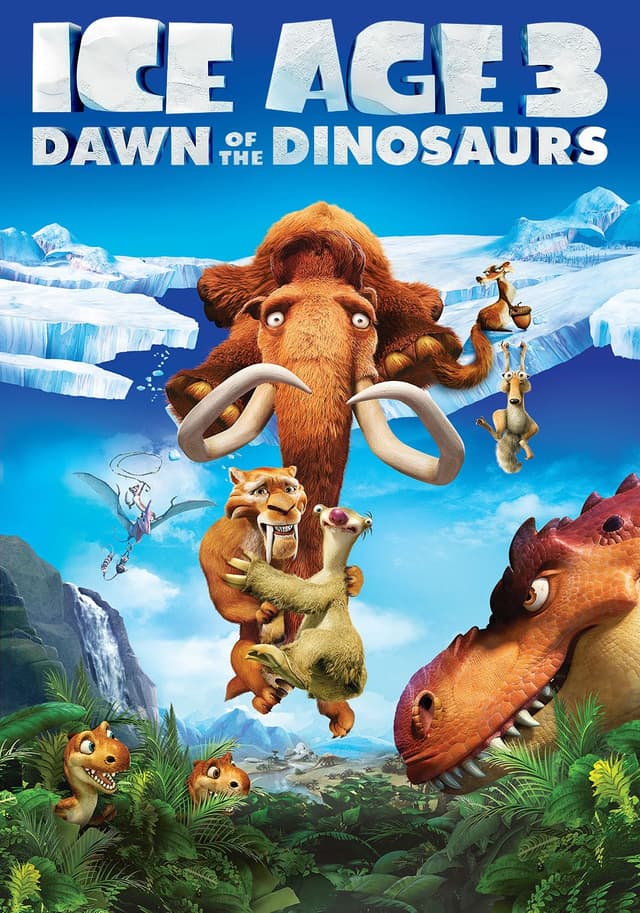
Ice Age Dawn of the Dinosaurs Budget
 AnimationComedyFamilyAdventure1h 34m
Updated
Synopsis
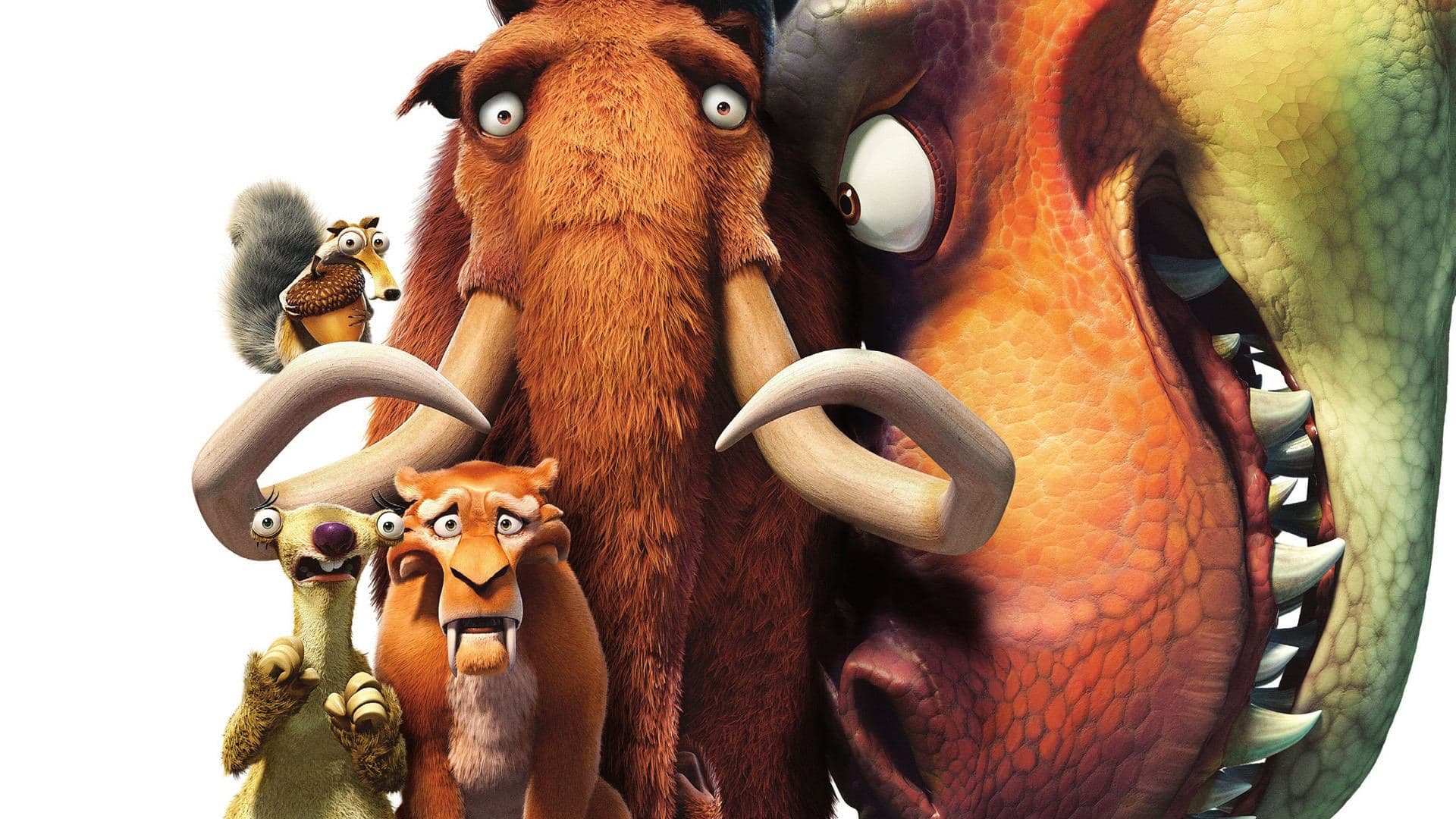
When Sid the sloth discovers and adopts three dinosaur eggs from an underground world, the hatching babies and their furious mother drag him into a lost ecosystem teeming with prehistoric creatures. Manny, Diego, Ellie, and the possum twins Crash and Eddie venture underground to rescue Sid, teaming up with Buck, a swashbuckling one-eyed weasel who has been living alone in the dinosaur world. Together they navigate volcanic terrain, carnivorous plants, and a relentless albino Baryonyx named Rudy in a race to bring Sid home.
What Is the Budget of Ice Age: Dawn of the Dinosaurs?
Ice Age: Dawn of the Dinosaurs (2009), the third installment in the Ice Age franchise, had a production budget of $90,000,000. Directed by Carlos Saldanha and co-directed by Mike Thurmeier, the film was produced by Blue Sky Studios and distributed by 20th Century Fox. The budget represented a significant increase over the original Ice Age (2002, $59 million) and its sequel The Meltdown (2006, $80 million), reflecting the franchise's growing global audience and the need for more complex animation sequences set in a subterranean dinosaur world.
At $90 million, the production cost placed Dawn of the Dinosaurs in the upper-mid range of animated features for 2009. The film's prehistoric jungle environments, large-scale dinosaur action sequences, and the introduction of new characters like Buck the weasel required substantial animation and rendering resources beyond what the earlier, more ice-focused entries demanded.
Key Budget Allocation Categories
The $90 million budget for Ice Age: Dawn of the Dinosaurs was distributed across the production requirements of a major CG animated sequel with expanded scope and new environments.
- Animation and Rendering: The largest budget category. Blue Sky Studios built an entirely new underground world populated with dinosaurs, tropical vegetation, and lava fields. The dinosaur characters required complex muscle and skin simulation systems distinct from the furry mammal rigs used in the first two films. Blue Sky's proprietary rendering software handled millions of polygons per frame across jungle environments.
- Above-the-Line Talent: Voice cast fees for returning stars Ray Romano (Manny), John Leguizamo (Sid), Denis Leary (Diego), and Queen Latifah (Ellie), plus new additions Simon Pegg (Buck), Seann William Scott (Crash), and Josh Peck (Eddie). Director Carlos Saldanha and writers Michael Berg, Peter Ackerman, and Yoni Brenner comprised the core creative leadership.
- Character Development: The film introduced Buck, a swashbuckling one-eyed weasel voiced by Simon Pegg, who became the breakout character. Creating Buck's animation rig, movement style, and the elaborate action sequences he drives through the dinosaur world added development time and cost beyond maintaining returning characters.
- Music and Sound Design: Composer John Powell created an original orchestral score that expanded the franchise's musical palette to incorporate adventure and action themes fitting the dinosaur setting. Sound design covered the roars and movements of multiple dinosaur species, environmental effects for the underground jungle, and dialogue recording sessions with the ensemble cast.
- 3D Stereoscopic Conversion: Dawn of the Dinosaurs was the first Ice Age film released in 3D, capitalizing on the theatrical 3D wave ignited by films like Beowulf and Bolt. The stereoscopic rendering pipeline added production time and cost, requiring scenes to be composed and lit with depth perception in mind.
- Story Development: Writers Michael Berg, Peter Ackerman, and Yoni Brenner developed the screenplay, which needed to balance the returning ensemble cast with Buck's new storyline and the shift from ice age settings to a tropical dinosaur ecosystem. Multiple story iterations and test screenings shaped the final narrative.
How Does Ice Age: Dawn of the Dinosaurs's Budget Compare to Similar Films?
At $90 million, Dawn of the Dinosaurs fell in the middle range of animated features released in the late 2000s. Here is how it compares to other animated sequels and films from the same era.
- Up (2009): Budget $175M | Worldwide $735M. Pixar's adventure cost nearly double Dawn of the Dinosaurs, reflecting the studio's higher production overhead and longer development cycles.
- Ice Age: The Meltdown (2006): Budget $80M | Worldwide $660M. The direct predecessor cost $10 million less, illustrating the budget escalation that comes with expanding a franchise's scope and adding 3D rendering.
- Monsters vs. Aliens (2009): Budget $175M | Worldwide $381M. DreamWorks' 3D tentpole cost nearly twice as much but earned less than half of Dawn of the Dinosaurs' worldwide gross, demonstrating that Blue Sky achieved far superior ROI.
- Kung Fu Panda (2008): Budget $130M | Worldwide $632M. DreamWorks' martial arts comedy cost 44% more than Dawn of the Dinosaurs while earning 29% less, highlighting Blue Sky's cost-efficient production model.
- Cloudy with a Chance of Meatballs (2009): Budget $100M | Worldwide $243M. Sony Pictures Animation's debut franchise cost slightly more than Dawn of the Dinosaurs but earned only a fraction of its worldwide gross.
Ice Age: Dawn of the Dinosaurs Box Office Performance
Ice Age: Dawn of the Dinosaurs opened in US theaters on July 1, 2009, earning $41.7 million in its opening weekend. The film went on to gross $196,573,705 domestically and $886,686,817 worldwide, making it the third highest-grossing film of 2009 globally behind Avatar and Harry Potter and the Half-Blood Prince.
Using the standard industry formula, a film needs to earn roughly 2x its production budget to break even after accounting for marketing and prints & advertising (P&A) costs, plus the exhibitor share (theaters typically retain 40-50% of ticket revenue). For Dawn of the Dinosaurs, the break-even threshold was approximately $180 million in worldwide theatrical gross. The film surpassed that mark nearly five times over.
The theatrical ROI was approximately 885%, calculated as ($886,686,817 - $90,000,000) / $90,000,000 x 100. At the time of release, Dawn of the Dinosaurs was the highest-grossing entry in the Ice Age franchise, surpassing The Meltdown's $660 million worldwide total by more than $226 million. The film's massive international performance, which accounted for 78% of total gross, demonstrated the franchise's extraordinary appeal outside North America, particularly in Europe and Latin America.
The 3D premium contributed meaningfully to per-ticket revenue. Dawn of the Dinosaurs was one of the first animated films to fully capitalize on the 3D theatrical surcharge, with a significant portion of domestic and international grosses coming from 3D screenings at higher ticket prices.
Ice Age: Dawn of the Dinosaurs Production History
Development on the third Ice Age film began shortly after The Meltdown's massive commercial success in 2006. 20th Century Fox and Blue Sky Studios greenlit the sequel with Carlos Saldanha returning to direct (he had co-directed the original Ice Age and solo-directed Robots before helming The Meltdown). Mike Thurmeier, who had served as supervising animator on the first two films, was promoted to co-director.
Writers Michael Berg (who had worked on the previous Ice Age films), Peter Ackerman, and Yoni Brenner developed the screenplay. The central creative challenge was keeping the franchise fresh after two films set in frozen landscapes. The solution was a literal change of scenery: sending the main characters underground into a lost world of dinosaurs, allowing for action-adventure set pieces that the ice age setting couldn't support. The decision also enabled the introduction of Buck, a fearless, slightly unhinged weasel who had been living alone in the dinosaur world. Simon Pegg's energetic vocal performance made Buck the film's standout character.
Blue Sky Studios, based in Greenwich, Connecticut, handled all animation production in-house using their proprietary rendering tools. The dinosaur world required the studio to develop new environments, creature rigs, and effects systems for lava, water, and dense jungle foliage that differed substantially from the snow and ice effects in previous entries. The film's signature set piece, a chase through a dinosaur-filled jungle on the back of a Brachiosaurus, pushed the studio's rendering capabilities.
Dawn of the Dinosaurs was Blue Sky's first stereoscopic 3D production, released in both standard and RealD 3D formats. The studio adapted its pipeline to support dual-camera rendering for the stereoscopic version, requiring additional compositing and quality control passes. Composer John Powell, known for his work on the How to Train Your Dragon and Shrek franchises, provided an adventurous orchestral score that expanded the series' musical identity.
Awards and Recognition
Ice Age: Dawn of the Dinosaurs received limited awards recognition compared to its commercial performance. The film was nominated for the Kids' Choice Award for Favorite Animated Movie in 2010, losing to Up. It also received nominations at the Annie Awards, which recognize achievement in animation.
The film's primary legacy is commercial rather than awards-based. Its $886 million worldwide gross established it as the highest-grossing Ice Age entry at the time, validated the franchise's international appeal, and greenlit the fourth installment, Continental Drift (2012), which would go on to earn even more worldwide ($877 million). Dawn of the Dinosaurs remains one of the most commercially successful animated films not produced by Pixar, DreamWorks Animation, or Illumination.
Critical Reception
Ice Age: Dawn of the Dinosaurs received mixed reviews from critics. The film holds a 46% approval rating on Rotten Tomatoes and a 50 out of 100 on Metacritic, indicating "mixed or average reviews." The critical consensus acknowledged the film as colorful and energetic family entertainment but noted diminishing creative returns from the franchise formula.
Simon Pegg's voice performance as Buck was widely praised as the film's highlight, with multiple critics calling the character the most entertaining addition to the franchise since its inception. Roger Ebert gave the film three out of four stars, noting that the dinosaur world provided welcome visual variety after two films of frozen landscapes.
The primary criticism centered on the script's reliance on familiar franchise beats: Manny worrying about fatherhood, Sid getting into trouble, and Diego questioning his role in the group. Critics noted that these character arcs recycled themes from the previous films without meaningful development. Nevertheless, most reviewers acknowledged that the target audience of children and families would find the film entertaining, colorful, and fast-paced enough to justify the ticket price, particularly in 3D.
Frequently Asked Questions
How much did it cost to make Ice Age: Dawn of the Dinosaurs (2009)?
The production budget was $90,000,000, covering CG animation at Blue Sky Studios, voice cast fees for Ray Romano, John Leguizamo, Denis Leary, Queen Latifah, Simon Pegg, and others, original score by John Powell, and 3D stereoscopic rendering. Marketing and distribution costs through 20th Century Fox are estimated at an additional $100,000,000 to $120,000,000.
How much did Ice Age: Dawn of the Dinosaurs earn at the box office?
Ice Age: Dawn of the Dinosaurs grossed $196,573,705 domestically and $690,113,112 internationally, totaling $886,686,817 worldwide. It was the third highest-grossing film of 2009 globally.
Was Ice Age: Dawn of the Dinosaurs profitable?
Extremely. Against a $90,000,000 production budget, the film earned $886,686,817 worldwide, yielding a theatrical ROI of approximately 885%. Even accounting for marketing costs estimated at $100,000,000+, the film was one of 2009's most profitable releases.
What were the biggest costs in producing Ice Age: Dawn of the Dinosaurs?
The primary cost drivers were CG animation production at Blue Sky Studios (building an entirely new dinosaur world with tropical environments and creature rigs), above-the-line voice talent, the new 3D stereoscopic rendering pipeline, and the original orchestral score by John Powell.
How does Ice Age: Dawn of the Dinosaurs compare to other animated films from 2009?
At $90,000,000, it cost significantly less than Pixar's Up ($175M) and DreamWorks' Monsters vs. Aliens ($175M), yet outgrossed both internationally. It demonstrated Blue Sky Studios' ability to produce globally competitive animation at roughly half the budget of its main competitors.
What was the return on investment (ROI) for Ice Age: Dawn of the Dinosaurs?
The theatrical ROI on production costs was approximately 885%, calculated as ($886,686,817 - $90,000,000) / $90,000,000 x 100. The film earned nearly ten times its production budget at the worldwide box office.
Who directed Ice Age: Dawn of the Dinosaurs?
Carlos Saldanha directed, with Mike Thurmeier serving as co-director. Saldanha had co-directed the original Ice Age (2002) and solo-directed Ice Age: The Meltdown (2006). Thurmeier was promoted from supervising animator on the first two films.
Was Ice Age: Dawn of the Dinosaurs the highest-grossing Ice Age film?
Yes, at the time of its release. Its $886,686,817 worldwide gross surpassed The Meltdown's $660 million total by over $226 million. It held that record until Continental Drift (2012) earned $877 million, though Dawn of the Dinosaurs technically remained the franchise's top earner globally.
What is the Rotten Tomatoes score for Ice Age: Dawn of the Dinosaurs?
The film holds a 46% approval rating on Rotten Tomatoes and a 50 out of 100 on Metacritic. Critics gave mixed reviews, praising Simon Pegg's Buck character and the visual spectacle but noting the franchise formula was showing signs of fatigue.
Who voices Buck in Ice Age: Dawn of the Dinosaurs?
Simon Pegg voices Buck, a swashbuckling one-eyed weasel who lives alone in the underground dinosaur world. The character was widely praised as the film's standout addition and later received his own spinoff film, The Ice Age Adventures of Buck Wild (2022).
Filmmakers
Ice Age Dawn of the Dinosaurs

Official Trailer
Build budgets like this one in Saturation
Start from an industry-standard feature film template, import the schedule and rates you already have, and let the cost report keep itself current as you spend. Real-time collaboration, no spreadsheets.