Son of the White Mare Budget
Updated
Synopsis
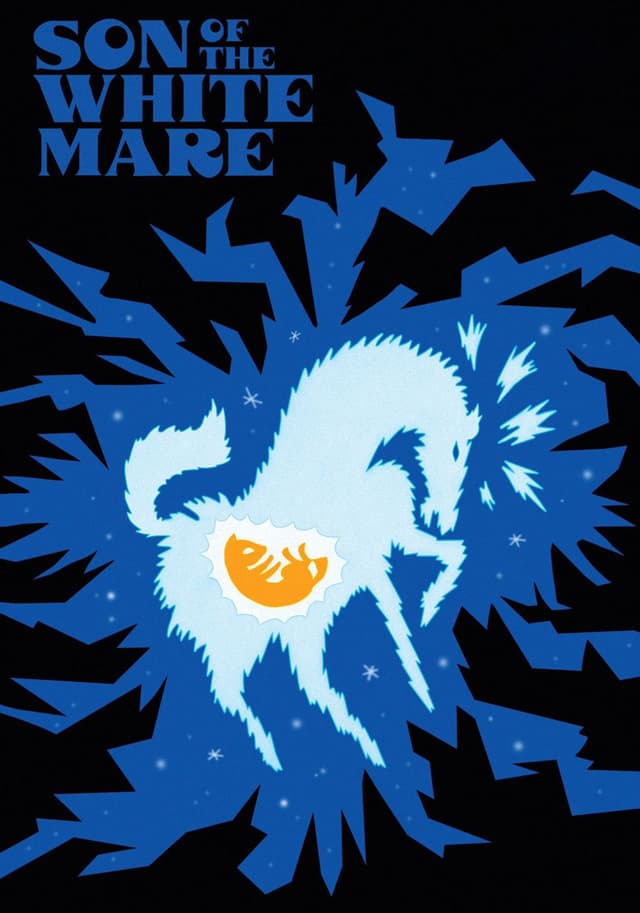
Three brothers, sons of a divine white mare, descend into the underworld to rescue three princesses from the seven-headed, twelve-headed, and thirty-six-headed dragons who have stolen them. The youngest brother, Fehérlófia, proves to be the strongest and must defeat the dragons in succession to restore balance to the upper and lower worlds.
What Is the Budget of Son of the White Mare (1981)?
Son of the White Mare (Fehérlófia, 1981), directed by Marcell Jankovics and produced by Pannónia Filmstúdió, was made under the Hungarian state-controlled film system of the late socialist era. No public budget figure has ever been released, but production reconstructions place the cost at roughly 35 to 40 million Hungarian forints of the period, equivalent to approximately $700,000 to $1,000,000 in 1981 US dollars. Pannónia Filmstúdió, the state animation studio that also produced Jankovics' Hungarian Folk Tales series and his Oscar-winning short Sisyphus, fully financed the four-year production.
The film was hand-drawn over approximately four years, an unusually long animation production timeline that reflected both the artistic ambition of Jankovics' design system and the limited animator pool at Pannónia. The state-financed model effectively decoupled budget from market expectation. The film was a state cultural project intended to demonstrate Hungarian animation craft, not a commercial product.
Key Budget Allocation Categories
The estimated budget was distributed across these production areas:
- Hand-Drawn Animation Labor. A core team of fewer than thirty animators and assistants at Pannónia Filmstúdió hand-drew the film's approximately 100,000 individual cels across four years. The labor cost, paid at Hungarian state-studio rates, was the dominant line item by a wide margin.
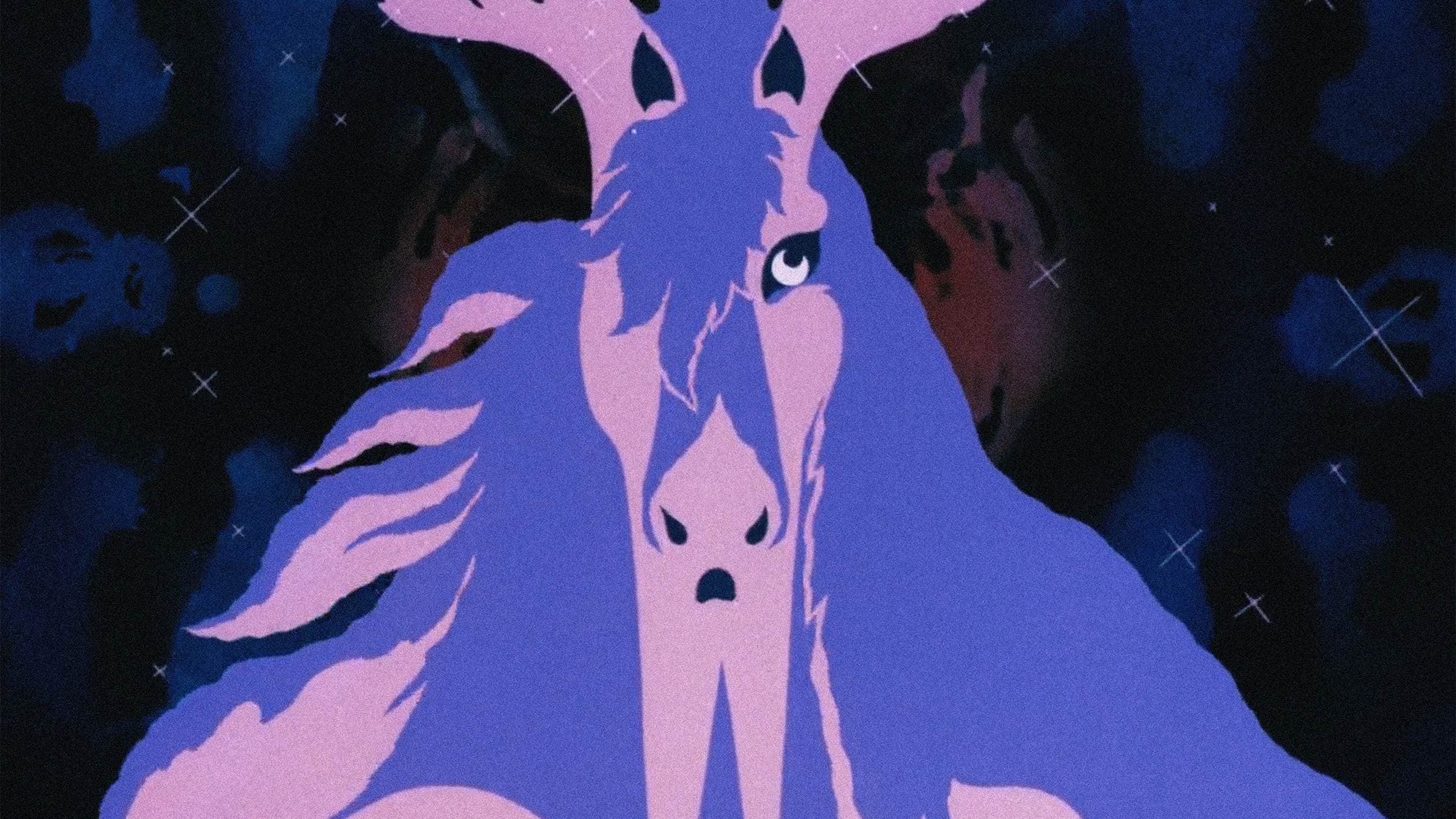
- Background Painting. The film's saturated, psychedelic backgrounds, drawn from Hungarian folk-art motifs, Scythian artifacts, and Art Nouveau influences, required dedicated painters working in gouache and casein. Jankovics personally designed the color palettes for each of the underworld sequences.
- Direction and Design. Marcell Jankovics personally storyboarded the film and designed every major character and environment, an unusual degree of authorial control even by socialist-era state-studio standards. His draftsman fee and the multi-year salary commitment from Pannónia accounted for a notable share of above-the-line cost.
- Score and Sound. Composer István Vajda created the orchestral and electronic score incorporating Hungarian and Carpathian folk-music elements. Recording with Hungarian state orchestra members and the layered sound design for the dragon battles required dedicated studio time at Pannónia's sound facility.
- Cels, Paint, and Materials. Soviet-bloc-sourced animation materials, including cels, ink, paint, and the multi-plane camera setup, added to the line items. The film's use of fluid color shifts and overlapping translucent layers required specific high-quality cel stock not always available through the standard COMECON supply chain.
- State Studio Overhead. Pannónia Filmstúdió's Budapest facility carried fixed overhead across the four-year production including building maintenance, equipment, and administrative staffing. The state-financed model treated this overhead as fully absorbed rather than per-project allocated.
How Does Son of the White Mare's Budget Compare to Similar Films?
At an estimated $700,000 to $1,000,000 (1981 dollars), Son of the White Mare sits among other state-financed European animated features of the late Cold War era:
- The Mysterious Geographic Explorations of Jasper Morello (2005): Budget under $1,000,000 | Worldwide N/A. A later European stop-motion comparison at roughly the same dollar-equivalent budget, illustrating how the Pannónia-era state subsidy model anticipated the European auteur animation niche budget profile by two decades.
- Watership Down (1978): Budget approximately $4,800,000 | Worldwide $25,000,000. The contemporaneous British animated feature cost roughly five times Son of the White Mare in nominal 1978 dollars, demonstrating the gap between Western private-finance animation and the socialist state model.
- The Last Unicorn (1982): Budget approximately $4,000,000 | Worldwide $6,455,330. The Rankin-Bass animated feature released a year after Son of the White Mare cost approximately five times as much, again illustrating the budget gap between Western and Hungarian production environments.
- Tale of Tales (1979): Budget under $500,000 | Worldwide N/A. Yuri Norstein's Soviet animated short, the closest stylistic and ideological cousin to Son of the White Mare, was produced on a smaller scale at Soyuzmultfilm but under the same state-subsidy model. The pairing illustrates the cultural-prestige economy that produced both films.
Son of the White Mare Box Office Performance
Son of the White Mare had no commercial theatrical release in the Western sense. The film premiered at Pannónia Filmstúdió in 1981 and screened across Hungarian state cinemas through 1981 and 1982 with attendance figures not separately tracked under the socialist exhibition system. International festival distribution followed, including the Cannes Critics' Week selection in 1981 and several Eastern Bloc festival prizes through 1982 and 1983.
Against an estimated $700,000 to $1,000,000 (1981) production cost, the financial outcome cannot be calculated in conventional terms:
Box Office Breakdown
Son of the White Mare

The film's commercial revival came nearly four decades after release. Arbelos Films acquired US restoration and theatrical rights in 2019, releasing a 4K restoration in select US theaters in 2020 with simultaneous virtual cinema windowing through the pandemic. The restoration grossed an estimated $40,000 to $60,000 across the US specialty theatrical release before transitioning to home-video and streaming platforms.
The 2020 restoration release confirmed the film's reputation as a touchstone for the contemporary auteur-animation conversation. Coverage in The New Yorker, IndieWire, and The Guardian framed the film as a missing link between Eastern European folk-art animation and the contemporary international art-animation tradition that includes Studio Laika and Cartoon Saloon.
Son of the White Mare Production History
Development began at Pannónia Filmstúdió in Budapest, Hungary, in 1977 after Marcell Jankovics completed work on the Sisyphus short and the Hungarian Folk Tales TV series. Jankovics drew the project from László Arany's nineteenth-century Hungarian folk tale collection and from broader Eurasian shamanistic and Scythian artistic motifs, framing the project as a recovery of pre-Christian Hungarian mythology.
Production began in 1977 and ran through 1981. The four-year animation timeline reflected the small studio scale, the technical demands of Jankovics' fluid metamorphosis sequences, and the careful color and design pre-production he insisted on for every shot. The studio team included Csaba Szórády as art director, Manó Csillag as animation director, and a core team of approximately twenty-five animators working in shifts to deliver completed cels at a sustainable pace.
Hungarian state cinema funding through the Ministry of Culture covered the full production cost. The socialist film economy treated animation features as cultural-prestige projects, with budgetary discipline measured against artistic and ideological criteria rather than commercial return. Jankovics' previous international recognition for Sisyphus (which won the 1974 Academy Award for Best Animated Short) provided the institutional credibility for the four-year commitment.
The film premiered domestically in 1981 and entered the international festival circuit through 1982 and 1983, screening at Cannes, Annecy, Hiroshima, and the Ottawa International Animation Festival. The film was not commercially distributed in the United States at the time of release. The Arbelos Films 4K restoration in 2020 was the film's first proper US theatrical release.
Awards and Recognition
Son of the White Mare received the Critics' Week selection at the Cannes Film Festival in 1981 and the Best Animated Feature prize at the Los Angeles International Animation Celebration in 1984, an early but limited US recognition. The film also won prizes at the Espinho International Cinema Festival in Portugal and at multiple Eastern Bloc animation showcases through the early 1980s.
The film's contemporary reputation as a landmark in international animation history was established gradually over decades. The Los Angeles Olympic Arts Festival named the film one of the fifty most important animated features of all time in 1984, and the Annecy Festival included Son of the White Mare on its list of the hundred most influential animated features at the 1995 anniversary survey. The 2020 Arbelos restoration and re-release generated wide critical praise but no new awards. Jankovics himself was named a member of the Hungarian Order of Merit in 1995 and received the Kossuth Prize, Hungary's highest cultural honor, in 2014.
Critical Reception
Son of the White Mare received highly positive reviews at the time of its 1981 release and again upon its 2020 Arbelos restoration. The 2020 release holds a 96% approval rating on Rotten Tomatoes based on 27 critic reviews, with the critical consensus calling it "a hypnotic, gorgeously animated retelling of Hungarian myth." On Metacritic, the 2020 release scored 87 out of 100, indicating universal acclaim. The film does not have a CinemaScore because of its specialty release pattern.
Contemporary critics responded to the film's saturated colors, fluid metamorphosis sequences, and the integration of Hungarian folk-art motifs with psychedelic design. The New Yorker's Richard Brody called the film "a kaleidoscopic vision of pre-Christian myth filtered through twentieth-century modernism, with every frame composed like a folk-art tapestry." The Guardian's Peter Bradshaw wrote that "Jankovics' design system is so distinctive that the film registers immediately as the work of a single visionary mind, comparable to Yuri Norstein or René Laloux in its conviction."
Detractors at the time of original release were rare in the published Hungarian and Eastern Bloc film press, but Western critics encountering the 2020 restoration occasionally noted the dense mythological narrative as difficult to follow without context. IndieWire's David Ehrlich called the film "stunningly beautiful but narratively elusive, demanding active engagement with the Hungarian folk-tale tradition the film draws on." The film's reputation today rests almost entirely on its design and animation craft rather than its conventional storytelling, a critical consensus that the filmmakers and the Arbelos restoration team have explicitly embraced.
Frequently Asked Questions
How much did Son of the White Mare (1981) cost to make?
No public budget figure was released under the Hungarian socialist film system. Production reconstructions estimate the cost at approximately 35 to 40 million Hungarian forints of the period, equivalent to roughly $700,000 to $1,000,000 in 1981 US dollars, or approximately $2,500,000 to $3,500,000 in 2024 dollars.
Who directed Son of the White Mare?
Marcell Jankovics, the Hungarian animator who won the 1974 Academy Award for Best Animated Short Film for Sisyphus. He spent his career at Pannónia Filmstúdió in Budapest and was named a Kossuth Prize laureate in 2014.
What is Son of the White Mare based on?
The film draws from László Arany's nineteenth-century Hungarian folk tale collection and from broader Eurasian shamanistic and Scythian artistic motifs. Jankovics framed the project as a recovery of pre-Christian Hungarian mythology, integrating folk-art designs from Carpathian Basin sources.
How long did Son of the White Mare take to make?
Approximately four years, from 1977 to 1981. The hand-drawn production involved roughly 100,000 individual cels animated by a core team of fewer than thirty animators at Pannónia Filmstúdió in Budapest. The long timeline reflected the small studio scale and the technical demands of Jankovics' fluid metamorphosis sequences.
Was Son of the White Mare released in the United States?
Not commercially at the time of original 1981 release. The film screened at festivals including the Los Angeles International Animation Celebration. Arbelos Films acquired US restoration and theatrical rights in 2019 and released a 4K restoration in select US theaters in 2020 and 2021, the film's first proper US theatrical release.
Where was Son of the White Mare produced?
At Pannónia Filmstúdió in Budapest, Hungary, the state animation studio that also produced Jankovics' Oscar-winning Sisyphus and his Hungarian Folk Tales TV series. The state cinema system through the Ministry of Culture fully financed the four-year production.
Did Son of the White Mare win any awards?
Yes. The film received the Critics' Week selection at the Cannes Film Festival in 1981, the Best Animated Feature prize at the Los Angeles International Animation Celebration in 1984, and additional prizes at Espinho and Eastern Bloc animation showcases. The Annecy Festival included it on its list of the hundred most influential animated features at the 1995 anniversary survey.
What did critics think of Son of the White Mare?
The 2020 Arbelos restoration release holds a 96% approval rating on Rotten Tomatoes (27 critics) and a 87 out of 100 score on Metacritic. Critics praised the saturated colors, fluid metamorphosis sequences, and the integration of Hungarian folk-art motifs with psychedelic design. The New Yorker's Richard Brody called the film "a kaleidoscopic vision of pre-Christian myth."
Who composed the music for Son of the White Mare?
István Vajda, the Hungarian composer who created the orchestral and electronic score incorporating Hungarian and Carpathian folk-music elements. The score was recorded with members of the Hungarian state orchestra at Pannónia Filmstúdió's sound facility in Budapest.
Is Son of the White Mare related to other Marcell Jankovics works?
Yes. Jankovics directed the Hungarian Folk Tales TV series (1977 to 2011) and the Oscar-winning Sisyphus (1974) at the same Pannónia Filmstúdió, with overlapping visual and thematic concerns around Hungarian folk culture and Eurasian mythology. His later The Tragedy of Man (2011) completed a thematic trilogy of mythological and philosophical animated features.
Filmmakers
Son of the White Mare

Official Trailer
Build budgets like this one in Saturation
Start from an industry-standard feature film template, import the schedule and rates you already have, and let the cost report keep itself current as you spend. Real-time collaboration, no spreadsheets.