Men in Black Budget
 ActionAdventureComedyScience Fiction1h 38m
Updated
Synopsis
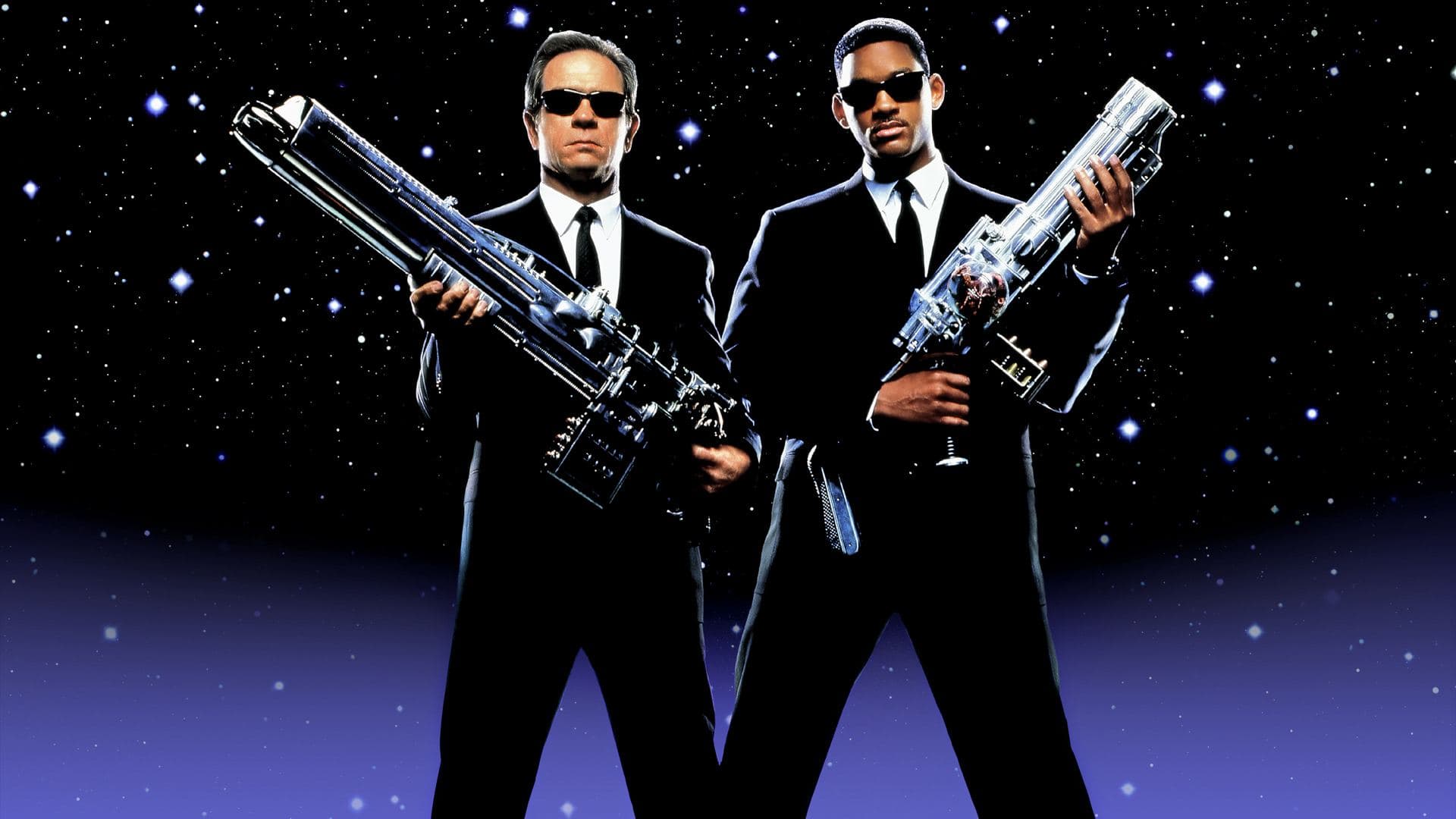
A streetwise NYPD detective joins a secret organization that polices extraterrestrial affairs on Earth. Men in Black follows the exploits of agents Kay and Jay, members of a top-secret organization established to monitor and police alien activity on Earth. The two Men in Black find themselves in the middle of the deadly plot by an intergalactic terrorist who has arrived on Earth to assassinate two ambassadors from opposing galaxies. In order to prevent worlds from colliding, the MiB must track down the terrorist and prevent the destruction of Earth. It's just another typical day for the Men in Black.
What is the budget of Men in Black?
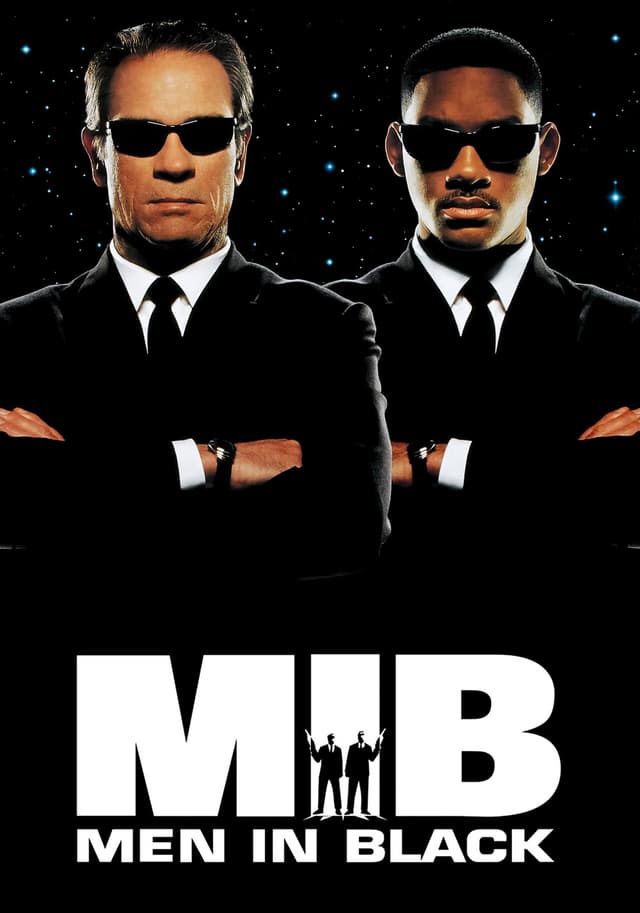
"Men in Black," an action released in 1997, was directed by Barry Sonnenfeld and stars Tommy Lee Jones, Will Smith. The production budget was $90,000,000, placing it in the high-budget range for action productions of the 1990s.
Key Budget Allocation Categories
While specific budget breakdowns are not publicly available, typical cost drivers for an action production like this include:
- Stunts, Action Sequences & Visual Effects: Action films allocate a substantial portion of their budget to choreographing and executing practical stunts, pyrotechnics, and CGI-heavy sequences.
- Above-the-Line Talent (Cast & Director): A-list talent commands significant upfront fees plus backend participation.
- Production Design, Sets & Locations: Action films frequently require multiple international shooting locations, large-scale set construction, vehicle acquisitions and modifications, and specialized equipment , all of which drive production costs well above those of dialogue-driven genres.
- Development: The film is loosely based on Lowell Cunningham and Sandy Carruthers's comic book The Men in Black.
What were the major cost factors in Men in Black?
Several factors contributed to the overall production costs of "Men in Black."
- Stunts: Stunts, Action Sequences & Visual Effects is one of the primary cost drivers in action productions of this scale.
- Above-the-Line Talent (Cast: Above-the-Line Talent (Cast & Director) is one of the primary cost drivers in action productions of this scale.
- Production Design: Production Design, Sets & Locations is one of the primary cost drivers in action productions of this scale.
How Does Men in Black's Budget Compare to Similar Films?
At $90,000,000, Men in Black sits in the high-budget range. Here is how it compares to productions with a similar budget:
- Bad Boys for Life (2020): Budget $90,000,000, Worldwide Gross $426,505,244
- Contact (1997): Budget $90,000,000, Worldwide Gross $171,120,329
- DC League of Super-Pets (2022): Budget $90,000,000, Worldwide Gross $203,000,000
- Death on the Nile (2022): Budget $90,000,000, Worldwide Gross $137,307,235
- A Good Day to Die Hard (2013): Budget $92,000,000, Worldwide Gross $304,654,182
The median budget for wide-release action films in the era ranges from $30 to 80M for mid-budget to $150M+ for tentpoles.
Men in Black Box Office Performance
"Men in Black" earned $250,690,539 domestically and $589,390,539 worldwide at the box office. Against a production budget of $90,000,000, the film performed strongly at the box office.
A film typically needs to earn approximately twice its production budget to cover marketing and distribution costs. For "Men in Black," that break-even threshold was roughly $180,000,000. With worldwide earnings of $589,390,539, the film cleared that threshold comfortably.
Box Office Breakdown
Men in Black

At 554.9%, "Men in Black" earned roughly $6.55 for every $1 invested in production.
Men in Black Production History
The film is loosely based on Lowell Cunningham and Sandy Carruthers's comic book The Men in Black. Producers Walter F. Parkes and Laurie MacDonald optioned the rights to The Men in Black in 1992, and hired Ed Solomon to write a very faithful script.
Principal photography began in March 1996. Many last-minute changes ensued during production. First, the scene where James Edwards was chasing a disguised alien was to be filmed at Lincoln Center, but the New York Philharmonic decided to charge the filmmakers for using their buildings, prompting Sonnenfeld to film the scene at the Solomon R.
Two different soundtracks for the film were released: a score soundtrack featuring music composed by Danny Elfman and an album of songs used in and inspired by the film, featuring Will Smith's original song "Men in Black" based on the film's plot. Elfman's music was called "rousing" by the Los Angeles Times. Variety called the film a technical marvel, giving special credit to "Elfman's always lively score." Elfman was nominated for Best Original Musical or Comedy Score at the 70th Academy Awards for his score, but lost to The Full Monty.
Awards and Recognition
Won 1 Oscar. 23 wins & 39 nominations total
- Academy Award for Best Makeup and Hairstyling: Rick Baker (70th Academy Awards)
- Academy Award for Best Makeup and Hairstyling: David LeRoy Anderson (70th Academy Awards)
- Saturn Award for Best Science Fiction Film (24th Saturn Awards)
Critical Reception
On review aggregation website Rotten Tomatoes, Men in Black holds an approval rating of 91% based on 93 reviews, and an average score of 7.50/10. The site's critical consensus reads, "Thanks to a smart script, spectacular set pieces, and charismatic performances from its leads, Men in Black is an entirely satisfying summer blockbuster hit." On Metacritic, the film has a weighted average score of 71 out of 100, based on 22 critics, indicating "generally favorable reviews". Audiences polled by CinemaScore gave the film an average grade of "B+" on an A+ to F scale.
Frequently Asked Questions
How much did Men in Black (1997) cost to make?
The production budget was $90,000,000. Columbia Pictures and Amblin Entertainment co-financed the film, with Steven Spielberg producing through his Amblin banner.
How much did Men in Black earn at the box office?
Men in Black grossed $250,690,539 domestically and $338,693,000 internationally, for a worldwide total of approximately $589,400,000. It opened to $51,068,455 on July 2, 1997, the second-highest July opening of all time at that point.
Who stars in Men in Black?
Tommy Lee Jones plays Agent K and Will Smith plays Agent J. Vincent D'Onofrio plays the body-snatching Edgar the Bug, with Linda Fiorentino as Dr. Laurel Weaver, Rip Torn as Zed, and Tony Shalhoub as Jeebs.
Who directed Men in Black?
Barry Sonnenfeld directed the film. Sonnenfeld had previously directed The Addams Family (1991, $191,500,000 worldwide), Addams Family Values (1993), and Get Shorty (1995, $115,100,000 worldwide).
Is Men in Black based on a comic book?
Yes. The film adapts The Men in Black comic book series by Lowell Cunningham, originally published by Aircel Comics in 1990 and later by Malibu Comics. The film tones down the comic's darker conspiracy elements for a four-quadrant audience.
Where was Men in Black filmed?
Principal photography took place in New York City and on soundstages at Sony Pictures Studios in Culver City, California. The Brooklyn-Battery Tunnel entrance and the Unisphere at Flushing Meadows-Corona Park feature prominently.
Did Men in Black win any Oscars?
Yes. Rick Baker, David LeRoy Anderson, and the makeup team won the Academy Award for Best Makeup at the 70th Academy Awards. The film was also nominated for Best Art Direction and Best Original Score for Danny Elfman.
What did critics think of Men in Black?
The film received strong reviews, with a 92% approval rating on Rotten Tomatoes and a 71 out of 100 score on Metacritic. Critics praised the chemistry between Jones and Smith and Sonnenfeld's comic timing.
How profitable was Men in Black?
Extremely. Against the $90,000,000 production budget and approximately $50,000,000 in marketing spend, the worldwide gross of $589,400,000 produced a substantial theatrical profit. Merchandising, home video, and franchise rights have generated additional hundreds of millions over the decades.
How many Men in Black sequels were made?
Three direct sequels followed: Men in Black II (2002, $140,000,000 budget, $441,800,000 worldwide), Men in Black 3 (2012, $225,000,000 budget, $624,000,000 worldwide), and the spin-off Men in Black: International (2019, $110,000,000 budget, $253,900,000 worldwide). An animated series ran from 1997 to 2001.
Official Trailer
Build budgets like this one in Saturation
Start from an industry-standard feature film template, import the schedule and rates you already have, and let the cost report keep itself current as you spend. Real-time collaboration, no spreadsheets.