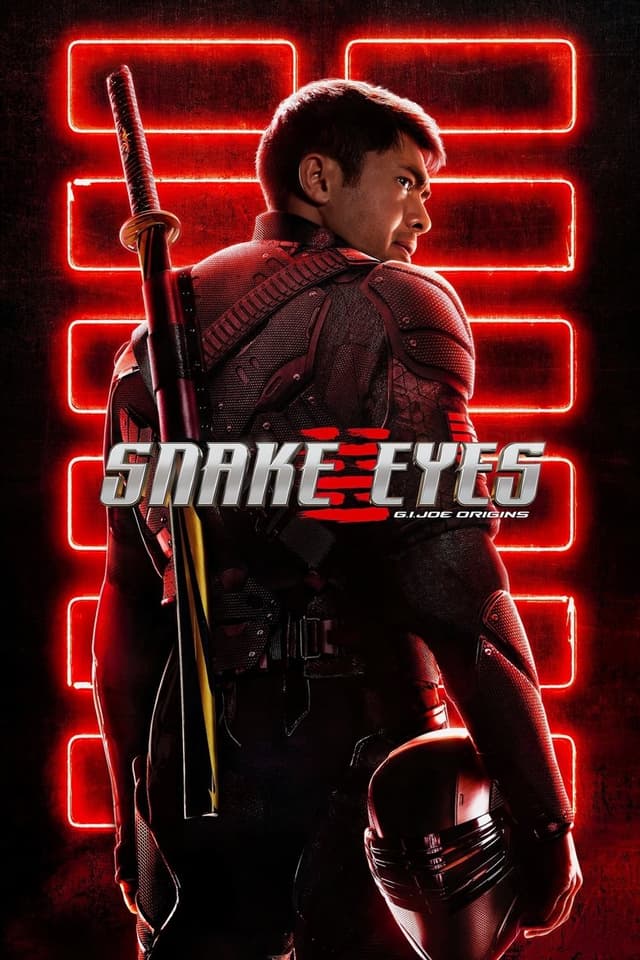
Snake Eyes G.I. Joe Origins Budget
 ActionAdventure2h 1m
Updated
Synopsis
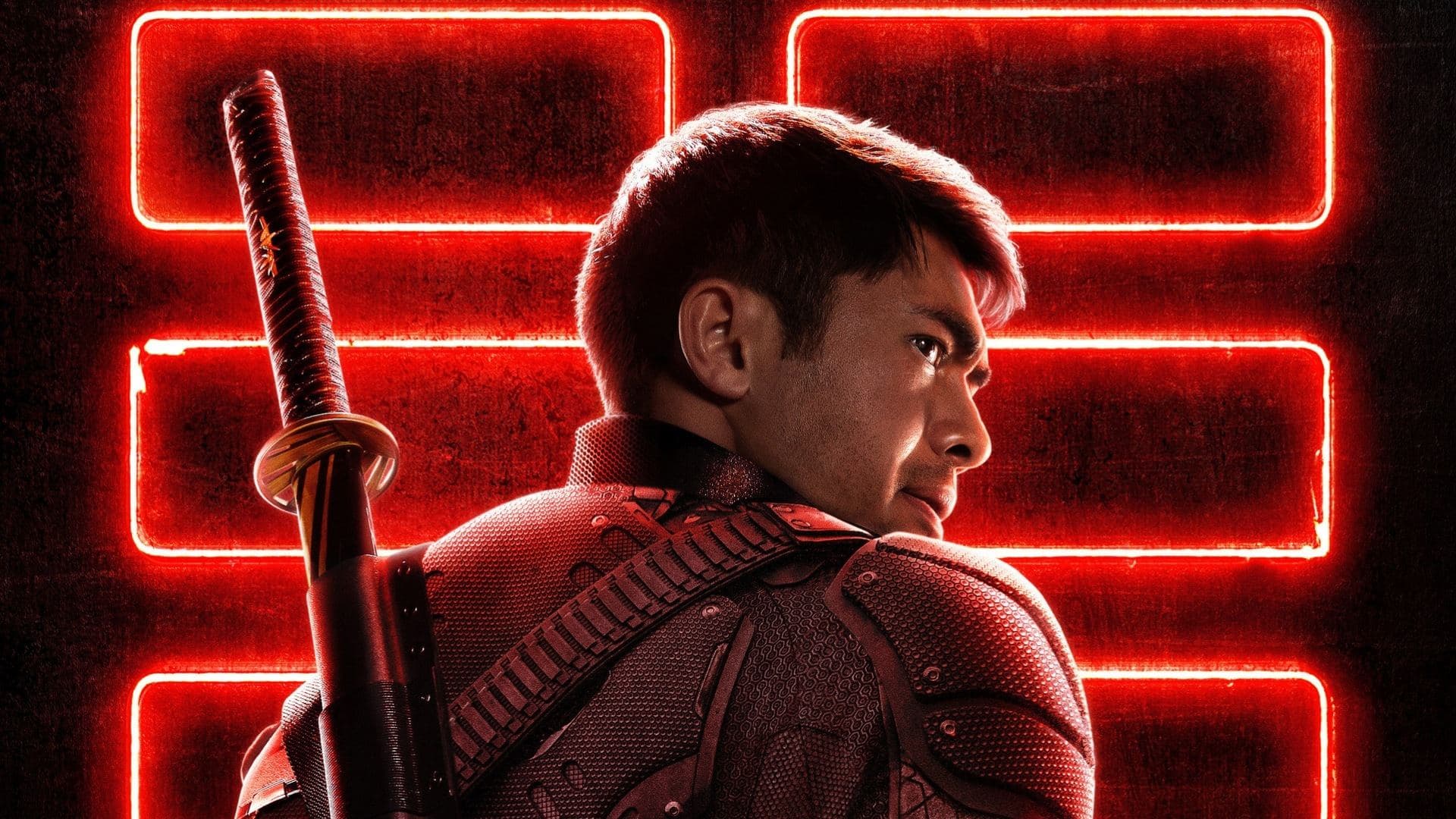
After saving the life of their heir apparent, tenacious loner Snake Eyes is welcomed into an ancient Japanese clan called the Arashikage, where he is taught the ways of the ninja warrior. When secrets from his past are revealed, Snake Eyes' honor and allegiance will be tested, even if that means losing the trust of those closest to him.
What Is the Budget of Snake Eyes: G.I. Joe Origins (2021)?
Snake Eyes: G.I. Joe Origins (2021), directed by Robert Schwentke and distributed by Paramount Pictures, was produced on a reported budget of $88,000,000, with some industry estimates placing the figure as high as $110,000,000 once reshoots and pandemic-related delays were factored in. The film served as a reboot of the G.I. Joe live-action franchise, repositioning the property around an origin story for the silent ninja Snake Eyes rather than the ensemble military team that anchored the previous two installments. Paramount, Hasbro's production arm Allspark, MGM, and Skydance Media co-financed the production as a launchpad for a new shared cinematic universe built around Hasbro toy properties.
The investment reflected a calculated mid-budget play. Compared with the $175,000,000 spent on G.I. Joe: The Rise of Cobra (2009), the studios pulled back significantly while still committing enough capital for an A-list lead, location shooting in Japan, elaborate martial arts choreography, and a soundtrack-driven action piece. The math assumed Snake Eyes would clear roughly $175,000,000 worldwide to break even after marketing, a target the film ultimately missed by a wide margin.
Key Budget Allocation Categories
Snake Eyes' reported $88,000,000 budget was distributed across several core production areas:
- Above-the-Line Talent: Director Robert Schwentke (RED, R.I.P.D., The Captain) commanded a feature-director rate appropriate to a studio tentpole, and lead Henry Golding, coming off Crazy Rich Asians and The Gentlemen, was cast as the first Asian actor to headline a G.I. Joe film. Supporting roles for Andrew Koji, Úrsula Corberó, Samara Weaving, and Iko Uwais filled out an internationally recognizable ensemble, with each cast member commanding compensation reflecting their post-Crazy Rich Asians, Warrior, and Money Heist visibility.
- Japan Location Shoot: A multi-week production block in Japan during January and February 2020 covered Tokyo street photography, temple exteriors at locations including Himeji Castle, and culturally specific set pieces that could not have been replicated on a Vancouver stage. International travel, lodging, local crew, and location permits added significant cost compared with a fully Canada-based shoot.
- Martial Arts Choreography: Stunt coordinator and fight choreographer Kenji Tanigaki, known for his work on the Rurouni Kenshin films and Donnie Yen collaborations, designed the film's sword and hand-to-hand sequences. Choreography of this caliber requires extended pre-production rehearsal time, dedicated stunt doubles, and lengthy on-set blocking, all of which expand the principal photography schedule.
- Visual Effects: While Snake Eyes was lighter on digital effects than its predecessors, the film still required CG work for the Arashikage clan's mythical anaconda guardians, environmental enhancements for the Tokyo and mountain sequences, and seamless integration of stunt wirework. Multiple vendor houses contributed shots, with the heaviest creature work handled by Industrial Light & Magic.
- Score and Music: German composer Martin Todsharow scored the film, blending traditional Japanese instrumentation with orchestral and electronic textures. The soundtrack budget covered original composition, orchestra recording, and licensing of needle drops used in trailers and key sequences.
- Reshoots and COVID Delays: Originally slated for an October 2020 release, the film was pushed to July 2021 by the pandemic. Reshoots in March 2021 added incremental costs for cast availability, stage rental, and crew. The 16-month gap between principal photography and theatrical release also extended marketing and finance carrying costs.
How Does Snake Eyes' Budget Compare to Similar Films?
At a reported $88,000,000, Snake Eyes sits in the mid-range of recent action-fantasy reboots and franchise origin stories. The comparison set illustrates how its commercial outcome diverged from its budgetary peers:
- G.I. Joe: The Rise of Cobra (2009): Budget $175,000,000 | Worldwide $302,469,017. The franchise opener spent nearly twice as much and earned more than seven times Snake Eyes worldwide, demonstrating the appetite for ensemble G.I. Joe content when the property was a fresh theatrical entry.
- G.I. Joe: Retaliation (2013): Budget $130,000,000 | Worldwide $375,740,705. The second installment held the line on budget while expanding the worldwide haul, suggesting that the franchise core audience preferred the team-based premise that Snake Eyes deliberately set aside.
- Mortal Kombat (2021): Budget $55,000,000 | Worldwide $84,453,488. New Line's contemporaneous toy-and-game adaptation cost roughly two thirds of Snake Eyes and out-grossed it worldwide while also driving HBO Max subscriber gains, a hybrid release strategy Paramount declined to pursue.
- Hellboy (2019): Budget $50,000,000 | Worldwide $55,113,219. Lionsgate's Hellboy reboot cost less than 60% of Snake Eyes and still flopped, illustrating the high failure rate of legacy property origin stories that lacked clear audience demand.
- Ninja Assassin (2009): Budget $40,000,000 | Worldwide $61,601,280. The Wachowski-produced ninja action film offers the closest genre comparison and earned 1.5x its budget despite mixed reviews, a result Snake Eyes failed to match against more than double the production cost.
Snake Eyes Box Office Performance
Snake Eyes: G.I. Joe Origins opened on July 23, 2021, in the middle of the Delta variant surge, finishing second at the domestic box office with $13,374,651 over its opening weekend. That figure trailed Universal's Old, which won the weekend with $16,500,000, and fell well below pre-pandemic G.I. Joe franchise openings (the 2009 original opened to $54,700,000). The film never recovered from its soft start.
Against a reported production budget of $88,000,000, the film needed approximately $175,000,000 in worldwide gross to reach profitability when accounting for marketing and distribution costs. Here is the financial breakdown:
Box Office Breakdown
Snake Eyes G.I. Joe Origins

Snake Eyes returned approximately $0.29 in theatrical revenue for every $1 invested when measured against total estimated production and marketing spend, placing it among the most decisive box office bombs of the 2021 calendar year. The domestic share of the gross was $28,332,000 against an international share of just $11,795,899, a 71/29 split heavily weighted toward North America and a clear signal that the property did not travel.
The collapse killed the planned shared-universe rollout. Paramount and Hasbro shelved a Baroness spin-off that had been in active development, and a true G.I. Joe ensemble sequel set after Snake Eyes was indefinitely postponed. Subsequent Hasbro live-action plans pivoted to the Transformers franchise crossover route rather than continuing the Snake Eyes thread.
Snake Eyes Production History
Development on a Snake Eyes origin film began in earnest in 2018 at Paramount, with Brian Goldner of Hasbro and Lorenzo di Bonaventura producing through Allspark Pictures and Di Bonaventura Pictures. Evan Spiliotopoulos delivered an early draft of the screenplay, with Joe Shrapnel and Anna Waterhouse handling subsequent rewrites and shooting drafts. Robert Schwentke was attached as director in early 2019 on the strength of his action and genre filmography, and Larry Hama, the Marvel Comics writer who built the modern G.I. Joe mythology and originally created Snake Eyes' silent backstory, was retained as a consultant.
Casting Henry Golding as Snake Eyes in March 2019 reframed the project. The producers deliberately moved away from the iconic full-mask silent ninja design to give the lead a face, a backstory, and dialogue, a creative decision that became one of the most divisive elements of the final film among longtime fans. Andrew Koji was cast as Tommy Arashikage, the future Storm Shadow, with Úrsula Corberó (Money Heist) as the Baroness, Samara Weaving as Scarlett, and Indonesian martial artist Iko Uwais (The Raid) as the Hard Master.
Principal photography ran from October to December 2019 in Vancouver, British Columbia, utilizing the province's production tax credits to anchor the studio shoot and warehouse-based action set pieces. The unit then relocated to Japan for several weeks in January and February 2020, shooting at locations including Himeji Castle and various Tokyo street and temple settings before wrapping just ahead of the COVID-19 lockdowns.
The film was originally scheduled for October 16, 2020. The pandemic forced two release shifts, first to October 2021 and then forward to July 23, 2021. Reshoots took place in March 2021. The 16-month gap between the wrap of principal photography and the theatrical release coincided with a wholesale industry recalibration of mid-budget action films and an exhibition recovery that never fully materialized for non-franchise tentpoles in summer 2021.
Awards and Recognition
Snake Eyes: G.I. Joe Origins received no significant awards recognition. The film failed to register at the major industry ceremonies and was not nominated at the Saturn Awards for genre filmmaking, the Visual Effects Society Awards, or the Motion Picture Sound Editors Golden Reels.
The film also avoided Razzie nominations, despite its commercial failure and mixed reviews, in part because the 2022 Razzies ceremony focused on more publicly maligned titles such as Diana the Musical and Karen. Snake Eyes' legacy within awards conversation has been almost entirely absent, reflecting both its limited cultural footprint and the genre ceiling that affects most live-action toy adaptations.
Critical Reception
Snake Eyes: G.I. Joe Origins received mixed-to-negative reviews. The film holds a 35% approval rating on Rotten Tomatoes based on 147 critic reviews, with a critical consensus that called it competently staged but narratively thin. On Metacritic, the film scored 43 out of 100, indicating mixed or average reviews. Audiences surveyed by CinemaScore gave the film a B-, a notable underperformance for an action tentpole where A- or higher is the typical floor for buzzed-about properties.
Critics broadly praised the martial arts choreography by Kenji Tanigaki, the location work in Japan, and Henry Golding's screen presence, but objected to the muddled storytelling, the decision to unmask Snake Eyes and give him an extensive speaking role, and the pacing of an extended Arashikage clan initiation sequence that delays the film's connection to wider G.I. Joe lore. Variety's Owen Gleiberman called it "a movie that wants to be cool and ends up looking like it's trying too hard," while The Hollywood Reporter's Frank Scheck wrote that the film "delivers competent action set pieces but never finds an emotional center."
Genre-press reaction was more divided. IGN praised the fight design while flagging the script's structural problems, and Collider noted that the film's reluctance to commit to either grounded ninja realism or full G.I. Joe pulp left it stranded between two audiences. The mixed reception, combined with the commercial collapse, has cemented Snake Eyes' reputation as a cautionary example of how a costly franchise origin story can fail when its core creative choices alienate the property's established fanbase without converting new viewers.
Frequently Asked Questions
How much did it cost to make Snake Eyes: G.I. Joe Origins (2021)?
The reported production budget was $88,000,000, with some industry estimates running as high as $110,000,000 once reshoots and pandemic-related carrying costs are factored in. Paramount Pictures co-financed the production with Metro-Goldwyn-Mayer, Skydance Media, Hasbro's Allspark Pictures, and Lorenzo di Bonaventura's production company.
How much did Snake Eyes: G.I. Joe Origins earn at the box office?
The film grossed $28,332,000 domestically and $11,795,899 internationally, for a worldwide total of $40,127,899. It opened to $13,374,651 in the United States, finishing second on its July 23, 2021 opening weekend behind M. Night Shyamalan's Old.
Was Snake Eyes a box office bomb?
Yes. Against a $88,000,000 production budget and an estimated $50,000,000 to $70,000,000 in marketing spend, the film returned approximately $0.29 in worldwide gross for every $1 invested. It is among the most clear-cut studio losses of 2021 and is widely cited as the reason Paramount shelved the planned Snake Eyes-led G.I. Joe shared universe.
Who directed Snake Eyes: G.I. Joe Origins?
Robert Schwentke directed the film, working from a screenplay by Evan Spiliotopoulos with rewrites by Joe Shrapnel and Anna Waterhouse. Schwentke had previously directed RED, R.I.P.D., and The Captain.
Where was Snake Eyes filmed?
Principal photography took place in Vancouver, British Columbia from October to December 2019, followed by a multi-week shoot in Japan during January and February 2020. Japan locations included Himeji Castle and various Tokyo street and temple settings. Reshoots were conducted in March 2021 after the COVID-19 pandemic delayed the original October 2020 release.
How does Snake Eyes compare to other G.I. Joe films?
Snake Eyes cost half what G.I. Joe: The Rise of Cobra (2009) spent and still earned only one seventh of that film's worldwide gross. The original earned $302,469,017 worldwide against a $175,000,000 budget. G.I. Joe: Retaliation (2013) earned $375,740,705 against a $130,000,000 budget. Snake Eyes' $40,127,899 worldwide haul makes it the lowest-grossing entry in the G.I. Joe film series by a wide margin.
Who plays Snake Eyes in the 2021 film?
Henry Golding plays Snake Eyes, becoming the first Asian actor to headline a G.I. Joe film. Golding came to the project after starring roles in Crazy Rich Asians (2018) and The Gentlemen (2019). The casting was a deliberate departure from the silent, fully masked Snake Eyes of the comics and previous films.
Why was Snake Eyes delayed from 2020 to 2021?
The film was originally scheduled for October 16, 2020 but was pushed first to October 2021 and then forward to July 23, 2021 because of the COVID-19 pandemic. Reshoots in March 2021 added incremental costs for cast availability, stage rental, and crew. The 16-month gap between the wrap of principal photography and the theatrical release coincided with a wholesale industry recalibration of mid-budget action films.
What did critics think of Snake Eyes: G.I. Joe Origins?
The film received mixed-to-negative reviews, with a 35% approval rating on Rotten Tomatoes (based on 147 critics) and a 43 out of 100 score on Metacritic. Audiences gave it a B- CinemaScore. Critics praised the martial arts choreography by Kenji Tanigaki and Henry Golding's screen presence but objected to the muddled storytelling and the creative decision to unmask Snake Eyes and give him an extensive speaking role.
Did Snake Eyes win any awards?
No. Snake Eyes: G.I. Joe Origins received no major awards recognition. It was not nominated at the Saturn Awards, the Visual Effects Society Awards, or the Motion Picture Sound Editors Golden Reels, and it also avoided Razzie nominations despite its commercial failure.
Filmmakers
Snake Eyes G.I. Joe Origins

Build budgets like this one in Saturation
Start from an industry-standard feature film template, import the schedule and rates you already have, and let the cost report keep itself current as you spend. Real-time collaboration, no spreadsheets.