Rush Hour 2 Budget
 ActionComedyCrime1h 30m
Updated
Synopsis
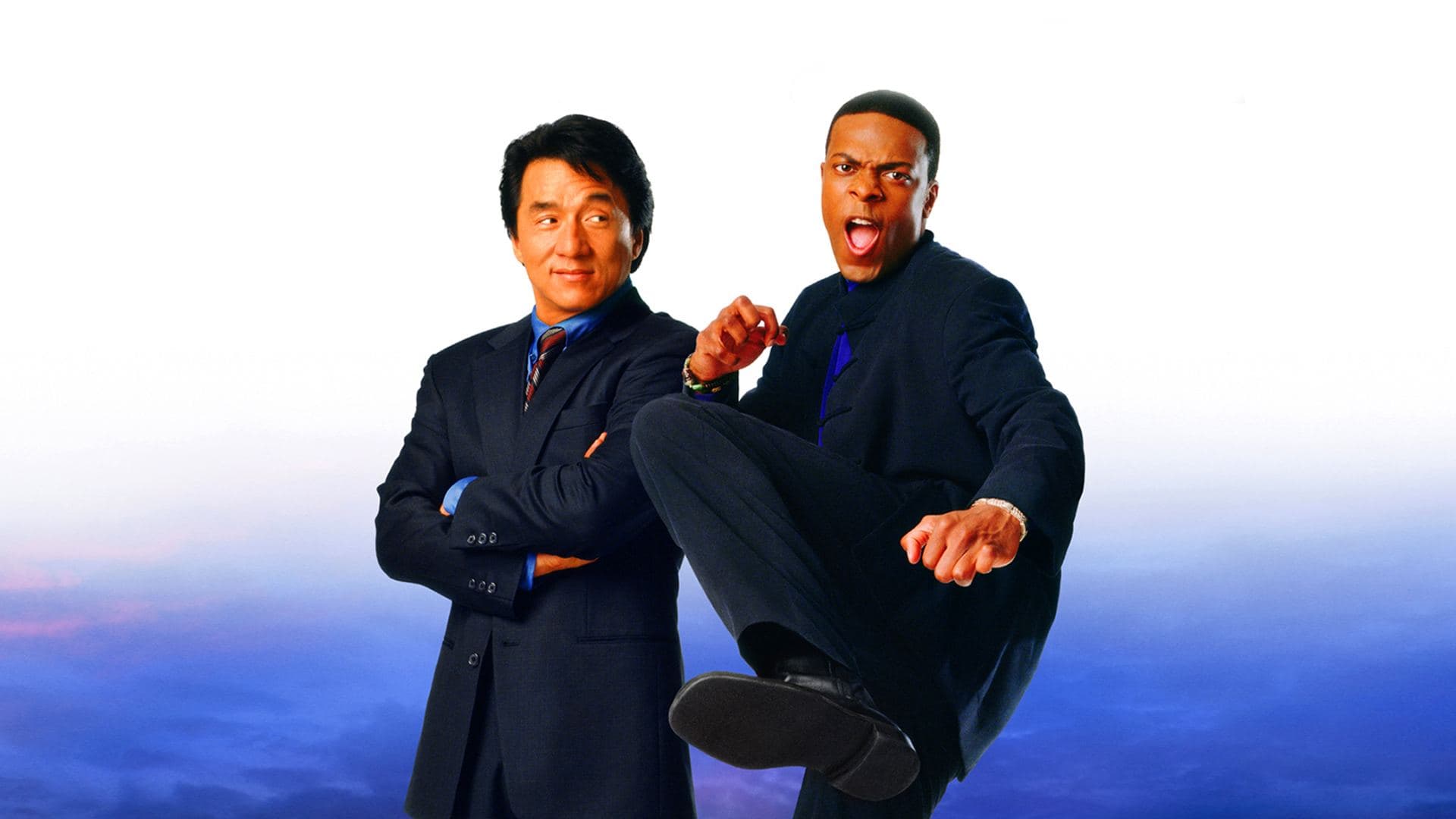
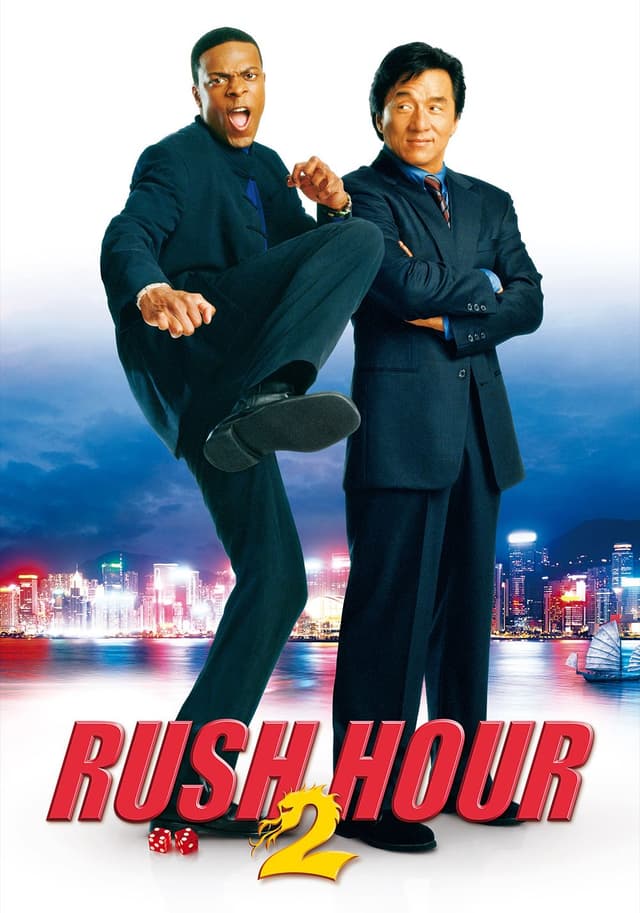
"Rush Hour 2" is a high-octane action-comedy that reunites the dynamic duo of LAPD Detective James Carter, played by Chris Tucker, and Hong Kong Inspector Lee, portrayed by Jackie Chan. Set against the vibrant backdrop of Hong Kong and Las Vegas, the film kicks off with Carter on vacation in Hong Kong, where he hopes to enjoy some leisure time. However, their plans take a sharp turn when a bomb explodes at the US Consulate, leading them to investigate a counterfeiting ring linked to the notorious Triads.
As they delve deeper into the case, Carter and Lee find themselves embroiled in a web of intrigue, deception, and explosive action. Their journey takes them from the bustling streets of Hong Kong to the dazzling lights of Las Vegas, where they encounter a host of colorful characters, including the beautiful and cunning agent, Hu Li, played by Zhang Ziyi. The film expertly blends humor with thrilling fight sequences, showcasing Chan's martial arts prowess and Tucker's comedic timing.
With a mix of clever one-liners, breathtaking stunts, and a captivating storyline, "Rush Hour 2" delivers a rollercoaster ride of entertainment that keeps audiences on the edge of their seats. As the duo races against time to uncover the truth, their friendship is tested, leading to hilarious and heartwarming moments that solidify their bond. Ultimately, the film is a testament to the power of teamwork and the importance of friendship, all wrapped up in a fast-paced, action-packed adventure.
What is the budget of Rush Hour 2?
"Rush Hour 2," an action released in 2001, was directed by Brett Ratner and stars Jackie Chan, Chris Tucker. The production budget was $90,000,000, placing it in the high-budget range for action productions of its era.
Key Budget Allocation Categories
While specific budget breakdowns are not publicly available, typical cost drivers for an action production like this include:
- Stunts, Action Sequences & Visual Effects: Action films allocate a substantial portion of their budget to choreographing and executing practical stunts, pyrotechnics, and CGI-heavy sequences.
- Above-the-Line Talent (Cast & Director): A-list talent commands significant upfront fees plus backend participation.
- Production Design, Sets & Locations: Action films frequently require multiple international shooting locations, large-scale set construction, vehicle acquisitions and modifications, and specialized equipment , all of which drive production costs well above those of dialogue-driven genres.
- Filming & Locations: Filming took place between December 11, 2000 and April 30, 2001.
What were the major cost factors in Rush Hour 2?
Several factors contributed to the overall production costs of "Rush Hour 2."
- Stunts: Stunts, Action Sequences & Visual Effects is one of the primary cost drivers in action productions of this scale.
- Above-the-Line Talent (Cast: Above-the-Line Talent (Cast & Director) is one of the primary cost drivers in action productions of this scale.
- Production Design: Production Design, Sets & Locations is one of the primary cost drivers in action productions of this scale.
How Does Rush Hour 2's Budget Compare to Similar Films?
At $90,000,000, Rush Hour 2 sits in the high-budget range. Here is how it compares to productions with a similar budget:
- Bad Boys for Life (2020): Budget $90,000,000, Worldwide Gross $426,505,244
- Contact (1997): Budget $90,000,000, Worldwide Gross $171,120,329
- DC League of Super-Pets (2022): Budget $90,000,000, Worldwide Gross $203,000,000
- Death on the Nile (2022): Budget $90,000,000, Worldwide Gross $137,307,235
- Men in Black (1997): Budget $90,000,000, Worldwide Gross $589,390,539
The median budget for wide-release action films in the 2000s ranges from $30 to 80M for mid-budget to $150M+ for tentpoles.
Rush Hour 2 Box Office Performance
"Rush Hour 2" earned $226,164,286 domestically and $347,325,802 worldwide at the box office. Against a production budget of $90,000,000, the film performed strongly at the box office.
A film typically needs to earn approximately twice its production budget to cover marketing and distribution costs. For "Rush Hour 2," that break-even threshold was roughly $180,000,000. With worldwide earnings of $347,325,802, the film cleared that threshold comfortably.
Box Office Breakdown
Rush Hour 2

At 285.9%, "Rush Hour 2" earned roughly $3.86 for every $1 invested in production.
Rush Hour 2 Production History
Filming took place between December 11, 2000 and April 30, 2001. [Filming] Filming took place between December 11, 2000 and April 30, 2001.
Lalo Schifrin returned to compose the score for the film. According to him, "The music for Rush Hour 2 is completely different from Rush Hour. The first 20 to 30 seconds of the main title is a reprise of the music from Rush Hour , but that's it." He said that Ratner had requested a "symphonic score", which he incidentally found suitable for Rush Hour 2: For the sequel, he asked me to do a symphonic score.
Awards and Recognition
10 wins & 22 nominations total
Critical Reception
Reviews for Rush Hour 2 were mixed. On Rotten Tomatoes, the film has an approval rating of 50% based on 127 reviews, with an average rating of 5.2/10. The website's critical consensus states that the film "doesn't feel as fresh or funny as the first, and the stunts lack some of the intricacy normally seen in Chan's films." On Metacritic, the film has a score of 48 out of 100 based on 28 reviews, indicating "mixed or average reviews". Audiences polled by CinemaScore during Rush Hour 2 opening weekend gave the film an average grade of A on an A+ to F scale.
Frequently Asked Questions
How much did Rush Hour 2 cost to make?
The production budget was $90,000,000, triple the $33,000,000 cost of the 1998 original. New Line Cinema produced and distributed the sequel, with Roger Birnbaum and Arthur Sarkissian returning as producers.
How much did Rush Hour 2 earn at the box office?
Rush Hour 2 grossed $226,164,286 domestically and $121,100,000 internationally, for a worldwide total of approximately $347,300,000. It opened to a then-August-record $67,408,222 on August 3, 2001.
Who stars in Rush Hour 2?
Jackie Chan plays Detective Lee and Chris Tucker plays LAPD Detective James Carter. Supporting cast includes Zhang Ziyi as the assassin Hu Li, John Lone as the Triad boss Ricky Tan, Roselyn Sanchez as Isabella Molina, and Alan King.
Who directed Rush Hour 2?
Brett Ratner directed the film, returning from the 1998 original. Ratner subsequently directed Rush Hour 3 (2007), X-Men: The Last Stand (2006), Red Dragon (2002), and Tower Heist (2011).
How much did Chris Tucker get paid for Rush Hour 2?
Chris Tucker received $20,000,000 plus a percentage of the gross for Rush Hour 2, a then-record figure for an African American actor. The deal was widely cited as a watershed moment for African American leading-man compensation in Hollywood.
Where was Rush Hour 2 filmed?
Principal photography took place in Hong Kong, Los Angeles, and Las Vegas. The Hong Kong sequences include scenes at the Aberdeen floating restaurant Jumbo Kingdom and the Wing Lung Bank, with the Las Vegas casino sequences shot at the Venetian Resort.
What did critics think of Rush Hour 2?
Reviews were mixed, with a 52% approval rating on Rotten Tomatoes and a 48 out of 100 score on Metacritic. Audiences gave the film an A- CinemaScore. Critics praised the Chan-Tucker chemistry while objecting to a thin plot that recycled the original film's structure.
How profitable was Rush Hour 2?
Extremely. Against the $90,000,000 production budget and approximately $40,000,000 in marketing spend, the worldwide gross of $347,300,000 produced a substantial theatrical profit. Home video and television syndication revenue extended the financial return significantly.
Did Rush Hour 2 get a sequel?
Yes. Rush Hour 3 (2007, $140,000,000 budget, $258,100,000 worldwide) underperformed the previous two entries and brought the franchise to a pause. Rush Hour 4 has been in development since 2017 with Jackie Chan and Chris Tucker both repeatedly confirming their interest in returning.
How does Rush Hour 2 compare to other buddy-cop sequels?
Rush Hour 2's $347,300,000 worldwide gross outperformed Lethal Weapon 2 (1989, $30,000,000 budget, $227,800,000 worldwide) and Bad Boys II (2003, $130,000,000 budget, $273,300,000 worldwide). It remains one of the highest-grossing buddy-cop sequels in cinema history.
Official Trailer
Build budgets like this one in Saturation
Start from an industry-standard feature film template, import the schedule and rates you already have, and let the cost report keep itself current as you spend. Real-time collaboration, no spreadsheets.