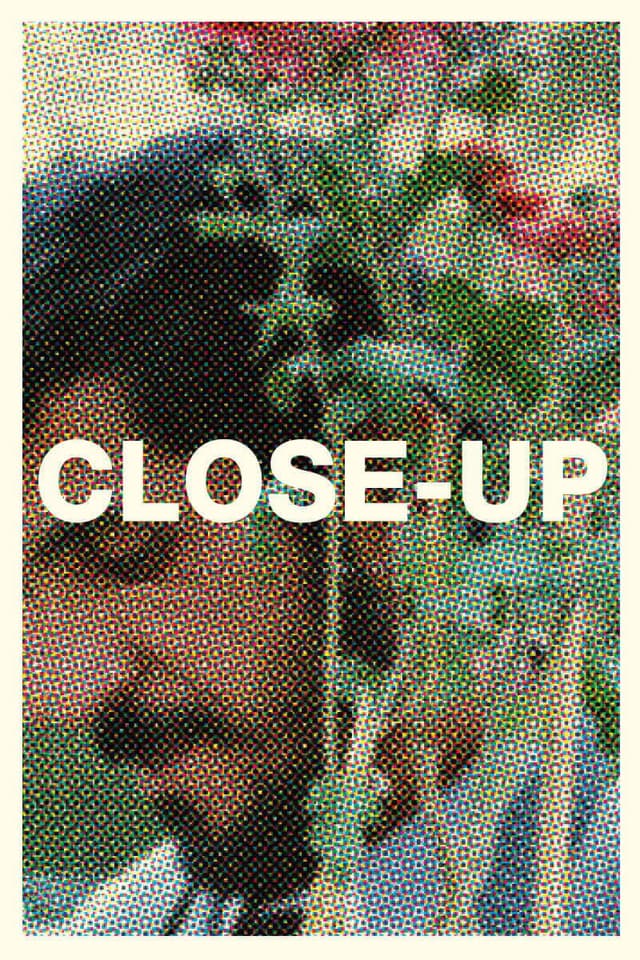
Close-Up Budget
Updated
Synopsis
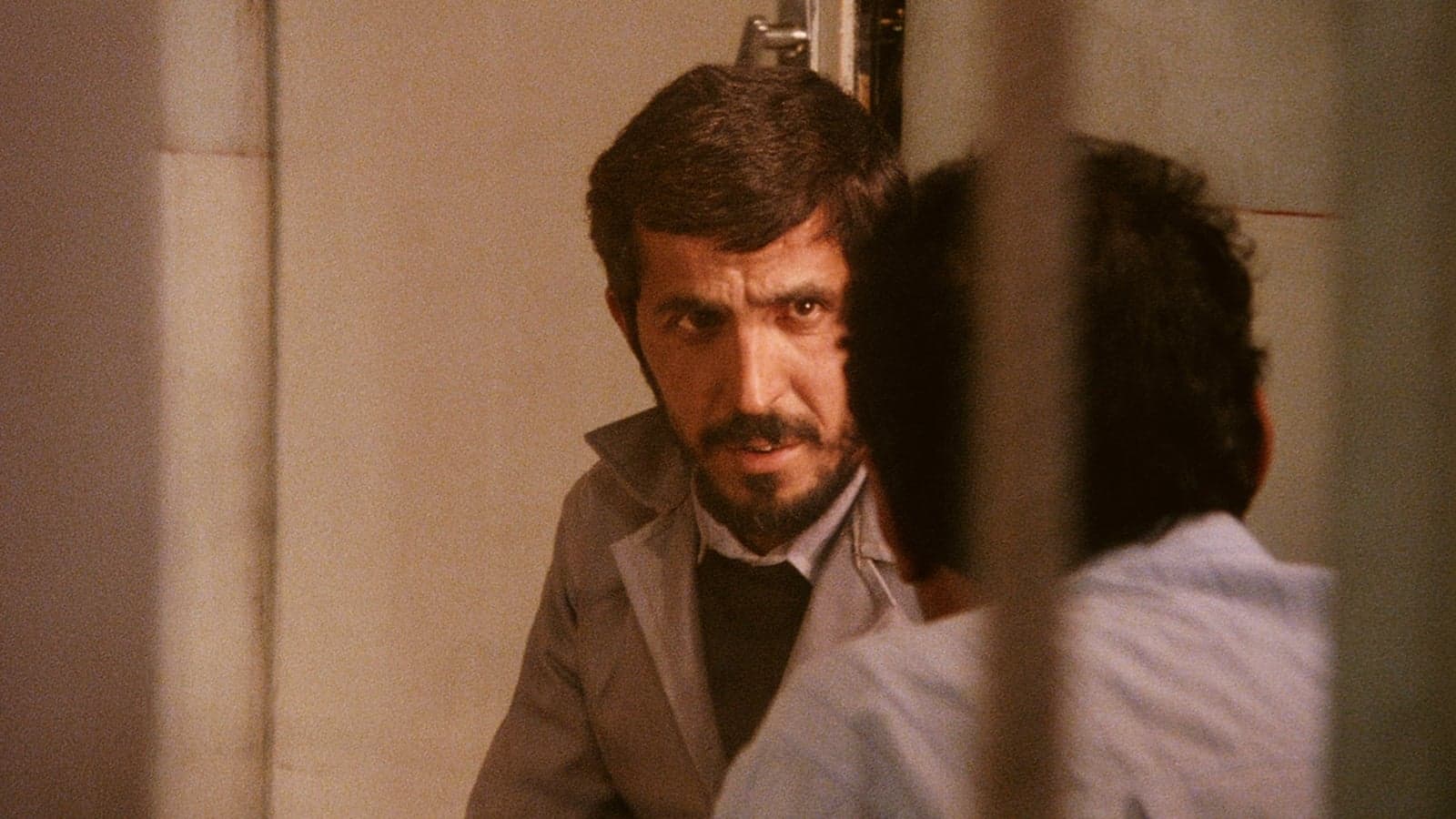
A poor Tehran cinephile is arrested after impersonating filmmaker Mohsen Makhmalbaf and convincing a middle-class family they would star in his next film. Abbas Kiarostami blends documentary footage of the real trial with reenactments staged by the actual participants, blurring the line between fact and reconstruction.
What Is the Budget of Close-Up (1990)?
The production budget of Close-Up has never been publicly disclosed in dollar terms. The picture was produced inside the Institute for the Intellectual Development of Children and Young Adults, a state-affiliated Iranian production body, on a microbudget characteristic of Kiarostami's early work. Industry estimates place the total cost in the low tens of thousands of US dollars.
Director Abbas Kiarostami shot the picture in 16mm across Tehran in late 1989 and early 1990, using the real participants, including the impostor Hossein Sabzian, the Ahankhah family, and filmmaker Mohsen Makhmalbaf, to play themselves in reconstructed scenes.
Key Budget Allocation Categories
- Cast Compensation: Modest fees for non-professional participants playing themselves, including Hossein Sabzian, the Ahankhah family, and Mohsen Makhmalbaf.
- Crew: A skeletal Iranian crew working under the Institute for the Intellectual Development of Children and Young Adults.
- Film Stock and Equipment: 16mm film stock and lightweight handheld camera packages typical of Iranian production conditions in the late 1980s.
- Location Filming: Shooting in real Tehran apartments, courtrooms, and streets where the original events took place.
- Post-Production: Sound mix and edit handled by Kiarostami himself in Tehran with a small team.
- International Distribution: Festival print costs and international distribution handled by foreign-sales partners after the film's discovery on the European festival circuit.
How Does Close-Up's Budget Compare to Similar Films?
- Where Is the Friend's House? (1987): Budget undisclosed | Worldwide limited release. Kiarostami's earlier Koker trilogy entry at a similarly microscopic Iranian production budget.
- The White Balloon (1995): Budget undisclosed | Worldwide limited release. Jafar Panahi's Kiarostami-scripted Cannes Camera d'Or winner at a comparably small Iranian budget.
- A Taste of Cherry (1997): Budget undisclosed | Worldwide $221,290. Kiarostami's Palme d'Or winner at a similar microbudget level with stronger international distribution.
- Children of Heaven (1997): Budget approximately $180,000 | Worldwide $1,648,000. Majid Majidi's Oscar-nominated Iranian drama at a budget that documents the broader scale of Iranian filmmaking in the era.
Close-Up Box Office Performance
Close-Up had no conventional theatrical opening in the United States or major Western markets at the time of release. The film circulated on the international festival circuit beginning in 1990 before receiving a limited US theatrical revival in 2010 following its restoration by the Criterion Collection.
Box Office Breakdown
Close-Up

For every $1 invested, the picture has likely returned a healthy multiple over thirty-five years, driven primarily by festival fees, repertory screenings, and home video.
The picture had no significant theatrical run on initial release. Its commercial life began with the 2010 Criterion restoration, which generated steady art-house ticket sales and Blu-ray sales worldwide. The Criterion Collection release remains in print.
Close-Up Production History
In late 1989, Kiarostami read a news article in the Iranian magazine Soroush about the arrest of an unemployed cinephile, Hossein Sabzian, who had passed himself off as the celebrated filmmaker Mohsen Makhmalbaf to a Tehran family. Kiarostami abandoned a film already in progress and rushed to Tehran to film the trial.
Kiarostami secured permission from the court to film Sabzian's trial. He then asked all the real participants, the Ahankhah family, Sabzian, Makhmalbaf, and the arresting officers, to play themselves in dramatized reconstructions of the events leading up to the arrest. The interleaving of trial footage and reenactment became the picture's defining formal device.
Filming wrapped in a matter of weeks. The picture premiered at the 1990 Fajr Film Festival in Tehran, then began an international festival run that brought Kiarostami sustained Western attention for the first time. Sight & Sound, Cahiers du Cinéma, and other major critical institutions began listing it among the most important films of the decade.
Awards and Recognition
Close-Up appears on the 2012 Sight & Sound critics' poll of the greatest films of all time at number 42, the highest-ranked Iranian film. It tops Sight & Sound's separate poll of the best Iranian films. Quentin Tarantino, Werner Herzog, Martin Scorsese, and Nanni Moretti have all cited it as a personal favorite. The Criterion Collection released the picture in 2010, securing its standing in the Anglophone canon.
Critical Reception
Close-Up holds a 100 percent rating on Rotten Tomatoes and a Metacritic score of 95. Jonathan Rosenbaum of the Chicago Reader called it "the great Iranian film." A.O. Scott of The New York Times described the picture as "a profound meditation on cinema, identity, and class." Kent Jones at Film Comment named it "one of the major works of modern cinema." The picture is taught widely in film schools as a foundational text on hybrid documentary form.
Frequently Asked Questions
What is the budget of Close-Up (1990)?
The production budget of Close-Up has never been publicly disclosed in dollar terms. Industry estimates place the total cost in the low tens of thousands of US dollars, typical of Iranian Institute productions of the era.
Is Close-Up a documentary or a drama?
Close-Up is a hybrid. Kiarostami filmed the real trial of Hossein Sabzian as documentary, then staged reenactments of the events leading to the arrest using the real participants. The interleaving of the two modes is the picture's defining formal device.
Who is Hossein Sabzian?
Hossein Sabzian was an unemployed Tehran cinephile who in 1989 impersonated the filmmaker Mohsen Makhmalbaf, convincing the Ahankhah family they would star in his next film. He plays himself in the picture.
Where was Close-Up filmed?
Close-Up was filmed in Tehran, in the real apartments, courtroom, and streets where the original events took place.
How long did Close-Up take to make?
Filming wrapped in roughly two months in late 1989 and early 1990. Kiarostami abandoned a different film already in progress to make Close-Up.
When did Close-Up come out?
Close-Up premiered at the 1990 Fajr Film Festival in Tehran. International festival distribution followed throughout 1990 and 1991. A restored version was released by the Criterion Collection in 2010.
Why is Close-Up considered important?
The picture is widely regarded as a foundational work of hybrid documentary cinema and one of the major films of the modern era. It ranks at number 42 on the 2012 Sight & Sound critics' poll of the greatest films of all time.
Did Close-Up have a US theatrical release?
Close-Up had no significant US theatrical release at the time. The Criterion Collection released a restoration in 2010, which received a limited US theatrical revival.
Who composed the score for Close-Up?
Kambiz Roshanravan composed the modest original score. Much of the picture relies on natural sound and silence.
How long is Close-Up?
Close-Up runs 98 minutes.
Filmmakers
Close-Up

Official Trailer
Build budgets like this one in Saturation
Start from an industry-standard feature film template, import the schedule and rates you already have, and let the cost report keep itself current as you spend. Real-time collaboration, no spreadsheets.