Once Upon a Time in the West Budget
 DramaWestern2h 46m
Updated
Synopsis
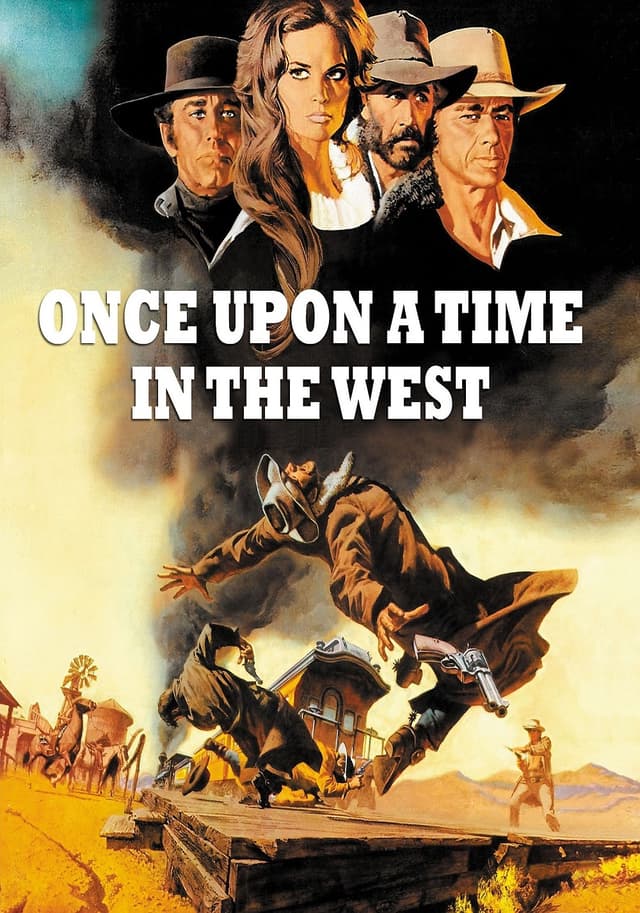
Jill McBain travels to the wild frontier, Utah, where she and her new husband planned to settle down, but upon arrival, she finds him and his children dead. There's a lot of land, and potential, but there are also those who want to take it--at any cost. Even if it means killing a man and his kids.
What is the budget of Once Upon a Time in the West?
"Once Upon a Time in the West," a drama released in 1968, was directed by Sergio Leone and stars Claudia Cardinale, Henry Fonda. The production budget was $5,000,000, placing it in the low-budget range for drama productions of the 1960s.
Key Budget Allocation Categories
While specific budget breakdowns are not publicly available, typical cost drivers for a drama production like this include:
- Above-the-Line Talent: Drama films live or die on the strength of their performances.
- Location Filming & Period Production Design: Authentic locations , whether contemporary or historical , require scouting, permits, travel, lodging, and often significant dressing to match the story's time period.
- Post-Production, Color Grading & Score: The editorial process for dramas is typically longer than genre films, with careful attention to pacing and tone.
- Casting: Henry Fonda did not accept Leone's first offer to play Frank, so Leone flew to New York to convince him, telling him: "Picture this: the camera shows a gunman from the waist down pulling his gun and shooting a running child.
What were the major cost factors in Once Upon a Time in the West?
Several factors contributed to the overall production costs of "Once Upon a Time in the West."
- Above-the-Line Talent: Above-the-Line Talent is one of the primary cost drivers in drama productions of this scale.
- Location Filming: Location Filming & Period Production Design is one of the primary cost drivers in drama productions of this scale.
- Post-Production: Post-Production, Color Grading & Score is one of the primary cost drivers in drama productions of this scale.
How Does Once Upon a Time in the West's Budget Compare to Similar Films?
At $5,000,000, Once Upon a Time in the West sits in the low-budget range. Here is how it compares to productions with a similar budget:
- Come and See (1985): Budget $5,000,000, Worldwide Gross $20,929,648
- Cinema Paradiso (1988): Budget $5,000,000, Worldwide Gross $35,962,062
- Mishima: A Life in Four Chapters (1985): Budget $5,000,000 , Gross $502,758
- A Separation (2011): Budget $5,000,000, Worldwide Gross $24,426,169
- The Elephant Man (1980): Budget $5,000,000, Worldwide Gross $26,000,000
The median budget for wide-release drama films in the era ranges from $30 to 80M for mid-budget to $150M+ for tentpoles.
Once Upon a Time in the West Box Office Performance
"Once Upon a Time in the West" earned $5,321,508 domestically and $5,380,118 worldwide at the box office. Against a production budget of $5,000,000, the film showed modest profitability in theatrical release.
A film typically needs to earn approximately twice its production budget to cover marketing and distribution costs. For "Once Upon a Time in the West," that break-even threshold was roughly $10,000,000. With worldwide earnings of $5,380,118, the film fell short of that threshold but recouped its production costs in theatrical release.
Box Office Breakdown
Once Upon a Time in the West

At 7.6%, "Once Upon a Time in the West" returned its production investment but margin was tight after marketing and distribution costs.
Once Upon a Time in the West Production History
Henry Fonda did not accept Leone's first offer to play Frank, so Leone flew to New York to convince him, telling him: "Picture this: the camera shows a gunman from the waist down pulling his gun and shooting a running child. The camera tilts up to the gunman's face and... it's Henry Fonda".
The music was written by composer Ennio Morricone, Leone's regular collaborator, who wrote the score under Leone's direction before filming began. As in The Good, the Bad and the Ugly, the haunting music contributes to the film's grandeur and, like the music for The Good, the Bad and the Ugly, is considered one of Morricone's greatest compositions. The film features leitmotifs that relate to each of the main characters (with their own theme music), as well as to the spirit of the American West.
Awards and Recognition
6 wins & 5 nominations total
Critical Reception
Once Upon a Time in the West was reviewed in 1969 in the Chicago Sun-Times by Roger Ebert, who gave it two and a half stars out of four. He found the film "good fun" and "a painstaking distillation" of Leone's famous style, with intriguing performances by actors cast against their type and a richness of detail projecting "a sense of life of the West" made possible by Paramount's larger budget for this Leone film. Ebert complained of the film's length and convoluted plot, which he said only becomes clear by the second hour.
Frequently Asked Questions
How much did it cost to make Once Upon a Time in the West (1968)?
The production budget was $5,000,000, covering principal photography, cast and crew salaries, locations, sets, post-production, and music. Marketing and distribution (P&A) costs are estimated at an additional $2,500,000 - $4,000,000, bringing the total studio investment to approximately $7,500,000 - $9,000,000.
How much did Once Upon a Time in the West (1968) earn at the box office?
Once Upon a Time in the West grossed $5,321,508 domestic, $58,610 international, totaling $5,380,118 worldwide.
Was Once Upon a Time in the West (1968) profitable?
The film did not break even theatrically, earning $5,380,118 against an estimated $12,500,000 needed. Ancillary revenue may have improved the picture.
What were the biggest costs in producing Once Upon a Time in the West?
The primary cost drivers were above-the-line talent (Claudia Cardinale, Henry Fonda, Jason Robards); talent compensation, authentic period production design, and meticulous post-production; international production across Italy, United States of America.
How does Once Upon a Time in the West's budget compare to similar drama films?
At $5,000,000, Once Upon a Time in the West is classified as a micro-budget production. The median budget for wide-release drama films in the era ranges from $30 - 80M for mid-budget to $150M+ for tentpoles. Comparable budgets: Come and See (1985, $5,000,000); Cinema Paradiso (1988, $5,000,000); Mishima: A Life in Four Chapters (1985, $5,000,000).
Did Once Upon a Time in the West (1968) go over budget?
There are no widely reported accounts of significant budget overruns for this production. However, studios rarely disclose precise budget overrun figures publicly. The reported production budget reflects the final estimated cost.
What was the return on investment (ROI) for Once Upon a Time in the West?
The theatrical ROI was 7.6%, calculated as ($5,380,118 − $5,000,000) ÷ $5,000,000 × 100. This measures gross revenue against production budget only - it does not account for P&A or exhibitor shares.
What awards did Once Upon a Time in the West (1968) win?
6 wins & 5 nominations total.
Who directed Once Upon a Time in the West and who were the key crew members?
Directed by Sergio Leone, written by Dario Argento, Sergio Donati, Bernardo Bertolucci, Sergio Leone, shot by Tonino Delli Colli, with music by Ennio Morricone, edited by Nino Baragli.
Where was Once Upon a Time in the West filmed?
Once Upon a Time in the West was filmed in Italy, United States of America.
Filmmakers
Once Upon a Time in the West

Official Trailer
Build budgets like this one in Saturation
Start from an industry-standard feature film template, import the schedule and rates you already have, and let the cost report keep itself current as you spend. Real-time collaboration, no spreadsheets.