Resident Evil Welcome to Raccoon City Budget
 ActionHorrorScience Fiction1h 47m
Updated
Synopsis
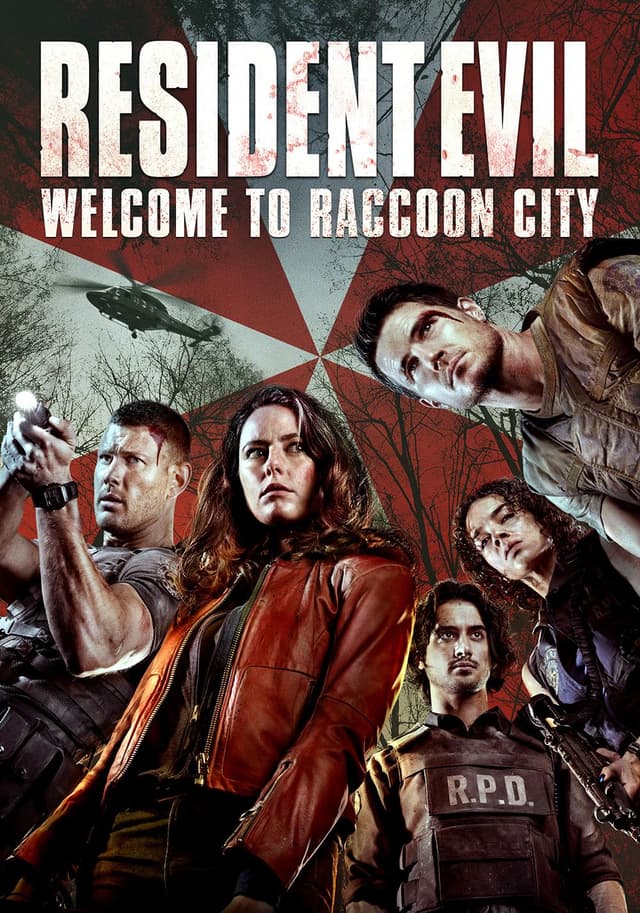
Once the booming home of pharmaceutical giant Umbrella Corporation, Raccoon City is now a dying Midwestern town. The company’s exodus left the city a wasteland…with great evil brewing below the surface. When that evil is unleashed, the townspeople are forever…changed…and a small group of survivors must work together to uncover the truth behind Umbrella and make it through the night.
What is the budget of Resident Evil Welcome to Raccoon City?
"Resident Evil Welcome to Raccoon City," an action released in 2021, was directed by Johannes Roberts and stars Kaya Scodelario, Hannah John-Kamen. The production budget was $25,000,000, placing it in the mid-budget range for action productions of its era.
Key Budget Allocation Categories
While specific budget breakdowns are not publicly available, typical cost drivers for an action production like this include:
- Stunts, Action Sequences & Visual Effects: Action films allocate a substantial portion of their budget to choreographing and executing practical stunts, pyrotechnics, and CGI-heavy sequences.
- Above-the-Line Talent (Cast & Director): A-list talent commands significant upfront fees plus backend participation.
- Production Design, Sets & Locations: Action films frequently require multiple international shooting locations, large-scale set construction, vehicle acquisitions and modifications, and specialized equipment , all of which drive production costs well above those of dialogue-driven genres.
- Casting: In early 2020, casting was underway but was delayed by the COVID-19 pandemic.
What were the major cost factors in Resident Evil Welcome to Raccoon City?
Several factors contributed to the overall production costs of "Resident Evil Welcome to Raccoon City."
- Stunts: Stunts, Action Sequences & Visual Effects is one of the primary cost drivers in action productions of this scale.
- Above-the-Line Talent (Cast: Above-the-Line Talent (Cast & Director) is one of the primary cost drivers in action productions of this scale.
- Production Design: Production Design, Sets & Locations is one of the primary cost drivers in action productions of this scale.
How Does Resident Evil Welcome to Raccoon City's Budget Compare to Similar Films?
At $25,000,000, Resident Evil Welcome to Raccoon City sits in the mid-budget range. Here is how it compares to productions with a similar budget:
- 1408 (2007): Budget $25,000,000, Worldwide Gross $133,000,000
- A Journal for Jordan (2021): Budget $25,000,000, Worldwide Gross $6,700,000
- Abandon (2002): Budget $25,000,000, Worldwide Gross $10,719,357
- All My Life (2020): Budget $25,000,000, Worldwide Gross $2,000,000
- August Rush (2007): Budget $25,000,000, Worldwide Gross $66,122,026
The median budget for wide-release action films in the 2020s ranges from $30 to 80M for mid-budget to $150M+ for tentpoles.
Resident Evil Welcome to Raccoon City Box Office Performance
"Resident Evil Welcome to Raccoon City" earned $17,000,612 domestically and $41,914,915 worldwide at the box office. Against a production budget of $25,000,000, the film showed modest profitability in theatrical release.
A film typically needs to earn approximately twice its production budget to cover marketing and distribution costs. For "Resident Evil Welcome to Raccoon City," that break-even threshold was roughly $50,000,000. With worldwide earnings of $41,914,915, the film fell short of that threshold but recouped its production costs in theatrical release.
Box Office Breakdown
Resident Evil Welcome to Raccoon City

At 67.7%, "Resident Evil Welcome to Raccoon City" returned its production investment but margin was tight after marketing and distribution costs.
Resident Evil Welcome to Raccoon City Production History
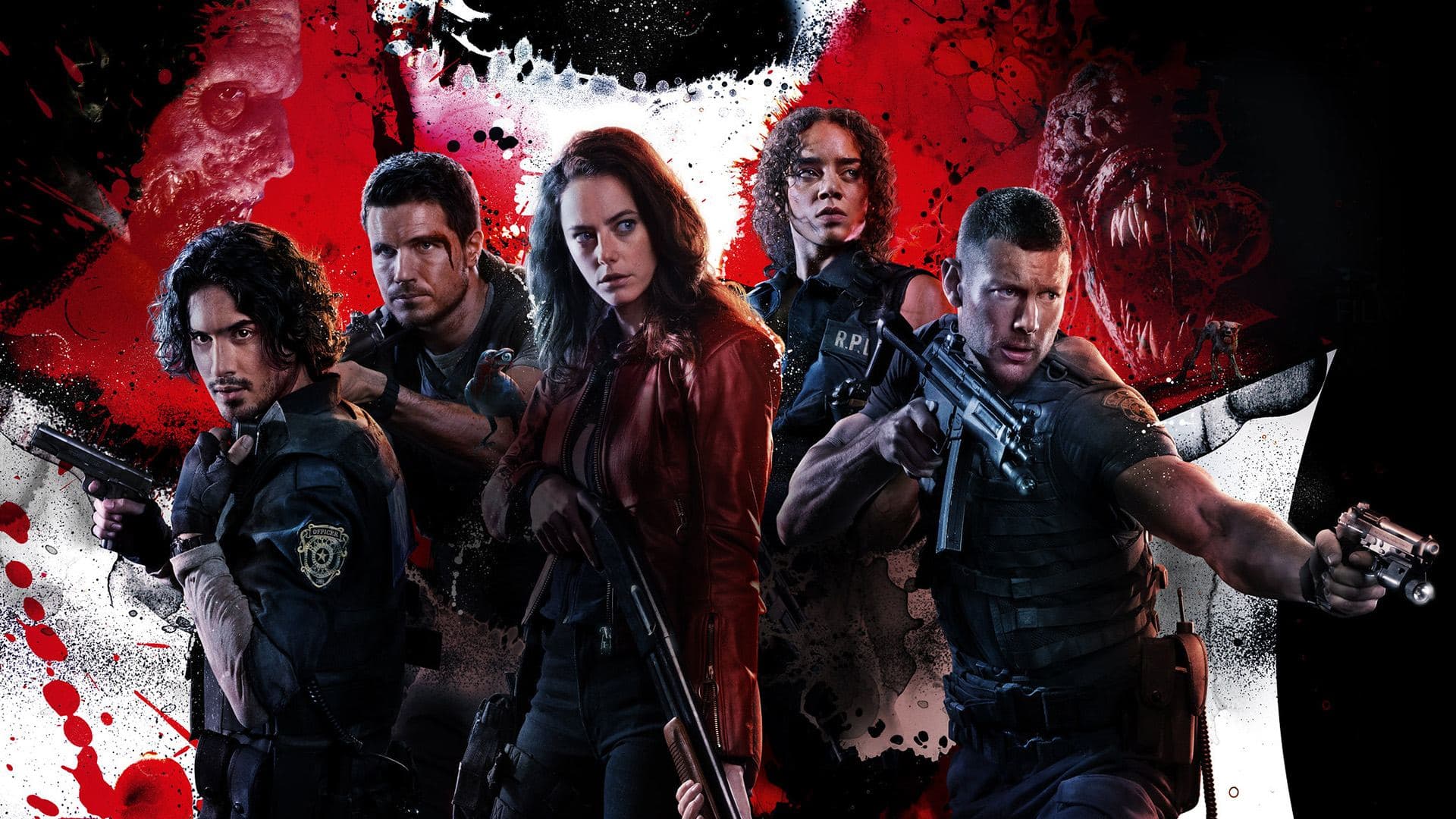
In early 2020, casting was underway but was delayed by the COVID-19 pandemic. On October 6, Deadline Hollywood reported that Scodelario and Hannah John-Kamen had been cast as Claire Redfield and Jill Valentine, alongside Robbie Amell, Tom Hopper, Avan Jogia, and Neal McDonough as Chris Redfield, Albert Wesker, Leon S. Kennedy, and William Birkin, respectively.
Principal photography began in Greater Sudbury, Ontario, Canada, on October 17, 2020, with Maxime Alexandre serving as cinematographer. Filming was completed on December 24, 2020. In March 2021, Roberts revealed the full title as Resident Evil: Welcome to Raccoon City.
The film score was composed by Mark Korven. Milan Records and Sony Classical released the soundtrack. :Source:
Awards and Recognition
1 win & 2 nominations total
Critical Reception
Audiences polled by CinemaScore gave the film an average grade of "C+" on an A+ to F scale, while those at PostTrak gave it a 61% positive score, with 48% saying they would definitely recommend it. Ferdosa Abdi from Screen Rant called it a "fun and faithful adaptation of the games", but felt it was "lacking in character substance".
Frequently Asked Questions
How much did Resident Evil: Welcome to Raccoon City cost to make?
The production budget was $25,000,000. Sony Pictures Worldwide Acquisitions and Screen Gems produced the reboot, with Constantin Film maintaining the Resident Evil rights position it had held across the original six-film Paul W.S. Anderson series.
How much did Resident Evil: Welcome to Raccoon City earn at the box office?
The film grossed $17,219,994 domestically and $24,800,000 internationally, for a worldwide total of approximately $41,500,000. It opened to a soft $5,358,000 over the five-day Thanksgiving holiday weekend on November 24, 2021.
Who stars in Resident Evil: Welcome to Raccoon City?
Kaya Scodelario plays Claire Redfield. Robbie Amell plays Chris Redfield, Hannah John-Kamen plays Jill Valentine, Tom Hopper plays Albert Wesker, Avan Jogia plays Leon Kennedy, and Neal McDonough plays William Birkin. The casting closely follows the original Resident Evil and Resident Evil 2 video games.
Is Resident Evil: Welcome to Raccoon City a reboot?
Yes. The film is a complete continuity reboot of the live-action Resident Evil franchise, abandoning the Paul W.S. Anderson and Milla Jovovich series that ran from 2002 to 2016 across six films and $1,234,000,000 in worldwide grosses. The reboot was positioned as a more faithful adaptation of the early Capcom games.
Who directed Resident Evil: Welcome to Raccoon City?
Johannes Roberts directed the film. Roberts had previously directed 47 Meters Down (2017, $5,000,000 budget, $62,300,000 worldwide) and its sequel 47 Meters Down: Uncaged (2019), establishing a reputation for delivering modest-budget genre thrills.
Where was Resident Evil: Welcome to Raccoon City filmed?
Principal photography took place in Sudbury, Ontario, doubling for Raccoon City, with additional Toronto-area work. The Ontario Production Services Tax Credit and the Canadian federal Film or Video Production Services Tax Credit supported the production budget.
What did critics think of Resident Evil: Welcome to Raccoon City?
Reviews were mixed-to-negative, with a 27% approval rating on Rotten Tomatoes and a 44 out of 100 score on Metacritic. Critics praised the closer connection to the original Capcom games but objected to a frequently dim and confused visual presentation, often citing lighting and pacing concerns.
Was Resident Evil: Welcome to Raccoon City profitable?
The theatrical performance was at a loss. Against the $25,000,000 production budget and an estimated $20,000,000 to $25,000,000 in marketing spend, the worldwide gross of $41,500,000 fell short of the 2.5x rule for theatrical profitability. Streaming revenue through the Sony Pictures output deal has narrowed the gap.
Is there a Resident Evil: Welcome to Raccoon City sequel?
No theatrical sequel has been greenlit. Sony shifted Resident Evil development to the Netflix live-action series Resident Evil (2022), which was cancelled after one season, and the property reverted to longer-term franchise planning at Constantin and Capcom.
How does the reboot compare to the original six-film series?
The original Paul W.S. Anderson and Milla Jovovich series ran from Resident Evil (2002, $33,000,000 budget, $103,000,000 worldwide) to Resident Evil: The Final Chapter (2016, $40,000,000 budget, $312,200,000 worldwide). The reboot opened well below the franchise floor and ended any prospect of immediate continuation.
Official Trailer
Build budgets like this one in Saturation
Start from an industry-standard feature film template, import the schedule and rates you already have, and let the cost report keep itself current as you spend. Real-time collaboration, no spreadsheets.