Real Steel Budget
 ActionScience FictionDrama2h 7m
Updated
Synopsis
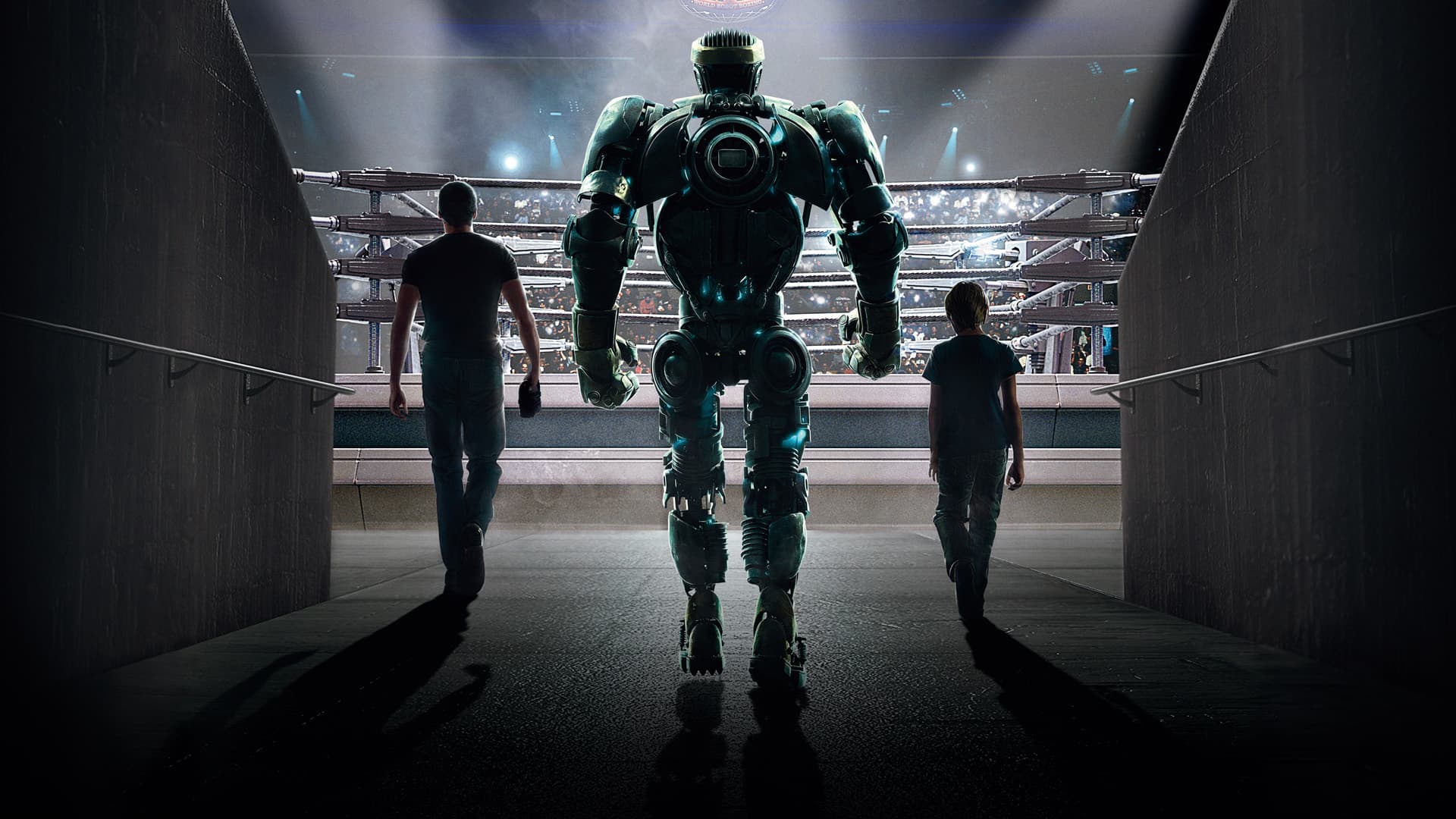
Charlie Kenton is a washed-up fighter who lost his chance at a title when 2000-pound, 8-foot-tall steel robots took over the ring. Now nothing but a small-time promoter, Charlie earns just enough money piecing together low-end bots from scrap metal to get from one underground boxing venue to the next. When Charlie hits rock bottom, he reluctantly teams up with his estranged son Max to build and train a championship contender. As the stakes in the brutal, no-holds-barred arena are raised, Charlie and Max, against all odds, get one last shot at a comeback.
What is the budget of Real Steel?
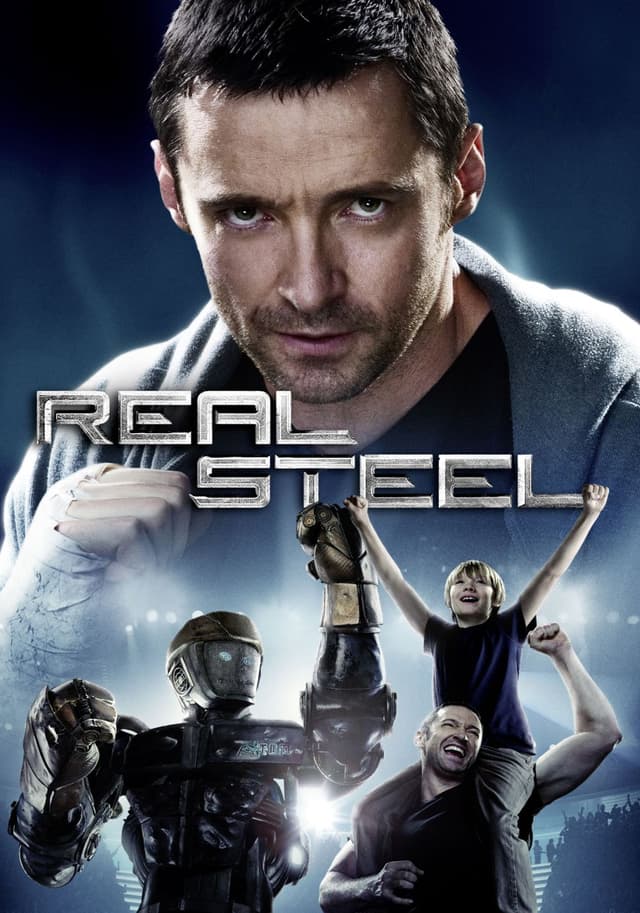
"Real Steel," an action released in 2011, was directed by Shawn Levy and stars Hugh Jackman, Dakota Goyo. The production budget was $110,000,000, placing it in the high-budget range for action productions of its era.
Key Budget Allocation Categories
While specific budget breakdowns are not publicly available, typical cost drivers for an action production like this include:
- Stunts, Action Sequences & Visual Effects: Action films allocate a substantial portion of their budget to choreographing and executing practical stunts, pyrotechnics, and CGI-heavy sequences.
- Above-the-Line Talent (Cast & Director): A-list talent commands significant upfront fees plus backend participation.
- Production Design, Sets & Locations: Action films frequently require multiple international shooting locations, large-scale set construction, vehicle acquisitions and modifications, and specialized equipment , all of which drive production costs well above those of dialogue-driven genres.
- Filming & Locations: Real Steel had a production budget of .
What were the major cost factors in Real Steel?
Several factors contributed to the overall production costs of "Real Steel."
- Stunts: Stunts, Action Sequences & Visual Effects is one of the primary cost drivers in action productions of this scale.
- Above-the-Line Talent (Cast: Above-the-Line Talent (Cast & Director) is one of the primary cost drivers in action productions of this scale.
- Production Design: Production Design, Sets & Locations is one of the primary cost drivers in action productions of this scale.
How Does Real Steel's Budget Compare to Similar Films?
At $110,000,000, Real Steel sits in the high-budget range. Here is how it compares to productions with a similar budget:
- 300: Rise of an Empire (2014): Budget $110,000,000 , Gross $337,580,051
- Ocean's Twelve (2004): Budget $110,000,000, Worldwide Gross $362,744,280
- Deadpool 2 (2018): Budget $110,000,000, Worldwide Gross $785,896,632
- Deepwater Horizon (2016): Budget $110,000,000, Worldwide Gross $121,790,376
- Ender's Game (2013): Budget $110,000,000, Worldwide Gross $125,537,191
The median budget for wide-release action films in the 2010s ranges from $30 to 80M for mid-budget to $150M+ for tentpoles.
Real Steel Box Office Performance
"Real Steel" earned $85,468,508 domestically and $299,300,000 worldwide at the box office. Against a production budget of $110,000,000, the film performed strongly at the box office.
A film typically needs to earn approximately twice its production budget to cover marketing and distribution costs. For "Real Steel," that break-even threshold was roughly $220,000,000. With worldwide earnings of $299,300,000, the film cleared that threshold comfortably.
Box Office Breakdown
Real Steel

At 172.1%, "Real Steel" earned roughly $2.72 for every $1 invested in production.
Real Steel Production History
Real Steel had a production budget of . Levy chose to set the film in state fairs and other "old-fashioned" Americana settings that would exude nostalgia and create a warm tone for the film's father-son story. There was also an attempt for the scenery to blend in new and old technology.
Real Steels soundtrack consists of 13 tracks featuring artists including Foo Fighters, Tom Morello, Eminem, Royce da 5'9" (Bad Meets Evil), Yelawolf, 50 Cent, and Limp Bizkit. Levy, a fan of The Crystal Method, invited that duo to contribute to the soundtrack; they recorded two new songs for it after viewing a rough cut of the film. The score album, Real Steel: Original Motion Picture Score consists of 19 tracks composed by Danny Elfman, and was released on November 8, 2011, in the US.
Awards and Recognition
Nominated for 1 Oscar. 2 wins & 6 nominations total
Critical Reception
On Rotten Tomatoes, the film has an approval rating of 60% based on reviews from 233 critics and an average rating of 5.91/10. The website's consensus is, "Silly premise notwithstanding, this is a well-made Hollywood movie: Thrilling and exciting action with just enough characterization." On Metacritic, the film has a weighted average score of 56 out of 100, based on reviews from 34 critics, indicating "mixed or average reviews". Audiences surveyed by CinemaScore during the opening weekend gave the film a grade A, on a scale from A+ to F.
Frequently Asked Questions
How much did it cost to make Real Steel (2011)?
The production budget was $110,000,000, covering principal photography, visual effects, cast and crew salaries, locations, sets, post-production, and music. Marketing and distribution (P&A) costs are estimated at an additional $55,000,000 - $88,000,000, bringing the total studio investment to approximately $165,000,000 - $198,000,000.
How much did Real Steel (2011) earn at the box office?
Real Steel grossed $85,468,508 domestic, $213,831,492 international, totaling $299,300,000 worldwide.
Was Real Steel (2011) profitable?
Yes. Against a production budget of $110,000,000 and estimated total costs of ~$275,000,000, the film earned $299,300,000 theatrically - a 172% ROI on production costs alone.
What were the biggest costs in producing Real Steel?
The primary cost drivers were above-the-line talent (Hugh Jackman, Dakota Goyo, Evangeline Lilly); visual effects, practical stunts, and A-list talent compensation; international production across United States of America, India.
How does Real Steel's budget compare to similar action films?
At $110,000,000, Real Steel is classified as a big-budget production. The median budget for wide-release action films in the 2010s ranges from $30 - 80M for mid-budget to $150M+ for tentpoles. Comparable budgets: 300: Rise of an Empire (2014, $110,000,000); Ocean's Twelve (2004, $110,000,000); Deadpool 2 (2018, $110,000,000).
Did Real Steel (2011) go over budget?
There are no widely reported accounts of significant budget overruns for this production. However, studios rarely disclose precise budget overrun figures publicly. The reported production budget reflects the final estimated cost.
What was the return on investment (ROI) for Real Steel?
The theatrical ROI was 172.1%, calculated as ($299,300,000 − $110,000,000) ÷ $110,000,000 × 100. This measures gross revenue against production budget only - it does not account for P&A or exhibitor shares.
What awards did Real Steel (2011) win?
Nominated for 1 Oscar. 2 wins & 6 nominations total.
Who directed Real Steel and who were the key crew members?
Directed by Shawn Levy, written by Jeremy Leven, Dan Gilroy, John Gatins, shot by Mauro Fiore, with music by Danny Elfman, Poe, edited by Dean Zimmerman.
Where was Real Steel filmed?
Real Steel was filmed in United States of America, India. Real Steel had a production budget of . Levy chose to set the film in state fairs and other "old-fashioned" Americana settings that would exude nostalgia and create a warm tone for the film's father-son story.
Filmmakers
Real Steel

Official Trailer
Build budgets like this one in Saturation
Start from an industry-standard feature film template, import the schedule and rates you already have, and let the cost report keep itself current as you spend. Real-time collaboration, no spreadsheets.