Rear Window Budget
 ThrillerMystery1h 52m
Updated
Synopsis
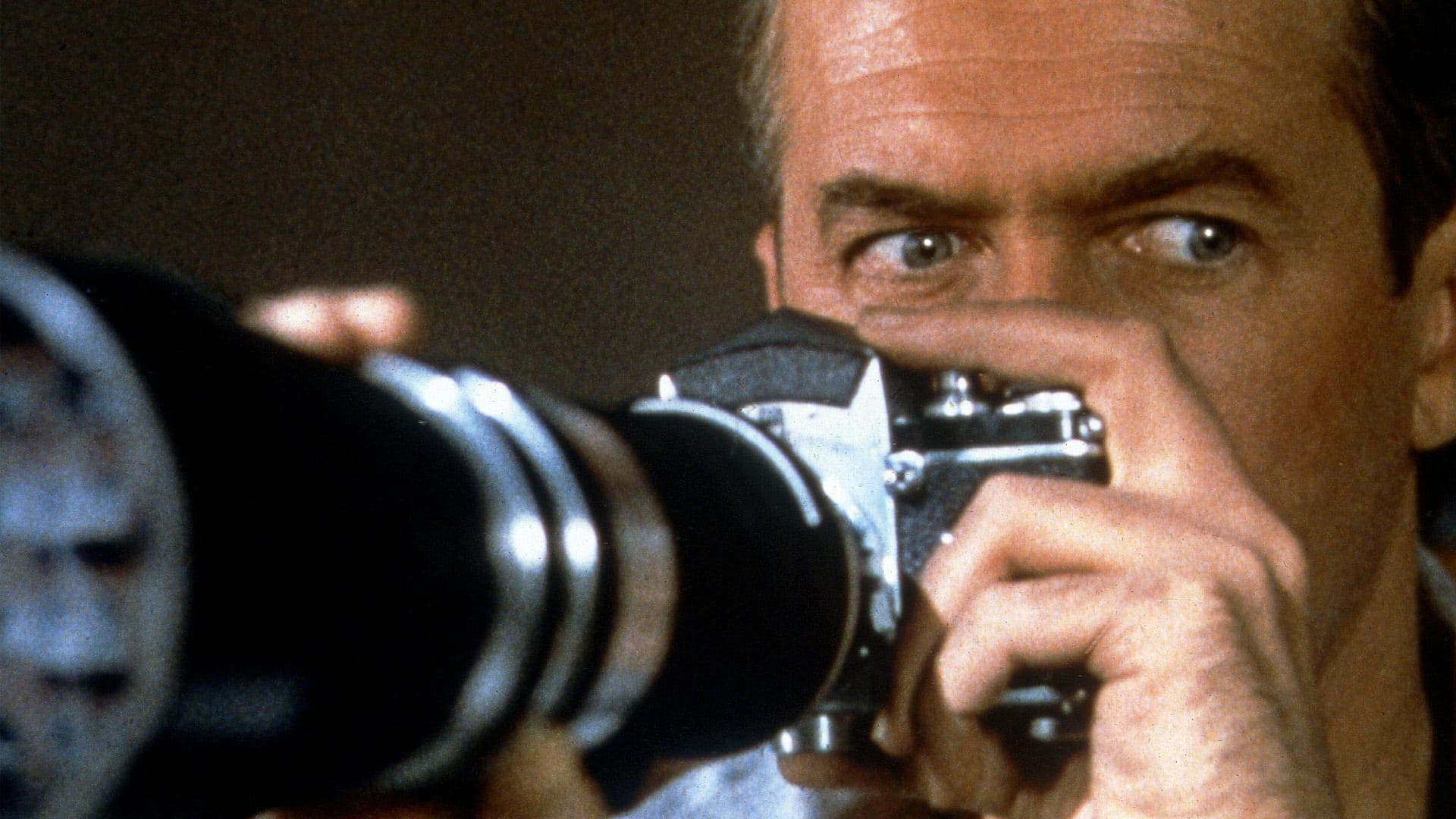
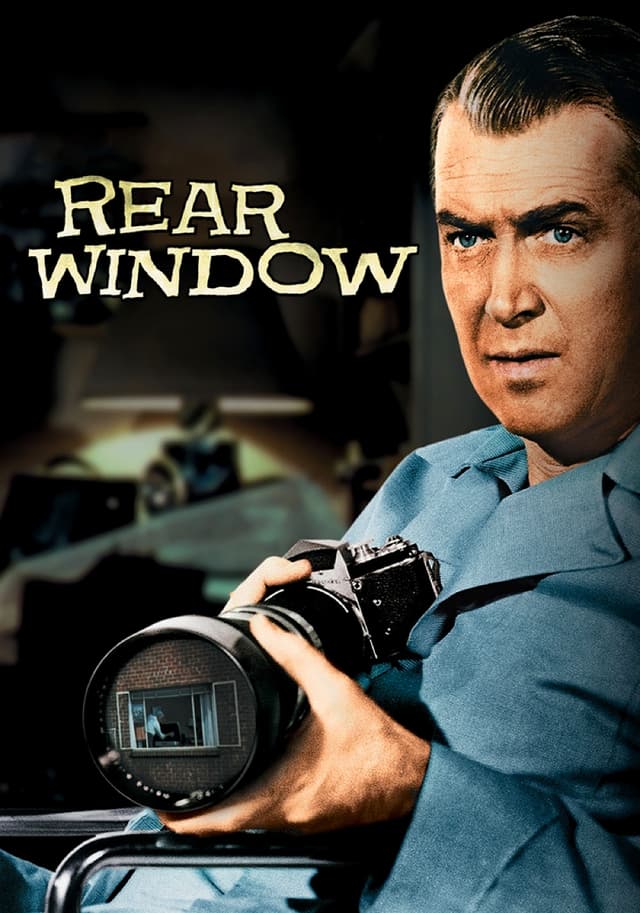
Professional photographer L.B. "Jeff" Jefferies breaks his leg while getting an action shot at an auto race. Confined to his New York apartment, he spends his time looking out of the rear window observing the neighbors. He begins to suspect that a man across the courtyard may have murdered his wife. Jeff enlists the help of his high society fashion-consultant girlfriend Lisa Fremont and his visiting nurse Stella to investigate.
What is the budget of Rear Window?
"Rear Window," a thriller released in 1954, was directed by Alfred Hitchcock and stars James Stewart, Grace Kelly. The production budget was $1,000,000, placing it in the micro-budget range for thriller productions of the 1950s.
Key Budget Allocation Categories
While specific budget breakdowns are not publicly available, typical cost drivers for a thriller production like this include:
- Talent & Director Compensation: Thrillers depend on compelling lead performances to sustain tension, making cast compensation a primary budget concern. Directors with proven thriller credentials command premium fees.
- Cinematography & Location Photography: Thriller aesthetics demand specific visual languages , surveillance-style photography, claustrophobic framing, or expansive location work across multiple cities or countries.
- Editorial & Sound Post-Production: Precision editing , controlling information flow, building suspense through pacing, and orchestrating reveals , requires extended post-production schedules.
- Writing: The screenplay, which was written by John Michael Hayes, was based on Cornell Woolrich's 1942 short story It Had to Be Murder.
What were the major cost factors in Rear Window?
Several factors contributed to the overall production costs of "Rear Window."
- Talent: Talent & Director Compensation is one of the primary cost drivers in thriller productions of this scale.
- Cinematography: Cinematography & Location Photography is one of the primary cost drivers in thriller productions of this scale.
- Editorial: Editorial & Sound Post-Production is one of the primary cost drivers in thriller productions of this scale.
How Does Rear Window's Budget Compare to Similar Films?
At $1,000,000, Rear Window sits in the micro-budget range. Here is how it compares to productions with a similar budget:
- Gone in 60 Seconds (1974): Budget $1,000,000, Worldwide Gross $40,000,000
- A Woman Under the Influence (1974): Budget $1,000,000, Worldwide Gross $12,200,000
- How to Make Millions Before Grandma Dies (2024): Budget $1,000,000, Worldwide Gross $73,800,000
- Raise the Red Lantern (1991): Budget $1,000,000, Worldwide Gross $16,600,000
- The Turin Horse (2011): Budget $1,000,000, Worldwide Gross $162,088
The median budget for wide-release thriller films in the era ranges from $30 to 80M for mid-budget to $150M+ for tentpoles.
Rear Window Box Office Performance
"Rear Window" earned $36,764,313 domestically and $37,042,336 worldwide at the box office. Against a production budget of $1,000,000, the film performed strongly at the box office.
A film typically needs to earn approximately twice its production budget to cover marketing and distribution costs. For "Rear Window," that break-even threshold was roughly $2,000,000. With worldwide earnings of $37,042,336, the film cleared that threshold comfortably.
Box Office Breakdown
Rear Window

At 3604.2%, "Rear Window" earned roughly $37.04 for every $1 invested in production.
Rear Window Production History
The screenplay, which was written by John Michael Hayes, was based on Cornell Woolrich's 1942 short story It Had to Be Murder. However, in 1990 the question as to who owned the film rights of Woolrich's original story went before the Supreme Court of the United States in Stewart v. Abend.
The film was shot entirely at stage 18 at Paramount Studios which included an enormous indoor set to replicate a Greenwich Village courtyard, with the set stretching from the bottom of the basement storeroom to the top of the lighting grid in the ceiling. The lighting was rigged with four interchangeable scene lighting arrangements: morning, afternoon, evening, and night-time. Set designers Hal Pereira and Joseph MacMillan Johnson spent six weeks building the extremely detailed and complex set, which ended up being the largest of its kind at Paramount.
Although veteran Hollywood composer Franz Waxman is credited with the score for the film, his contributions were limited to the opening and closing titles and the songwriter's piano tune ("Lisa"). This was Waxman's final score for Hitchcock. The director instead used primarily diegetic music and sounds throughout the film.
Awards and Recognition
Nominated for 4 Oscars. 7 wins & 14 nominations total
Critical Reception
upright|Bosley Crowther of The New York Times called the film a "tense and exciting exercise" and deemed Hitchcock as a director whose work has a "maximum of build-up to the punch, a maximum of carefully tricked deception and incidents to divert and amuse." Crowther also noted that "Mr. Hitchcock's film is not 'significant.' What it has to say about people and human nature is superficial and glib, but it does expose many facets of the loneliness of city life, and it tacitly demonstrates the impulse of morbid curiosity.
Frequently Asked Questions
How much did it cost to make Rear Window (1954)?
The production budget was $1,000,000, covering principal photography, cast and crew salaries, locations, sets, post-production, and music. Marketing and distribution (P&A) costs are estimated at an additional $500,000 - $800,000, bringing the total studio investment to approximately $1,500,000 - $1,800,000.
How much did Rear Window (1954) earn at the box office?
Rear Window grossed $36,764,313 domestic, $278,023 international, totaling $37,042,336 worldwide.
Was Rear Window (1954) profitable?
Yes. Against a production budget of $1,000,000 and estimated total costs of ~$2,500,000, the film earned $37,042,336 theatrically - a 3604% ROI on production costs alone.
What were the biggest costs in producing Rear Window?
The primary cost drivers were above-the-line talent (James Stewart, Grace Kelly, Wendell Corey); talent compensation, location cinematography, and tension-driven editorial.
How does Rear Window's budget compare to similar thriller films?
At $1,000,000, Rear Window is classified as a micro-budget production. The median budget for wide-release thriller films in the era ranges from $30 - 80M for mid-budget to $150M+ for tentpoles. Comparable budgets: Gone in 60 Seconds (1974, $1,000,000); A Woman Under the Influence (1974, $1,000,000); How to Make Millions Before Grandma Dies (2024, $1,000,000).
Did Rear Window (1954) go over budget?
There are no widely reported accounts of significant budget overruns for this production. However, studios rarely disclose precise budget overrun figures publicly. The reported production budget reflects the final estimated cost.
What was the return on investment (ROI) for Rear Window?
The theatrical ROI was 3604.2%, calculated as ($37,042,336 − $1,000,000) ÷ $1,000,000 × 100. This measures gross revenue against production budget only - it does not account for P&A or exhibitor shares.
What awards did Rear Window (1954) win?
Nominated for 4 Oscars. 7 wins & 14 nominations total.
Who directed Rear Window and who were the key crew members?
Directed by Alfred Hitchcock, written by John Michael Hayes, shot by Robert Burks, with music by Franz Waxman, edited by George Tomasini.
Where was Rear Window filmed?
Rear Window was filmed in United States of America. The film was shot entirely at stage 18 at Paramount Studios which included an enormous indoor set to replicate a Greenwich Village courtyard, with the set stretching from the bottom of the basement storeroom to the top of the lighting grid in the ceiling. The lighting was rigged with four interchangeable scene lighting arrangements: morning, afternoon, evening, and night-time.
Filmmakers
Rear Window

Official Trailer
Build budgets like this one in Saturation
Start from an industry-standard feature film template, import the schedule and rates you already have, and let the cost report keep itself current as you spend. Real-time collaboration, no spreadsheets.