Quigley Down Under Budget
 Western1h 59m
Updated
Synopsis
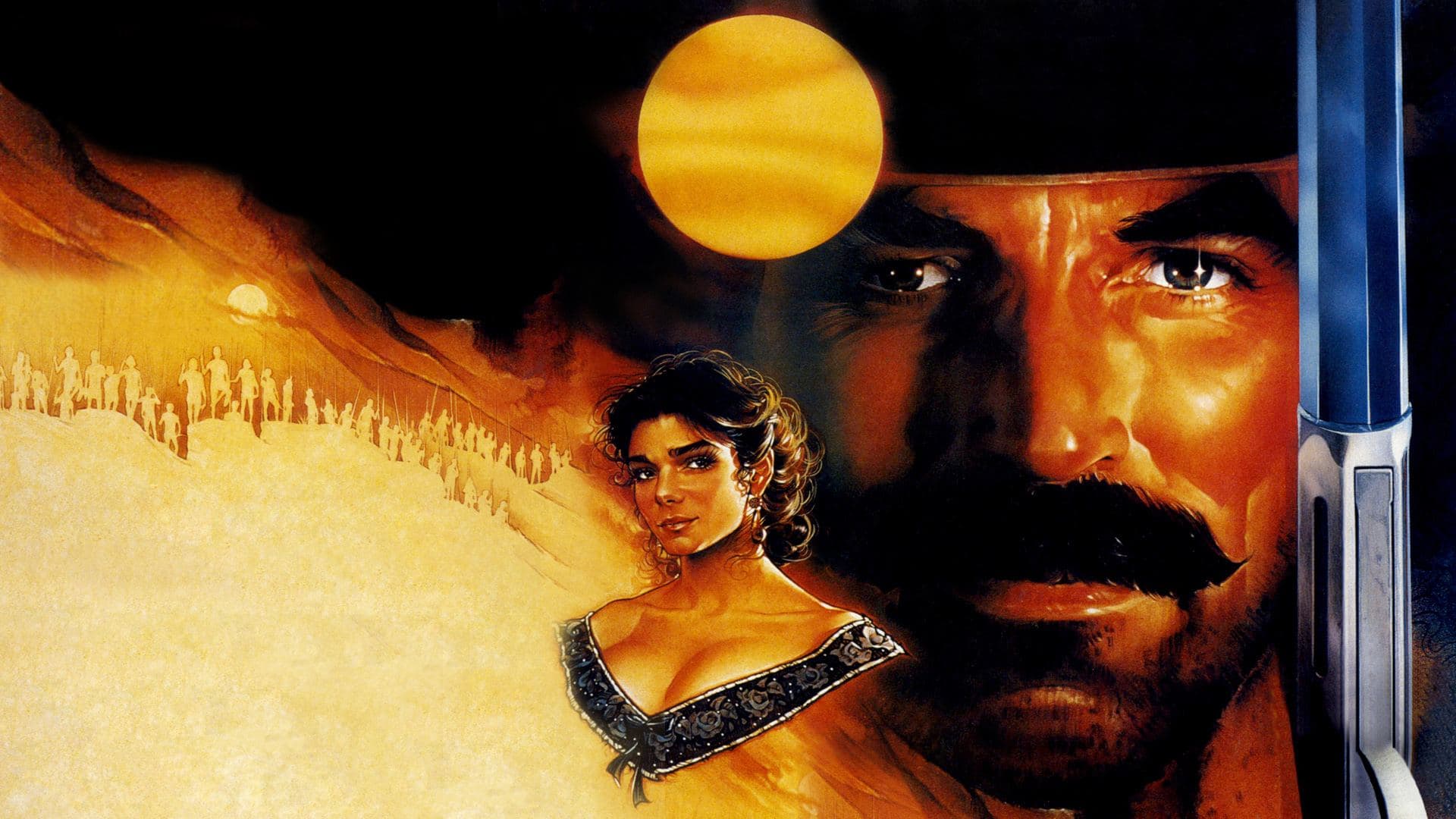
American sharpshooter Matthew Quigley answers a newspaper advertisement and travels to 1860s Western Australia, only to discover that the cattle baron who hired him, Elliott Marston, intended to use his long-range marksmanship to exterminate the local Aboriginal population. Refusing the job and left for dead in the Outback, Quigley joins forces with a troubled American woman known as Crazy Cora to survive the desert and exact justice on Marston and his men.
What Is the Budget of Quigley Down Under (1990)?
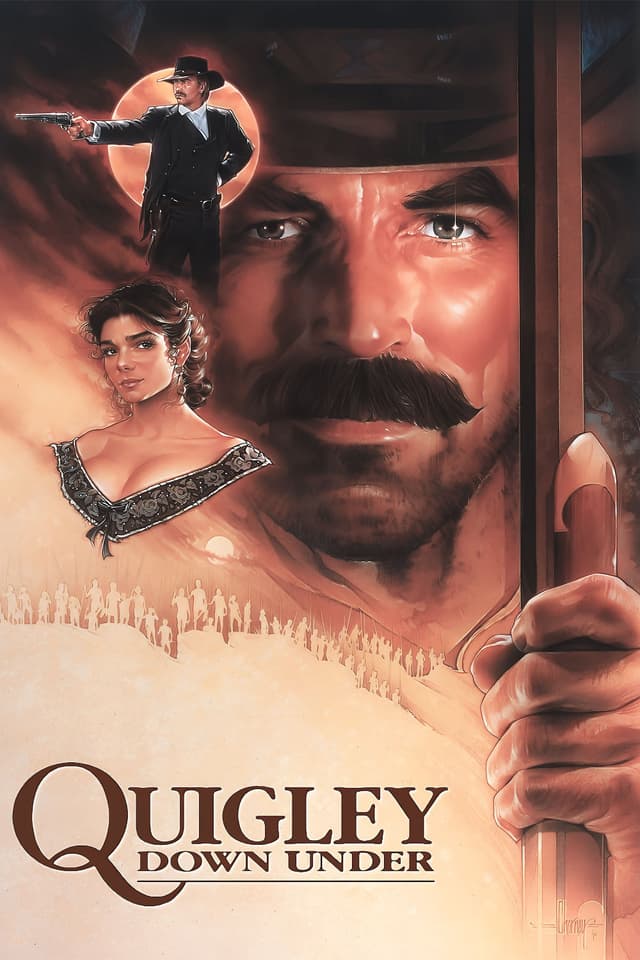
Quigley Down Under (1990), directed by Simon Wincer and distributed by Metro-Goldwyn-Mayer/Pathe Communications, was produced on a reported budget of approximately $18,000,000. The Australian-American Western starred Tom Selleck as Matthew Quigley, an American sharpshooter who travels to 1860s Western Australia after being hired by a ruthless cattle baron, Laura San Giacomo as Crazy Cora, and Alan Rickman as the villainous Elliott Marston. The production was financed by MGM and Pathe Entertainment during a turbulent period at the studio, with principal photography mounted entirely on location in South Australia and the Northern Territory.
The investment reflected a calculated bet on a star-led genre revival. Tom Selleck, fresh off the eight-year run of Magnum, P.I. that ended in 1988, had publicly turned down the role of Indiana Jones a decade earlier because of his television commitments, and Quigley was positioned as the project that would finally translate his small-screen appeal into a leading-man theatrical career. At $18,000,000 the budget sat below the cost of contemporary studio Westerns like Dances with Wolves but well above the typical Australian production of the period, with the long-distance shoot in the Outback driving the majority of the above-the-line and logistics costs.
Key Budget Allocation Categories
Quigley Down Under's reported $18,000,000 budget was distributed across several core production areas:
- Above-the-Line Talent: Tom Selleck, in his first leading film role after Magnum, P.I., commanded a star salary appropriate to his television profile, with Laura San Giacomo (sex, lies, and videotape) and Alan Rickman (Die Hard) drawing supporting fees as the female lead and villain respectively. Australian director Simon Wincer, coming off Lonesome Dove, and screenwriter John Hill, who had developed the script over more than a decade, completed the principal above-the-line costs.
- Outback Australia Location Shoot: Principal photography took place across remote South Australia and the Northern Territory, with key sequences shot in the Flinders Ranges, around Warrnambool, and at locations near Alice Springs. Helicoptering crew, generators, water, catering, and unit vehicles into the Outback for a multi-month shoot represented a significant logistical line item, with daylight cycles and the harsh red-desert environment dictating a slow shooting pace.
- Period Production Design and Costumes: Production designer Ross Major rebuilt 1860s frontier sets including the cattle baron Marston's Anglo-Australian estate at Marston Waters, an Aboriginal settlement, and authentic period interiors. Costume designer Wayne Finkelman dressed Selleck in the iconic duster and broad-brimmed hat that became one of the film's lasting visual signatures.
- Custom Sharps Rifle Props: The story turns on Quigley's extraordinary marksmanship with a custom Sharps Model 1874 buffalo rifle, and the production commissioned multiple working hero rifles, doubles, and aged variants. Period firearm armorers were retained, and Selleck rehearsed extensively with the weapon to perform the long-distance shooting sequences without obvious cut-aways.
- Horsemanship and Animal Wrangling: The film features extensive horseback work, cattle drives across the South Australian outback, and Aboriginal hunting sequences. Stock wranglers, veterinary crews, and stunt riders accounted for a notable production line, with multiple horses cast for each principal character to manage long days in extreme heat.
- Score and Music: Composer Basil Poledouris, fresh off the success of The Hunt for Red October earlier in 1990, wrote a sweeping orchestral score that drew on traditional Western motifs while incorporating Aboriginal instrumentation. The score was recorded with a full orchestra in Los Angeles.
- International Crew and Travel: Selleck, San Giacomo, Rickman, cinematographer David Eggby (originally an Australian working with Wincer), and several department heads were transported and housed in Australia for the duration of the shoot. The bi-national crew structure, while taking advantage of Australian rates for grips, electricians, and unit base, added executive travel and per diem costs that a fully domestic shoot would have avoided.
How Does Quigley Down Under's Budget Compare to Similar Films?
At a reported $18,000,000, Quigley Down Under sits firmly in the mid-tier of early 1990s Westerns, a genre that briefly returned to commercial prominence after a fallow decade. The comparison set illustrates how its outcome stacked up against its contemporaries:
- Dances with Wolves (1990): Budget $22,000,000 | Worldwide $424,208,848. Kevin Costner's directorial debut, released two months after Quigley, cost only marginally more but grossed roughly twenty times as much and won seven Academy Awards including Best Picture, eclipsing Quigley's commercial profile and reframing the entire 1990s Western revival around prestige rather than star-vehicle traditionalism.
- Young Guns II (1990): Budget $20,000,000 | Worldwide $44,143,410. The Emilio Estevez/Kiefer Sutherland sequel released in August 1990 cost slightly more and grossed roughly double, demonstrating that brat-pack Westerns held a clear edge with younger audiences over Selleck's adult-skewing traditionalist throwback.
- Unforgiven (1992): Budget $14,400,000 | Worldwide $159,157,447. Clint Eastwood's revisionist masterpiece, released two years later, cost roughly 20% less than Quigley and earned nearly eight times its worldwide take, winning four Oscars including Best Picture and Best Director and confirming that the Western audience preferred moral complexity over heroic adventure.
- City Slickers (1991): Budget $27,000,000 | Worldwide $179,033,791. Ron Underwood's comic Western with Billy Crystal cost half again as much as Quigley and out-grossed it by nearly nine to one, showing how genre crossover appeal could outperform a straight oater in the early 1990s.
- Last of the Mohicans (1992): Budget $40,000,000 | Worldwide $75,505,856. Michael Mann's frontier epic with Daniel Day-Lewis was more than double Quigley's budget but grossed only about 3.5 times as much, illustrating that even high-prestige period frontier films struggled to deliver outsized returns in the post-Dances with Wolves cycle.
Quigley Down Under Box Office Performance
Quigley Down Under opened on October 19, 1990, in 1,505 North American theaters, finishing third on its opening weekend with $6,940,915 behind Memphis Belle and Marked for Death. The film held steadily through November and benefited from positive word of mouth among older moviegoers, ultimately grossing $21,413,105 in domestic North American theaters. With international receipts, the worldwide total reached an estimated $21,400,000, with the film recouping additional value on home video and pay-cable that the theatrical figure does not capture.
Against a reported production budget of $18,000,000, the film needed approximately $45,000,000 in worldwide gross to reach theatrical profitability when accounting for marketing and distribution costs. Here is the financial breakdown:
Box Office Breakdown
Quigley Down Under

Quigley returned approximately $0.65 in theatrical revenue for every $1 invested when measured against total estimated production and marketing spend, placing it among the soft mid-budget releases of the 1990 calendar year. Theatrical receipts alone left MGM with a loss on the picture, but the studio recouped most of the deficit through a long-tail VHS and laserdisc run, cable television sales to TNT and TBS, and steady catalog performance through the 1990s and 2000s.
The film's commercial under-performance was widely attributed to its release timing rather than its quality. Opening one week after GoodFellas and one month before Dances with Wolves, Quigley was squeezed between two cultural events and never broke into the top two at the box office. Tom Selleck did not headline another theatrical hit and gradually pivoted to television movies and the long-running Blue Bloods series, while Alan Rickman's villainous turn became a cult-favorite calling card.
Quigley Down Under Production History
John Hill wrote the original screenplay for Quigley Down Under in 1978, originally with Steve McQueen attached to star. The project moved through more than a decade of development at multiple studios, with director attachments including Lewis Gilbert and Peter Yates and star attachments including McQueen (whose death in 1980 ended his involvement), Robert Redford, and Roger Moore. The script was eventually picked up by Pathe Entertainment in the late 1980s and packaged with Tom Selleck and Australian director Simon Wincer, whose 1989 miniseries Lonesome Dove had reestablished the commercial viability of the Western on television.
Casting Tom Selleck as Matthew Quigley reframed the film around a leading man who had become a household name through Magnum, P.I. but whose feature career, including roles in Three Men and a Baby, had not yet produced a signature theatrical lead. Laura San Giacomo, fresh off her breakout in Steven Soderbergh's sex, lies, and videotape (1989), was cast as Crazy Cora, the dispossessed American woman Quigley reluctantly takes under his protection. Alan Rickman, whose villainous turn as Hans Gruber in Die Hard (1988) had made him an in-demand antagonist, took the role of cattle baron Elliott Marston, with Chris Haywood as his henchman Major Ashley-Pitt.
Principal photography ran from August through November 1989 across remote locations in Australia, with the production based in South Australia. Key sequences were shot in the Flinders Ranges, the Coorong, and stations near Hawker, with Aboriginal-settlement scenes filmed near Alice Springs in the Northern Territory and additional unit work captured around Warrnambool in Victoria. Cinematographer David Eggby (Mad Max, Pitch Black) used anamorphic 2.39:1 photography to emphasize the scale of the South Australian outback, and the production faced extreme heat, dust storms, and the logistical challenge of moving cast and crew across hundreds of miles of largely unsealed road.
Tom Selleck trained extensively in marksmanship with a custom Sharps Model 1874 buffalo rifle in the weeks leading up to the shoot, performing many of the long-distance shooting sequences himself. Alan Rickman, who had no prior horseback experience, took intensive riding lessons in pre-production to handle the climactic gunfight sequence. The film wrapped in late 1989 and was edited in Los Angeles in early 1990, with Basil Poledouris recording his orchestral score that summer.
Quigley Down Under was released on October 19, 1990 by MGM/Pathe at the tail end of the brief 1990 Western mini-revival that included Dances with Wolves and Young Guns II. Tom Selleck would later cite Quigley as his proudest film role, and Wincer's collaboration with him continued through later television Westerns including the Jesse Stone series of TV movies.
Awards and Recognition
Quigley Down Under received modest awards attention focused primarily on craft categories. Basil Poledouris's score was nominated for the Best Original Score Golden Globe at the 1991 ceremony, and the film earned a nomination for Outstanding Theatrical Motion Picture at the 1991 Western Heritage Awards (the Wrangler Awards) presented by the National Cowboy and Western Heritage Museum in Oklahoma City.
The film was nominated for the Best Action Sequence ASCAP Award and won the Australian Film Institute (AFI) Award for Best Achievement in Production Design for Ross Major in 1991, with additional AFI nominations for Best Costume Design (Wayne Finkelman) and Best Cinematography (David Eggby). Tom Selleck himself did not receive significant awards-circuit attention for the lead role, although his performance has been periodically revisited as one of the strongest of his theatrical career.
Critical Reception
Quigley Down Under received mixed-to-positive reviews on release and has gained a stronger reputation in the decades since. The film holds a 73% approval rating on Rotten Tomatoes based on 22 critic reviews, with a critical consensus that emphasized its old-fashioned virtues as a star-driven Western adventure. Audiences responded warmly, with the film maintaining strong CinemaScore exit polling and posting unusually durable second- and third-weekend holds for a non-blockbuster release.
Roger Ebert gave the film three stars out of four in the Chicago Sun-Times, writing that "the movie is made with such conviction that I found myself believing in it" and singling out Alan Rickman's villainy as "absolutely first-class." Vincent Canby of The New York Times was more reserved, describing the film as "a long-winded if amiable Western" and noting that Selleck "doesn't convey the sort of self-consciousness that might make Quigley genuinely interesting." Variety praised the cinematography and Selleck's screen presence while flagging the conventional plot structure.
In the decades since its 1990 release, Quigley Down Under has acquired a reputation as one of the strongest traditional Westerns of the post-Eastwood era, regularly cited by fans of the genre as an underseen highlight of Tom Selleck's filmography. The film's set-piece sharpshooting sequences, particularly the climactic confrontation between Quigley and Marston, are routinely referenced in best-of lists of cinematic gunfights, and Selleck himself has publicly named the film as his personal favorite among his theatrical work.
Frequently Asked Questions
How much did it cost to make Quigley Down Under (1990)?
The reported production budget was approximately $18,000,000. Metro-Goldwyn-Mayer co-financed the production with Pathe Entertainment, with principal photography mounted entirely on location across remote South Australia, the Northern Territory, and Victoria over roughly four months in late 1989.
How much did Quigley Down Under earn at the box office?
The film grossed $21,413,105 in domestic North American theaters for an estimated worldwide total of $21,400,000. It opened on October 19, 1990 in 1,505 theaters and finished third on its opening weekend with $6,940,915, holding steadily through November on positive word of mouth among older audiences.
Was Quigley Down Under a box office bomb?
No, but it was a mild commercial disappointment. Against an $18,000,000 production budget and roughly $12,000,000 to $15,000,000 in marketing spend, the film returned about $0.65 in worldwide gross for every $1 invested. MGM ultimately recouped most of the theatrical shortfall through a long VHS, laserdisc, and pay-cable run, and the film has performed steadily in catalog ever since.
Who directed Quigley Down Under?
Australian director Simon Wincer directed the film, working from a screenplay by John Hill that had been in development since 1978. Wincer was coming off the success of the 1989 miniseries Lonesome Dove, which had reestablished the Western as a commercially viable form, and went on to direct several other Tom Selleck projects including the Jesse Stone TV movies.
Where was Quigley Down Under filmed?
Principal photography took place from August through November 1989 across remote locations in Australia. Key sequences were shot in the Flinders Ranges, the Coorong, and stations near Hawker in South Australia, with Aboriginal-settlement scenes filmed near Alice Springs in the Northern Territory and additional unit work captured around Warrnambool in Victoria. The production faced extreme heat, dust storms, and significant logistical challenges across hundreds of miles of unsealed road.
How does Quigley Down Under compare to other early 1990s Westerns?
Quigley's $18,000,000 budget sat just below Dances with Wolves (1990, $22,000,000) and Young Guns II (1990, $20,000,000) and slightly above Unforgiven (1992, $14,400,000). Of those four, Dances with Wolves grossed $424,208,848 worldwide and Unforgiven grossed $159,157,447, both vastly outperforming Quigley's $21,413,105. The film was overshadowed at the box office by both the Costner epic released two months later and by the brat-pack appeal of Young Guns II.
Why did Tom Selleck do Quigley Down Under after Magnum, P.I.?
After Magnum, P.I. ended in 1988, Tom Selleck spent two years searching for the right vehicle to establish himself as a theatrical leading man. He had famously turned down the role of Indiana Jones a decade earlier because of his television commitments, and Quigley Down Under, with its star-centered Western premise and authentic Outback shoot, was positioned as the project that would finally translate his small-screen profile into a feature career. Selleck has publicly named the film as his personal favorite among his theatrical work.
Who plays the villain in Quigley Down Under?
Alan Rickman plays Elliott Marston, the British-Australian cattle baron who hires Matthew Quigley to use his long-range rifle skills on Aboriginal people, then leaves him for dead in the Outback when he refuses. Rickman was cast on the strength of his villainous turn as Hans Gruber in Die Hard (1988), and his performance in Quigley has become a cult-favorite calling card for fans of the actor.
What did critics think of Quigley Down Under?
The film received mixed-to-positive reviews. It holds a 73% approval rating on Rotten Tomatoes based on 22 critic reviews. Roger Ebert gave it three stars out of four, calling it a film made "with such conviction that I found myself believing in it" and singling out Alan Rickman's villainy as "absolutely first-class." Vincent Canby of The New York Times was more reserved, describing it as "a long-winded if amiable Western."
Did Quigley Down Under win any awards?
The film won the Australian Film Institute (AFI) Award for Best Achievement in Production Design (Ross Major) in 1991, with additional AFI nominations for Best Costume Design and Best Cinematography. Basil Poledouris's score earned a Golden Globe nomination for Best Original Score, and the film was nominated for Outstanding Theatrical Motion Picture at the 1991 Western Heritage (Wrangler) Awards presented by the National Cowboy and Western Heritage Museum.
Filmmakers
Quigley Down Under

Official Trailer
Build budgets like this one in Saturation
Start from an industry-standard feature film template, import the schedule and rates you already have, and let the cost report keep itself current as you spend. Real-time collaboration, no spreadsheets.