Project Hail Mary Budget
 AdventureComedySci-Fi2h 36m
Updated
Synopsis
Science teacher Ryland Grace wakes up alone on a spaceship light-years from Earth. As his memory returns, he uncovers a mission to stop a mysterious substance killing the sun, and save Earth. An unexpected friendship may be the key.
What Is the Budget of Project Hail Mary?
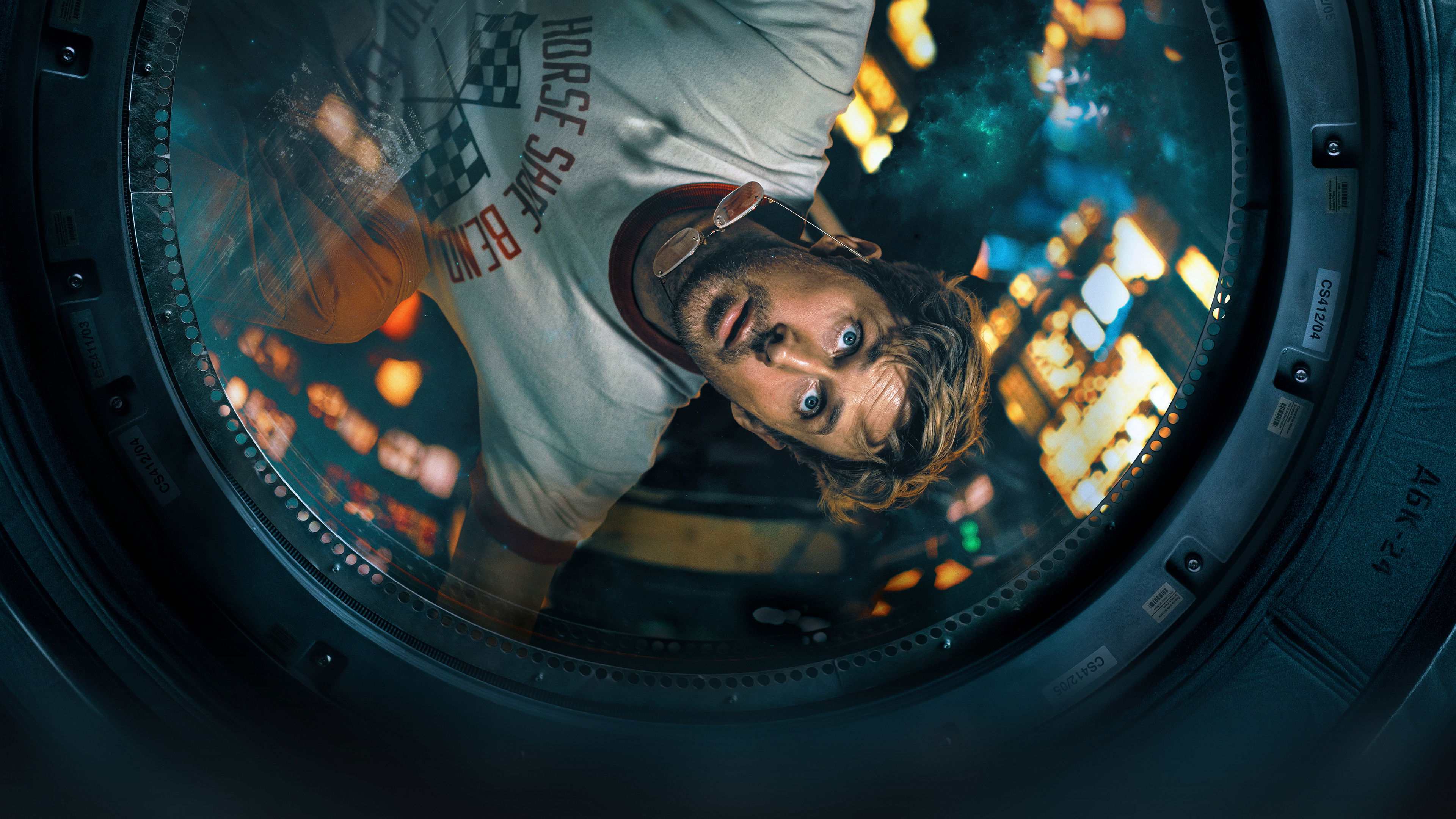
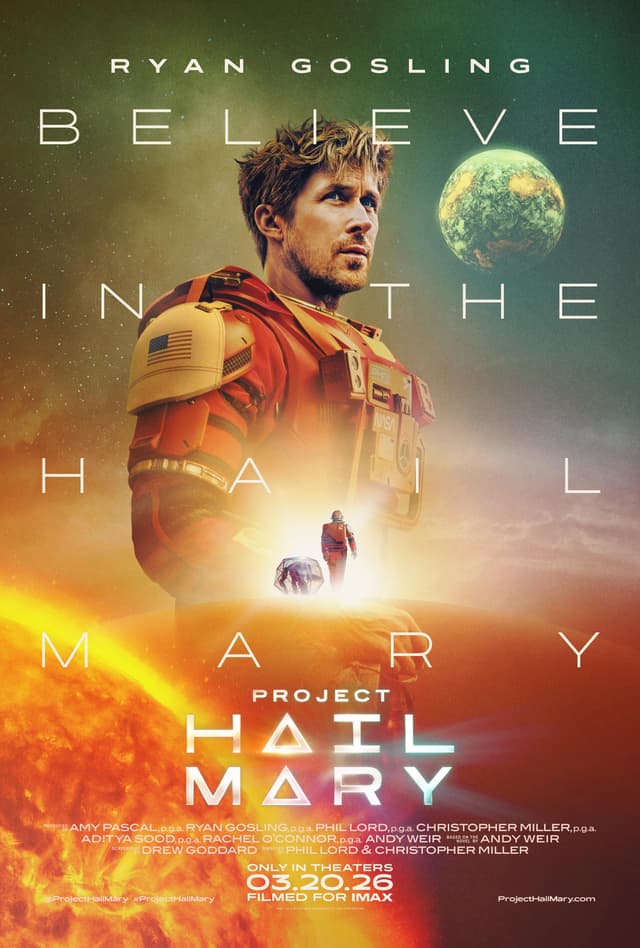
Project Hail Mary (2026) was produced on a net budget of $200 million, making it one of the largest productions in Amazon MGM Studios' history and the most expensive theatrical release of the 2026 spring calendar. Directed by Phil Lord and Christopher Miller, the adaptation of Andy Weir's 2021 novel stars Ryan Gosling as Ryland Grace, an astronaut who wakes alone in space with no memory of how he got there, gradually piecing together that he is Earth's last hope against an extinction-level threat.
The film grossed $584 million worldwide, including $295 million domestic and $288 million international, becoming the third highest-grossing film of 2026 and Amazon MGM's largest theatrical opening ever. Its $80.5 million domestic debut on March 20, 2026, broke the previous Amazon MGM record held by Creed III ($58 million in 2023) and demonstrated that the streaming giant could compete directly with traditional studio tentpoles in theatrical markets.
Key Budget Allocation Categories
- Ryan Gosling (Star and Producer): Gosling, who co-produced through Open Invite Entertainment, headlined the film as Ryland Grace. His above-the-line fee, which typically reaches $20 to $30 million for a lead actor on a $200 million production, combined with his producer credit created a substantial investment in a single performer. The virtually solo first act of the film required Gosling to carry extended sequences with only a CGI alien character as counterpart.
- UK Production at Shepperton Studios: Principal photography ran from June 3 through October 26, 2024, primarily at Shepperton Studios in Surrey, England, with additional location work at South Parade Pier in Portsmouth, the Mullard Radio Astronomy Observatory in Cambridge, and Durdle Door and Man o' War Cove in Dorset. UK production allows access to the British Film Tax Relief, which returns up to 25% of qualifying expenditure.
- Greig Fraser and IMAX Cinematography: Cinematographer Greig Fraser (Dune, The Batman) shot the film on IMAX-certified Arri Alexa 65 cameras with variable aspect ratios, a technically demanding approach that drove equipment and infrastructure costs upward. Premium format screenings on IMAX, Dolby, and large-format screens accounted for approximately 55% of ticket sales, validating the technical investment.
- Rocky the Alien (James Ortiz with puppetry): The alien character Rocky, the film's most significant visual effects challenge, was brought to life through a combination of physical puppeteering by James Ortiz and digital enhancement. The hybrid approach was chosen to give Gosling a real performance partner on set rather than acting opposite a tennis ball, at significant cost premium over fully digital approaches.
- Composer Daniel Pemberton: Composer Daniel Pemberton (Spider-Man: Into the Spider-Verse, All the Money in the World) scored the film. The 156-minute runtime required an expansive musical architecture capable of supporting both the intimate character drama of Grace's memory recovery and the large-scale science fiction spectacle of the film's third act.
How Does Project Hail Mary's Budget Compare to Similar Films?
Project Hail Mary sits at the upper tier of prestige science fiction productions, comparable to the original Interstellar and the Dune franchise in budget ambition. Its $200 million investment and $584 million global return place it among the most financially successful original science fiction films in recent years.
- Interstellar (2014): Budget $165M | Worldwide $701.8M. The closest comparable in terms of hard science fiction prestige and emotional ambition. Interstellar spent less and earned more, though Hail Mary's adjusted-dollar comparison is favorable given 12 years of ticket price inflation.
- The Martian (2015): Budget $108M | Worldwide $630.2M. Another Andy Weir adaptation (same author as Hail Mary) at a lower budget with a marginally higher gross. The comparison highlights Weir's track record as source material for commercial science fiction.
- Dune: Part Two (2024): Budget $190M | Worldwide $711.8M. The most structurally comparable recent production in terms of prestige sci-fi scale, IMAX cinematography (also Greig Fraser), and franchise-building ambition. Hail Mary's standalone result of $584 million is a strong outcome relative to Dune Part Two's $711 million, especially given that Dune was an established franchise entry.
Project Hail Mary Box Office Performance
Project Hail Mary opened on March 20, 2026, in the US following a world premiere in London on March 9. The domestic opening weekend of $80,506,007 combined with $60,400,000 from 82 international markets to produce a global debut of $140,900,000, the largest opening of 2026 at that point and Amazon MGM's biggest ever. The film went on to gross $341,307,287 domestically and $335,980,949 internationally, for a worldwide total of $677,288,236 as tracked by Box Office Mojo. Approximately 55% of domestic ticket sales came from premium IMAX, Dolby, and large-format screens.
With a $200,000,000 production budget and an estimated $100,000,000 in prints and advertising for a global tentpole release, the total investment reached approximately $300,000,000. At a 50% average theater revenue split, the studio's share of the $677,288,236 gross was roughly $338,600,000. The film cleared its total investment within its theatrical window, with additional revenue from streaming and home entertainment providing meaningful upside for Amazon MGM, which retains digital rights.
Box Office Breakdown
Project Hail Mary

Project Hail Mary earned roughly $3.39 in worldwide gross for every $1 invested in production, an excellent result for a $200,000,000 original film without franchise precedent. The 94% Rotten Tomatoes score and A CinemaScore drove exceptional audience word of mouth, sustaining strong multiplier performance beyond the opening weekend — the domestic gross of $341,307,287 represents a 4.2x multiplier on the $80,506,007 opening weekend, well above the typical 2.5x to 3x range for a film of this scale. Amazon MGM's ability to also exploit the film through its Prime Video streaming platform after the theatrical window provides additional revenue that traditional studio models cannot capture as efficiently.
Project Hail Mary Production History
Project Hail Mary entered development when Andy Weir's novel was acquired before publication in 2021, following the pattern of The Martian, which was also optioned ahead of wide release. Ryan Gosling became attached as star and producer through his Open Invite Entertainment banner, and his producing partners Aditya Sood and Rachel O'Connor of Lord Miller Productions brought in Phil Lord and Christopher Miller as directors. The Lord Miller involvement connected the project to the producing team's track record with The Lego Movie and the Spider-Man: Into the Spider-Verse films, known for inventive structural approaches to familiar genre material.
Amy Pascal and Pascal Pictures joined as producers alongside Andy Weir himself, creating an unusually author-involved production with the novelist credited as a producer. Screenwriter Drew Goddard, who adapted The Martian for Ridley Scott, was hired to write the Project Hail Mary adaptation, extending the creative connection between the two Weir properties. The casting of Sandra Huller as Eva Stratt, the European bureaucrat who drives the Hail Mary mission, and Lionel Boyce (The Bear) in a supporting role, was announced in 2024.
Principal photography began June 3, 2024, at Shepperton Studios and ran through October 26, 2024, an approximately 21-week shoot that covered the film's 156-minute runtime. Greig Fraser's IMAX-certified Arri Alexa 65 approach required custom rigging for spacecraft interior sequences. The Rocky alien character involved months of pre-production design collaboration between the visual effects team and performer James Ortiz to develop a puppetry system that would work on a physical set.
The film premiered in London on March 9, 2026, to standing ovations and near-unanimous critical praise. The US release on March 20 produced a record-breaking opening weekend and sustained remarkable audience enthusiasm throughout the spring theatrical season. A 94% Rotten Tomatoes score, A CinemaScore, and multiple critical consensus descriptions of it as a "near-miraculous fusion of smarts and heart" established Project Hail Mary as the defining theatrical event of 2026's first half.
Awards and Recognition
Project Hail Mary's March 2026 release positioned it outside the traditional awards season window, though its critical acclaim generated significant conversation about eligibility for the 2026-2027 awards cycle. The film received a Guild of Music Supervisors Award nomination for Best Music Supervision in a Trailer. Ryan Gosling's performance as Ryland Grace, requiring him to carry long stretches of screen time opposite a digital-physical alien character, was cited in multiple critics' midyear roundups. Greig Fraser's IMAX cinematography was noted for technical ambition. The film's commercial performance as Amazon MGM's largest opening ever was itself treated as an industry milestone recognized in trade press coverage.
Critical Reception
Project Hail Mary received a Rotten Tomatoes score of 94% from 393 critics and a Metacritic score of 77 out of 100 from 60 critics, with audience response measured by CinemaScore at an A grade. The Rotten Tomatoes consensus described it as "a visually dazzling space odyssey" and "a near-miraculous fusion of smarts and heart." Critics praised Lord and Miller's ability to adapt the novel's largely solo first act into compelling cinema, with Ryan Gosling's performance, Greig Fraser's IMAX cinematography, and the Rocky alien character's emotional plausibility receiving the most consistent praise. Audiences responded with exceptional enthusiasm, generating word-of-mouth that sustained the film through multiple weekends. The film became the third highest-grossing of 2026 and was widely described as the best science fiction film since Interstellar.
Frequently Asked Questions
How much did it cost to make Project Hail Mary (2026)?
The production budget was $200,000,000, covering principal photography, visual effects, cast and crew salaries, locations, sets, post-production, and music. Marketing and distribution (P&A) costs are estimated at an additional $100,000,000 - $160,000,000, bringing the total studio investment to approximately $300,000,000 - $360,000,000.
How much did Project Hail Mary (2026) earn at the box office?
Project Hail Mary grossed $442,836,273 worldwide.
Was Project Hail Mary (2026) profitable?
The film did not break even theatrically, earning $442,836,273 against an estimated $500,000,000 needed. Ancillary revenue may have improved the picture.
What were the biggest costs in producing Project Hail Mary?
The primary cost drivers were above-the-line talent (Ryan Gosling, James Ortiz, Sandra Hüller); visual effects pipelines, virtual production technology, and speculative world-building.
How does Project Hail Mary's budget compare to similar science fiction films?
At $200,000,000, Project Hail Mary is classified as a mega-budget production. The median budget for wide-release science fiction films in the 2020s ranges from $30 - 80M for mid-budget to $150M+ for tentpoles. Comparable budgets: 2012 (2009, $200,000,000); Alice in Wonderland (2010, $200,000,000); Ant-Man and the Wasp: Quantumania (2023, $200,000,000).
Did Project Hail Mary (2026) go over budget?
There are no widely reported accounts of significant budget overruns for this production. However, studios rarely disclose precise budget overrun figures publicly. The reported production budget reflects the final estimated cost.
What was the return on investment (ROI) for Project Hail Mary?
The theatrical ROI was 121.4%, calculated as ($442,836,273 − $200,000,000) ÷ $200,000,000 × 100. This measures gross revenue against production budget only - it does not account for P&A or exhibitor shares.
What awards did Project Hail Mary (2026) win?
1 nomination total.
Who directed Project Hail Mary and who were the key crew members?
Directed by Phil Lord, Christopher Miller, written by Drew Goddard, shot by Greig Fraser, with music by Daniel Pemberton, edited by Joel Negron.
Where was Project Hail Mary filmed?
Project Hail Mary was filmed in United States of America. Principal photography began on June 3, 2024, in the United Kingdom and wrapped on October 26, 2024. Filming occurred at Shepperton Studios.
Filmmakers
Project Hail Mary

Official Trailer
Build budgets like this one in Saturation
Start from an industry-standard feature film template, import the schedule and rates you already have, and let the cost report keep itself current as you spend. Real-time collaboration, no spreadsheets.