Pride & Prejudice Budget
 DramaRomance2h 8m
Updated
Synopsis
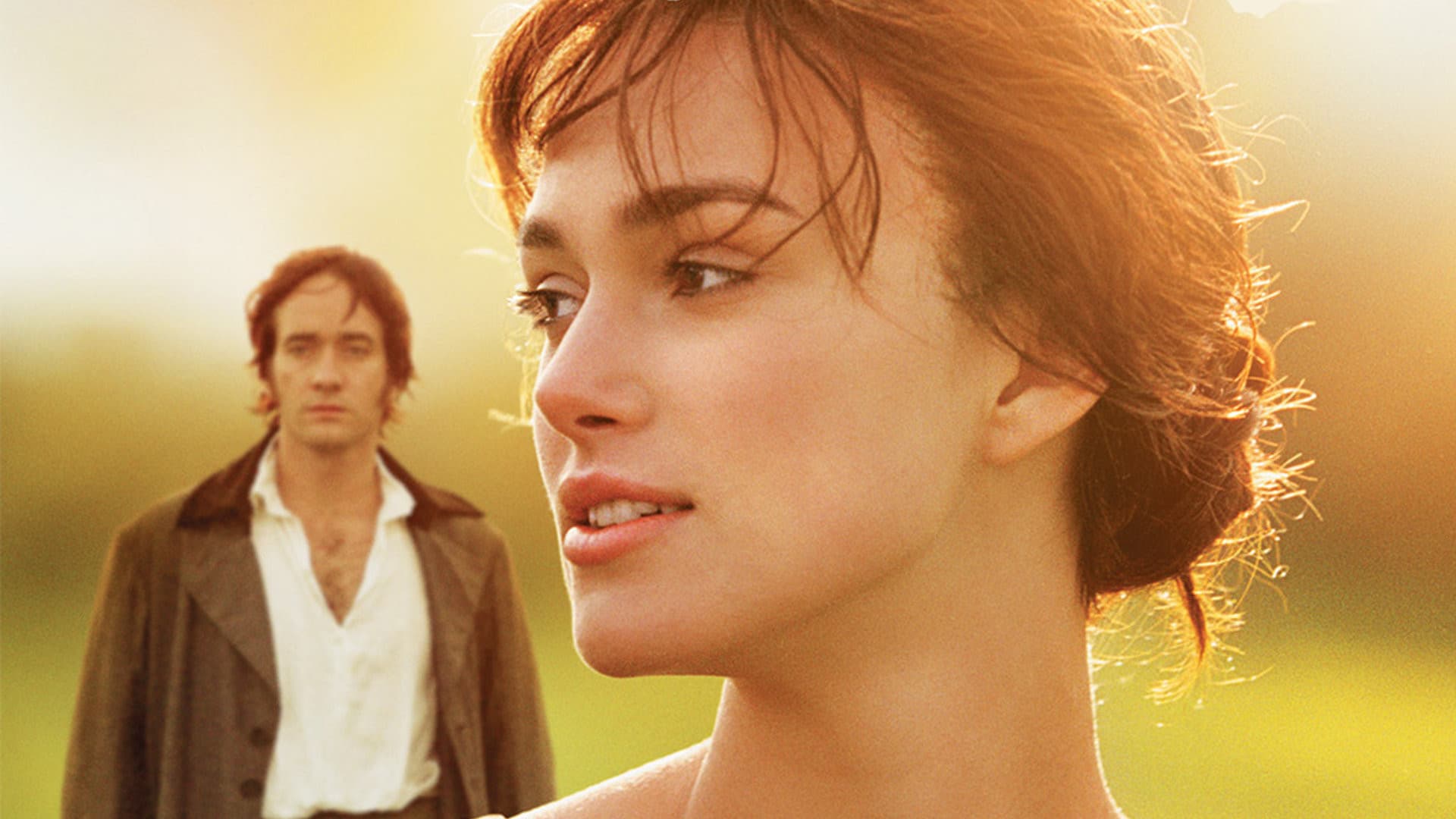
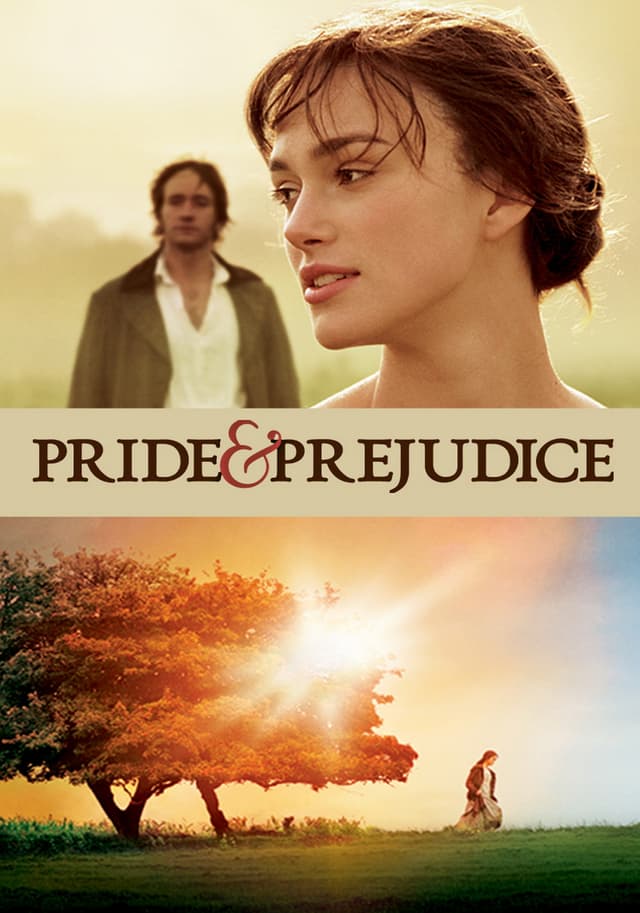
The story is based on Jane Austen's novel about five sisters - Jane (Rosamund Pike), Elizabeth (Keira Knightley), Mary (Talulah Riley), Kitty (Carey Mulligan), and Lydia Bennet (Jena Malone) - in Georgian England. Their lives are turned upside down when wealthy young Mr. Bingley (Simon Woods) and his best friend, Mr. Darcy (Matthew Macfadyen), arrive in their neighborhood.
What Is the Budget of Pride & Prejudice?
Pride & Prejudice (2005) was produced on an approximately $28 million budget, a figure that positioned the film as a mid-range prestige production rather than a blockbuster. For Working Title Films and StudioCanal, the budget was a considered bet on a first-time feature director, a 19-year-old lead actress, and a Jane Austen adaptation that would have to stand on its own against the cultural memory of the beloved 1995 BBC miniseries starring Colin Firth.
The budget was large enough to secure seven major UK heritage properties, a prestige supporting cast including Donald Sutherland and Judi Dench, and an intimate orchestral score by Dario Marianelli. It was modest enough that director Joe Wright and cinematographer Roman Osin had to be strategic about every shooting day, which ultimately drove creative decisions that made the film distinctive. Focus Features secured US distribution rights before production began, substantially de-risking the investment for the UK financiers.
Key Budget Allocation Categories
- Cast and Above-the-Line Talent: Keira Knightley anchors the film as Elizabeth Bennet alongside Matthew Macfadyen as Mr. Darcy, Donald Sutherland and Brenda Blethyn as Mr. and Mrs. Bennet, and Judi Dench as the formidable Lady Catherine de Bourgh. Brenda Blethyn had previously received an Academy Award nomination for Secrets & Lies, and Dench was a screen institution well before Pride & Prejudice. The ensemble above-the-line package likely consumed $8 to $12 million of the $28 million budget.
- Heritage Estate Location Access: Filming took place across seven major UK heritage properties, including Chatsworth House in Derbyshire (doubling for Mr. Darcy's Pemberley), Burghley House in Lincolnshire, Lacock Abbey in Wiltshire (standing in for various Bennet home interiors), Groombridge Place in Kent, Basildon Park in Berkshire, Stourhead Gardens, and Wilton House. Each location required individual negotiation, insurance, scheduling around public visiting hours, and extensive crew logistics for a period-authentic shoot. Working Title's long relationship with UK heritage organisations made access possible that an independent production could rarely secure.
- Dario Marianelli's Piano-Led Score: Marianelli composed a score built around a recurring piano theme for Elizabeth Bennet, performing an intimate chamber music approach that suited both the budget and the emotional scale of the story. The score received an Academy Award nomination and won the BAFTA Award for Best Film Music at the 59th BAFTA Awards. Marianelli later won the Academy Award for his score for Wright's follow-up film Atonement.
- Period Costume and Production Design: Jacqueline Durran's Regency-era costumes and Sarah Greenwood's production design both received Academy Award nominations. Authentic period design across seven locations, with hand-sewn costumes for the entire cast and period-accurate props, textiles, carriages, and farm animals, represented a substantial portion of the production's below-the-line spend.
- Steadicam Choreography and Camera Approach: Roman Osin and Wright used extended Steadicam sequences throughout the film, most famously a single unbroken take at the Netherfield ball that sweeps through the entire party. These sequences required two weeks of rehearsal before the cameras rolled on that sequence alone, but reduced the total number of camera setups needed and gave the film a fluid, observational quality that became one of its most praised visual features.
How Does Pride & Prejudice's Budget Compare to Similar Films?
Pride & Prejudice sits at the higher end of the British literary adaptation tier, below the full studio tentpole range but above the micro-budget art house approach that many period films take. The following comparisons place its budget and box office in context.
- Sense and Sensibility (1995, Ang Lee): Budget $16M | Worldwide $134M. The direct template for the Working Title Austen adaptation formula: a strong British cast with American distribution, modest production values, and exceptional writing. The higher worldwide total reflects the different theatrical landscape of 1995. Pride & Prejudice's $28M budget bought notably more location scale and star power.
- Emma (1996, Douglas McGrath): Budget $6M | Worldwide $37M. The smaller-budget Gwyneth Paltrow Austen adaptation, made the same year as the ITV television version, shows what a leaner approach can achieve. Pride & Prejudice's budget is more than four times larger, and its worldwide gross is also significantly higher.
- Atonement (2007, Joe Wright): Budget $30M | Worldwide $129M. Wright's immediate follow-up film with Keira Knightley, also produced by Working Title, shows how Pride & Prejudice launched his career. The similar budgets and worldwide totals confirm that Wright had found a reliable creative and commercial formula with this ensemble approach.
- Downton Abbey: A New Era (2022): Budget $12M | Worldwide $91M. A contemporary British period production for comparison of scale and audience appetite. Pride & Prejudice achieved nearly 35% more worldwide gross on a production budget that was more than twice the size, reflecting both the different eras and the Oscar platform that drove awareness of Wright's film.
Pride & Prejudice Box Office Performance
Pride & Prejudice opened in the United Kingdom on September 16, 2005 and in the United States on November 11, 2005 through Focus Features, the specialty arm of Universal Pictures. The US release was timed to position the film for awards season, a strategy that paid off with four Academy Award nominations. The film earned $38,405,808 domestically and $82,663,215 internationally for a worldwide total of $121,069,023.
Against a $28 million production budget and an estimated $20 million in prints and advertising, the film's total investment was approximately $48 million. Theatrical distribution returns roughly 50 percent of gross to the studio after exhibitor share, giving Working Title and StudioCanal an estimated $60.5 million studio share from worldwide theatrical receipts. The film cleared theatrical break-even comfortably, with additional revenue from DVD and Blu-ray sales, television licensing deals across major markets, and a streaming window that has kept the film in active rotation for two decades.
Box Office Breakdown
Pride & Prejudice

Pride & Prejudice earned roughly $4.32 for every $1 invested in production. After accounting for the estimated $20 million in prints and advertising and the theatrical exhibitor's approximately 50 percent share of ticket revenue, the film's actual profit on production and marketing combined was more modest, but the home video and television licensing life of the film has made it one of Working Title's most reliable catalogue assets across the two decades since its release.
Pride & Prejudice Production History
Working Title Films developed the project with director Joe Wright, who had built a reputation in British television with productions including the 2003 BBC drama Charles II: The Power and the Passion. Wright was 33 and had never directed a feature film when he was hired. Deborah Moggach wrote the screenplay, deliberately departing from the approach taken by Andrew Davies in his celebrated 1995 BBC adaptation. Where Davies had six episodes to trace every subplot, Moggach had two hours, so she compressed the story and added visual poetry: muddy hems, dawn light breaking over open fields, candles burning in darkened rooms. The result was a film that could not compete with the miniseries on breadth but could surpass it on mood.
Keira Knightley had just completed Pirates of the Caribbean: The Curse of the Black Pearl when she was cast as Elizabeth Bennet. She was 19 when principal photography began, and the role required her to carry the comedy and the drama of Austen's most complex heroine. Her casting was a deliberate choice to ground Elizabeth in intelligence and physical directness rather than drawing room wit. Matthew Macfadyen was cast as Mr. Darcy after several other British actors were considered. The supporting cast assembled around them included Brenda Blethyn as Mrs. Bennet, Donald Sutherland as Mr. Bennet, Judi Dench as Lady Catherine de Bourgh, Rosamund Pike as Jane Bennet, Tom Hollander as Mr. Collins, and Jena Malone as Lydia.
Principal photography took place across an autumn shoot in England, timed to capture the golden-hour light and turning foliage that Wright wanted as the film's visual signature. The production filmed at Chatsworth House in Derbyshire, Burghley House in Lincolnshire, Lacock Abbey in Wiltshire, Groombridge Place in Kent, Basildon Park in Berkshire, Stourhead Gardens, and Wilton House. The Netherfield ball sequence, one of the film's most technically ambitious set pieces, required two weeks of rehearsal to choreograph the actors and the Steadicam operator so that the entire party could be captured in a single unbroken take.
Post-production included Dario Marianelli's composition of the score, built around a piano theme for Elizabeth that he developed in close collaboration with Wright and that Knightley herself can be seen playing on screen in several scenes. The film premiered at the Toronto International Film Festival in September 2005 and was released by Universal Pictures in the UK and by Focus Features in the US. The Oscar nominations, particularly Knightley's Best Actress nomination at age 20, drove a second wave of theatrical interest that extended the US run into early 2006.
Awards and Recognition
Pride & Prejudice received four Academy Award nominations at the 78th Academy Awards ceremony in March 2006. Keira Knightley, at age 20, was nominated for Best Actress, making her one of the youngest nominees in that category in Oscar history. The film was also nominated for Best Original Score (Dario Marianelli), Best Art Direction (Sarah Greenwood and Katie Spencer), and Best Costume Design (Jacqueline Durran).
At the 59th BAFTA Awards, the film won Best British Film and Best Film Music (Dario Marianelli). It also received nominations for Best Film, Best Actress in a Leading Role (Knightley), Best Director (Wright), Best Adapted Screenplay (Moggach), Best Cinematography (Osin), Best Editing, and Best Production Design. At the 19th European Film Awards, Pride & Prejudice won the European Film Award for Best Film, with additional nominations for Best Cinematographer and Best Composer.
Keira Knightley also received a Golden Globe nomination for Best Actress in a Drama. The breadth of nominations across the major awards bodies reflected the film's status as a genuine awards contender rather than a genre exercise, and the campaign sustained the film's theatrical run in North America well into 2006.
Critical Reception
Pride & Prejudice holds an 87 percent approval rating on Rotten Tomatoes, certified Fresh, with a Metacritic score of 80 out of 100. Roger Ebert awarded the film four out of four stars, calling it a film that is smart enough to know that the novel's romantic elements are the drawing power, but intelligent enough to surround them with a convincing portrait of the social world that shapes every character. A.O. Scott of the New York Times praised the film as witty, passionate, and beautifully made.
The central critical debate was whether the film could stand alongside the 1995 BBC miniseries with Colin Firth and Jennifer Ehle, which many viewers and critics consider the definitive Austen adaptation. The consensus that emerged was that the film was not attempting to replace the miniseries but to offer something it could not: a film's compression, visual beauty, and the particular performances of Knightley and Macfadyen as a Darcy who reads as genuinely awkward rather than simply proud. Some critics found Knightley too modern in her physical directness, but the majority recognized the performance as a significant dramatic turn for an actress primarily known for action films.
The film's critical standing has grown in the decades since its release, particularly as Joe Wright has become an established auteur with Atonement, Anna Karenina, and Darkest Hour. Pride & Prejudice is now routinely cited as one of the best British films of the 2000s and as a template for the prestige literary adaptation that Working Title and Focus Features have continued to develop.
Frequently Asked Questions
How much did Pride & Prejudice (2005) cost to make?
The production budget was $28,000,000. Working Title Films and Focus Features co-financed the period adaptation, leveraging Working Title's long-standing relationship with director Joe Wright, who was making his feature debut.
How much did Pride & Prejudice earn at the box office?
The film grossed $38,405,088 domestically and $82,900,000 internationally, for a worldwide total of approximately $121,300,000. It opened to $2,852,000 on November 11, 2005 in 215 theaters, before expanding into a 1,300-theater wide release over the following weeks.
Who directed Pride & Prejudice?
Joe Wright directed the film, his feature debut. Wright went on to direct Atonement (2007), Anna Karenina (2012), Darkest Hour (2017), and Cyrano (2021), making period and prestige material a signature of his career.
Who stars in Pride & Prejudice?
Keira Knightley stars as Elizabeth Bennet, with Matthew Macfadyen as Mr. Darcy. Supporting cast includes Brenda Blethyn as Mrs. Bennet, Donald Sutherland as Mr. Bennet, Rosamund Pike as Jane Bennet, Judi Dench as Lady Catherine, and Tom Hollander as Mr. Collins.
Is Pride & Prejudice based on the Jane Austen novel?
Yes. The film adapts Jane Austen's 1813 novel, with the screenplay by Deborah Moggach (with uncredited revisions by Emma Thompson) compressing the novel's social-comedy plot into a 129-minute runtime. The adaptation is generally considered faithful to the source.
Where was Pride & Prejudice filmed?
Principal photography took place at numerous historic English country estates including Chatsworth House (Pemberley exterior), Wilton House, Burghley House, Groombridge Place (Longbourn), and Stourhead Gardens. The Peak District provided the open landscape sequences.
Did Pride & Prejudice win any awards?
The film received four Academy Award nominations including Best Actress for Keira Knightley, Best Costume Design, Best Art Direction, and Best Original Score for Dario Marianelli. It did not win in any category. Knightley's nomination made her the third-youngest Best Actress nominee at the time.
What did critics think of Pride & Prejudice?
The film received strong reviews, with an 87% approval rating on Rotten Tomatoes and an 82 out of 100 score on Metacritic. Critics praised Joe Wright's naturalistic visual approach and Keira Knightley's spirited Elizabeth Bennet, distinguishing the film from the celebrated 1995 BBC miniseries.
Was Pride & Prejudice profitable?
Yes. Against the $28,000,000 production budget and an estimated $25,000,000 in marketing spend, the worldwide gross of $121,300,000 produced a clear theatrical profit. Strong home video and television broadcast revenue extended profitability significantly.
How does Pride & Prejudice compare to the 1995 BBC version?
The 2005 film and the 1995 BBC miniseries starring Jennifer Ehle and Colin Firth are widely considered the two definitive screen adaptations of the novel. The 1995 version, at 327 minutes across six episodes, offers a more complete novel adaptation, while the 2005 film favors visual romanticism within feature-length constraints.
Build budgets like this one in Saturation
Start from an industry-standard feature film template, import the schedule and rates you already have, and let the cost report keep itself current as you spend. Real-time collaboration, no spreadsheets.