Pixote Budget
 CrimeDrama2h 7m
Updated
Synopsis
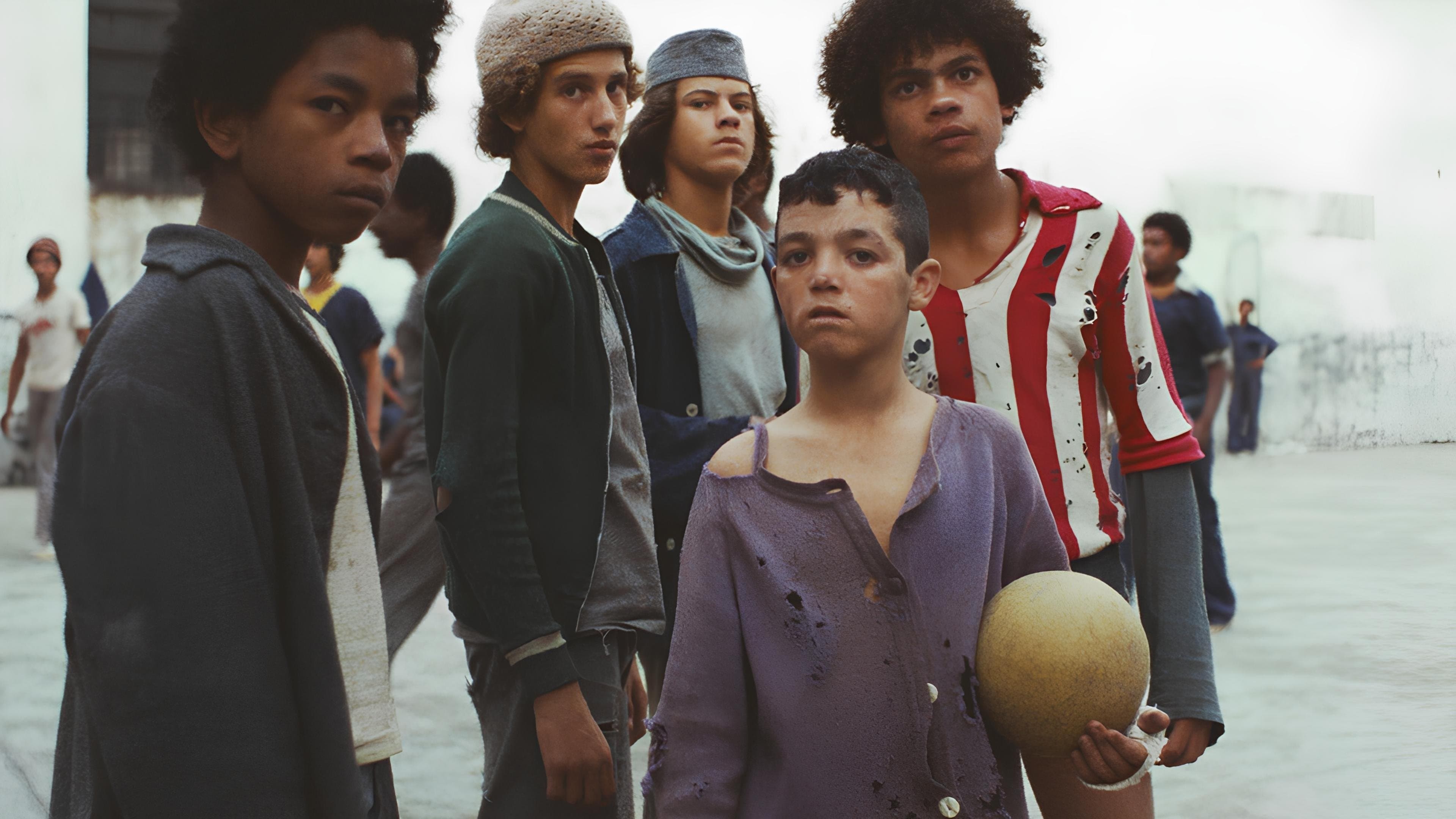
Ten-year-old Pixote escapes a brutal São Paulo juvenile detention center and survives on the streets of Rio de Janeiro through petty crime, drug trafficking, and pimping. Hector Babenco's neorealist drama follows the boy and his fellow runaways as the violence of Brazil's underclass closes around them, anchored by a non-professional cast pulled from the favelas the film depicts.
What Is the Budget of Pixote (1980)?
Pixote (1980), directed by Argentine-Brazilian filmmaker Hector Babenco, was produced on a reported budget of approximately $450,000. The figure was disclosed by Babenco in interviews with Cahiers du Cinéma and the Brazilian press around the film's 1981 international festival rollout, and remains the most widely cited cost across Brazilian cinema scholarship. The production was financed by a combination of Babenco's own HB Filmes and the state production agency Embrafilme, which provided roughly half of the negative cost in exchange for theatrical distribution rights inside Brazil.
At approximately $450,000, the budget was substantial by 1980 Brazilian standards but tiny by the international art-house benchmarks the film would soon compete against. Babenco shot in 35mm on the streets and in actual juvenile detention facilities in São Paulo and Rio de Janeiro, drawing on a non-professional cast of street children to keep above-the-line costs negligible. Unifilm and later Embrafilme handled the international sales rollout, with Robert Altman recommending the film to Unifilm executive Steve Talbot after a private New York screening that led directly to the film's theatrical release through Embrafilme/Unifilm in the United States.
Key Budget Allocation Categories
The estimated $450,000 budget covered an aggressively economical neorealist production:
- Above-the-Line Talent: Hector Babenco directed, co-wrote, and produced the film at the modest rate typical of Brazilian auteur cinema in 1980. The non-professional child cast was paid minimum-wage stipends through Embrafilme welfare protocols, with Fernando Ramos da Silva receiving a modest fee that reportedly amounted to roughly $300 across the entire shoot. The single major professional name, theater veteran Marília Pêra as Sueli, commanded the largest single talent line item but worked well below her established Brazilian theatrical rate.
- São Paulo and Rio Location Shoot: Principal photography took place on location across the FEBEM juvenile detention compound in São Paulo, the Diadema favelas, and the streets of central Rio de Janeiro. Babenco negotiated direct access to active juvenile facilities and shot in functioning brothels, bus terminals, and street markets. Permit costs, security, and on-set protection for the child cast formed a significant share of the location line item.
- Cinematography and Film Stock: Rodolfo Sánchez shot the film on Kodak 35mm color negative, processed in São Paulo at the Lider laboratory. The aggressive documentary aesthetic relied on handheld coverage, available-light interiors, and minimal lighting packages, keeping camera-department costs modest. Sánchez's deliberately raw visual approach reflected the budget constraints and reinforced the film's neorealist DNA.
- Production Design and Costumes: Production design by Clóvis Bueno was minimal: real locations dressed only as necessary, with the children wearing their own clothes for most of the shoot. The naturalist look was a creative choice that also functioned as a major cost saving compared to the period or stylized productions of contemporary Brazilian cinema.
- Music and Sound: John Neschling's spare original score was recorded in São Paulo on a modest music budget. Sound was captured production-mono on location and remixed in post, an economical workflow consistent with Brazilian indie norms of the era.
- Post-Production and International Delivery: Editing by Luiz Elias was completed at HB Filmes' São Paulo facility. International subtitled prints for the festival rollout and the subsequent Unifilm North American theatrical release accounted for the majority of post-production spend, including 35mm interpositive striking and lab work for the multi-territory rollout.
How Does Pixote's Budget Compare to Similar Films?
At approximately $450,000, Pixote sits firmly in the 1980 international art-house micro-budget tier. The comparison set illustrates the scale:
- Los Olvidados (1950): Budget approximately $90,000 in 1950 dollars (roughly $1,000,000 adjusted to 1980) | Worldwide modest theatrical. Luis Buñuel's Mexican street-children classic, the most obvious antecedent to Pixote, cost about twice as much in inflation-adjusted terms and reached a comparable international art-house audience.
- Salaam Bombay! (1988): Budget approximately $900,000 | Worldwide $2,200,000. Mira Nair's Indian street-children drama cost roughly twice as much as Pixote and earned a comparable international total, demonstrating the genre's stable commercial ceiling.
- City of God (2002): Budget approximately $3,300,000 | Worldwide $30,600,000. Fernando Meirelles' later Brazilian favela drama cost more than seven times as much as Pixote and out-earned it by roughly ten times worldwide, reflecting the genre's commercial expansion in the digital era.
- Bye Bye Brasil (1980): Budget approximately $700,000 | Worldwide modest. Carlos Diegues' contemporaneous Brazilian road movie, also financed through Embrafilme, cost roughly 55 percent more than Pixote on a comparable festival-circuit release pattern.
- Kes (1969): Budget approximately £157,000 (roughly $750,000 adjusted to 1980) | Worldwide modest theatrical. Ken Loach's British social-realist coming-of-age drama operated on a comparable working-class neorealist premise at a slightly higher cost.
Pixote Box Office Performance
Pixote premiered at the Locarno Film Festival in August 1981, where it won the Silver Leopard, then opened in New York on May 8, 1981 through Unifilm/Embrafilme. The North American theatrical run grossed approximately $2,100,000 over an extended platform release, an exceptional result for a subtitled Brazilian film and the highest-grossing Brazilian theatrical release in the United States to that point. The Brazilian domestic run through Embrafilme also performed strongly, with reported ticket sales of approximately 2,500,000.
Box Office Breakdown
Pixote

Pixote returned an estimated $2.50 to $3.00 in worldwide theatrical revenue for every $1 invested, an exceptional result for a Brazilian art film and the strongest international performance for a Latin American release of 1981. The film's North American gross of approximately $2,100,000 stood as the all-time record for a Brazilian theatrical release in the United States until Central Station broke it in 1998.
The Brazilian domestic run, supported by Embrafilme's exhibitor mandate, drew approximately 2,500,000 admissions, an unusually strong result for a film whose subject matter prompted condemnation from segments of the Brazilian Catholic establishment. The European theatrical rollout through 1981 and 1982 generated additional revenue, particularly in France, Italy, and West Germany, where the film opened in art-house chains following its Locarno and Cannes Director's Fortnight festival recognition.
Pixote Production History
Hector Babenco arrived at the Pixote project after spending months researching juvenile detention in São Paulo following the success of his 1978 prison drama Lúcio Flávio. The screenplay, co-written with Jorge Durán, drew on José Louzeiro's nonfiction book Infância dos Mortos (Childhood of the Dead) and on Babenco's direct interviews with children inside the FEBEM (Fundação Estadual do Bem-Estar do Menor) compounds. The project initially struggled to attract Embrafilme support given the subject matter and the prevailing climate under the Brazilian military dictatorship.
Casting took place across late 1979 and early 1980 through open calls in the favelas of São Paulo and Rio de Janeiro. Babenco rejected professional child actors in favor of children pulled directly from the streets and the FEBEM compounds. Fernando Ramos da Silva, a ten-year-old from Diadema, was cast as Pixote after Babenco encountered him at an open call attended by hundreds of children. The non-professional approach extended through the entire child ensemble, with theater veteran Marília Pêra as Sueli the only major exception.
Principal photography took place across mid-1980 in São Paulo and Rio de Janeiro, with shooting inside the active FEBEM juvenile detention compound at Tatuapé and on the streets of central Rio. The shoot was logistically demanding: child welfare protocols required on-set social workers, child psychologists, and careful scheduling to limit working hours for the cast. Babenco worked with the children through extensive improvisation, with much of the on-screen dialogue developed in collaboration with the child performers during rehearsal.
Post-production was completed at HB Filmes in São Paulo across late 1980 and early 1981. The film premiered at the Locarno Film Festival in August 1981, where Marília Pêra received broadly enthusiastic reviews and the film won the Silver Leopard. Robert Altman attended a New York preview screening and personally recommended the film to Unifilm executive Steve Talbot, who acquired North American distribution rights and orchestrated the May 1981 New York opening that launched the film's commercial run.
The film's subsequent life was marked by tragedy. Fernando Ramos da Silva, unable to sustain an acting career after Pixote, returned to street life and was killed by São Paulo police in August 1987 at the age of nineteen. His death prompted international press attention and was directly referenced in José Joffily's 1996 documentary Quem Matou Pixote? (Who Killed Pixote?). The trajectory of da Silva's life and death has become inseparable from the film's legacy.
Awards and Recognition
Pixote received an extraordinary critical reception across 1981 and 1982. The film won the Silver Leopard at the Locarno Film Festival in August 1981 and screened in the Director's Fortnight at the 1981 Cannes Film Festival, where it was widely cited by international critics as one of the strongest entries of the year. The Boston Society of Film Critics named Marília Pêra Best Supporting Actress for 1981, and the Los Angeles Film Critics Association named her Best Supporting Actress for 1981, marking the first time a Brazilian performer had won a major American critics' prize.
The New York Film Critics Circle awarded Marília Pêra Best Supporting Actress for 1981, the most prominent American critical recognition the film received. The National Society of Film Critics also recognized Pêra. The film won the Coral Award at the Havana Film Festival, the FIPRESCI prize at the San Sebastián Film Festival, and Best Foreign Language Film honors from multiple regional American critics' bodies. The film was selected as Brazil's submission for the Best Foreign Language Film Academy Award for 1981 but was not nominated, a notorious snub that drew commentary from American critics including Pauline Kael, who called Pixote one of the best films of the year.
Critical Reception
Pixote received among the strongest critical reviews of any 1981 international release. The film holds a 100% approval rating on Rotten Tomatoes based on 27 critic reviews, with the consensus describing it as "a harrowing, uncompromising street-level drama anchored by Fernando Ramos da Silva's unforgettable lead performance." Pauline Kael's New Yorker review called the film "the greatest movie ever made about underclass childhood, a work of staggering empathy and rigor," and the review remains the single most cited piece of American criticism on a Brazilian film.
Vincent Canby in The New York Times described the film as "a movie of overwhelming honesty and despair, with no false sentimentality and no easy redemption." Roger Ebert awarded the film four stars and called it "one of the great films about children, and one of the most painful." Andrew Sarris in The Village Voice ranked the film among the year's best, alongside Atlantic City and Body Heat. The international press response, particularly in France and Italy, was equally enthusiastic, with Cahiers du Cinéma running an extended interview with Babenco across two consecutive issues.
Marília Pêra's performance as Sueli was singled out across nearly every major review as among the year's strongest supporting turns. The casting of non-professional children, particularly Fernando Ramos da Silva's lead performance, drew comparisons to Vittorio De Sica's Shoeshine and Luis Buñuel's Los Olvidados. Retrospective assessments, including the 2012 Sight & Sound critics' poll and the 2016 BBC poll of greatest non-English-language films, have consolidated Pixote's reputation as one of the defining Latin American features of the post-war era and the most internationally celebrated Brazilian film of the 1980s.
Frequently Asked Questions
How much did it cost to make Pixote (1980)?
The production budget was approximately $450,000, disclosed by Hector Babenco in interviews with Cahiers du Cinéma and the Brazilian press around the film's 1981 international festival rollout. The film was financed by a combination of Babenco's HB Filmes and the state production agency Embrafilme, which provided roughly half of the negative cost in exchange for Brazilian theatrical distribution rights.
How much did Pixote earn at the box office?
The film grossed approximately $2,100,000 in North America through Unifilm/Embrafilme, the highest-grossing Brazilian theatrical release in the United States until Central Station broke the record in 1998. The Brazilian domestic run drew approximately 2,500,000 admissions, and the European theatrical rollout generated additional revenue across France, Italy, and West Germany.
Who directed Pixote?
Argentine-Brazilian filmmaker Hector Babenco directed and co-wrote the film. Babenco had previously directed Lúcio Flávio (1978) and would later go on to direct Kiss of the Spider Woman (1985), Ironweed (1987), and At Play in the Fields of the Lord (1991). Pixote established his international reputation and earned him offers from major Hollywood studios.
Was Pixote based on a true story?
The film was adapted from José Louzeiro's nonfiction book Infância dos Mortos (Childhood of the Dead) and drew on Hector Babenco's direct interviews with children inside the FEBEM juvenile detention compounds in São Paulo. The characters are composites of real children Babenco encountered during his research, and the situations depicted were drawn from documented conditions inside the Brazilian juvenile justice system circa 1980.
Where was Pixote filmed?
Principal photography took place on location across the FEBEM juvenile detention compound in São Paulo, the Diadema favelas, and the streets of central Rio de Janeiro. Babenco negotiated direct access to active juvenile facilities and shot in functioning brothels, bus terminals, and street markets. The naturalist locations were a central element of the film's neorealist aesthetic.
Who played Pixote?
Fernando Ramos da Silva, a ten-year-old non-professional from Diadema in São Paulo, played the title role. He was cast after an open call that attracted hundreds of street children. Unable to sustain an acting career after Pixote, he returned to street life and was killed by São Paulo police in August 1987 at the age of nineteen, a tragedy chronicled in José Joffily's 1996 documentary Quem Matou Pixote?.
Did Pixote win any awards?
The film won the Silver Leopard at the Locarno Film Festival in 1981. Marília Pêra won Best Supporting Actress from the New York Film Critics Circle, the Los Angeles Film Critics Association, the Boston Society of Film Critics, and the National Society of Film Critics for 1981, becoming the first Brazilian performer to win major American critics' prizes. The film was Brazil's Academy Award submission but was not nominated, a notorious snub.
What did critics think of Pixote?
The film received among the strongest reviews of any 1981 release, holding a 100% approval rating on Rotten Tomatoes. Pauline Kael's New Yorker review called it "the greatest movie ever made about underclass childhood." Vincent Canby in The New York Times, Roger Ebert, and Andrew Sarris all ranked the film among the year's best. The critical consensus has stabilized into a reading of Pixote as a defining Latin American feature of the post-war era.
How does Pixote compare to City of God?
City of God (2002), Fernando Meirelles' later Brazilian favela drama, cost approximately $3,300,000 and earned approximately $30,600,000 worldwide, more than seven times Pixote's budget and roughly ten times its worldwide gross. The two films are frequently paired in international criticism as the defining Brazilian street-life dramas of their respective eras, with Pixote's 1980 neorealist roots clearly influencing City of God's 2002 hyperkinetic favela aesthetic.
Where can I watch Pixote?
Pixote is available on the Criterion Channel and is periodically licensed to other art-house streaming services including MUBI. The Criterion Collection released the film on Blu-ray and DVD in 2021 with a new 4K restoration overseen by Hector Babenco's estate. The film is also available to rent or purchase digitally through Apple, Amazon, and Kanopy in select territories.
Filmmakers
Pixote

Official Trailer
Build budgets like this one in Saturation
Start from an industry-standard feature film template, import the schedule and rates you already have, and let the cost report keep itself current as you spend. Real-time collaboration, no spreadsheets.