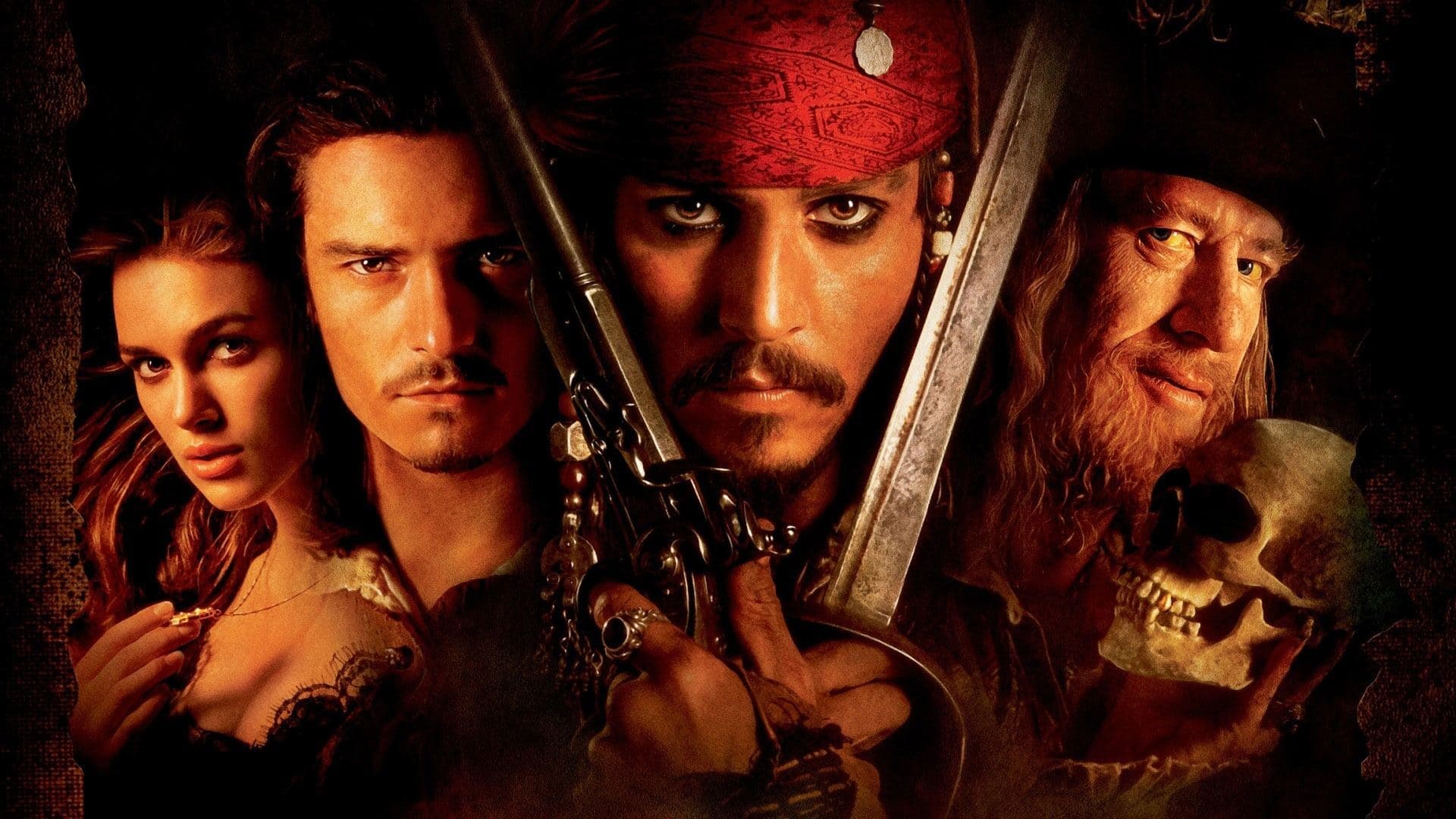
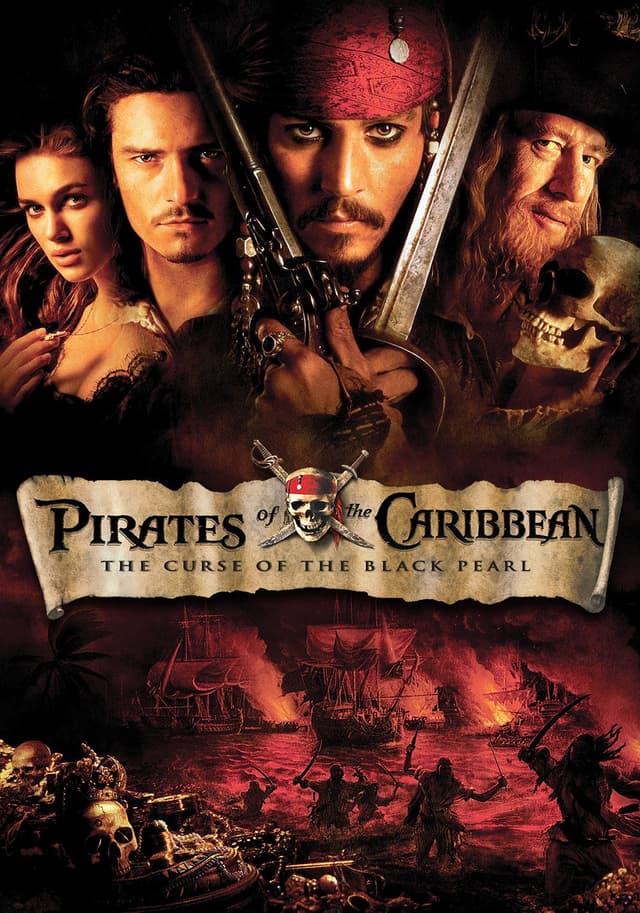
Pirates of the Caribbean Budget
 AdventureFantasyAction2h 23m
Updated
Synopsis
This swash-buckling tale follows the quest of Captain Jack Sparrow, a savvy pirate, and Will Turner, a resourceful blacksmith, as they search for Elizabeth Swann. Elizabeth, the daughter of the governor and the love of Will's life, has been kidnapped by the feared Captain Barbossa. Little do they know, but the fierce and clever Barbossa has been cursed. He, along with his large crew, are under an ancient curse, doomed for eternity to neither live, nor die. That is, unless a blood sacrifice is made.
What is the budget of Pirates of the Caribbean?
"Pirates of the Caribbean," an adventure released in 2003, was directed by Gore Verbinski and stars Johnny Depp, Geoffrey Rush. The production budget was $140,000,000, placing it in the high-budget range for adventure productions of its era.
Key Budget Allocation Categories
While specific budget breakdowns are not publicly available, typical cost drivers for an adventure production like this include:
- Stunts, Action Sequences & Visual Effects: Action films allocate a substantial portion of their budget to choreographing and executing practical stunts, pyrotechnics, and CGI-heavy sequences.
- Above-the-Line Talent (Cast & Director): A-list talent commands significant upfront fees plus backend participation.
- Production Design, Sets & Locations: Action films frequently require multiple international shooting locations, large-scale set construction, vehicle acquisitions and modifications, and specialized equipment , all of which drive production costs well above those of dialogue-driven genres.
- Casting: Stuart Beattie, who drafted early versions of the film's script, said he created the character Jack Sparrow with Hugh Jackman in mind to play the part.
What were the major cost factors in Pirates of the Caribbean?
Several factors contributed to the overall production costs of "Pirates of the Caribbean."
- Stunts: Stunts, Action Sequences & Visual Effects is one of the primary cost drivers in adventure productions of this scale.
- Above-the-Line Talent (Cast: Above-the-Line Talent (Cast & Director) is one of the primary cost drivers in adventure productions of this scale.
- Production Design: Production Design, Sets & Locations is one of the primary cost drivers in adventure productions of this scale.
How Does Pirates of the Caribbean's Budget Compare to Similar Films?
At $140,000,000, Pirates of the Caribbean sits in the high-budget range. Here is how it compares to productions with a similar budget:
- Ant-Man and the Wasp (2018): Budget $140,000,000, Worldwide Gross $622,674,139
- Armageddon (1998): Budget $140,000,000, Worldwide Gross $553,799,566
- Captain America: The First Avenger (2011): Budget $140,000,000 , Gross $370,569,774
- Exodus: Gods and Kings (2014): Budget $140,000,000 , Gross $268,031,828
- Gemini Man (2019): Budget $140,000,000, Worldwide Gross $173,469,516
The median budget for wide-release adventure films in the 2000s ranges from $30 to 80M for mid-budget to $150M+ for tentpoles.
Pirates of the Caribbean Box Office Performance
"Pirates of the Caribbean" earned $305,413,918 domestically and $655,011,224 worldwide at the box office. Against a production budget of $140,000,000, the film performed strongly at the box office.
A film typically needs to earn approximately twice its production budget to cover marketing and distribution costs. For "Pirates of the Caribbean," that break-even threshold was roughly $280,000,000. With worldwide earnings of $655,011,224, the film cleared that threshold comfortably.
Box Office Breakdown
Pirates of the Caribbean

At 367.9%, "Pirates of the Caribbean" earned roughly $4.68 for every $1 invested in production.
Pirates of the Caribbean Production History
Stuart Beattie, who drafted early versions of the film's script, said he created the character Jack Sparrow with Hugh Jackman in mind to play the part. However, since Jackman was not well known outside of his native Australia, the Johnny Depp was cast instead. Depp found the script quirky: rather than seeking treasure, the crew of the Black Pearl were trying to return it; also, the traditional mutiny had already taken place.
Verbinski did not want an entirely romanticized feel to the film, but rather a sense of historical fantasy. Most of the actors wore prosthetics and contact lenses. Depp had contacts that acted as sunglasses, while Rush and Lee Arenberg wore dulled contacts that gave a sinister feel to the characters.
The musical score was composed by Klaus Badelt, conducted by Blake Neely and performed by the Hollywood Studio Symphony. Hans Zimmer served as the music producer. Seven other composers, including Geoff Zanelli and Ramin Djawadi, received credit for "additional music".
Awards and Recognition
Nominated for 5 Oscars. 38 wins & 104 nominations total
- Silver nugget for the best foreign film
Critical Reception
On review aggregator Rotten Tomatoes, the film has an approval rating of 79% based on 216 reviews, and an average rating of 7.1/10. The site's critical consensus reads, "May leave you exhausted like the theme park ride that inspired it; however, you'll have a good time when it's over." At Metacritic, which assigns a weighted average rating to reviews, the film received an average score of 63 out of 100, based on reviews from 40 critics indicating generally favorable reviews. Audiences polled by CinemaScore gave the film an average grade of "A" on an A+ to F scale.
Frequently Asked Questions
How much did it cost to make Pirates of the Caribbean: The Curse of the Black Pearl (2003)?
The production budget was $140,000,000, covering principal photography, cast and crew salaries, locations, sets, post-production, and music. Marketing and distribution (P&A) costs are estimated at an additional $70,000,000 - $112,000,000, bringing the total studio investment to approximately $210,000,000 - $252,000,000.
How much did Pirates of the Caribbean: The Curse of the Black Pearl (2003) earn at the box office?
Pirates of the Caribbean: The Curse of the Black Pearl grossed $305,413,918 domestic, $349,597,306 international, totaling $655,011,224 worldwide.
Was Pirates of the Caribbean: The Curse of the Black Pearl (2003) profitable?
Yes. Against a production budget of $140,000,000 and estimated total costs of ~$350,000,000, the film earned $655,011,224 theatrically - a 368% ROI on production costs alone.
What were the biggest costs in producing Pirates of the Caribbean: The Curse of the Black Pearl?
The primary cost drivers were above-the-line talent (Johnny Depp, Geoffrey Rush, Orlando Bloom); visual effects, practical stunts, and A-list talent compensation.
How does Pirates of the Caribbean: The Curse of the Black Pearl's budget compare to similar adventure films?
At $140,000,000, Pirates of the Caribbean: The Curse of the Black Pearl is classified as a big-budget production. The median budget for wide-release adventure films in the 2000s ranges from $30 - 80M for mid-budget to $150M+ for tentpoles. Comparable budgets: Ant-Man and the Wasp (2018, $140,000,000); Armageddon (1998, $140,000,000); Captain America: The First Avenger (2011, $140,000,000).
Did Pirates of the Caribbean: The Curse of the Black Pearl (2003) go over budget?
There are no widely reported accounts of significant budget overruns for this production. However, studios rarely disclose precise budget overrun figures publicly. The reported production budget reflects the final estimated cost.
What was the return on investment (ROI) for Pirates of the Caribbean: The Curse of the Black Pearl?
The theatrical ROI was 367.9%, calculated as ($655,011,224 − $140,000,000) ÷ $140,000,000 × 100. This measures gross revenue against production budget only - it does not account for P&A or exhibitor shares.
What awards did Pirates of the Caribbean: The Curse of the Black Pearl (2003) win?
Nominated for 5 Oscars. 38 wins & 104 nominations total.
Who directed Pirates of the Caribbean: The Curse of the Black Pearl and who were the key crew members?
Directed by Gore Verbinski, written by Terry Rossio, Ted Elliott, shot by Dariusz Wolski, with music by Klaus Badelt, edited by Stephen E. Rivkin, Craig Wood.
Where was Pirates of the Caribbean: The Curse of the Black Pearl filmed?
Pirates of the Caribbean: The Curse of the Black Pearl was filmed in United States of America. Verbinski did not want an entirely romanticized feel to the film, but rather a sense of historical fantasy. Most of the actors wore prosthetics and contact lenses.
Filmmakers
Pirates of the Caribbean

Official Trailer
Build budgets like this one in Saturation
Start from an industry-standard feature film template, import the schedule and rates you already have, and let the cost report keep itself current as you spend. Real-time collaboration, no spreadsheets.