Persona Budget
Updated
Synopsis
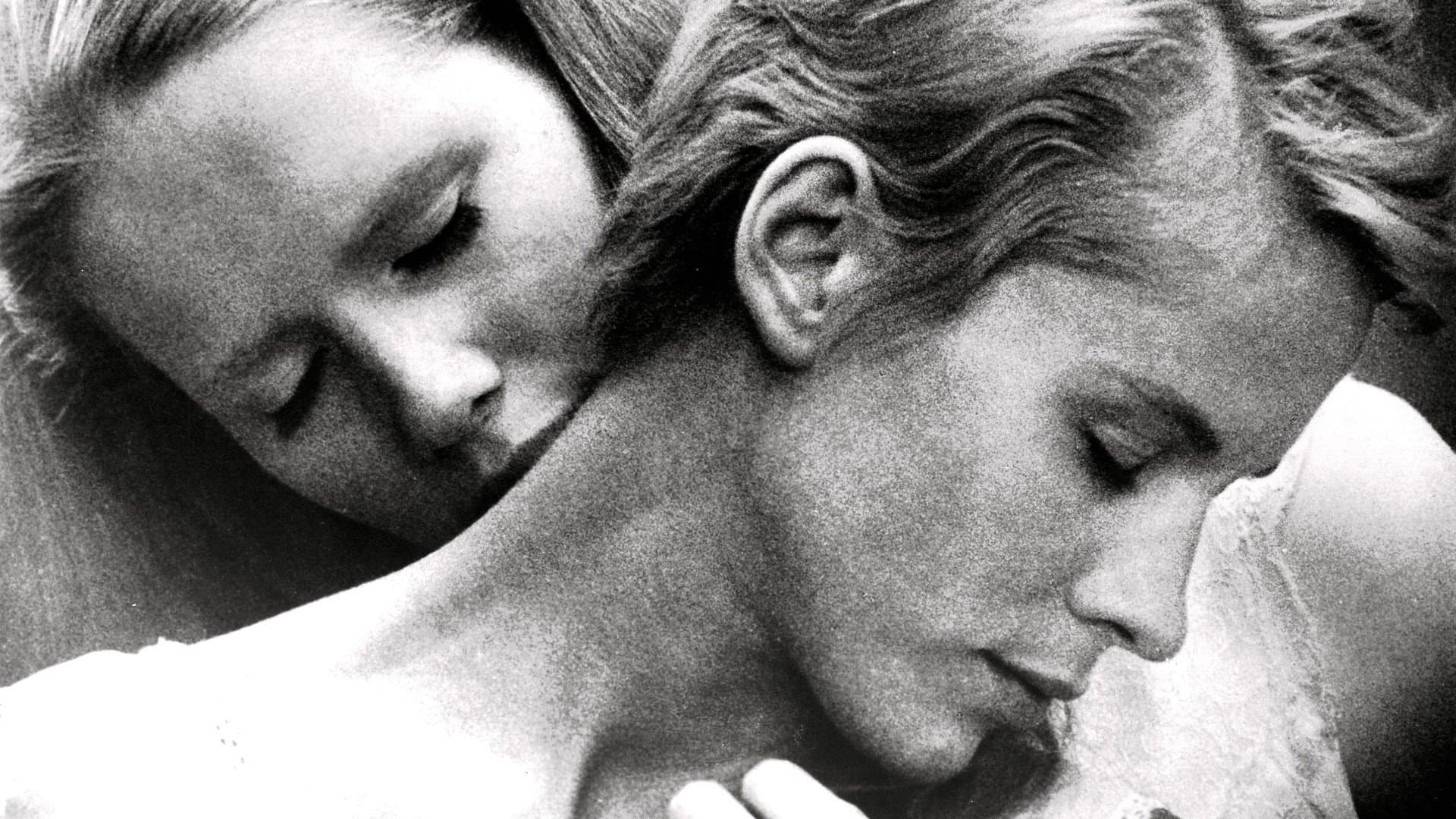
When a stage actress named Elisabet falls silent mid-performance and refuses to speak, she is sent to a remote seaside cottage on Fårö island in the care of a young nurse, Alma, and the two women's identities begin to merge across long monologues, dreams, and reflective surfaces. Ingmar Bergman's 1966 Swedish-language psychological drama stars Bibi Andersson and Liv Ullmann and is widely cited as one of the greatest films ever made.
What Is the Budget of Persona (1966)?
Persona (1966), written and directed by Ingmar Bergman, was produced on a modest Swedish-feature budget that has not been publicly disclosed in precise figures. Scholarly estimates and Svensk Filmindustri production records place the cost in the range of 2,000,000 to 3,000,000 Swedish kronor, equivalent to approximately $400,000 to $600,000 in 1966 dollars. Svensk Filmindustri (the production arm of the Swedish exhibition giant SF) financed and distributed the picture as part of its long-standing partnership with Bergman.
The production was a deliberately small operation: a two-lead cast, a single primary location (Fårö island in the Baltic), a five-person principal crew including cinematographer Sven Nykvist, and a 56-day shoot in summer 1965. The economic discipline matched the artistic concept; Persona is one of the most economical major art films of the 1960s by any production metric, and the relative absence of definitive cost data reflects the small-scale Scandinavian production environment of the era rather than secrecy.
Key Budget Allocation Categories
Persona's modest production budget was distributed across a small number of essential categories:
- Cast Bibi Andersson, by 1965 a regular Bergman collaborator (Smiles of a Summer Night, Wild Strawberries, The Seventh Seal), played Nurse Alma. Liv Ullmann, in her first Bergman picture, played the silent actress Elisabet Vogler. The cast was rounded out with smaller roles for Margaretha Krook (the doctor) and Gunnar Björnstrand (Elisabet's husband). Both leads were on Scandinavian-feature scale, considerably below international rates.
- Fårö Location Bergman had purchased a property on Fårö in 1965 and built the cottage that doubles as the film's primary setting on his own land. The location costs were minimal, with the production essentially building a small set on the director's personal property. The Baltic coast exteriors required no significant location fees.
- Cinematography Sven Nykvist's black-and-white cinematography is the defining technical element of the film and required substantial lens and camera rental. Nykvist used long focal lengths to compress the famous face-merging shots, and the production rented Mitchell BNC cameras and a small lighting package from Svensk Filmindustri's Stockholm facility.
- Crew The total crew was unusually small, with Nykvist as cinematographer, Lennart Olsson as assistant director, Ulla Ryghe as editor, Bibi Lindström as set designer, and a minimal support team. The intimate crew matched the production's two-actor focus.
- Post-Production Editor Ulla Ryghe worked through summer and autumn 1965 on the picture's complex elliptical structure. The Lars Johan Werle score and the unusual prologue sequence (which intercuts a silent comedy clip, a spider, a sheep slaughter, and a boy reaching toward a screen) required additional optical printing and sound work at Svensk Filmindustri's Stockholm post facility.
- Score Lars Johan Werle composed a sparse modernist score that featured prominently in the prologue and final dissociation sequences. The recording was handled at Stockholm scale with a chamber ensemble.
How Does Persona's Budget Compare to Similar Films?
At an estimated $400,000 to $600,000, Persona sits firmly in the European art-house budget range of its era. The comparison set illustrates the modest scale typical of 1960s Scandinavian and continental auteur productions:
- 8 1/2 (1963): Budget $1,500,000 | Worldwide approximately $3,500,000. Federico Fellini's Italian masterwork cost roughly three times Persona's budget but operated in a similar art-house economic frame, with prestige international distribution following Cannes recognition.
- Blow-Up (1966): Budget $1,800,000 | Worldwide approximately $20,000,000. Michelangelo Antonioni's same-year English-language production cost roughly three to four times Persona but earned dramatically more thanks to Carlo Ponti's MGM distribution and the swinging-London hook.
- Cries and Whispers (1972): Budget approximately $400,000 | Worldwide approximately $3,000,000. Bergman's later chamber drama cost roughly the same as Persona and earned around five times the worldwide gross thanks to its Academy Award nominations and Roger Corman's New World Pictures U.S. release.
- The Silence (1963): Budget approximately $300,000 | Worldwide approximately $4,500,000. Bergman's previous Swedish-language chamber drama cost slightly less and earned more thanks to its scandalous reputation and wide international distribution.
- Au Hasard Balthazar (1966): Budget approximately $500,000 | Worldwide approximately $1,200,000. Robert Bresson's same-year French art-house drama operated in a nearly identical economic frame to Persona, providing the closest direct continental peer.
Persona Box Office Performance
Persona opened in Sweden on October 18, 1966 through Svensk Filmindustri and was subsequently distributed internationally by United Artists in the United States (where it opened on March 6, 1967) and by various art-house distributors across Europe and Asia. Theatrical grosses for an art-house film of this period are imprecise; Variety reported approximately $190,000 in U.S. rental income through 1968.
Persona's commercial performance was modest by Hollywood standards but strong by art-house standards. Here is the financial breakdown:
Box Office Breakdown
Persona

Persona returned an estimated $1.80 to $3.50 in theatrical revenue for every $1 invested when measured against estimated production and marketing spend, putting it in the comfortably profitable art-house corridor for Svensk Filmindustri. The Swedish domestic gross provided the production's primary recovery, with international distribution generating long-tail income through repertory bookings, university film-club rentals, and eventual home video.
The picture has remained continuously in distribution for nearly sixty years through MGM, United Artists, Janus Films, the Criterion Collection (which has issued the film on DVD, Blu-ray, and 4K UHD), and Svensk Filmindustri's catalog operations. Repertory revenue, academic licensing, and home-video sales have generated multiples of the original theatrical gross.
Persona Production History
Persona was written by Ingmar Bergman during a hospital stay in early 1965 while he was recovering from pneumonia. He had been hospitalized after a breakdown during pre-production on another project and conceived the central image of two faces merging into one as a way of working through what he later described as a complete artistic and personal crisis. The screenplay was completed in approximately one month.
Bergman cast Bibi Andersson and Liv Ullmann after observing the physical resemblance between the two actors during a photo session for Svensk Filmindustri publicity. Ullmann was a Norwegian stage actor with limited screen experience; Andersson was Bergman's frequent collaborator. The decision to cast against the conventional star-and-supporting hierarchy (the silent actress is theoretically the larger part, but most of the film is Andersson's monologues) was central to the picture's conception.
Principal photography began on July 19, 1965 on Fårö island in the Baltic Sea, where Bergman had recently purchased a property and built a small wooden cottage that became the film's primary setting. Sven Nykvist's black-and-white cinematography used predominantly natural light, with the famous two-faces-merging shot achieved through optical printing in post-production. The 56-day shoot wrapped on September 15, 1965.
The film's notorious prologue, a montage of silent-film clips, a spider, a sheep being slaughtered, a hand being nailed in crucifixion, and a boy reaching toward a screen, was shot separately and added in post-production. The sequence was inspired by Bergman's hospital-bed reading of art-historical literature on early cinema and was meant to function as a kind of meta-cinematic invocation. Bergman later described the prologue as the film's true beginning.
Editor Ulla Ryghe assembled the film through autumn 1965 and into early 1966. The picture's most famous sequence, in which the film appears to burn and disintegrate mid-screening, was achieved through deliberate damage to a print and was inserted as a structural rupture point. Persona premiered at the Berlin Film Festival in October 1966 to substantial critical acclaim.
Awards and Recognition
Persona won the Best Foreign Language Film award from the National Board of Review in 1967 and was named Best Foreign Film by the National Society of Film Critics. The picture received the Best Foreign Language Film prize from the Kinema Junpo Awards in Japan and won multiple Best Foreign Film prizes from European critics' circles in 1967 and 1968. Bibi Andersson won the Best Actress prize at the Guldbagge Awards (Sweden's national film award).
Bergman did not enter Persona for Academy Award consideration; Sweden submitted the picture for Best Foreign Language Film but the Academy did not nominate it. The picture's omission from the Oscar nominations was widely regarded as one of the major foreign-film snubs of the late 1960s. Sight & Sound's decennial Greatest Films of All Time poll has consistently placed Persona in the top 50 since 1972, with the 2012 critics' poll ranking the picture 17th and the 2022 directors' poll ranking it 9th.
Critical Reception
Persona received overwhelmingly positive reviews at release and its critical reputation has only grown across the subsequent half-century. The film holds a 92% approval rating on Rotten Tomatoes based on 51 retrospective critic reviews, with a critical consensus that calls it Bergman's masterpiece and one of the defining films of the 1960s European art cinema movement. The picture does not have a contemporaneous Metacritic score (the service was founded in 2001) but is universally cited in academic and critic surveys as among the greatest films ever made.
Susan Sontag's landmark 1967 essay Persona placed the picture at the center of the period's most ambitious film criticism, calling it "a work that endures." Pauline Kael of The New Yorker called the picture "a transparent failure as theater and a brilliant film." Andrew Sarris of The Village Voice ranked Persona among the year's best foreign-language films. French Cahiers du Cinéma critics including Jean-Luc Godard placed Bergman alongside Antonioni, Bresson, and Tarkovsky as the era's defining art-cinema authors.
Persona's standing in academic and cinephile culture has held for nearly six decades. The Sight & Sound critic and director polls have placed the picture in the top 20 across multiple decades; the Criterion Collection's 2014 Blu-ray and 2022 4K UHD releases drew extensive retrospective coverage. The picture's influence on subsequent psychological-doubling films, including Robert Altman's 3 Women (1977), David Lynch's Mulholland Drive (2001), and Darren Aronofsky's Black Swan (2010), is widely acknowledged. Persona remains one of the most frequently studied films in film-studies curricula worldwide.
Frequently Asked Questions
How much did Persona (1966) cost to make?
The production budget has not been publicly disclosed in precise figures, but scholarly and Svensk Filmindustri records place it in the range of 2,000,000 to 3,000,000 Swedish kronor, equivalent to approximately $400,000 to $600,000 in 1966 dollars. Svensk Filmindustri financed the picture as part of its long-standing partnership with Bergman.
Where was Persona filmed?
Principal photography took place on Fårö island in the Baltic Sea, where Bergman had purchased a property and built the wooden cottage that became the film's primary setting. The 56-day shoot ran from July 19 to September 15, 1965.
Who directed Persona?
Ingmar Bergman wrote and directed the film. He conceived the screenplay during a hospital stay in early 1965 while recovering from pneumonia, drawing on what he later described as a complete artistic and personal crisis.
Who stars in Persona?
Bibi Andersson plays Nurse Alma and Liv Ullmann plays the silent actress Elisabet Vogler. Margaretha Krook plays the doctor and Gunnar Björnstrand plays Elisabet's husband. Persona was Liv Ullmann's first film with Bergman; she went on to appear in nine more of his pictures.
What is Persona about?
A stage actress named Elisabet falls silent mid-performance and refuses to speak. She is sent to a remote seaside cottage on Fårö island in the care of a young nurse, Alma, and across long monologues, dreams, and reflective surfaces the two women's identities appear to merge. The film is structured as a psychological drama and a meta-cinematic meditation on identity, voice, and performance.
Why does the film appear to burn in Persona?
The mid-film image of the film burning and disintegrating is a deliberate structural rupture inserted by Bergman as a meta-cinematic device. It marks the transition between the film's two halves and signals the disintegration of the boundary between the two women. The effect was achieved by physically damaging a print frame-by-frame during editing.
What is the prologue of Persona?
The prologue is a roughly four-minute montage of silent-film clips, a spider, a sheep being slaughtered, a hand being nailed in crucifixion, and a boy reaching toward a screen. Bergman conceived the sequence in his hospital bed while reading about early cinema. It functions as a meta-cinematic invocation that Bergman later described as the film's true beginning.
Did Persona win any Academy Awards?
No. Sweden submitted Persona for Best Foreign Language Film consideration but the Academy did not nominate it, an omission widely regarded as one of the major Oscar snubs of the late 1960s. The picture did win Best Foreign Language Film prizes from the National Board of Review, the National Society of Film Critics, and the Kinema Junpo Awards in Japan, among others.
Why is Persona considered one of the greatest films ever made?
Persona has appeared in the top 25 of Sight & Sound's decennial Greatest Films of All Time poll for more than five decades, ranking 17th in the 2012 critics' poll and 9th in the 2022 directors' poll. The picture is universally cited in film studies for its formal innovations, its philosophical engagement with identity and performance, and its influence on subsequent psychological-doubling films including 3 Women (1977), Mulholland Drive (2001), and Black Swan (2010).
Where can I watch Persona today?
Persona is widely available through The Criterion Collection (which has issued the picture on DVD, Blu-ray, and 4K UHD), through streaming on The Criterion Channel and HBO Max, and through theatrical repertory programming worldwide. The picture is one of the most frequently studied films in film-studies curricula globally.
Filmmakers
Persona

Official Trailer
Build budgets like this one in Saturation
Start from an industry-standard feature film template, import the schedule and rates you already have, and let the cost report keep itself current as you spend. Real-time collaboration, no spreadsheets.