Penguins Budget
 DocumentaryFamily76 minutes
Updated
Synopsis
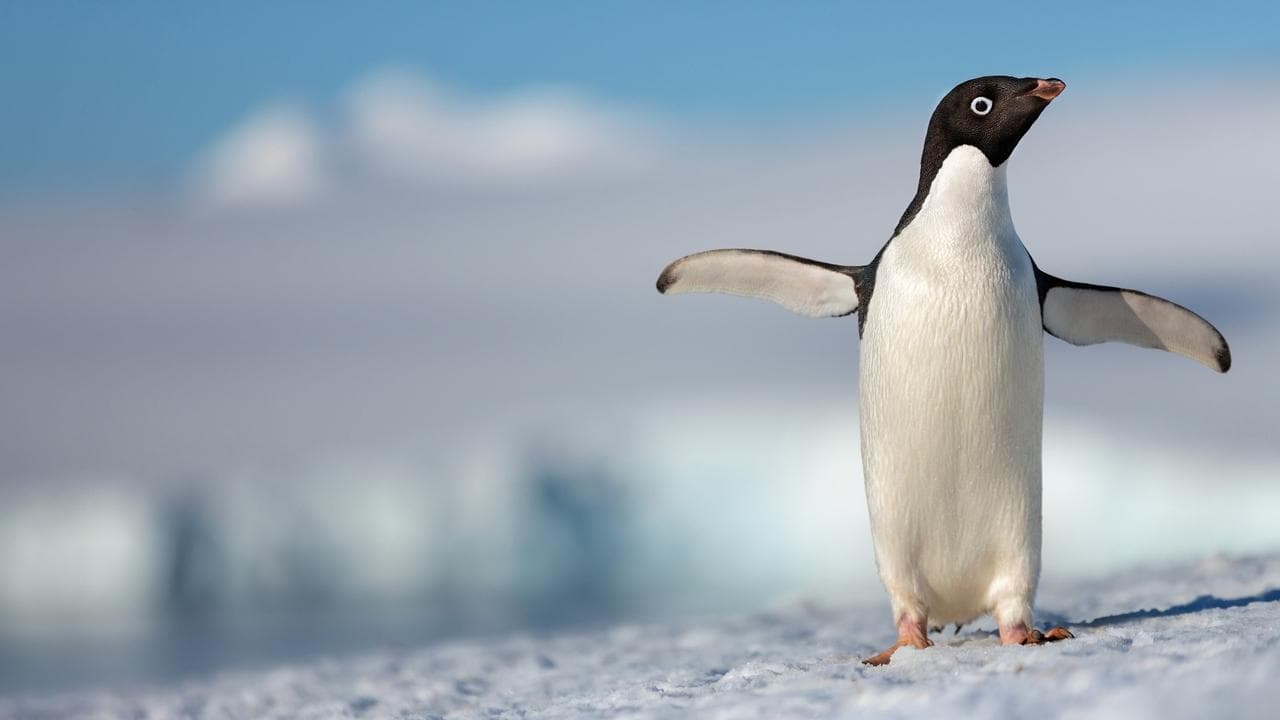
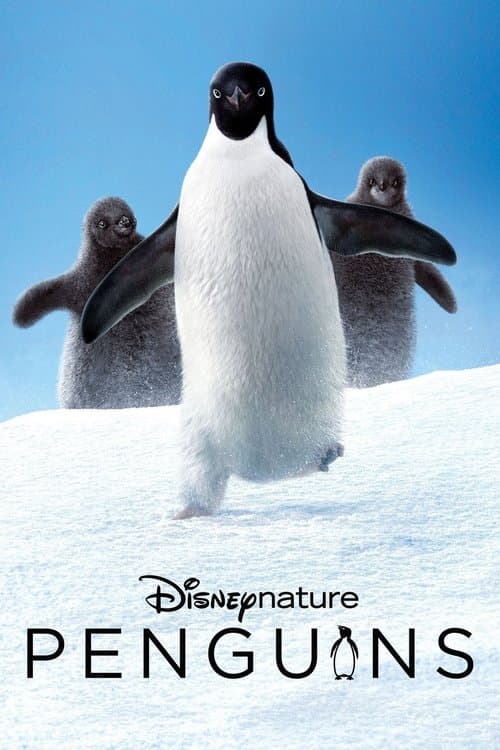
Disneynature's all-new feature film "Penguins" is a coming-of-age story about an Adélie penguin named Steve who joins millions of fellow males in the icy Antarctic spring on a quest to build a suitable nest, find a life partner and start a family. None of it comes easily for him, especially considering he's targeted by everything from killer whales to leopard seals, who unapologetically threaten his happily ever after. From the filmmaking team behind "Bears" and "Chimpanzee," Disneynature's "Penguins" opens in theaters nationwide in time for Earth Day 2019.
What Is the Budget of Penguins?
Penguins was produced on a budget of approximately $25 million by Disneynature in association with Walt Disney Pictures. The film was directed by Alastair Fothergill and Jeff Wilson, narrated by Ed Helms, and released on Earth Day, April 17, 2019. It follows Steve, a male Adélie penguin in Antarctica, as he makes the annual migration to his breeding ground, finds a mate, builds a nest, and raises chicks through the brutal southern summer.
The $25 million budget placed Penguins at the high end of the Disneynature production range, reflecting the extraordinary cost of filming in Antarctica with specialized cold-weather camera systems and thermal-protected equipment. Fothergill, who had previously directed or produced Disneynature's Monkey Kingdom, Chimpanzee, Bears, and Earth, brought the company's most experienced natural history production infrastructure to one of the most logistically demanding filming environments on the planet.
Key Budget Allocation Categories
- Two-Year Antarctic Field Production: Filming in Antarctica requires specialized cold-weather logistics that make standard wildlife documentary production look simple by comparison. Camera systems must be modified for extreme cold, where standard lubricants freeze and battery capacity drops precipitously. The production team developed thermal housings and modified operating procedures to keep equipment functional at temperatures that regularly dropped below -40 degrees Celsius at the filming locations near the Antarctic Peninsula.
- Directors Alastair Fothergill and Jeff Wilson: Fothergill is among the most experienced natural history filmmakers alive, with credits including Planet Earth, Blue Planet, Frozen Planet, and multiple prior Disneynature releases. Wilson, a wildlife cameraman and director who had worked extensively in polar environments, co-directed the film and led camera teams in the field. Their combined experience with extreme-environment filming was essential to the production's ability to capture the behaviors the film documents.
- Ed Helms Narration and Score by Harry Gregson-Williams: Ed Helms, known for The Office and The Hangover franchise, provided a narration style that combined warmth and comedic timing appropriate for Disneynature's family audience. Harry Gregson-Williams, whose orchestral credits include The Martian, the Shrek franchise, and multiple Disneynature titles, composed the original score recorded with a full orchestra, representing a significant music production investment.
- Specialized Cold-Weather Camera Equipment: The production used a combination of 4K cinema cameras in custom thermal housings, long-lens telephoto systems for observational photography at distance, and compact cameras rigged close to nesting sites to capture intimate behavioral footage without disturbing the colony. Camera operators trained extensively in cold-weather operation and safety before deploying to Antarctica.
- Logistics, Safety, and Antarctic Operations: Reaching Adélie penguin breeding colonies in Antarctica requires icebreaker vessels or air transport to research stations, followed by zodiac or helicopter transport to filming locations. The production coordinated with research organizations for safety support and weather monitoring. The cost of Antarctic logistics, including vessel hire, fuel, and safety infrastructure, represented a major above-the-line production expense with no equivalent in most wildlife documentary budgets.
How Does Penguins' Budget Compare to Similar Films?
Penguins falls within the established Disneynature theatrical budget range, where $20-25 million reflects the standard investment for a wide-release Earth Day nature documentary. Its box office performance was below the company's historical average, continuing a pattern of declining domestic theatrical returns for the format in the late 2010s.
- Chimpanzee (2012): Budget ~$20M | Domestic $28.7M. The Fothergill-directed Disneynature release that currently holds the highest domestic gross in the franchise. Penguins spent $5 million more and earned $13.4 million less domestically, a significant reversal despite a comparable formula and similar director.
- Monkey Kingdom (2015): Budget ~$20M | Domestic $13.4M. The most recent Fothergill-directed Disneynature release before Penguins also underperformed. The pattern of declining domestic Disneynature returns between 2012 and 2019 is consistent: the format was losing theatrical audience across this period regardless of subject.
- Born in China (2016): Budget ~$15M | Domestic $13.5M. Disneynature's documentary following giant pandas, snow leopards, and golden snub-nosed monkeys in China, narrated by John Krasinski. Penguins spent $10 million more and matched Born in China's domestic gross almost exactly, suggesting the domestic ceiling for Disneynature theatrical releases had stabilized around $13-15 million regardless of production investment.
- March of the Penguins (2005): Budget ~$8M | Worldwide $127.4M. The original theatrical penguin documentary, directed by Luc Jacquet and narrated by Morgan Freeman, remains the second-highest-grossing documentary of all time and the benchmark against which all subsequent penguin films are measured. Penguins spent more than three times as much and earned less than 15 percent of March of the Penguins' worldwide gross, illustrating how market saturation and audience fatigue affected the subject's commercial return 14 years later.
Penguins Box Office Performance
Penguins opened April 17, 2019, across 2,622 theaters in the United States, the standard Disneynature Earth Day wide release with Walt Disney Pictures handling distribution. The opening weekend generated $3.9 million, in line with recent Disneynature titles but well below the franchise's earlier Earth Day openings. The domestic total finished at $15.3 million, the highest Disneynature domestic gross since Chimpanzee (2012) but still significantly below the franchise's early performances. International markets added $3.3 million for a worldwide total of $18.6 million.
Against a production budget of approximately $25 million and an estimated $8 million in prints and advertising, Disney's total investment was approximately $33 million. With theaters retaining roughly 50 percent of gross, the studio's share of the worldwide theatrical gross was approximately $9.3 million, well below the total investment. The theatrical release operated at a significant loss, with the film's profitability dependent on Disney+ streaming, home video, and international broadcast licensing.
Box Office Breakdown
Penguins

For every dollar invested in production, Penguins returned approximately $0.74 at the worldwide box office. Accounting for P&A, the total cost recovery in theatrical was approximately 28 percent of total investment. Disney's ownership of the Disney+ streaming platform, which became the primary distribution window for Disneynature titles after its November 2019 launch, fundamentally altered the economics of the franchise. Penguins was among the first Disneynature releases to benefit directly from Disney+ catalog placement, where its family-friendly content and 75-minute runtime made it an ideal streaming title.
Penguins Production History
Alastair Fothergill and Jeff Wilson developed Penguins after Fothergill's extensive experience filming in polar environments for the BBC Natural History Unit's Frozen Planet (2011), where the production team had established relationships with Antarctic research organizations and developed expertise in cold-weather filming protocols. The decision to focus specifically on Adélie penguins, rather than the more familiar emperor penguins of March of the Penguins, was made to differentiate the film and exploit the Adélie's more chaotic and personality-rich breeding behavior.
The production chose to follow a single male penguin protagonist named Steve, using individual identification techniques developed by Antarctic researchers to track the same bird across the breeding season. Adélie penguins return to the same nesting sites each year, which allowed the production team to plan camera positions in advance of Steve's arrival. The film's central narrative of Steve finding a mate, named by the filmmakers as Adeline, and raising chicks through predation by skua birds was constructed from the natural behavioral events that occurred during filming rather than scripted scenarios.
Filming took place over two austral summer seasons at breeding colonies near the Antarctic Peninsula, coordinated with the British Antarctic Survey and other research organizations that maintain stations in the region. The production's presence at active research stations provided safety infrastructure, weather monitoring, and logistical support that would otherwise have been prohibitively expensive to establish independently.
The film was released April 17, 2019, with Disney maintaining its Earth Day theatrical tradition. As with prior Disneynature releases, Disney pledged that a portion of opening week ticket sales would go to conservation organizations, in this case to the Wildlife Conservation Society's work on penguin habitat protection. The film became available on Disney+ at the platform's launch in November 2019, transitioning to streaming as the theatrical run concluded.
Awards and Recognition
Penguins was not nominated for the Academy Award for Best Documentary Feature. Disneynature titles rarely receive Documentary branch consideration due to their family-entertainment framing and Earth Day theatrical positioning, which the Academy branch has historically distinguished from the more issue-driven or formally innovative documentaries it typically nominates.
The film received recognition within the natural history filmmaking community for its technical achievement in Antarctica. The Wildlife Conservation Society cited the film's conservation partnership as one of Disneynature's most significant, with Disney's opening week pledge contributing to the organization's Adélie penguin habitat research in the Antarctic Peninsula region, which faces accelerating threat from climate change and krill stock depletion. Penguins was recognized at the Jackson Wild Media Awards, the leading awards program for natural history filmmaking, where Antarctic productions are historically well-represented.
Critical Reception
Penguins holds an 87% approval rating on Rotten Tomatoes, with critics praising the cinematography and finding Ed Helms's narration effectively matched to the subject's lighter tone. The film's IMDb rating of 7.4 out of 10 reflects a family audience that received it warmly. Metacritic scored it 58 out of 100, indicating mixed reviews among critics who found it competent but formulaic within the Disneynature structure.
Critics who appreciated the film highlighted the quality of the Antarctic photography, particularly the sequences showing Steve navigating the physical chaos of a large Adélie colony during the peak breeding season, and the frank depiction of predation by skua birds, which Disneynature handled more directly than its earlier titles had addressed similar predator-prey sequences. Critics who were more reserved noted that the anthropomorphized narrative imposed on Steve's story diminished the behavioral science interest of what is actually being filmed, and that Ed Helms's comedic narration occasionally worked against the footage's natural drama.
Within the Disneynature library, Penguins is generally regarded as a mid-to-upper tier entry, ahead of Bears and Monkey Kingdom in domestic performance, and behind Chimpanzee and the original Earth. The comparison with March of the Penguins is inevitable for any subsequent penguin documentary, and critics consistently noted that Penguins did not surpass or meaningfully challenge its predecessor's emotional impact, though its production values and Antarctic photography were technically superior.
Frequently Asked Questions
How much did Penguins (2019) cost to make?
The production budget was approximately $20,000,000. Disneynature financed the documentary, which was Disney's tenth nature feature under the label founded in 2008.
How much did Penguins earn at the box office?
Penguins grossed $7,613,367 domestically and $9,200,000 internationally, for a worldwide total of approximately $16,800,000. It opened to $2,475,807 on April 17, 2019, in a soft opening that fell short of Disneynature's prior performance.
What is Penguins (2019) about?
The documentary follows Steve, an Adélie penguin in Antarctica, as he attempts to build a nest, find a mate, and raise a family in the brutal conditions of the southernmost continent. The film was narrated by Ed Helms in his Disneynature debut.
Who directed Penguins?
Alastair Fothergill and Jeff Wilson co-directed the film. Fothergill is one of the most prolific natural-history filmmakers of his generation, having previously directed Disneynature productions Earth (2007), African Cats (2011), and Bears (2014).
How long did filming take?
The production filmed across three Antarctic field seasons over more than two years, capturing roughly 900 hours of footage. The crew operated from research stations and field camps in extreme conditions, working with the U.S. Antarctic Program for logistical support.
Where was Penguins filmed?
Filming took place in Antarctica, primarily around the Adélie penguin colonies at Cape Crozier on Ross Island and around the U.S. McMurdo Station. The production also captured sequences in the Drake Passage and the Southern Ocean.
What did critics think of Penguins?
Reviews were largely positive, with a 91% approval rating on Rotten Tomatoes and a 67 out of 100 score on Metacritic. Critics praised the nature photography and the more lighthearted tone enabled by Ed Helms' narration, while some objected to the anthropomorphic framing of the protagonist penguin.
How does Penguins compare to other Disneynature films?
Penguins' $16,800,000 worldwide gross trailed Earth (2007, $111,000,000 worldwide), Chimpanzee (2012, $34,000,000 worldwide), and Bears (2014, $25,800,000 worldwide). It outperformed Born in China (2016, $14,000,000 worldwide) but underperformed against Disneynature's historical baseline.
What charity did the film support?
For every ticket sold during the opening week, Disneynature made a donation to the Wildlife Conservation Network's Penguin Conservation Fund, ultimately contributing more than $500,000 toward Antarctic penguin research.
Where can I stream Penguins (2019)?
The film is available on Disney+, which has been the exclusive subscription streaming home for the Disneynature catalog since the service's 2019 launch. The film is also available for digital purchase on Apple TV and Amazon Prime Video.
Official Trailer
Build budgets like this one in Saturation
Start from an industry-standard feature film template, import the schedule and rates you already have, and let the cost report keep itself current as you spend. Real-time collaboration, no spreadsheets.