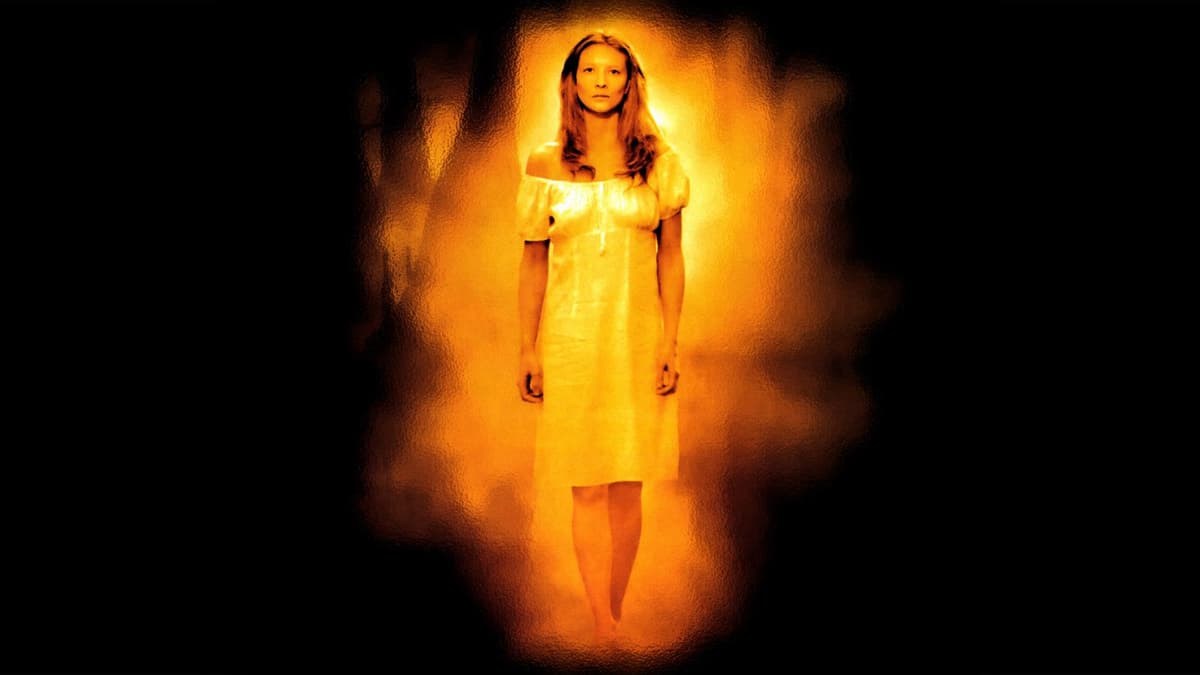

One Missed Call Budget
Updated
Synopsis
College student Beth Raymond watches her friends die one by one after they each receive a chilling voicemail from their own future selves, recorded at the exact moment they will die. As the death toll rises, Beth teams with a detective whose sister was the latest victim to trace the cursed messages back to their source before the call comes for her.
What Is the Budget of One Missed Call (2008)?
One Missed Call (2008), directed by Eric Valette and distributed worldwide by Warner Bros. Pictures, was produced on a reported budget of $20,000,000. The film was an English-language remake of Takashi Miike's 2003 Japanese horror feature of the same name and was financed by Warner Bros., Alcon Entertainment, Intermedia, and Equity Pictures Medienfonds, with the costing reflecting the modest production scope, a Georgia-based principal photography schedule, and a cast headlined by Shannyn Sossamon and Edward Burns at appropriate horror-film scale.
The investment thesis followed the standard playbook of the mid-2000s J-horror remake cycle that had begun with The Ring (2002): acquire a successful Asian horror property, remake it in English on a tight budget, market it to teenage and young-adult audiences as a PG-13 supernatural thriller, and capture the kind of opening weekend that would justify the entire production cost. Against a release dump-month slot in early January 2008, the film cleared its production budget on its opening weekend in the United States.
Key Budget Allocation Categories
One Missed Call's $20,000,000 budget was distributed across several core production areas:
- Above-the-Line Talent: Lead Shannyn Sossamon, then known for A Knight's Tale (2001) and 40 Days and 40 Nights (2002), and co-lead Edward Burns, the writer-director-actor coming off his independent feature track and his role in Saving Private Ryan (1998), were cast at standard horror-feature scale rather than top-tier quotes. Director Eric Valette, the French filmmaker behind Malefique (2002), received a feature director rate in his first English-language assignment.
- Atlanta Production: Principal photography was based in Atlanta and the surrounding Georgia area, with the production taking advantage of the Georgia state film and entertainment investment tax credit then in its early years. The Atlanta-based shoot reduced the production's travel and lodging costs and accessed a deepening local crew base.
- Visual and Practical Effects: The film's ghost figures, the time-of-death apparitions, the kayaku-marker mouth maggots, and the cursed-call sound design required a moderate visual effects program and substantial practical creature and makeup work. Effects vendor work was distributed across several mid-tier houses.
- Cinematography and Camera: Glen MacPherson shot the film in the high-contrast, desaturated palette typical of the mid-2000s American remake cycle of Asian horror, with a lighting plan that emphasized deep shadows, mobile cameras during the death sequences, and naturalistic interior coverage of the central friend group.
- Score and Music: Composers Reinhold Heil and Johnny Klimek, the Tom Tykwer collaborators behind Run Lola Run (1998) and The Princess and the Warrior (2000), composed the score. The cursed cell-phone ringtone became one of the film's most marketed sonic elements and required dedicated music composition and clearance work.
- Marketing-Forward Production Choices: The film was deliberately scoped to support a January 2008 marketing campaign that could push its trailer and ringtone to the teenage audience that had supported the J-horror remake cycle. The MPAA cut and the PG-13 rating drove certain creative choices in the death sequences to preserve theatrical accessibility.
How Does One Missed Call's Budget Compare to Similar Films?
At $20,000,000, One Missed Call sat in the standard mid-2000s J-horror remake budget band. The comparison set illustrates how its commercial and critical outcome compared with peers in the cycle:
- The Ring (2002): Budget $48,000,000 | Worldwide $249,300,000. Gore Verbinski's remake of Hideo Nakata's Ringu launched the modern J-horror remake cycle, cost more than twice as much as One Missed Call, and earned more than five times as much worldwide.
- The Grudge (2004): Budget $10,000,000 | Worldwide $187,300,000. Takashi Shimizu's English-language remake of his own Ju-On cost half what One Missed Call did and earned more than four times as much worldwide, the cleanest J-horror remake economic comparison.
- Pulse (2006): Budget $20,500,000 | Worldwide $29,800,000. The Jim Sonzero remake of Kiyoshi Kurosawa's Kairo cost almost the same as One Missed Call and earned $16,000,000 less worldwide, illustrating the diminishing-returns curve the cycle had entered.
- The Eye (2008): Budget $12,000,000 | Worldwide $58,300,000. The David Moreau and Xavier Palud remake of the Pang Brothers' Hong Kong original was released six days before One Missed Call and earned $13,000,000 more worldwide on a smaller budget.
- Shutter (2008): Budget $8,000,000 | Worldwide $48,000,000. The Masayuki Ochiai remake of the Thai horror cost less than half what One Missed Call did and earned $2,000,000 more worldwide, illustrating that the format's ceiling had collapsed by 2008.
One Missed Call Box Office Performance
One Missed Call opened in the United States on January 4, 2008, the traditional dump-month slot Warner Bros. had used for horror releases throughout the J-horror remake cycle. The film grossed $12,508,883 over its opening weekend, finishing third behind National Treasure: Book of Secrets and Juno. It legged out modestly through January and February to a domestic total of $26,890,041 and an international gross of $18,951,017, for a worldwide total of $45,841,058.
Against a $20,000,000 production budget and an estimated $25,000,000 to $35,000,000 in worldwide prints and advertising spend, the financial breakdown was:
Box Office Breakdown
One Missed Call

One Missed Call returned approximately $0.85 to $1.00 in theatrical revenue for every $1 invested when measured against total production and marketing spend, a marginal theatrical outcome that was partially offset by the substantial home-video market for horror titles in the late-DVD era. The film's downstream value through television library sales and the lingering catalog draw of the title has continued to deliver modest annual revenue to Warner Bros. and its co-financiers.
One Missed Call Production History
Warner Bros. and Alcon Entertainment acquired the English-language remake rights to Takashi Miike's 2003 Japanese feature One Missed Call (Chakushin Ari) in the mid-2000s as part of the J-horror remake cycle that had begun with Gore Verbinski's The Ring (2002). Andrew Klavan wrote the English-language screenplay, transposing the Tokyo setting to an American university town and adjusting the cursed-call mechanic to the cell-phone idiom of mid-2000s American teen-targeted horror.
Director Eric Valette, the French filmmaker behind Malefique (2002), was hired for his first English-language assignment. Principal photography ran for several weeks in early 2007 in Atlanta and surrounding Georgia locations, with the production taking advantage of the Georgia state film and entertainment investment tax credit then in its early years. Shannyn Sossamon was cast as the lead Beth, with Edward Burns as the detective and Ana Claudia Talancón, Ray Wise, and Azura Skye in supporting roles.
The film was deliberately scoped for a January 2008 release, the dump-month slot Warner Bros. had used for horror titles throughout the cycle. It was not screened for critics in advance of opening, a marketing decision that signaled the studio's lack of confidence in the critical reception the film was likely to receive. The release strategy traded critical recognition for opening-weekend theatrical accessibility, a calculation that delivered the film's modest opening-weekend gross before the reviews caught up with it.
Awards and Recognition
One Missed Call received no significant awards recognition. The film was not nominated for any Academy Awards, Golden Globes, Saturn Awards, or other major industry honors. It did receive negative-category attention from the 29th Golden Raspberry Awards (the Razzies) for the 2008 calendar year, though it did not win in any of the categories where it was considered.
The film holds the dubious honor of having received Rotten Tomatoes' Moldy Tomato Award for the worst-reviewed wide release film of 2008, the year-end recognition for the bottom of the year's critical consensus. The Moldy Tomato distinction, more than any positive industry recognition, has shaped the film's legacy and the periodic critical retrospectives of the J-horror remake cycle of the mid-2000s.
Critical Reception
One Missed Call received overwhelmingly negative reviews. The film holds a 0% approval rating on Rotten Tomatoes based on 79 critic reviews, the so-called perfect negative score that has become one of the site's most notorious data points, and scored 24 out of 100 on Metacritic, indicating overwhelming dislike or disgust. Audiences surveyed by CinemaScore gave the film a D, the worst possible grade for a wide-release horror film and a clear signal of audience rejection.
Critics broadly converged on the view that the film recycled J-horror remake tropes without conviction, that the screenplay's mechanical death sequences failed to generate suspense, and that the PG-13 rating limited the kind of visceral impact the format had previously delivered. The Hollywood Reporter's Frank Scheck wrote that the film "lacks even the most basic narrative coherence," and the New York Times' Jeannette Catsoulis called it "an unrelenting bore." The film became the year-end shorthand for the exhaustion of the J-horror remake cycle and is routinely cited in critical histories of mid-2000s American horror as the moment the format ran out of meaningful ground to cover.
Frequently Asked Questions
How much did One Missed Call (2008) cost to make?
The reported production budget was $20,000,000. The film was financed by Warner Bros. Pictures, Alcon Entertainment, Intermedia, and Equity Pictures Medienfonds, with the production based in Atlanta to take advantage of the Georgia state film and entertainment investment tax credit then in its early years.
How much did One Missed Call earn at the box office?
The film grossed $26,890,041 domestically and $18,951,017 internationally for a worldwide total of $45,841,058. It opened to $12,508,883 in the United States, finishing third on its January 4, 2008 opening weekend behind National Treasure: Book of Secrets and Juno.
Was One Missed Call (2008) a flop?
It was a marginal theatrical performer at best. Against a $20,000,000 budget and an estimated $25,000,000 to $35,000,000 in worldwide prints and advertising spend, the film returned approximately $0.85 to $1.00 in theatrical revenue for every $1 invested. Its downstream home-video and television library value has partially offset the theatrical disappointment.
Who directed One Missed Call (2008)?
French filmmaker Eric Valette directed the film, in his first English-language assignment. Valette is best known for the 2002 French horror Malefique. He was hired by Warner Bros. and Alcon Entertainment as part of the studio's J-horror remake cycle.
What is One Missed Call (2008) based on?
The film is an English-language remake of Takashi Miike's 2003 Japanese horror feature Chakushin Ari (One Missed Call), itself based on a novel by Yasushi Akimoto. Andrew Klavan wrote the English-language screenplay, transposing the Tokyo setting to an American university town.
Who stars in One Missed Call (2008)?
Shannyn Sossamon plays the lead Beth, with Edward Burns as the detective and Ana Claudia Talancón, Ray Wise, Azura Skye, Johnny Lewis, Margaret Cho, and Meagan Good in supporting roles.
Where was One Missed Call (2008) filmed?
Principal photography took place in Atlanta and surrounding Georgia locations in early 2007. The production took advantage of the Georgia state film and entertainment investment tax credit then in its early years.
Why did critics hate One Missed Call?
The film holds a 0% approval rating on Rotten Tomatoes based on 79 critic reviews, the perfect negative score that has made it one of the site's most notorious data points. Critics broadly faulted it for recycling J-horror remake tropes without conviction, for mechanical death sequences that failed to generate suspense, and for a PG-13 rating that limited the kind of visceral impact the format had previously delivered.
Did One Missed Call (2008) win any Razzies?
No. The film received negative-category attention from the 29th Golden Raspberry Awards for the 2008 calendar year but did not win in any of the categories where it was considered. It did receive Rotten Tomatoes' Moldy Tomato Award for the worst-reviewed wide release of 2008.
How does One Missed Call compare to other J-horror remakes?
It sits at the low end of the cycle's commercial performance. The Ring (2002) cost $48,000,000 and earned $249,300,000 worldwide, The Grudge (2004) cost $10,000,000 and earned $187,300,000, and Pulse (2006) cost $20,500,000 and earned $29,800,000. One Missed Call's $45,841,058 worldwide gross placed it firmly in the cycle's diminishing-returns tail.
Filmmakers
One Missed Call

Official Trailer
Build budgets like this one in Saturation
Start from an industry-standard feature film template, import the schedule and rates you already have, and let the cost report keep itself current as you spend. Real-time collaboration, no spreadsheets.