Nine Lives Budget
Updated
Synopsis
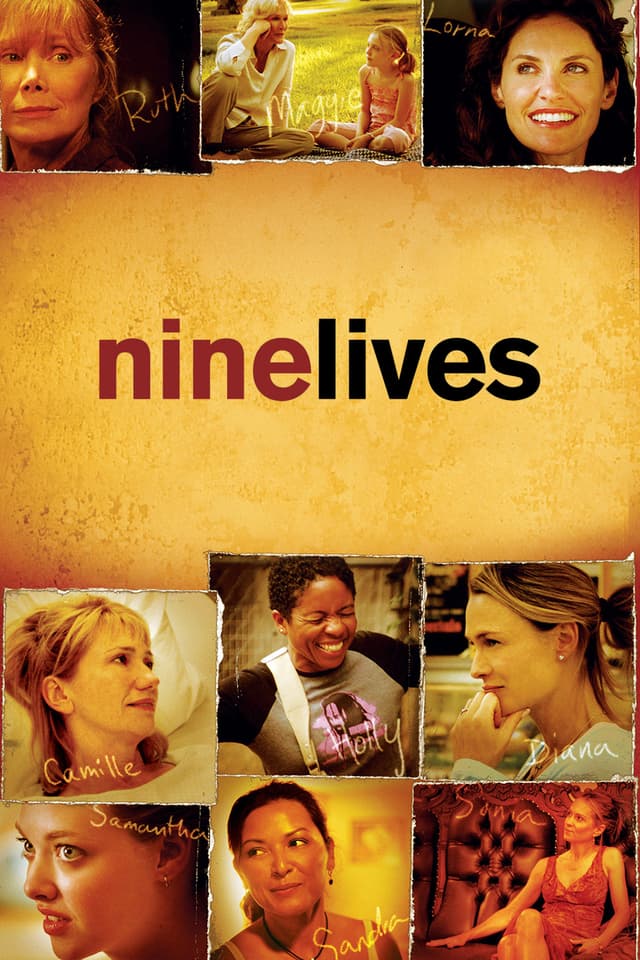
Rodrigo García's intimate ensemble drama follows nine women through pivotal, single-take vignettes that capture defining moments in their lives. Spanning a prison visiting room, a grocery store reunion with a former lover, and a graveyard goodbye, each ten-minute episode unfolds in a continuous unbroken shot.
What Is the Budget of Nine Lives (2005)?
Nine Lives (2005), written and directed by Rodrigo García and distributed by Magnolia Pictures, was produced as an ultra-low-budget independent feature with a reported production budget in the $2,000,000 to $3,000,000 range, financed by Mockingbird Pictures and producer Julie Lynn. The film is structured as nine ten-minute vignettes, each shot in a single unbroken take, a creative constraint that allowed García to assemble a deep ensemble of recognized actors at scale-rate fees against a compressed shooting schedule.
García, an accomplished cinematographer turned director, had previously made Things You Can Tell Just by Looking at Her (2000) on a similar shoestring, and Nine Lives doubled down on the format with even tighter logistical demands. The financial model relied on a-list talent willing to work for prestige and craft rather than commercial paychecks, and on Magnolia Pictures picking up the film for modest theatrical distribution out of the 2005 Sundance Film Festival.
Key Budget Allocation Categories
The Nine Lives budget was distributed across the categories that define a single-location ensemble indie:
- Above-the-Line Talent: Glenn Close, Holly Hunter, Sissy Spacek, Robin Wright, Kathy Baker, Amy Brenneman, Lisa Gay Hamilton, Elpidia Carrillo, Amanda Seyfried (in her feature debut), Aidan Quinn, William Fichtner, Stephen Dillane, Jason Isaacs, and Joe Mantegna all worked at Screen Actors Guild scale or modified low-budget rates. Each appeared in only a handful of shooting days, keeping their committed time minimal.
- Single-Take Methodology: Every vignette is one continuous Steadicam shot of roughly ten minutes. Extensive rehearsal time replaced traditional coverage. The crew spent weeks blocking, lighting, and rehearsing each segment before rolling, then attempted multiple complete takes per scene rather than breaking coverage into setups.
- Cinematography: DP Xavier Pérez Grobet shot the entire film on 35mm with Steadicam operator Geoffrey Erb handling the long, choreographed movements. The single-take format saved film stock relative to a conventional coverage schedule but demanded longer pre-light and rehearsal blocks.
- Locations: Practical Los Angeles locations including a prison visiting room, a supermarket, private homes, and a cemetery anchored the production. The contained nature of each vignette kept location fees, permits, and company moves to a minimum.
- Production Schedule: Principal photography ran approximately five weeks, with each vignette shot over two to three days of rehearsal plus one shooting day. The compressed schedule kept stage rental, equipment, and crew carrying costs lean.
- Post-Production and Music: Editor Andrea Folprecht assembled the nine segments with minimal coverage to choose from, dramatically simplifying post. Edward Shearmur composed a restrained score that bridges the vignettes without overwhelming the chamber-drama tone.
How Does Nine Lives's Budget Compare to Similar Films?
At a reported budget in the low single-digit millions, Nine Lives sits at the modest end of mid-2000s American ensemble indies. The comparison set:
- Crash (2005): Budget $6,500,000 | Worldwide $98,410,061. Paul Haggis's Best Picture winner ran two to three times the Nine Lives budget and grossed dramatically more, illustrating how a single connective premise can scale ensemble indies into the Academy conversation.
- Magnolia (1999): Budget $37,000,000 | Worldwide $48,451,803. Paul Thomas Anderson's interlocking-vignettes drama cost more than ten times Nine Lives because of its three-hour runtime, large speaking cast, and New Line's commitment to a prestige release rollout.
- Short Cuts (1993): Budget $12,000,000 | Worldwide $6,110,979. Robert Altman's Raymond Carver tapestry costs four to six times Nine Lives and lost money theatrically, a cautionary precedent that informed the lean financing model García pursued.
- Babel (2006): Budget $25,000,000 | Worldwide $135,330,000. Alejandro González Iñárritu's globe-spanning ensemble cost roughly ten times more and earned Oscar attention, demonstrating the upper end of what ensemble drama financing looked like in the same window.
Nine Lives Box Office Performance
Nine Lives opened in limited release on October 14, 2005 after a Sundance premiere earlier that year. Magnolia Pictures gave the film a platform release strategy that never expanded beyond major arthouse markets. The film never crossed $1,000,000 domestically, a typical outcome for a niche single-take ensemble indie without a marquee star anchor.
Against a reported production budget in the $2,000,000 to $3,000,000 range, the film needed perhaps $8,000,000 to $10,000,000 in worldwide gross to clear its theatrical and marketing costs. Here is the financial breakdown:
Box Office Breakdown
Nine Lives

The film returned roughly $0.10 to $0.15 in theatrical revenue for every $1 invested, a result typical of single-take festival indies that depend on awards momentum and post-theatrical revenue rather than a wide release. Home video, cable licensing, and international rights sales recouped a portion of the production cost over the years that followed.
The economic model assumed limited theatrical recoupment from the start. Magnolia Pictures structured the release for prestige positioning and ancillary value, and the film's lasting reputation rests on its presence in film-school curricula on long-take cinema rather than its opening-weekend grosses.
Nine Lives Production History
Development on Nine Lives began with García writing nine self-contained ten-minute screenplays during 2003 and 2004, each conceived from the outset as a single uninterrupted take. The single-take constraint was not a stylistic flourish layered onto conventional coverage. It defined the project from the script stage and shaped casting, rehearsal, and budget assumptions through pre-production.
Principal photography took place in California over approximately five weeks in 2004, with each vignette occupying two to three days of rehearsal followed by one shooting day. Glenn Close, Holly Hunter, Sissy Spacek, Robin Wright, Kathy Baker, Amy Brenneman, Lisa Gay Hamilton, Elpidia Carrillo, and a fourteen-year-old Amanda Seyfried in her first feature each anchored a single segment. Aidan Quinn, William Fichtner, Stephen Dillane, Jason Isaacs, and Joe Mantegna filled out the male supporting roster across the various vignettes.
Cinematographer Xavier Pérez Grobet and Steadicam operator Geoffrey Erb handled the long takes on 35mm. García has discussed in interviews how the multiple complete takes per vignette varied in their emotional texture, with selections often determined by a single beat of an actor's performance rather than the technical cleanliness of the shot. The film premiered in competition at Sundance in January 2005, where it won a Special Jury Prize for its ensemble cast, before Magnolia Pictures acquired domestic distribution rights and platformed the release that October.
Awards and Recognition
Nine Lives won the Special Jury Prize at the 2005 Sundance Film Festival, recognizing the entire ensemble cast. The film took the Golden Leopard at the 2005 Locarno Film Festival, a top-tier festival prize that solidified García's reputation as a director of intimate, character-driven cinema. Glenn Close, Robin Wright, and Lisa Gay Hamilton received broad acting praise from critics groups, though no major guild nominations followed.
The film also appeared on numerous year-end critics' top-ten lists for 2005, with the Boston Society of Film Critics naming it among the year's best ensemble works. Sissy Spacek and Holly Hunter received scattered supporting-actress consideration in the precursor cycle but did not break through to Globes or Oscar attention. The single-take craft became the film's most enduring legacy, with film schools regularly screening Nine Lives as a case study in long-take ensemble drama alongside Mike Figgis's Timecode and Alexander Sokurov's Russian Ark.
Critical Reception
Nine Lives received strongly positive reviews. The film holds a 78% approval rating on Rotten Tomatoes based on 105 critic reviews, with a critical consensus that praised García's restraint, the ensemble's performances, and the cumulative emotional power of the format. On Metacritic, the film scored 81 out of 100, indicating universal acclaim. The film did not register a CinemaScore, reflecting its limited release pattern.
Critics singled out Robin Wright's vignette opposite Jason Isaacs in a grocery store as the film's emotional centerpiece, and Glenn Close's closing graveyard scene with young Dakota Fanning drew particular praise. Roger Ebert awarded the film three and a half stars and wrote that García "reminds us that movies can be intimate, contained, and devastating without epic ambition." The New York Times's Manohla Dargis called the film "as quietly accomplished a movie about women as we have seen in years."
Some reviewers found individual vignettes uneven, with critics at Slant and the Village Voice noting that a handful of the ten-minute segments depend too heavily on a single climactic revelation to sustain their length. The consensus, however, treated Nine Lives as a sustained craft achievement and a showcase for an ensemble of actresses who rarely receive material at this scale in a single project. The film's reputation has only grown in the two decades since its release, particularly within film-school curricula on long-take cinema.
Frequently Asked Questions
How much did it cost to make Nine Lives (2005)?
The reported production budget was in the $2,000,000 to $3,000,000 range, financed independently by Mockingbird Pictures and producer Julie Lynn. The ultra-low-budget figure reflects the single-take, single-location ensemble structure, with most of the all-star cast working at SAG scale or modified low-budget rates.
Did Nine Lives make money?
The film grossed approximately $556,000 in its limited domestic theatrical release, well below the $8,000,000 to $10,000,000 it would have needed to break even against production and marketing costs. Home video, cable licensing, and international sales recouped a portion of the budget over time. Magnolia Pictures structured the release for prestige positioning and ancillary value, not theatrical profit.
Who directed Nine Lives?
Rodrigo García wrote and directed Nine Lives. The film was his fourth feature after Things You Can Tell Just by Looking at Her (2000), Ten Tiny Love Stories (2001), and Passengers, and it remains widely considered his best work. García is the son of novelist Gabriel García Márquez.
What is the single-take format in Nine Lives?
Each of the nine vignettes is shot in one continuous unbroken Steadicam take of roughly ten minutes. There is no traditional coverage, no edits within a segment, and no inserts. Cinematographer Xavier Pérez Grobet shot on 35mm with Steadicam operator Geoffrey Erb. The crew rehearsed each vignette for two to three days before shooting multiple complete takes on a single day.
Who is in the cast of Nine Lives?
The ensemble includes Glenn Close, Holly Hunter, Sissy Spacek, Robin Wright, Kathy Baker, Amy Brenneman, Lisa Gay Hamilton, Elpidia Carrillo, and Amanda Seyfried in her feature debut. The supporting male roster includes Aidan Quinn, William Fichtner, Stephen Dillane, Jason Isaacs, Joe Mantegna, and a young Dakota Fanning appearing opposite Glenn Close in the final vignette.
Where was Nine Lives filmed?
Principal photography took place in Los Angeles, California, in 2004 over approximately five weeks. Practical locations included a prison visiting room, a supermarket, private homes, and a cemetery. The contained, character-driven nature of each vignette kept location fees and company moves to a minimum.
Did Nine Lives win any awards?
Yes. The film won a Special Jury Prize for the ensemble cast at the 2005 Sundance Film Festival, and it won the Golden Leopard at the 2005 Locarno Film Festival, one of the top-tier prizes on the European festival circuit. The film appeared on numerous critics' top-ten lists for 2005 but did not break through to Globes or Oscar attention.
What did critics think of Nine Lives?
The film received strongly positive reviews, holding a 78% approval rating on Rotten Tomatoes and a Metacritic score of 81 out of 100, indicating universal acclaim. Critics praised García's restraint, the ensemble performances, and the cumulative emotional power of the single-take format. Roger Ebert awarded the film three and a half stars and called it intimate, contained, and devastating.
Which vignette is considered the best in Nine Lives?
Most critics single out the supermarket vignette starring Robin Wright opposite Jason Isaacs, in which a pregnant woman runs into her former lover. The Glenn Close and Dakota Fanning graveyard scene that closes the film is the other widely praised segment. The single-take design makes the format itself the project's most discussed achievement, regularly studied in film-school curricula.
Is Nine Lives a true story?
No. The nine vignettes are original fiction written by Rodrigo García. Each segment is a self-contained character study built around a single emotionally charged event, designed to play out in real time across one unbroken ten-minute take. The film is not based on any single source, though García has cited Chekhov's short stories and Robert Altman's mosaic films as creative influences.
Filmmakers
Nine Lives

Official Trailer
Build budgets like this one in Saturation
Start from an industry-standard feature film template, import the schedule and rates you already have, and let the cost report keep itself current as you spend. Real-time collaboration, no spreadsheets.