Night at the Museum: Battle of the Smithsonian Budget
 AdventureFantasyActionComedyFamily1h 45m
Updated
Synopsis
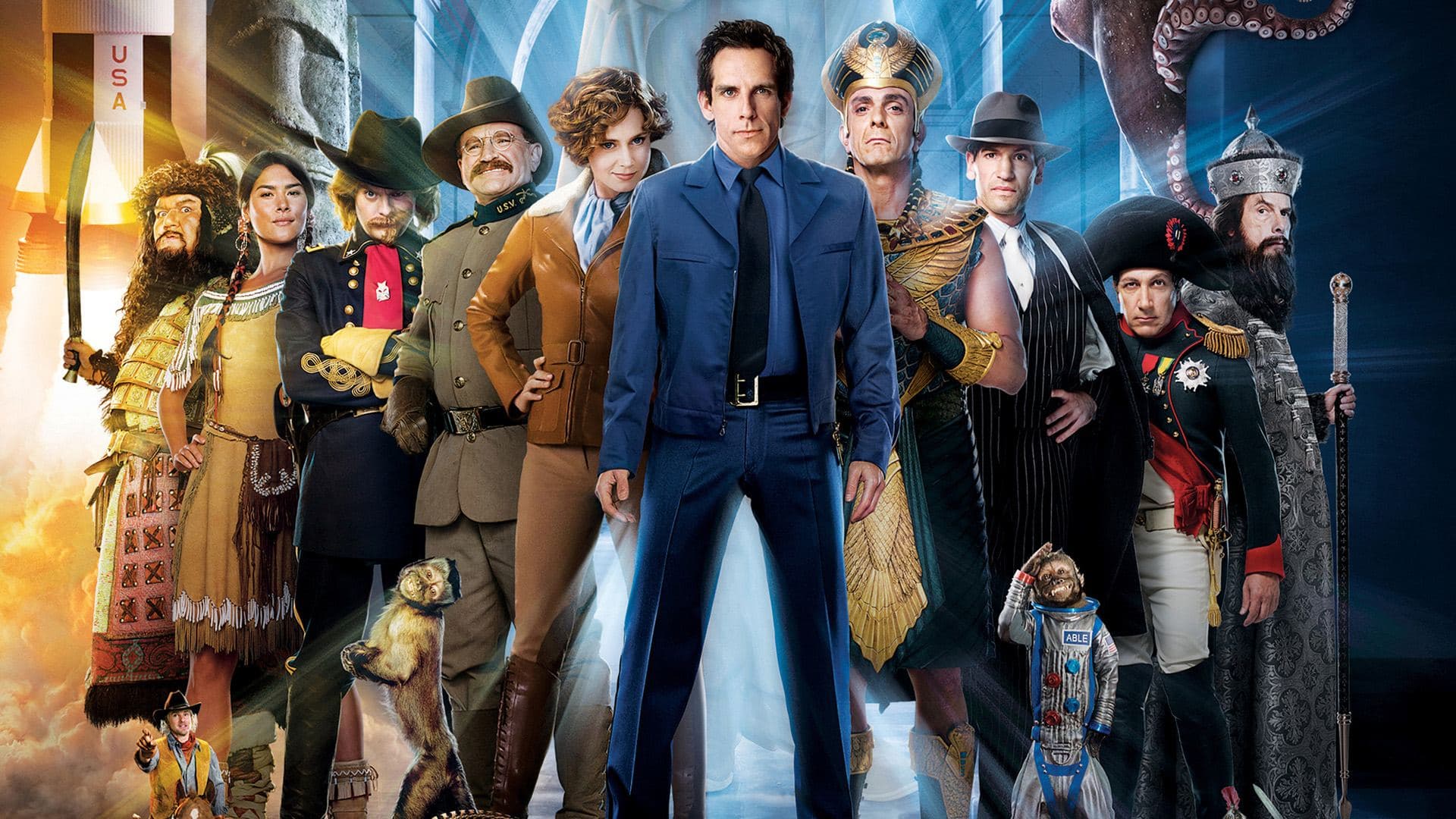
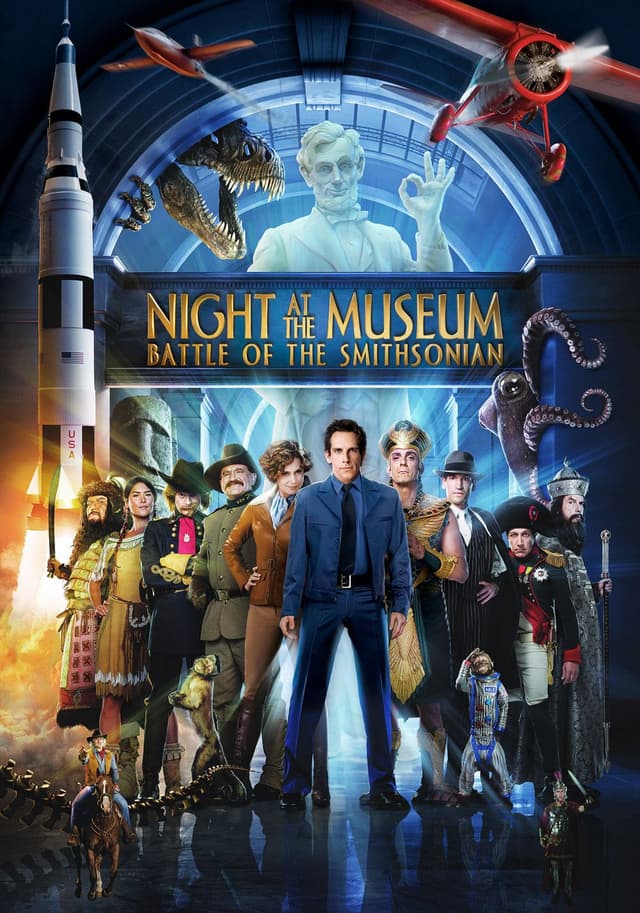
"Night at the Museum: Battle of the Smithsonian" (2009) continues the whimsical adventures of Larry Daley, played by Ben Stiller. After the events of the first film, Larry has moved on from his job as a night guard at the American Museum of Natural History and is now a successful entrepreneur. However, when he discovers that the museum is transitioning to a new exhibit, he learns that his beloved exhibits, including his friends like Theodore Roosevelt (Robin Williams) and the mischievous monkey Dexter, are being shipped to the Smithsonian Institution in Washington, D.C.
Determined to save his friends, Larry embarks on a journey to the Smithsonian, where he encounters a host of new characters, including the formidable Egyptian pharaoh Kahmunrah (Hank Azaria) and Amelia Earhart (Amy Adams). As chaos ensues in the vast museum, Larry must rally his old friends and new allies to thwart Kahmunrah's evil plans and ensure that the magic of the museum remains intact. With humor, adventure, and a touch of history, this sequel takes audiences on a thrilling ride through one of the world's largest museums, showcasing the importance of friendship and bravery in the face of adversity.
What is the budget of Night at the Museum Battle of the Smithsonian?
"Night at the Museum Battle of the Smithsonian," an adventure released in 2009, was directed by Shawn Levy and stars Ben Stiller, Amy Adams. The production budget was $150,000,000, placing it in the blockbuster range for adventure productions of its era.
Key Budget Allocation Categories
While specific budget breakdowns are not publicly available, typical cost drivers for an adventure production like this include:
- Stunts, Action Sequences & Visual Effects: Action films allocate a substantial portion of their budget to choreographing and executing practical stunts, pyrotechnics, and CGI-heavy sequences.
- Above-the-Line Talent (Cast & Director): A-list talent commands significant upfront fees plus backend participation.
- Production Design, Sets & Locations: Action films frequently require multiple international shooting locations, large-scale set construction, vehicle acquisitions and modifications, and specialized equipment , all of which drive production costs well above those of dialogue-driven genres.
- Development: Writers Robert Ben Garant and Thomas Lennon confirmed to Dark Horizons that they were writing a sequel to Night at the Museum, originally with the tentative title Another Night at the Museum.
What were the major cost factors in Night at the Museum Battle of the Smithsonian?
Several factors contributed to the overall production costs of "Night at the Museum Battle of the Smithsonian."
- Stunts: Stunts, Action Sequences & Visual Effects is one of the primary cost drivers in adventure productions of this scale.
- Above-the-Line Talent (Cast: Above-the-Line Talent (Cast & Director) is one of the primary cost drivers in adventure productions of this scale.
- Production Design: Production Design, Sets & Locations is one of the primary cost drivers in adventure productions of this scale.
How Does Night at the Museum Battle of the Smithsonian's Budget Compare to Similar Films?
At $150,000,000, Night at the Museum Battle of the Smithsonian sits in the blockbuster range. Here is how it compares to productions with a similar budget:
- 6 Underground (2019): Budget $150,000,000
- Angels & Demons (2009): Budget $150,000,000, Worldwide Gross $485,930,816
- Batman Begins (2005): Budget $150,000,000, Worldwide Gross $374,218,673
- Bee Movie (2007): Budget $150,000,000, Worldwide Gross $287,594,577
- Beverly Hills Cop: Axel F (2024): Budget $150,000,000
The median budget for wide-release adventure films in the 2000s ranges from $30 to 80M for mid-budget to $150M+ for tentpoles.
Night at the Museum Battle of the Smithsonian Box Office Performance
"Night at the Museum Battle of the Smithsonian" earned $177,243,721 domestically and $413,106,170 worldwide at the box office. Against a production budget of $150,000,000, the film performed strongly at the box office.
A film typically needs to earn approximately twice its production budget to cover marketing and distribution costs. For "Night at the Museum Battle of the Smithsonian," that break-even threshold was roughly $300,000,000. With worldwide earnings of $413,106,170, the film cleared that threshold comfortably.
Box Office Breakdown
Night at the Museum: Battle of the Smithsonian

At 175.4%, "Night at the Museum Battle of the Smithsonian" earned roughly $2.75 for every $1 invested in production.
Night at the Museum Battle of the Smithsonian Production History
Writers Robert Ben Garant and Thomas Lennon confirmed to Dark Horizons that they were writing a sequel to Night at the Museum, originally with the tentative title Another Night at the Museum. The writers said, "There'll be existing characters and plenty of new ones." 20th Century Fox announced that the sequel Night at the Museum: Battle of the Smithsonian would be released during Memorial Day weekend in 2009. Ben Stiller would return for the sequel, with Shawn Levy returning as director..
The film was filmed mostly in Vancouver and Montreal, with some scenes filmed inside the Smithsonian in Washington, D.C. A scene was shot at the Lincoln Memorial the night of May 21, 2008. Scenes were also shot at the American Museum of Natural History in New York on August 18 and 20, 2008.
Alan Silvestri returned to score the sequel. Varèse Sarabande issued the score on May 19, 2009.
Awards and Recognition
2 wins & 9 nominations total
Critical Reception
The film received mixed reviews from critics. On Rotten Tomatoes, the film has a 43% approval rating, based on 168 reviews, with an average score of 5.1/10. The site's critical consensus reads: "Night at the Museum: Battle at the Smithsonian is busy enough to keep the kids interested but the slapstick goes overboard and the special effects (however well executed) throw the production into mania." Metacritic gave the film a weighted average score of 42 out of 100 based on reviews from 31 critics, indicating "mixed or average" reviews.
Frequently Asked Questions
How much did Battle of the Smithsonian cost to make?
The production budget was $150,000,000, a significant increase from the $110,000,000 budget of Night at the Museum (2006). Twentieth Century Fox and 21 Laps Entertainment co-produced, with the expanded Washington D.C. setting and larger ensemble cast driving the higher cost.
How much did Battle of the Smithsonian earn at the box office?
The film grossed $177,243,721 domestically and $235,800,000 internationally, for a worldwide total of approximately $413,000,000. It opened to $54,173,286 on May 22, 2009, the Memorial Day weekend, taking first place at the U.S. box office.
Who directed Battle of the Smithsonian?
Shawn Levy directed the sequel, returning from the original Night at the Museum (2006) and later directing Secret of the Tomb (2014) to complete the trilogy. Levy went on to direct Free Guy (2021) and Deadpool & Wolverine (2024).
Who stars in Battle of the Smithsonian?
Ben Stiller returns as Larry Daley, with Amy Adams introduced as Amelia Earhart. Hank Azaria plays the villainous Pharaoh Kahmunrah. Robin Williams, Owen Wilson, Steve Coogan, and Ricky Gervais reprise their roles from the original.
Where was Battle of the Smithsonian filmed?
Principal photography took place at Vancouver Film Studios in British Columbia, with location shoots at the actual Smithsonian Institution in Washington D.C. The Smithsonian collaboration marked the first time a major American studio production had been granted access to film inside the National Air and Space Museum.
Did the Smithsonian gain anything from the film?
Yes. The Smithsonian received both a fee for filming access and a substantial boost in visitorship in the months following the film's release. The Smithsonian later partnered with Fox on a related interactive exhibition that toured several institutions.
What did critics think of Battle of the Smithsonian?
Reviews were mixed, with a 44% approval rating on Rotten Tomatoes and a 42 out of 100 score on Metacritic. Critics praised Amy Adams' performance as Amelia Earhart but objected to a thinner story compared with the first film. Audiences gave the film a B+ CinemaScore.
Was Battle of the Smithsonian profitable?
Yes. Against the $150,000,000 production budget and an estimated $100,000,000 in worldwide marketing spend, the $413,000,000 worldwide theatrical gross delivered a clear theatrical profit. Strong home video, cable broadcast, and later streaming revenue substantially extended the return.
How does Battle of the Smithsonian compare to the original film?
Battle of the Smithsonian grossed approximately $413,000,000 worldwide against Night at the Museum (2006) at $574,500,000 worldwide. Despite higher domestic opening numbers, the sequel slowed faster than the original, a common pattern for family-comedy franchises.
Was there a third Night at the Museum film?
Yes. Night at the Museum: Secret of the Tomb (2014) closed the trilogy with a $127,000,000 budget and a $363,200,000 worldwide gross. It was the final film performance for Robin Williams, who died on August 11, 2014, before the film's release.
Official Trailer
Build budgets like this one in Saturation
Start from an industry-standard feature film template, import the schedule and rates you already have, and let the cost report keep itself current as you spend. Real-time collaboration, no spreadsheets.